Quick Answer
This guide explains how to make creamy oatmeal with water using our reliable technique. Master the perfect ratio and dairy-free tips for satisfying, delicious morning oats.
Practical note
For Oatmeal Without Milk, this guide centers on Quick Oats, Rolled Oats (Old Fashioned), Steel-Cut Oats. Those are the checkpoints we would use first in a normal home kitchen before making a bigger change.
Decision table
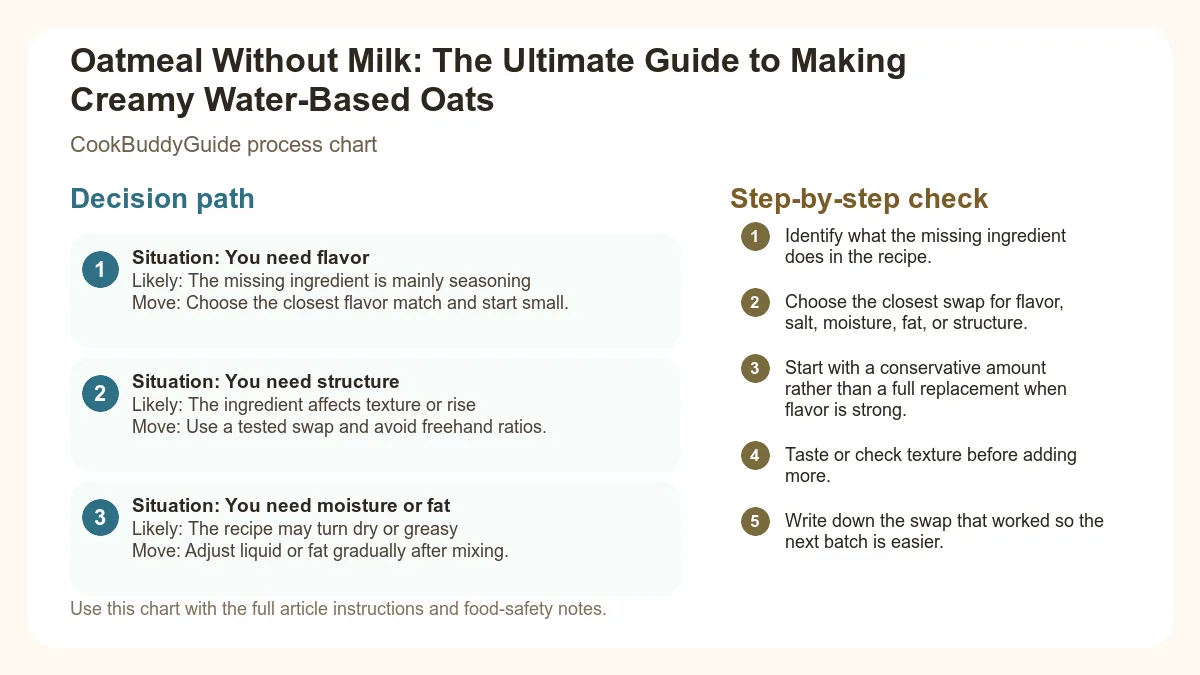
| Situation | Likely cause or meaning | Best move |
|---|---|---|
| You need flavor | The missing ingredient is mainly seasoning | Choose the closest flavor match and start small. |
| You need structure | The ingredient affects texture or rise | Use a practical swap and avoid freehand ratios. |
| You need moisture or fat | The recipe may turn dry or greasy | Adjust liquid or fat gradually after mixing. |
Step-by-step fix
- Identify what the missing ingredient does in the recipe.
- Choose the closest swap for flavor, salt, moisture, fat, or structure.
- Start with a conservative amount rather than a full replacement when flavor is strong.
- Taste or check texture before adding more.
- Write down the swap that worked so the next batch is easier.
Common mistakes
- Replacing a strong ingredient 1:1 before tasting.
- Choosing a flavor match when the recipe actually needs structure.
- Forgetting that salty swaps can change the whole dish.
- Adding extra liquid before the batter, dough, or sauce has time to hydrate.
Related topic hubs
Making a dairy-free breakfast doesn't mean sacrificing that luxurious mouthfeel. By understanding the chemistry of the oat itself—specifically how it interacts with heat and agitation—you can create a bowl of slow-cooked porridge that rivals any cream-laden version. In this guide, we will dive deep into the mechanics of starch gelatinization, the perfect water-to-oat ratios, and the practical techniques that transform humble gluten-free oats into a gourmet, healthy morning meal. Whether you are following a plant-based diet or simply looking for a low calorie breakfast, this is the only oatmeal roadmap you will ever need.
- Why You Don’t Need Dairy for the Perfect Bowl of Oats
- The Golden Ratio: Measurements for Success
- The Technique: Low, Slow, and the Power of the Stir
- Flavor Boosters That Don't Require Milk
- Dairy-Free Toppings for Natural Creaminess
- Common Mistakes to Avoid
- Meal Prep and Reheating: Keeping it Creamy
- Frequently Asked Questions
Why You Don’t Need Dairy for the Perfect Bowl of Oats
The biggest myth in the breakfast world is that milk provides the creaminess in oatmeal. In reality, the creamy texture comes from the oats themselves. Oats are packed with a specific type of soluble fiber called beta-glucan. When oats are heated in liquid, they undergo a process called starch gelatinization. The starch granules swell and eventually burst, releasing amylose and amylopectin into the water, creating a thick, viscous consistency.
The Science of Starch: How Water Creates Creaminess
Benefits of Water-Based Oatmeal for Digestion and Flavor
The Golden Ratio: How to Make Creamy Oatmeal with Water
The Standard 1:2 Ratio vs. The "Creamy" 1:2.5 Ratio
If you prefer your oats with a bit of "chew" or "bite," the 1:2 ratio works fine. However, for a creamy texture without dairy, that extra half-part of water is essential. It provides the necessary volume for the oats to fully hydrate and release their starches without the liquid evaporating too quickly. For steel-cut oats, which are the whole oat groat chopped into pieces, you need even more liquid—typically a 1:3 or 1:4 ratio—because they are much denser and require a longer cooking time to soften.
The Perfect Water-Based Rolled Oats (Single Serving)
Ingredients:
- 1/2 cup old-fashioned rolled oats (ensure they are gluten-free oats if necessary)
- 1 1/4 cups filtered water (The 1:2.5 ratio)
- 1/8 tsp fine sea salt
Instructions:
- Combine water and salt in a small saucepan and bring to a gentle boil.
- Add the oats and reduce the heat to low.
- Simmer for 7-10 minutes, stirring frequently (see the "Agitation Method" below).
- Remove from heat when the oats have absorbed most of the liquid but still look slightly "soupy."
Adjusting Liquid for Different Oat Types
- Quick Oats: Use a 1:2 ratio. They are pre-steamed and rolled thinner, so they don't need the extra hydration. Cook time: 1-2 minutes.
- Rolled Oats (Old Fashioned): Use a 1:2.5 ratio for maximum creaminess. Cook time: 7-10 minutes.
- Steel-Cut Oats: Use a 1:3.5 ratio. These require 20-30 minutes and benefit from a soak the night before to reduce cook time.
According to ideal oat to water ratio standards, the pot size also matters. A wider pot leads to faster evaporation, so if you're using a large saucepan for a single serving, you might need an extra splash of water to compensate.
The Technique: Low, Slow, and the Power of the Stir
The technique is where most home cooks go wrong. If you just dump oats in water and walk away, you’ll end up with a clumpy, uneven mess. To achieve a creamy texture without dairy, you must be active at the stove.
The "Cold Start" vs. "Boiling Start" Debate
The Agitation Method: Why Stirring Releases Beta-Glucan
Temperature Control: Avoiding the Scorched Bottom
Never cook your oats on high heat. Once the water reaches a simmer, turn the dial down to the lowest possible setting that still maintains a few bubbles. High heat causes the starches to "set" too quickly on the bottom of the pan, leading to burning. A slow simmer ensures even starch gelatinization throughout the entire batch. If you see the oats starting to stick, add a tablespoon of water immediately and stir vigorously.
Flavor Boosters That Don't Require Milk
Toasted Oats: The Secret to a Nutty Depth
Before adding your water, place the dry oats in your saucepan over medium heat. Toast them for 2-3 minutes, stirring constantly, until they smell like toasted nuts or popcorn. This simple step adds a savory complexity that makes water-based oats taste incredibly rich. Once toasted, carefully pour in your water (it will hiss and steam, so be careful!) and proceed with the cooking instructions.
The Essential Role of Sea Salt
Do not skip the salt! Salt is a flavor enhancer, not just a seasoning. Adding a pinch of sea salt at the very beginning of the boil allows it to penetrate the grain. Without salt, oatmeal without milk can taste flat and "cardboard-y." Salt balances the natural sugars in the oats and prepares your palate for the toppings you’ll add later.
Infusing Water with Aromatics
Since water is a blank canvas, you can infuse it with flavor. Try these oatmeal seasoning ideas:
- Cinnamon Stick: Drop a whole cinnamon stick into the water as it heats.
- Ginger: Add two thin slices of fresh ginger for a spicy, warming kick.
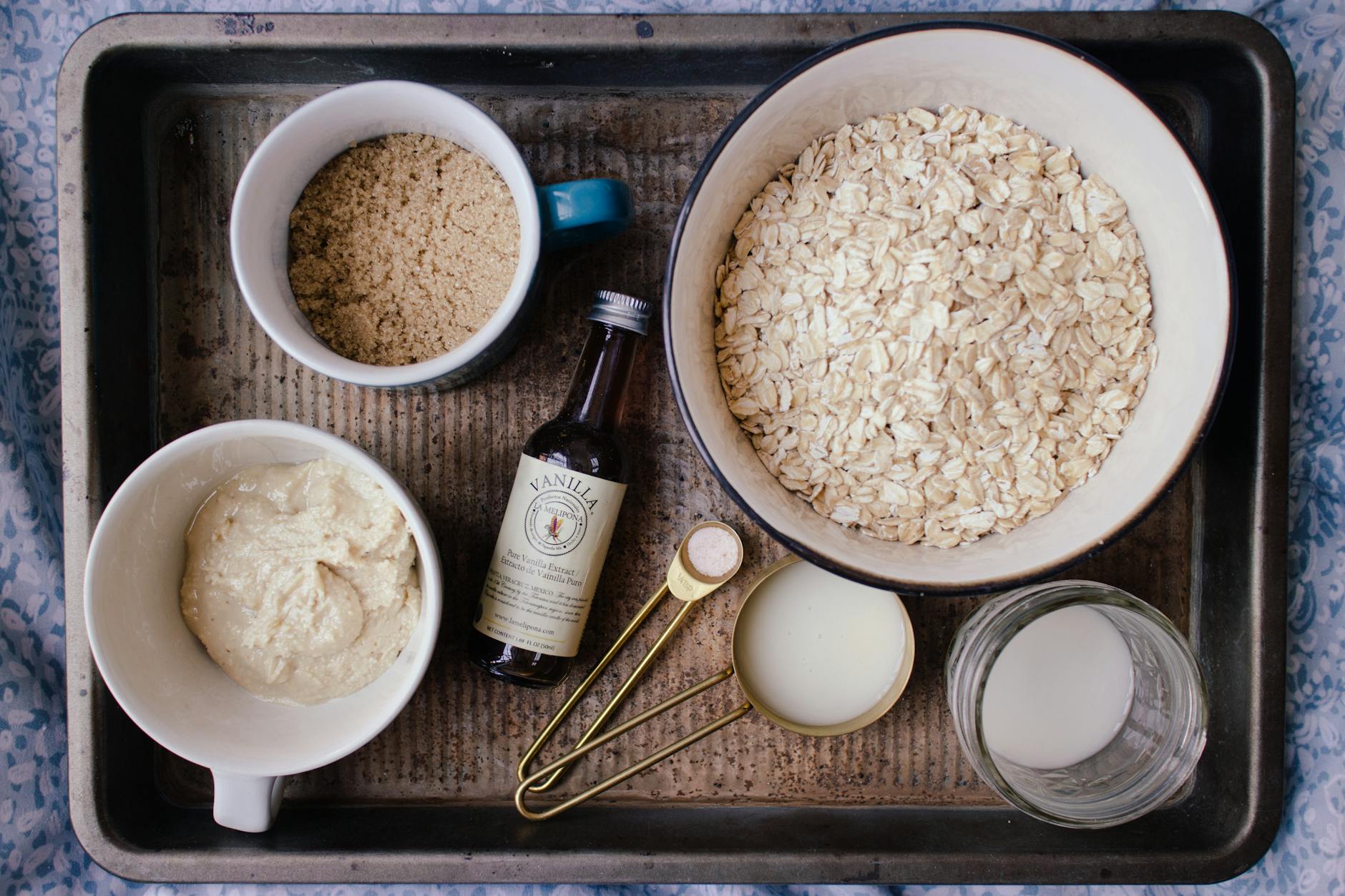
- Vanilla: Use vanilla bean paste instead of extract. The tiny black seeds look beautiful and provide a much deeper "creamy" aroma that mimics dairy.
- Coconut Water: For a natural sweetness, replace half of the plain water with coconut water.
Dairy-Free Toppings for Natural Creaminess
Toppings aren't just for decoration; they are functional ingredients that can change the texture of your bowl. If you're looking for healthy oatmeal topping ideas, focus on fats and fibers that emulsify well.
The Nut Butter Swirl: Almond, Peanut, and Cashew
Nut butters are the ultimate dairy substitute. A tablespoon of creamy almond or cashew butter stirred into the oats at the very end of cooking creates an instant emulsion. The fats in the nut butter bind with the oat starches, resulting in a texture that is indistinguishable from oats made with whole milk. For weight loss goals, check out our guide on high protein meals for weight loss to see how to balance these fats with protein powders.
Mashed Banana: A Practical Thickener
The "Banana Custard" Water Oats
The Secret Technique:
Follow the standard 1:2.5 ratio. At the 5-minute mark of simmering, whisk in 1/2 mashed banana and 1 tsp of chia seeds. The chia seeds absorb 10x their weight in liquid, adding even more volume and "gel" to the texture. Finish with a splash of maple syrup and a pinch of cinnamon.
Common Mistakes When Making Oatmeal Without Milk
Mistake 1: Using Too Much Heat
I mentioned this earlier, but it bears repeating. High heat is the enemy of creaminess. It causes the water to evaporate before the starches have a chance to fully gelatinize. If your oats look dry but the grains are still hard, you’ve used too much heat. Solution: Add 1/4 cup of water, cover the pot with a lid, and let it sit off the heat for 5 minutes.
Mistake 2: Walking Away from the Stove
Oatmeal is not a "set it and forget it" food. Without the proteins in milk to stabilize the bubbles, water-based oats can foam up and boil over quickly. More importantly, you miss out on the agitation needed for creaminess. Solution: Stay by the stove, enjoy the aroma, and keep that wooden spoon moving.
Mistake 3: Forgetting the Resting Period
This is the most critical step. When you turn off the heat, the oats are still cooking. This is called "carry-over cooking." If you eat the oats the second they leave the flame, they will feel a bit watery. Solution: Cover the pot and let it rest for exactly 3 minutes before serving. This allows the starches to "set" and reach their maximum viscosity.
Meal Prep and Reheating: Keeping it Creamy
Many people think oatmeal without milk becomes a "brick" the next day. While oats do firm up as they cool, they are actually very easy to revive. If you're interested in more morning efficiency, see our breakfast meal prep ideas.
The Overnight Water-Oat Method
You can make "overnight oats" using water. Use a 1:1.5 ratio for a thicker result. Because the oats soak for 8+ hours, they soften completely without any heat. In the morning, you can eat them cold or warm them up. To maintain creaminess, add a dollop of dairy-free yogurt or a splash of fresh water before eating.
How to Reheat Without Ending up with a Brick
When reheating rolled oats in the microwave or on the stovetop, you must add liquid. The starches have tightened up in the fridge. For every cup of cooked oats, add 2-3 tablespoons of water. Stir halfway through the reheating process to redistribute the moisture. This "un-gelatinizes" the starches just enough to bring back that silky texture.
Microwave Method for Water-Based Oats
Instructions:
- Use a deep bowl to prevent boil-over.
- Combine 1/2 cup oats and 1 cup water.
- Microwave on 50% power for 3 minutes.
- Stir vigorously, then let sit for 2 minutes. The resting period is even more important in the microwave!
Frequently Asked Questions
Yes! It is lower in calories and saturated fats than oats made with whole milk. It also allows you to fully benefit from the soluble fiber (beta-glucan) which helps lower cholesterol and improve heart health.
Absolutely. Just remember to increase the water ratio to 1:3.5 and increase the cooking time to 25-30 minutes. Steel-cut oats made with water have a wonderful, chewy texture that is very satisfying.
Gluey oats are usually the result of over-stirring or using quick oats. If they become too gummy, stir in a handful of fresh berries or chopped nuts to add some texture and break up the starchiness.
Conclusion: Embrace the Water-Based Bowl
Mastering oatmeal without milk is a fundamental skill for any home cook. It’s a testament to the fact that simple ingredients, when treated with the right technique, can produce extraordinary results. By focusing on the 1:2.5 ratio, practicing the "cold start" method, and utilizing the power of agitation, you can create a creamy texture without dairy every single morning.
Don't be afraid to experiment with your oatmeal seasoning ideas. Whether it's a pinch of cardamom, a swirl of almond butter, or a handful of toasted walnuts, water-based oats provide the perfect, neutral canvas for your culinary creativity. Next time you find that empty milk carton, don't reach for the cereal box—reach for the saucepan and make the best bowl of porridge you've ever had.