Quick Answer
This guide explains to make a rich curry without coconut milk. From cashew cream to dairy free coconut free curry options, these practical swaps guarantee a creamy texture.
Practical note
For How to Make Creamy Curry Without Coconut Milk, this guide centers on Testing Note, Flavor Adjustment, Peanut Butter. Those are the checkpoints we would use first in a normal home kitchen before making a bigger change.
Decision table
| Situation | Likely cause or meaning | Best move |
|---|---|---|
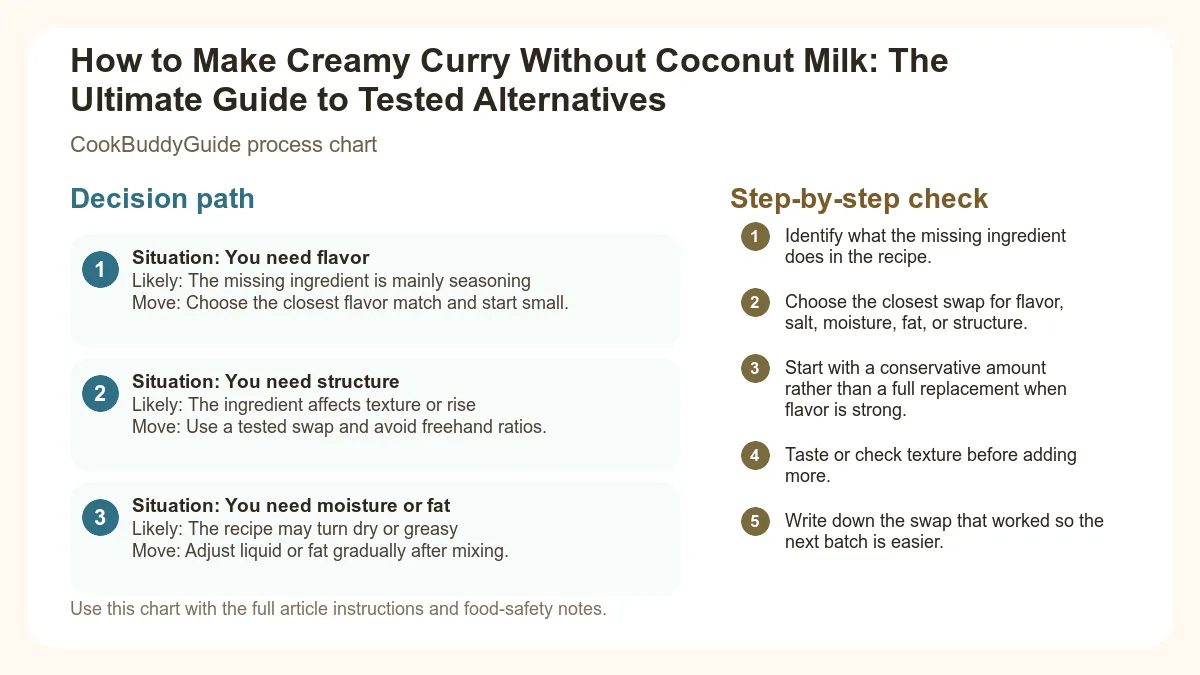
| You need flavor | The missing ingredient is mainly seasoning | Choose the closest flavor match and start small. |
| You need structure | The ingredient affects texture or rise | Use a practical swap and avoid freehand ratios. |
| You need moisture or fat | The recipe may turn dry or greasy | Adjust liquid or fat gradually after mixing. |
Step-by-step fix
- Identify what the missing ingredient does in the recipe.
- Choose the closest swap for flavor, salt, moisture, fat, or structure.
- Start with a conservative amount rather than a full replacement when flavor is strong.
- Taste or check texture before adding more.
- Write down the swap that worked so the next batch is easier.
Common mistakes
- Replacing a strong ingredient 1:1 before tasting.
- Choosing a flavor match when the recipe actually needs structure.
- Forgetting that salty swaps can change the whole dish.
- Adding extra liquid before the batter, dough, or sauce has time to hydrate.
Related topic hubs
It’s 6:15 PM on a Tuesday. You’ve already sautéed your onions, ginger, and garlic. The kitchen smells like a dream, and you’re reaching into the pantry for that trusty can of coconut milk to finish your Thai red curry—only to find an empty shelf. Or perhaps you’re cooking for a guest with a severe tree nut allergy, or you're simply trying to reduce the saturated fat in your diet. Whatever the reason, standing over a bubbling pot of spices without your primary creamy component can feel like a culinary disaster.
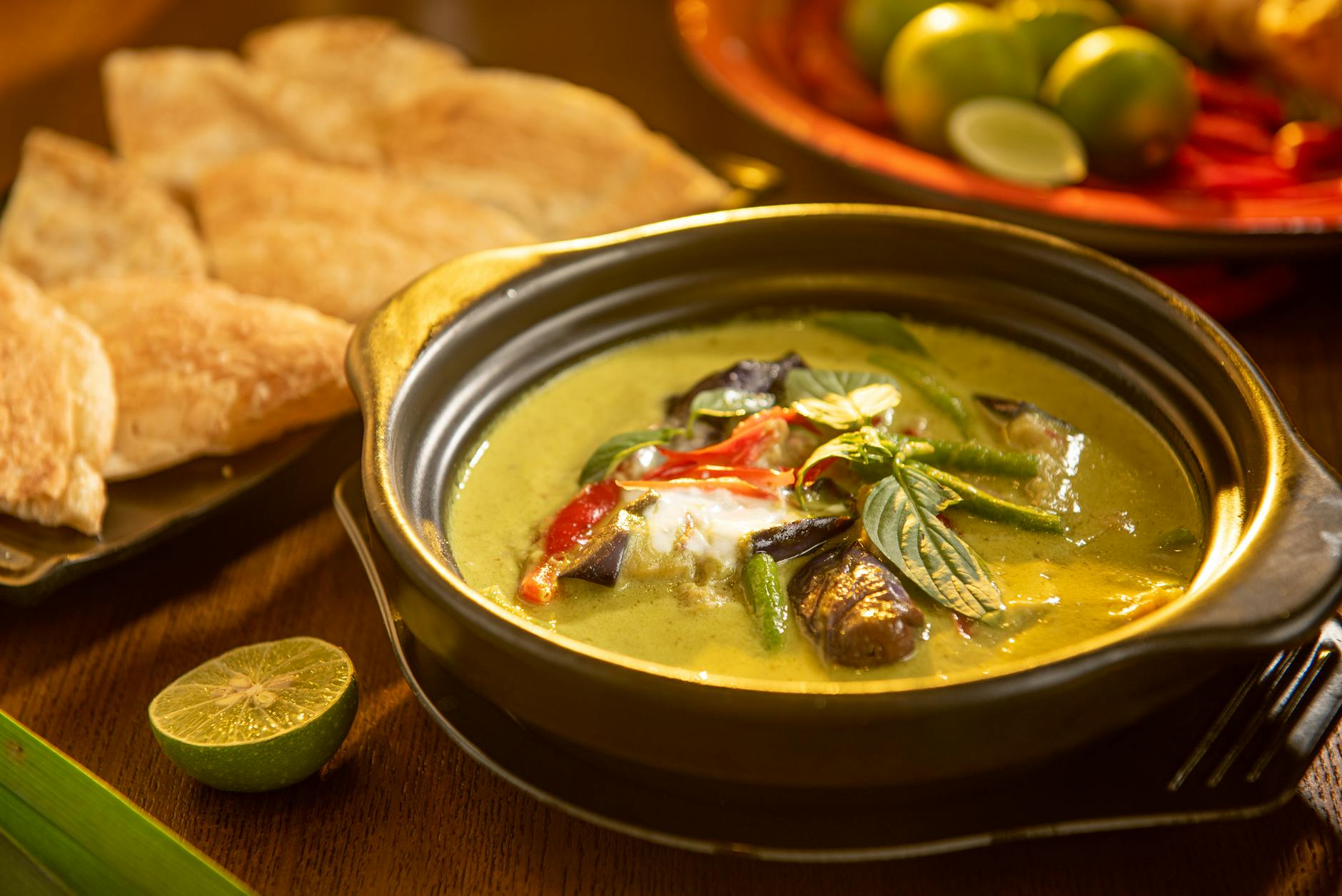
You can make a rich curry without coconut milk, but the best substitute depends on the dish. Full-fat yogurt suits many Indian-style curries, cashew cream provides a dairy-free body, and evaporated milk works when dairy is acceptable. Add yogurt off direct heat to reduce the chance of curdling.
- Why You Might Need a Curry Without Coconut Milk
- The Science of Creaminess: What Makes a Great Substitute?
- 1. Full-Fat Greek Yogurt: The Tangy Powerhouse
- 2. Cashew Cream: A Practical Dairy-Free Base
- 3. Heavy Cream: For Classic Restaurant Richness
- 4. Pureed Tomato and Onion: The Authentic 'Bhuna' Technique
- 5. Quick Pantry Hacks: Nut Butters and Starches
- Flavor Balancing: Adjusting Your Recipe
- Common Mistakes to Avoid
- Step-by-Step Recipe: Universal Creamy Curry Base
Why You Might Need a Curry Without Coconut Milk
Common Reasons: Allergies, Pantry Shortages, and Dietary Preferences
The most common reason for seeking an alternative is a coconut allergy. While coconut is technically a fruit, many people with tree nut allergies are advised to avoid it, making coconut allergy recipes a high priority for inclusive home cooking. Beyond health, there’s the simple reality of the "pantry gap." We’ve all been there—thinking we had a staple ingredient only to realize we used it for a smoothie three days ago.
The Role of Coconut Milk in Traditional Curry
Coconut milk contributes fat, liquid, mild sweetness, and its own flavor. A successful replacement should supply enough liquid and body for the sauce, while sweetness and fat can be adjusted separately when needed.
The Science of Creaminess: What Makes a Great Substitute?
Fat Content and Mouthfeel
Very low-fat substitutes can make a curry taste thin and may curdle more easily. Choose full-fat yogurt or add a modest amount of neutral oil when the recipe needs more body. Bloom ground spices in fat only as long as needed to make them fragrant; scorched spices will taste bitter.
Emulsification: Keeping the Sauce Smooth
A great thickening sauce isn't just thick; it’s emulsified. Emulsification is the process of combining two liquids that usually don't mix—like oil and water. Coconut milk is a natural emulsion. When we use alternatives like Greek yogurt or cashew cream, we have to be careful not to "break" the sauce. If you’ve ever seen a curry look curdled or oily on top with watery liquid underneath, that’s a failed emulsion. Understanding yogurt tempering and mechanical breakdown (blending) is the key to preventing this.
1. Full-Fat Greek Yogurt: The Tangy, Probiotic Powerhouse
Full-fat Greek yogurt adds body and noticeable tang, making it more suitable for many Indian-style curries than for a Thai curry where coconut flavor is central. Temper it with a spoonful of warm sauce and stir it in over low heat.
The Golden Rule: Stirring Off the Heat
Tempering Your Yogurt to Prevent Curdling
To ensure a silky-smooth result, you must practice tempering. Take about half a cup of your hot curry liquid and slowly whisk it into a bowl containing your room-temperature yogurt. This gradually raises the temperature of the yogurt without shocking the proteins. Once the yogurt mixture is warm and fluid, pour it back into the main pot. For more detailed science on this, preventing yogurt from curdling is a must-read for any serious home cook.
- Testing Note: Always use full-fat (5% or higher) yogurt. Non-fat yogurt lacks the stability to withstand even residual heat and will almost always break.
- Flavor Adjustment: Since yogurt is acidic, you may need to add a pinch more sugar or honey than the recipe calls for to mimic the natural sweetness of coconut.
2. Cashew Cream: The Best Dairy Free Coconut Free Curry Base
How to Make Smooth Cashew Cream from Scratch
To make a basic cashew cream, use a 1:1 ratio of raw cashews to water.
- Place 1 cup of raw, unsalted cashews in a bowl.
- Cover with boiling water and let sit for a cashew soak time of at least 15 minutes (though 2 hours is better for a standard blender).
- Drain and rinse the cashews.
- Place in a high-speed blender with 1 cup of fresh water and blend on high until completely smooth—no grit should remain.
Adjusting Consistency
For a thinner sauce, blend roughly 1 cup of soaked cashews with up to 1.5 cups of water. For a thicker Indian-style gravy, begin closer to a 1:1 ratio and add water as needed. A small pinch of sugar can replace some of coconut milk's mild sweetness, but it will not reproduce the coconut flavor.
3. Heavy Cream or Half-and-Half: For Classic Richness
If you aren't avoiding dairy, heavy whipping cream is the most direct substitute for the richness of coconut milk. This is the standard in many British-Indian restaurant kitchens. Heavy cream has a fat content of about 36%, which is actually higher than most canned coconut milks (which hover around 17-22%).
When to Add Dairy Cream
Unlike yogurt, heavy cream is quite stable, but it can still separate if boiled vigorously for too long. Consider adding it during the last 5 minutes of simmering. It mellows out the heat of the curry paste beautifully. If you're interested in the nuances of this ingredient, cooking with heavy cream provides excellent insight into its fat stability.
Pro Tip: If you find the mouthfeel too heavy, add a squeeze of fresh lime juice right before serving. The acid cuts through the dairy fat and brightens the entire dish, making it feel less "weighted."
4. Pureed Tomato and Onion: The Authentic 'Bhuna' Technique
Sometimes, you don't need an "additive" like cream or milk at all. In traditional Indian cooking, many of the richest-tasting sauces are actually made by the mechanical breakdown of aromatics. This is often called the "Bhuna" style, where onions, ginger, garlic, and tomatoes are cooked down until they form a thick, jammy paste.
The Secret of Caramelized Onion Paste
To achieve this, you need to cook your onions longer than you think—at least 15-20 minutes until they are deep golden brown. Then, you blend these caramelized onions with tomato puree base. The result is a thick, naturally sweet, and savory sauce that clings to meat and vegetables. For a masterclass in this method, consider the traditional Indian curry base guide by Serious Eats. It changed the way I think about sauce construction.
This method is excellent for those looking for a lighter option, as the "creaminess" comes from the fiber of the vegetables rather than added fats. To make it feel even more indulgent, Add a tablespoon of ghee or avocado oil at the end to carry the spice flavors.
5. Quick Pantry Hacks: Nut Butters and Starches
When you're really in a pinch, you can look to other pantry staples to save your curry without coconut milk. These are especially useful if you're following 5-ingredient dinner recipes where you need one item to do the work of three.
- Peanut Butter: Adding 1-2 tablespoons of smooth peanut butter (or almond butter) to a curry adds instant fat and thickness. This works exceptionally well for Massaman-style curries or African-inspired peanut stews. It provides a nutty depth that complements ginger and chili perfectly.
- Mashed potato: If the curry is too watery, mash a small piece of cooked potato with a little sauce and stir it back into the pot. Its starch thickens the sauce, although it can make the texture slightly heavier.
- Silken Tofu: For a high-protein, vegan substitute, blend half a block of silken tofu until completely liquid. It has a very neutral flavor and a texture remarkably similar to heavy cream.
Flavor Balancing: Adjusting Your Recipe for Each Swap
Replacing coconut milk isn't just about texture; it's about flavor. Coconut milk is naturally sweet and slightly floral. Most substitutes will require a little "doctoring" to get the balance right.
Managing Acidity and Sweetness
If you use yogurt, the sauce will be more acidic. If you use cashew cream, it will be more neutral. If you use heavy cream, it will be more "milky." Use the following table to adjust your seasonings:
| Substitute Used | What’s Missing? | The Fix |
|---|---|---|
| Greek Yogurt | Sweetness | Add 1 tsp Honey or Brown Sugar |
| Cashew Cream | Floral Notes | Add a drop of almond extract or lime zest |
| Heavy Cream | Acidity | Add 1 tbsp Lime Juice or Vinegar |
| Tomato/Onion Base | Fat/Mouthfeel | Add 1 tbsp Ghee or Coconut Oil |
Common Mistakes When Making Curry Without Coconut Milk
Three mistakes are especially likely to produce a thin, grainy, or unbalanced sauce:
- The Curdling Nightmare: As mentioned, adding cold dairy to boiling liquid is the fastest way to ruin a curry. Always temper your dairy or add it off-heat.
- The 'Watery Curry' Syndrome: Coconut milk has a lot of solids. If you replace it with just regular milk or broth, your curry will be thin. You must use a thickener like pureed cashews, a cornstarch slurry, or reduced vegetable purees to get the right body. This is a common issue when adapting beginner friendly instant pot recipes, as the steam doesn't escape to reduce the sauce naturally.
- Overpowering the Spices: Some substitutes, like peanut butter or strong Greek yogurt, can overshadow the delicate spices in your curry paste. Start with small amounts of your substitute and taste as you go.
Master Recipe: Universal Creamy Curry Base (Coconut-Free)
Ingredients
- 2 tbsp oil or ghee
- 1 large onion, finely diced
- 3 cloves garlic, minced
- 1 tbsp fresh ginger, grated
- 2 tbsp curry paste (Red, Green, or Yellow) OR 2 tbsp curry powder
- 1 lb protein (chicken, chickpeas, or tofu)
- 1 cup vegetable or chicken broth
- Choose your Creamy Component:
- 1 cup Full-fat Greek Yogurt (tempered)
- OR 1 cup Cashew Cream (1:1 ratio)
- OR 3/4 cup Heavy Cream
- 1 tsp sugar or honey
- Salt to taste
- Fresh cilantro and lime wedges for serving
Instructions
- Sauté Aromatics: Heat oil in a large skillet over medium heat. Add onions and cook until translucent (about 5-7 minutes). Add garlic and ginger and cook for another 1 minute until fragrant.
- Bloom Spices: Stir in the curry paste or powder. Cook for 2 minutes, stirring constantly. This "blooms" the spices in the oil, releasing their full flavor.
- Brown Protein: Add your chicken, tofu, or chickpeas. Stir to coat in the spice mixture and cook for 3-4 minutes.
- Simmer: Pour in the broth. Bring to a gentle boil, then reduce heat to low. Cover and simmer for 15-20 minutes until the protein is cooked through.
- Add Creaminess: If using Cashew Cream or Heavy Cream: Stir in and simmer uncovered for 5 minutes until thickened. If using Yogurt: Remove the pan from heat. Temper the yogurt with a ladle of hot sauce, then stir the mixture back into the pan.
- Balance and Serve: Stir in the sugar/honey and salt. Taste and adjust. If it needs more "zing," add lime juice. Serve over basmati rice.
Frequently Asked Questions
Regular cow's milk is much thinner than coconut milk. If you use it, you must add a thickening agent like a cornstarch slurry (1 tbsp cornstarch mixed with 1 tbsp cold water) to prevent the curry from being watery.
Yes! The pureed tomato and onion "Bhuna" technique is naturally nut-free and dairy-free. Alternatively, blended silken tofu or a "potato cream" (pureed cooked potatoes) works perfectly for nut-free curry needs.
For Thai flavors, cashew cream is the best substitute because its neutral flavor doesn't clash with lemongrass and galangal. Avoid yogurt for Thai curries as the tanginess can conflict with the traditional flavor profile.
Conclusion: Finding Your New Favorite Base
For a curry without coconut milk, select the substitute by cuisine and dietary need: yogurt for tang and dairy richness, cashew cream for neutral dairy-free body, or evaporated milk for a smooth pantry option. Add the replacement gradually, keep the heat controlled, and adjust sweetness and acidity at the end.
Remember the golden rules: prioritize fat for flavor, temper your dairy to prevent curdling, and always balance your acidity and sweetness at the end. With these tools in your culinary arsenal, you're ready to create a world-class curry any night of the week. Happy cooking!