Quick Answer
The right substitute for coconut milk depends on what that ingredient contributes: flavor, salt, acidity, fat, moisture, or structure. Use the comparison below to choose the closest match and adjust the amount for your recipe.
Practical note
For coconut milk in every recipe recipes substitutes, we judge swaps by job first: flavor, salt, acid, fat, moisture, or structure. That keeps a substitution from fixing one problem while creating another.
Decision table
| Situation | Likely cause or meaning | Best move |
|---|---|---|
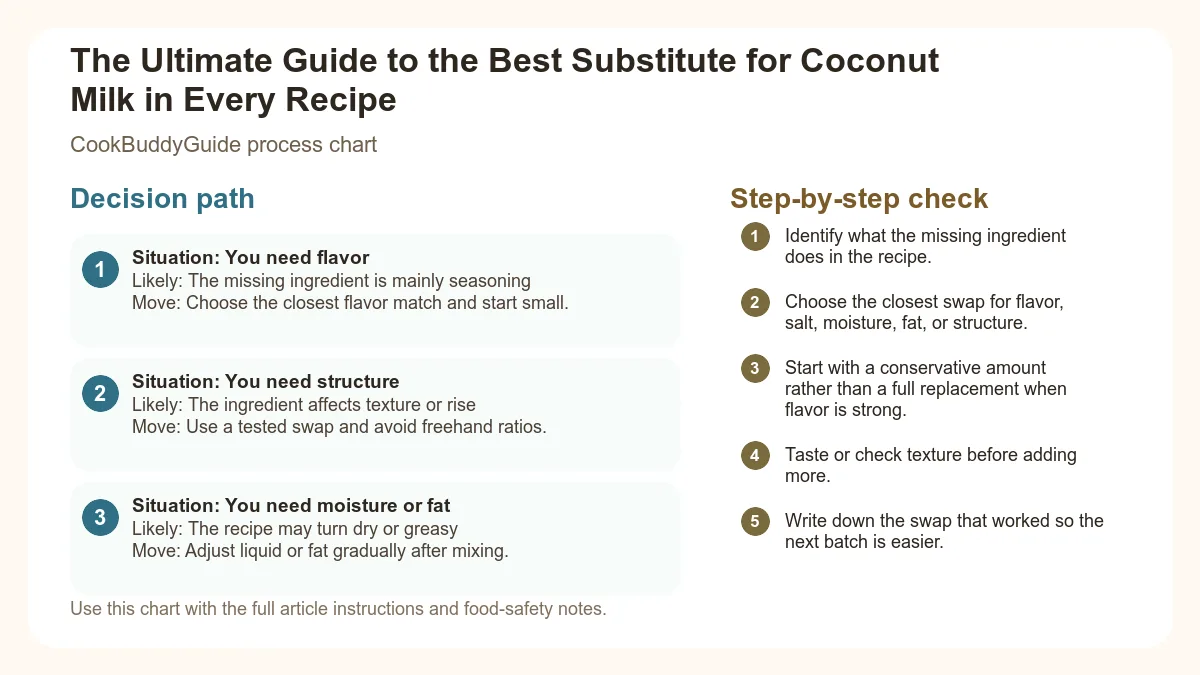
| You need flavor | The missing ingredient is mainly seasoning | Choose the closest flavor match and start small. |
| You need structure | The ingredient affects texture or rise | Use a practical swap and avoid freehand ratios. |
| You need moisture or fat | The recipe may turn dry or greasy | Adjust liquid or fat gradually after mixing. |
Step-by-step fix
- Identify what the missing ingredient does in the recipe.
- Choose the closest swap for flavor, salt, moisture, fat, or structure.
- Start with a conservative amount rather than a full replacement when flavor is strong.
- Taste or check texture before adding more.
- Write down the swap that worked so the next batch is easier.
Common mistakes
- Replacing a strong ingredient 1:1 before tasting.
- Choosing a flavor match when the recipe actually needs structure.
- Forgetting that salty swaps can change the whole dish.
- Adding extra liquid before the batter, dough, or sauce has time to hydrate.
Related topic hubs
Table of Contents
- Why You Might Need a Coconut Milk Replacement
- Understanding Coconut Milk: Fat Content and Texture
- Best Dairy-Based Substitutes for Coconut Milk
- Best Plant-Based and Vegan Substitutes
- The Best Substitute for Coconut Milk in Curry
- Replacing Coconut Milk in Baking and Desserts
- Smoothies, Soups, and Coffee: Light Replacements
- CookBuddy Testing Lab: Our Top 3 Results
- How to Make Emergency DIY Coconut Milk
- Summary Table: Quick Ratio Reference Guide
Why You Might Need a Coconut Milk Replacement
There are three primary reasons you might be searching for a substitute for coconut milk. First, and most common, is the "Oops, I'm out" scenario. Coconut milk is a pantry staple, but it’s easy to forget to restock. Second, dietary restrictions play a huge role. While coconut milk is naturally lactose-free and vegan, some people have tree nut allergies or simply need to monitor their intake of medium-chain triglycerides and saturated fats.
The third reason is flavor preference. Let’s be honest: coconut has a very distinct, bold flavor profile. If you are cooking for someone who dislikes that tropical sweetness, you need an alternative that provides the same creamy culinary applications without the coconut punch. When choosing your substitute, you must first identify what role the coconut milk is playing. Is it providing viscosity (thickness), acting as a cooking liquid for grains, or serving as an emulsification agent for spicy oils? Understanding this "why" is the secret to a successful swap.
Understanding Coconut Milk: Fat Content and Texture
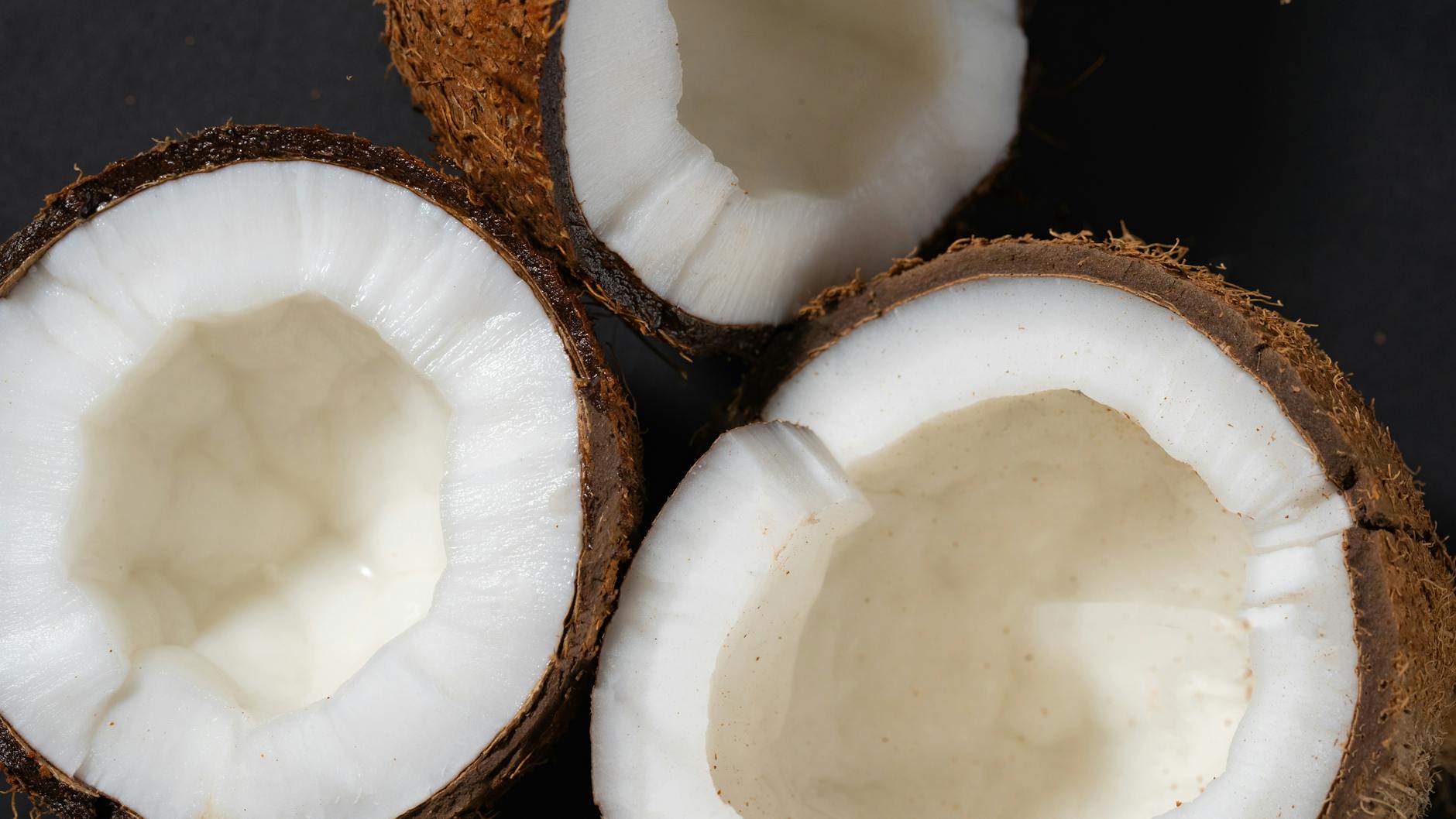
Before we swap it out, we have to understand what we are replacing. Canned coconut milk is not the same as the coconut milk you find in a carton in the dairy aisle. Canned versions are a stable emulsion of coconut meat and water. According to the nutritional profile of coconut milk provided by the USDA, full-fat versions can contain up to 22% fat, which is what gives it that luxurious mouthfeel.
Canned vs. Carton: What's the Difference?
Full-Fat vs. Lite Coconut Milk
Lite coconut milk is essentially full-fat milk that has been diluted with water. If your recipe calls for lite coconut milk, you have much more flexibility. You can use nut milks like almond or cashew milk without losing too much "body." However, for recipes requiring full-fat milk, you’ll need something heavier, like heavy whipping cream or a concentrated coconut cream.
Best Dairy-Based Substitutes for Coconut Milk
If you aren't avoiding dairy, cow’s milk products are often the most reliable substitutes because they behave predictably under heat.
Heavy Cream: The Gold Standard for Richness
Evaporated Milk: The Best Pantry Staple Swap
If you’re looking for a substitute for coconut milk that you likely already have in the back of your cupboard, evaporated milk is it. There are many benefits of evaporated milk, specifically its "cooked" flavor and reduced water content. It provides a similar density to coconut milk and works beautifully in slow-cooker recipes like Crockpot Freezer Meals where long simmer times are involved.
Whole Milk and Coconut Extract
If you only have full-fat milk (whole milk), it will be too thin on its own. To fix this, consider whisking 1 teaspoon of cornstarch into 1 cup of milk and adding a drop of coconut extract. This gives you the coconut flavor profile and the necessary thickening agent properties required for puddings or light curries.
Greek Yogurt and Sour Cream
Best Plant-Based and Vegan Substitutes
For those following a vegan diet or managing a lactose-free lifestyle, plant-based milk options have come a long way. But not all are created equal.
Cashew Cream: The Professional Chef's Choice
How to Make Quick Cashew Cream
This is the ultimate reliable substitute for coconut milk in savory dishes.
- 1 cup raw, unsalted cashews
- 1/2 cup to 3/4 cup water (depending on desired thickness)
- Pinch of salt
Method: Soak cashews in hot water for 2 hours. Drain and rinse. Place in a high-speed blender with 1/2 cup fresh water. Blend on high until completely smooth—about 2 minutes. If it's too thick, add water one tablespoon at a time until it reaches the consistency of canned coconut milk.
Oat Milk: The Best Nut-Free, Dairy-Free Option
Silken Tofu: The High-Protein Thickener
The Best Substitute for Coconut Milk in Curry
Curry is perhaps the hardest dish to find a substitute for because coconut milk does two things: it provides fat to carry the spices and it balances the heat. Thai cuisine specifically relies on the saturated fat in coconut to create that signature red or green oil slick on top of the curry.
The Nut Butter Hack: If you are using a thinner milk (like almond or soy), whisk in a tablespoon of almond butter or peanut butter. This adds the necessary lipids to carry the fat-soluble flavors of the curry paste. It won't taste exactly like coconut, but it will have the same satisfying "mouthfeel."
Replacing Coconut Milk in Baking and Desserts
In baking, coconut milk provides moisture, fat, and sugar. It also contributes to the Maillard reaction, which is the browning of the crust. If you swap it for something too lean, your cakes will be dry and pale.
- For Cakes and Muffins: Use whole milk or buttermilk. Buttermilk is excellent because its acidity creates a very tender crumb, much like coconut milk does. Use a 1:1 ratio.
- For Custards and Puddings: Use heavy whipping cream. If the recipe relies on the coconut milk to "set" (like a panna cotta), you may need to add a tiny bit more gelatin or cornstarch if using a thinner alternative.
- For Vegan Baking: Soy milk is actually better than almond milk here because it has a higher protein content, which helps with the structure of the baked good.
Smoothies, Soups, and Coffee: Light Replacements
In these applications, the coconut milk replacement doesn't need to be as heavy. You are mostly looking for a cooking liquid that adds a bit of creaminess.
Smoothies: Pureed silken tofu or a scoop of Greek yogurt works best. They provide the creaminess and a boost of protein that coconut milk lacks. If you miss the flavor, add a tablespoon of shredded coconut to the blender.
Soups: For a creamy vegetable soup (like pumpkin or butternut squash), rice milk or oat milk is ideal. Rice milk is quite sweet, which complements root vegetables perfectly. However, it is very thin, so ensure your soup has enough pureed vegetables to maintain viscosity.
Coffee: Half-and-half is the perfect 1:1 swap for coconut milk in coffee. It has enough fat to cut through the bitterness of the beans without being as heavy as heavy whipping cream.
CookBuddy Testing Lab: Our Top 3 Results
Test 1: Red Thai Curry with Cashew Cream
The Result: Visually, the curry was slightly more orange than usual (coconut milk provides a stark white base). However, the texture was incredible. It was actually richer than the canned coconut milk version. The Verdict: 9/10. The only thing missing was the floral coconut aroma.
Test 2: Coconut Cake with Evaporated Milk
The Result: I used evaporated milk plus 1/2 teaspoon of coconut extract. The cake was incredibly moist, perhaps even more so than the original. The browning on the edges was perfect. The Verdict: 10/10. This is a flawless substitute for coconut milk in baking.
Test 3: Creamy Pumpkin Soup with Oat Milk
The Result: The oat milk integrated perfectly. Because pumpkin is already thick, the "thinness" of the oat milk wasn't an issue. It tasted clean and allowed the pumpkin flavor to shine. The Verdict: 8/10. A great healthy, plant-based milk option.
How to Make Emergency DIY Coconut Milk
If you have a bag of shredded coconut in your baking drawer, you can make your own canned coconut milk substitute in about 5 minutes. This is a lifesaver when you absolutely need that specific flavor profile.
The 5-Minute Blender Coconut Milk
Use this when you need the real deal but the stores are closed.
- 1 cup unsweetened shredded coconut
- 2 cups very hot (not boiling) water
Method: Place the coconut and hot water in a blender. Let it sit for 60 seconds to soften the coconut. Blend on high for 2 minutes until the liquid is milky and white. Strain through a fine-mesh sieve or cheesecloth, squeezing hard to extract all the liquid. The resulting liquid will have the viscosity of "lite" coconut milk. For "full-fat," use only 1 cup of water.
Summary Table: Quick Ratio Reference Guide
Use this table as a quick reference when you're in the middle of cooking and need a substitute for coconut milk fast.
| Substitute | Ratio | Best For... | Notes |
|---|---|---|---|
| Heavy Whipping Cream | 1:1 | Curries, Rich Soups | Highest fat match; very stable. |
| Evaporated Milk | 1:1 | Baking, Stews | Great pantry staple; slightly caramelized flavor. |
| Cashew Cream | 1:1 | Vegan Curries | Best dairy-free richness; requires blending. |
| Oat Milk | 1:1 | Smoothies, Light Soups | Good nut-free plant-based option. |
| Greek Yogurt | 1:2 (dilute) | Thickening Sauces | Add at the end; do not boil. |
| Silken Tofu (Blended) | 1:1 | Protein Smoothies | Neutral flavor; very thick. |
Frequently Asked Questions
Yes, but it will be much thinner. Consider adding a thickening agent like a teaspoon of cornstarch or a tablespoon of almond butter to help it mimic the viscosity of coconut milk.
Yes. Coconut milk contains high levels of saturated fat, which coats the tongue and mellows the heat of chili peppers. If you use a lower-fat substitute like rice milk, the dish will likely taste much spicier.
Coconut cream is even thicker than milk. The best substitute is the solid part of a chilled can of heavy cream or a very thick cashew cream made with minimal water.
Final Thoughts from the Kitchen
Ready to put these substitutes to work? Check out our Instant Pot Recipes for Beginners for more easy dinner inspiration, or prep ahead with our Crockpot Freezer Meals guide.