Quick Answer
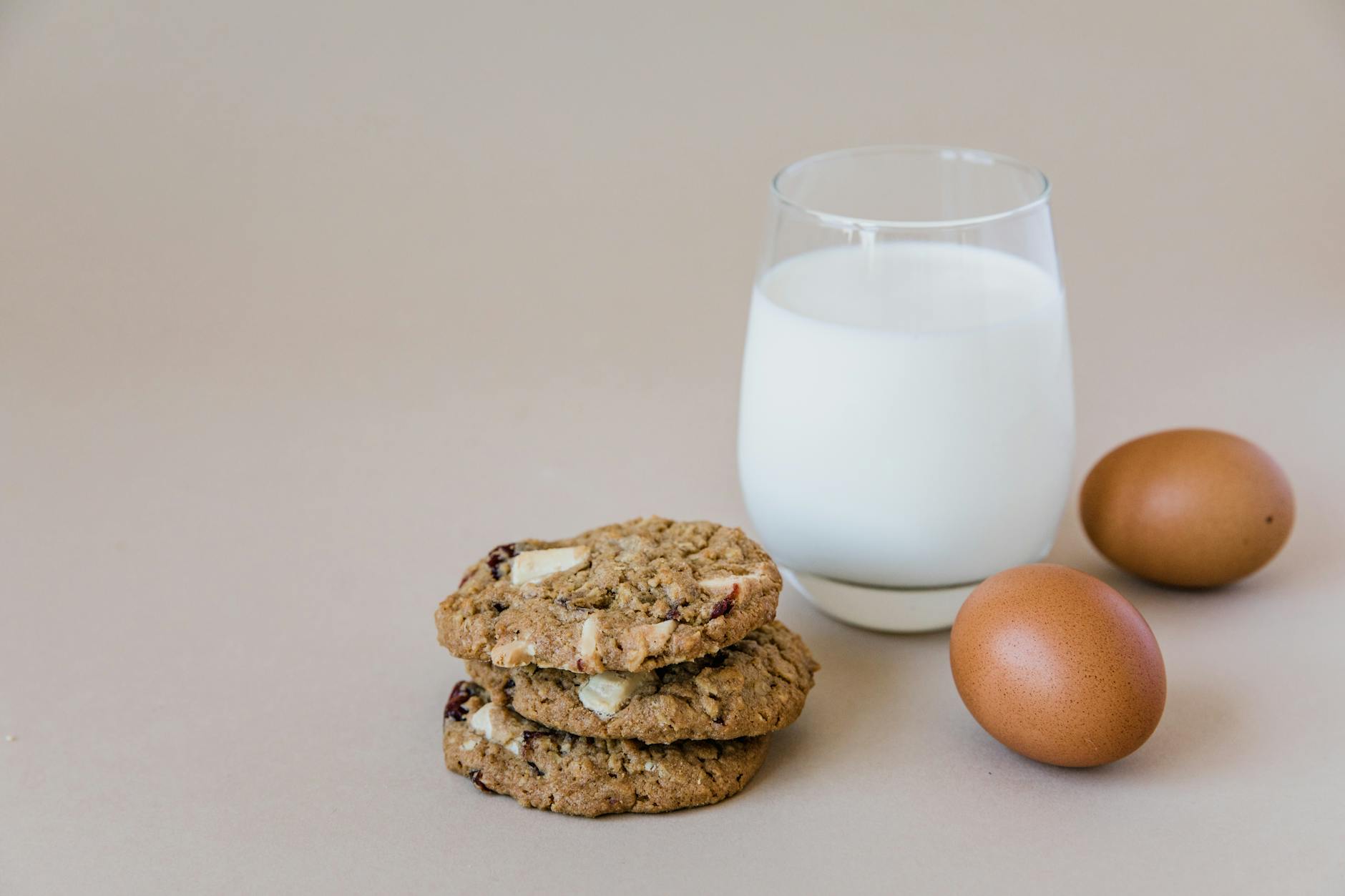
This guide covers the best easy oatmeal cookie recipe for soft chewy oatmeal cookies. It also explains practical tips on oat types, butter temp, and chilling for perfect bakery results.
Practical note
For A Practical Easy Oatmeal Cookie Recipe, this guide centers on Unsalted butter, Brown sugar, Vanilla extract. Those are the checkpoints we would use first in a normal home kitchen before making a bigger change.
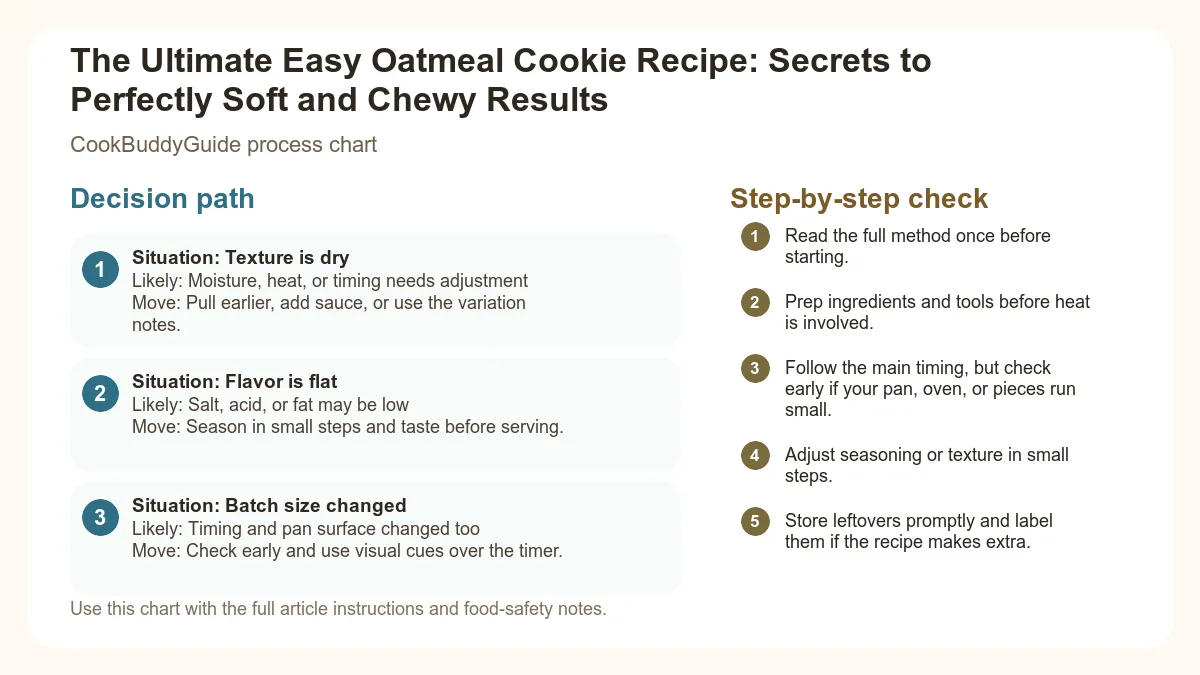
Decision table
| Situation | Likely cause or meaning | Best move |
|---|---|---|
| Texture is dry | Moisture, heat, or timing needs adjustment | Pull earlier, add sauce, or use the variation notes. |
| Flavor is flat | Salt, acid, or fat may be low | Season in small steps and taste before serving. |
| Batch size changed | Timing and pan surface changed too | Check early and use visual cues over the timer. |
Step-by-step fix
- Read the full method once before starting.
- Prep ingredients and tools before heat is involved.
- Follow the main timing, but check early if your pan, oven, or pieces run small.
- Adjust seasoning or texture in small steps.
- Store leftovers promptly and label them if the recipe makes extra.
Common mistakes
- Changing the recipe before trying the base method once.
- Measuring casually when texture depends on ratios.
- Waiting until the end to fix seasoning.
- Ignoring carryover heat or resting time.
Related topic hubs
Table of Contents
- Why This is the Only Easy Oatmeal Cookie Recipe You Need
- The Science of Soft Chewy Oatmeal Cookies
- Old-Fashioned vs. Quick Oats: Which is Best?
- Essential Ingredients and Equipment
- Step-by-Step Instructions for Success
- The Secret Step: Why You Must Chill the Dough
- Variations: Raisins, Chocolate Chips, and Beyond
- Baking and Cooling for Maximum Softness
- Troubleshooting Common Oatmeal Cookie Mistakes
- Storage Tips: Keeping Cookies Soft for Days
Why This is the Only Easy Oatmeal Cookie Recipe You Need
The Quest for the Perfect Texture
practical method notes: Our Practical notes
The Science of Soft Chewy Oatmeal Cookies
The Role of Brown Sugar and Molasses
Butter Temperature: Softened vs. Melted
Why Flour Ratio Matters
Oatmeal cookies are unique because they have two "bulking" agents: All-purpose flour and Rolled oats. If you use too much flour, the cookie becomes "cakey." If you use too little, it won't hold its shape. My formula uses just enough flour to provide a gluten framework, letting the oats provide the bulk of the texture. This ensures the cookie feels like a sweet treat rather than a muffin top.
Old-Fashioned vs. Quick Oats: Which is Best?
Texture Comparison: Hearty vs. Delicate
This is the debate that divides baking households. Rolled oats (also known as old-fashioned oats) are steamed and flattened, preserving their shape during baking. They provide a rustic, hearty "chew" that defines a classic oatmeal cookie. Quick oats, however, are rolled thinner and chopped into smaller pieces. They disappear into the dough, creating a more uniform, delicate, and softer bite. There are significant health benefits of whole grain oats regardless of the cut, but for texture, the choice is vital.
Can You Substitute One for the Other?
In a pinch, yes. However, if you substitute quick oats for old-fashioned oats in this easy oatmeal cookie recipe, your cookies will be slightly drier because quick oats absorb moisture faster. Pro Tip: Often, pulse half of my old-fashioned oats in a blender for 3 seconds. This "hybrid" method gives you the structural integrity of rolled oats with the softness of quick oats. You can read more about the structural differences between rolled and quick oats to see which fits your preference.
Why We Avoid Steel-Cut Oats
Essential Ingredients and Equipment
The Pantry Staples
To make these homemade cookies, you likely already have everything you need. Here is the breakdown of the "Must-Haves":
- Unsalted butter: This allows you to control the salt content. Ensure it is at room temperature butter (65°F).
- Brown sugar: Light or dark works, but dark will provide a deeper molasses flavor.
- Vanilla extract: Use pure vanilla, not imitation, for the best floral notes.
- Cinnamon: This is the soul of the oatmeal cookie. Use a fresh jar for maximum impact.
- Baking soda: Essential for browning and lift.
The Best Baking Sheets for Even Heating
Step-by-Step Instructions for Success
The Master Easy Oatmeal Cookie Recipe
This recipe yields approximately 24 cookies using a standard cookie scoop.
Ingredients:- 1 cup (226g) Unsalted butter, softened to 65°F
- 1 cup (200g) Light brown sugar, packed
- 1/2 cup (100g) Granulated sugar
- 2 large eggs, room temperature
- 1 tablespoon Vanilla extract
- 1 1/2 cups (190g) All-purpose flour
- 1 teaspoon Baking soda
- 1 teaspoon Ground Cinnamon
- 1/2 teaspoon Kosher salt
- 3 cups (270g) Rolled oats (Old-fashioned)
- Cream the Butter and Sugars: In a large bowl or stand mixer, beat the butter, brown sugar, and white sugar for exactly 3 minutes. The mixture should look pale and fluffy. This is where you build the chewy texture.
- Add Wet Ingredients: Add the eggs one at a time, beating well after each addition. Scrape down the bowl, then stir in the vanilla.
- Whisk Dry Ingredients: In a separate bowl, whisk the flour, baking soda, cinnamon, and salt.
- Combine: Gradually add the dry ingredients to the wet ingredients on low speed. Do not overmix! Stop as soon as the last streak of flour disappears.
- Fold in Oats: Use a sturdy spatula to fold in the Rolled oats by hand.
- Chill: Cover the cookie dough and refrigerate for at least 30 minutes (see why below).
- Bake: Preheat oven to 350°F (175°C). Use a #40 cookie scoop to place mounds 2 inches apart on a baking sheet lined with parchment paper.
- Cool: Bake for 10-12 minutes until edges are golden brown but centers still look slightly soft. Let rest on the pan for 5 minutes before moving to a wire cooling rack.
Creaming for Success
Portioning with a Cookie Scoop
For polished homemade cookies, stop using two spoons to drop dough. A #40 cookie scoop (about 1.5 to 2 tablespoons) ensures every cookie is the same size. This isn't just about aesthetics; it’s about even baking. If you have different sizes on one sheet, the small ones will burn while the large ones remain raw.
The Secret Step: Why You Must Chill the Dough
Hydrating the Oats
Oats are like little sponges. If you bake the dough immediately, the oats don't have time to absorb the moisture from the eggs and butter. This results in a "leaky" cookie where the fat runs out before the structure sets. Chilling the dough for even 30 minutes allows the starches in the flour and oats to hydrate. This is the difference between a good cookie and a soft chewy oatmeal cookie that people will beg you for. King Arthur Baking has an excellent article on the benefits of chilling cookie dough that Consider reading.
Preventing Excessive Spread
Variations: Raisins, Chocolate Chips, and Beyond
The Classic Oatmeal Raisin
If you are a traditionalist, you probably want raisins. The Pro Secret: Soak your raisins in warm water or apple juice for 10 minutes, then pat them dry before adding them to the dough. This prevents the raisins from sucking moisture out of the cookie, ensuring they stay plump and the cookie stays soft. These are also great toddler-friendly treats if you reduce the sugar slightly!
The Decadent Chocolate Chip Version
For those who find raisins controversial, chocolate chips are the answer. Consider using dark chocolate chunks (60% cacao or higher). The bitterness of the dark chocolate balances the sweetness of the brown sugar perfectly. Add 1 cup of chips or chunks during the same step you add the oats.
Nutty Additions and Salty Toppings
Baking and Cooling for Maximum Softness
The 'Under-Baking' Rule
If an oatmeal cookie looks fully baked in the oven, it is already overbaked. Cookies continue to cook on the hot baking sheet for several minutes after you pull them out. This is called "carry-over cooking." You want to remove them when the golden brown edges are set, but the center still looks a bit "wet" or underdone. This is the ultimate secret to soft chewy oatmeal cookies.
The Wire Cooling Rack
Don't leave the cookies on the hot pan for more than 5 minutes. If you do, the bottoms will become hard. Transfer them to a wire cooling rack. This allows air to circulate around the entire cookie, preventing the bottom from steaming and becoming soggy, while ensuring the edges stay just crisp enough.
Troubleshooting Common Oatmeal Cookie Mistakes
This usually happens if your butter was too warm or if you skipped the chilling step. It can also happen if your Baking soda is expired. To test your soda, drop a pinch into a spoonful of vinegar; if it doesn't fizz violently, throw it away.
You likely over-measured the flour. When measuring flour, do not scoop the measuring cup directly into the bag. This packs the flour down, and you can end up with 20-30% more than the recipe calls for. Instead, use the "spoon and level" method: spoon the flour into the cup and level it off with a knife.
Over-mixing is the culprit here. Once you add the flour, you start developing gluten. A little gluten is good for structure, but too much makes a cookie tough. Mix only until the flour is incorporated.
Storage Tips: Keeping Cookies Soft for Days
The Airtight Container Method
Once the cookies are completely cool, move them to an airtight container. If you leave them out on a plate, the air will pull the moisture out, turning your sweet treat into a rock overnight. Properly stored, these cookies will stay soft for up to 5 days at room temperature.
The Bread Slice Trick
This is an old-school baker's trick that actually works. If your cookies start to get a little firm, place a single slice of plain white bread into the airtight container with them. The cookies will actually absorb the moisture from the bread. By the next morning, the bread will be hard, and your cookies will be soft again!
Freezing Dough for Future Cravings
You don't have to bake the whole batch at once. Often, scoop the cookie dough into balls, freeze them on a tray for an hour, and then toss the frozen balls into a freezer bag. When you want a fresh cookie, just pop a few out and bake them from frozen—just add 2 minutes to the baking time. It’s the ultimate easy oatmeal cookie recipe hack for busy households.
Conclusion: Your Journey to Oatmeal Cookie Perfection
Mastering the easy oatmeal cookie recipe is a rite of passage for any home cook. By focusing on the quality of your Rolled oats, the temperature of your Unsalted butter, and the patience of the chilling process, you can create a cookie that rivals any high-end bakery. Remember, baking is a science, but it’s also an art. Don't be afraid to experiment with different mix-ins or to adjust the baking time by a minute or two to find your personal "perfect" level of chewiness.