 CookBuddyGuide
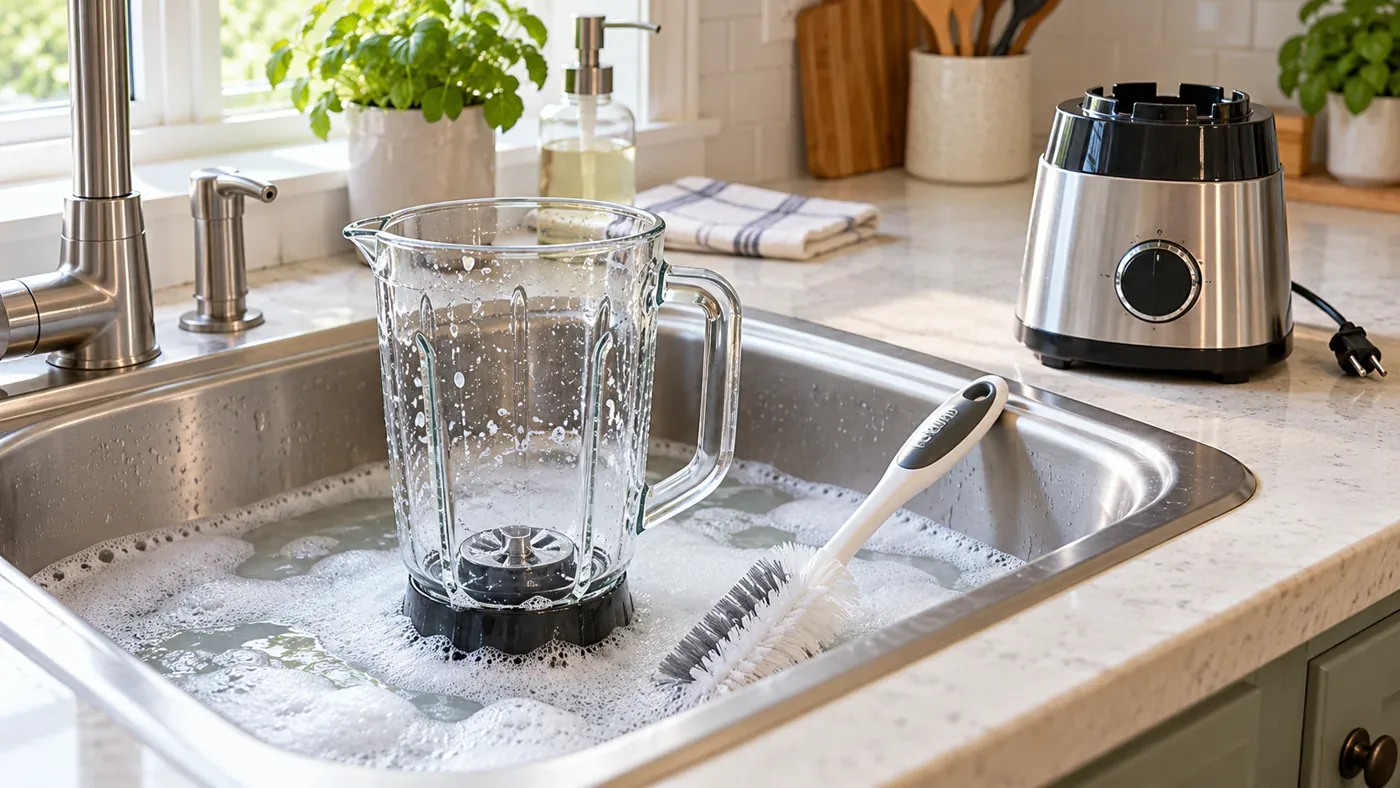
Check the jar design before adding water
A countertop pitcher, a sealed smoothie cup, and a blender with a removable blade tower need different handling. Find the model number on the base and check which parts detach, which can go in the dishwasher, and whether a powered wash is permitted.
| Design or problem | Use this approach | Avoid |
|---|---|---|
| Vented full-size pitcher with an approved cleaning cycle | Run the manual's water-and-soap cycle, then wash the lid separately. | Boiling water, overfilling, or assuming the cycle sanitizes. |
| Sealed personal cup | Hand-wash, or use a permitted short cycle with cold or room-temperature water. | Warm or hot liquid in a sealed running cup. |
| Removable blade tower or screw-off assembly | Unplug first; remove only parts identified in the manual and use a brush. | Reaching through sharp blades with a cloth-wrapped hand. |
| Fixed gasket, persistent hidden residue, or a leak | Clean accessible areas and ask the manufacturer about service or replacement. | Prying out seals or opening a bearing assembly. |
Nutribullet's cleaning guidance explicitly distinguishes warm-water cleaning in a full-size pitcher from cold or room-temperature water in a sealed personal cup. Steam pressure can force a sealed cup and blade apart. A method suitable for a large pitcher is not automatically suitable for its single-serve attachment.
The everyday wash
Clean after each use, before smoothie pulp or sauce dries around the blade hub. Fibrous residue from a green smoothie is easier to remove while wet; rinsing alone still leaves food and grease behind.
- Empty and rinse. Switch off the machine, remove the container, and rinse loose food away. Unplug before hand cleaning or handling removable blades.
- Wash with dish soap. Use a soft sponge and a long-handled brush for corners. Keep fingers away from cutting edges. Never leave loose blades hidden under sudsy water.
- Use an approved powered cycle if appropriate. For compatible pitchers, follow the stated fill level, water temperature, soap amount, and run time. Vitamix's container guide describes a half-full pitcher, a few drops of soap, and 30 to 60 seconds of blending or the cleaning program. That is machine run time, not the total cleanup time.
- Wash the lid and accessories separately. Clean the lid underside, drinking spout, threads, and any user-removable lid seal. Residue above the water line may survive a blending cycle.
- Rinse and inspect. Look around the blade hub and rim. Use the brush, not your fingers, to dislodge residue near blades. Repeat washing if food remains.
- Dry with airflow. Place parts on a clean rack until completely dry. Store the lid loosely rather than sealing moisture inside.
Use only the dishwasher settings and rack positions approved for that exact container and blade. Dishwasher-safe cups do not make the blade assembly or motor base dishwasher-safe.
Seals and stuck-on residue
A gasket that appears removable may be designed to stay in place. Nutribullet's gasket instructions say not to remove the blade gasket; a loose or displaced gasket requires a replacement blade assembly. Do not lift it with a toothpick or butter knife.
For dried protein smoothie residue, wet the accessible food-contact surface with soapy water, give it time to soften as the manual permits, then brush and rinse. Do not soak bearings, electrical contacts, or a whole blade unit unless its instructions permit immersion. Never force a brush into a sealed joint.
If ordinary washing leaves a cloudy film, it may be mineral buildup, staining, or scratches. Vitamix describes a container-specific vinegar soak for mineral film. Follow that recipe only for a compatible container; do not treat a strong overnight acid soak as universal blender care. Scratches will not dissolve, and more aggressive scrubbing can make them worse.
When an odor needs more than another rinse
A lingering sour smell is a reason to inspect the lid, seals, and blade area, not to perfume the jar with lemon. If residue or mold is trapped in a joint you cannot clean, stop using that part and contact the maker. Cracked containers and damaged seals also need attention.
Cleaning and sanitizing are different operations, as USDA's cleaning guidance explains. A soap cycle removes soil; it is not a validated sanitizer cycle. When sanitizing is needed, use the appliance's approved procedure and a compatible food-contact product with its specified dilution and contact time. Never mix bleach with vinegar or other cleaners.
Keep liquid out of the base
Unplug the base, then wipe it with a well-wrung damp cloth. Do not spray cleaner into switches, vents, or the drive socket. Dry the cup exterior before mounting it. If a leak reaches inside the housing, leave it unplugged and seek service rather than testing whether it still runs.
Before the next strawberry-banana smoothie, check that the container is clean, the permitted removable parts are correctly assembled, and the seals are undamaged. A cleaning routine cannot compensate for a leaking assembly.
Sources and method
- Nutribullet: How to clean a blender, for personal-cup temperature limits.
- Nutribullet: Blades and gaskets, for fixed-seal care.
- Vitamix: How to clean your container, for pitcher washing and mineral-film treatment.
- USDA FSIS: Washing food and cleaning kitchen surfaces, for cleaning versus sanitizing.
This reference synthesizes manufacturer care and public food-safety guidance. No blender testing was performed; the manual for the specific appliance takes priority.