 CookBuddyGuide
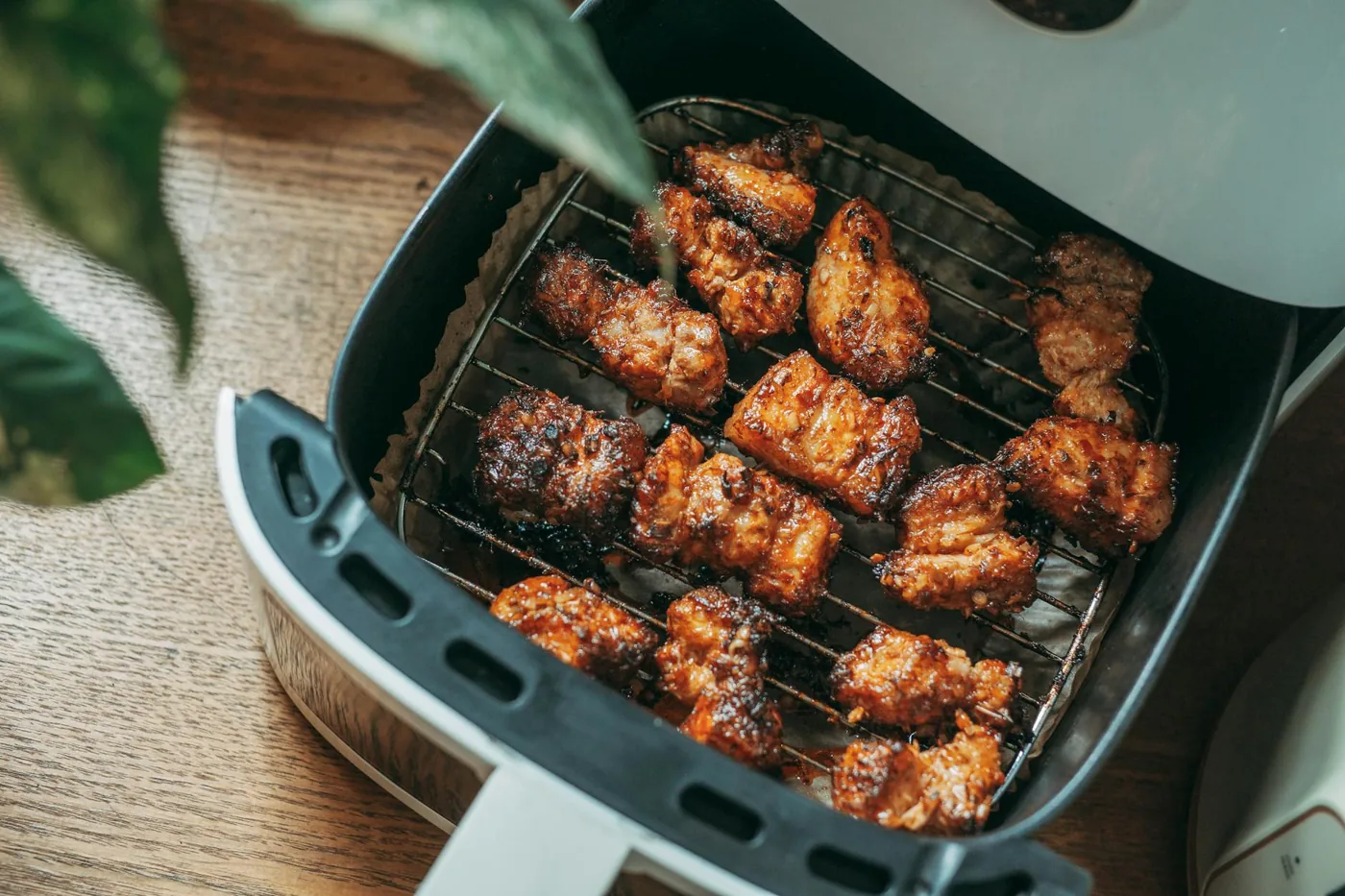
Separate washable parts from electrical parts
A basket-style air fryer is not a watertight cooking pot. Its drawer may contain a coated basket, removable plate, silicone bumpers, a window, or a probe. Identify those parts in the model's manual before pulling them apart or putting them in a dishwasher.
| Part or condition | Cleaning approach | Boundary |
|---|---|---|
| Removable basket and crisper plate | Wash with dish soap and a soft sponge; soak only if permitted. | Do not scrape coated surfaces with metal. |
| Greasy drawer corners or plate underside | Remove approved inserts and brush accessible crevices. | Do not dismantle the handle or window assembly without instructions. |
| Housing, controls, and vents | Wipe with the manual's recommended cloth method. | No immersion, running tap water, or direct spraying. |
| Crumbs near the heating element | Once cold and unplugged, use the specified soft brush or sponge. | Do not bend the element or open the electrical housing. |
| Peeling coating, damaged cord, or persistent electrical odor | Stop using the appliance and contact the maker. | Cleaning is not a repair. |
Clean after use, once the appliance is cool
Let temperature, not a universal timer, decide when handling is safe. Some manufacturers suggest a cooling period, but a large unit or grease-filled drawer can stay hot longer. Keep the appliance unplugged during cleaning.
- Empty loose food and excess grease. Let fat cool enough to handle, collect it in a suitable container, and dispose of it according to local rules. Do not pour it down the drain.
- Remove approved inserts. Lift the crisper plate as instructed. Wash beneath it, where crumbs from air-fryer fries and other foods collect.
- Wash gently. Use warm soapy water and a soft sponge on both sides of removable parts. A soft brush helps around perforations. Rinse away soap and loosened food.
- Soften stuck food in the sink. If permitted, soak the detached washable part, then try the sponge again. Repeated gentle washing is preferable to cutting at burnt glaze with a knife.
- Wipe the cooled chamber. Use a well-wrung cloth and only the cleaner approved for that surface. Follow with a clean damp cloth to remove soap residue.
- Dry and inspect. Dry both sides of the plate and the drawer corners, then allow remaining moisture to evaporate before reassembly. Check that inserts and silicone pieces are correctly seated.
Philips' cleaning instructions allow a short soapy soak for stuck food on its removable pan and identify dishwasher-safe parts. That permission applies to the listed parts, not every air-fryer accessory or the whole machine.
Treat the heating area as a model-specific job
Grease can collect above the basket, particularly after foods such as chicken thighs. Inspect the accessible heating area once it is cold. A clean basket does not rule out residue higher in the chamber.
Manufacturer methods differ. Philips describes cleaning its accessible element with a soft sponge or appropriate bristle brush. Cosori's maintenance guidance cautions against applying water directly to the heating element. Use the procedure for your model rather than combining tips from different appliances.
Do not spray degreaser into the fan area or pack baking-soda paste behind a coil. Do not turn the unit upside down unless the manual permits that position. If grease has entered an inaccessible cavity, contact support rather than removing screws or bending the element for access.
Skip the heated water-and-soap shortcut
Do not fill a conventional air-fryer drawer with water, vinegar, or dish soap and switch on the machine to wash it. That is not the same as soaking a detached basket. A model with a purpose-built steam or cleaning program is an exception only when operated exactly as its manual specifies.
Likewise, avoid oven cleaner, steel wool, and abrasive erasers on nonstick surfaces unless the maker explicitly approves them. A cleaner suitable for a steel oven wall may be unsuitable for a coated basket, plastic window, or heating assembly.
If smoke or an odor returns after cleaning
Switch off and let the machine cool before investigating. Check for fat under the plate, food touching the element, trapped packaging, and incorrect assembly. Do not try to cover a plastic or electrical smell with lemon, or keep running a smoking machine to burn it clean.
Use only approved liners, and do not let a loose sheet obstruct the fan or approach the element. Liners still leave the drawer and heating area needing inspection. For repeated splashing, check oil quantity and food arrangement in the relevant method, such as air-fryer chicken thighs, after the appliance is clean.
If smoke persists, the coating peels, or the cord or housing is damaged, stop using it. Ask the manufacturer about replacement parts or service. Do not wash away a symptom and assume an electrical fault has been fixed.
Sources and method
- Philips Support: How to clean my Airfryer, for removable-part washing, dishwasher permissions, and element access.
- Cosori: How to clean and maintain your air fryer, for housing, coating, and heating-element precautions.
This researched guide compares manufacturer care boundaries, not firsthand cleaning tests. Model-specific manuals take priority, especially for steam functions, electrical probes, and removable parts.