Quick Answer
A Practical Air Fryer Baked Potato Guide works best when the food is spaced well, lightly coated, and checked before the final minutes. Use the timing in this guide as a starting point, then adjust for food size, basket crowding, and how crisp you want the result.
Practical note
For A Practical Air Fryer Baked Potato Guide, basket crowding and food size usually change the result more than the brand of air fryer. Check early, shake or flip when needed, and record the timing that works for your basket.
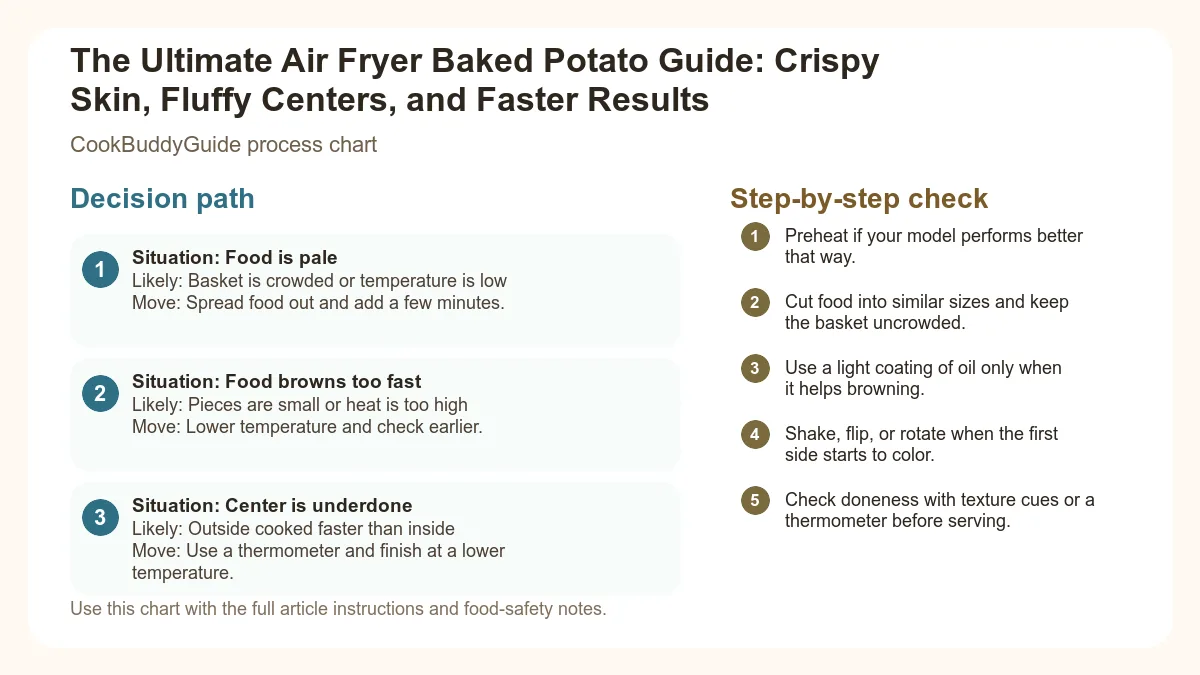
Decision table
| Situation | Likely cause or meaning | Best move |
|---|---|---|
| Food is pale | Basket is crowded or temperature is low | Spread food out and add a few minutes. |
| Food browns too fast | Pieces are small or heat is too high | Lower temperature and check earlier. |
| Center is underdone | Outside cooked faster than inside | Use a thermometer and finish at a lower temperature. |
Step-by-step fix
- Preheat if your model performs better that way.
- Cut food into similar sizes and keep the basket uncrowded.
- Use a light coating of oil only when it helps browning.
- Shake, flip, or rotate when the first side starts to color.
- Check doneness with texture cues or a thermometer before serving.
Common mistakes
- Crowding the basket until food steams instead of browns.
- Using too much oil and making the surface heavy.
- Following time charts without checking piece size.
- Skipping a thermometer for foods where doneness matters.
Related topic hubs
- Why the Air Fryer is the Superior Method
- Selecting the Right Potato for Air Frying
- The Prep Phase: Foundation for Crispy Skin
- The Two-Ingredient Coating: Oil and Salt
- Air Fryer Temperature and Timing Guide
- How to Check for Perfect Doneness
- The Art of the Reveal: Slicing and Fluffing
- Loaded Baked Potato Guide
- Common Mistakes to Avoid
- Storage, Reheating, and Leftover Ideas
Why the Air Fryer is the Superior Method for Baked Potatoes
The Science of Convection: Why It Beats the Oven
To understand why the air fryer baked potato is so successful, we have to look at how these kitchen appliances actually work. An air fryer isn't actually "frying" in the traditional sense; it is a powerful, compact convection oven. It uses a high-velocity fan to circulate hot air around the food. In a standard oven, the air can become stagnant, leading to "cold spots" and a slower transfer of heat.
In an air fryer basket, the potato is hit with constant, intense heat from every angle. This triggers the Maillard reaction—a chemical reaction between amino acids and reducing sugars that gives browned food its distinctive flavor—much more efficiently than a traditional oven. This concentrated heat dehydrates the surface of the skin rapidly, creating that potato-chip-like crunch while the internal moisture steams the starch into fluffiness.
Speed Comparison: Air Fryer vs. Oven vs. Microwave
When we talk about making a baked potato in air fryer faster, we aren't just talking about a couple of minutes. In my side-by-side testing, a medium-sized Russet takes about 65 minutes in a 400°F oven (including preheat time). In the air fryer, that same potato is fork-tender and ready in 40 minutes.
- Microwave: 7-10 minutes. Result: Soggy skin, gummy interior, uneven heat.
- Conventional Oven: 60-75 minutes. Result: Good skin, fluffy interior, but high energy use and long wait.
- Air Fryer: 35-45 minutes. Result: The "Goldilocks" zone. Perfect crispy potato skin and maximum fluff.
Selecting the Right Potato for Air Frying
The Russet Advantage: High Starch for Maximum Fluff
If you want that classic steakhouse baked potato, there is only one choice: the Russet (often called the Idaho potato). Russets are high-starch potatoes with low moisture content. When heated, the starch granules expand and separate, which is what creates that "fluffy" texture we all crave. According to the nutritional profile of russet potatoes, they are also an excellent source of dietary fiber, especially if you eat the skin (which you absolutely should when it's this crispy!).
Can You Use Yukon Golds or Red Potatoes?
While you can air fry other best potato varieties for baking, the results will differ. Yukon Golds have a medium starch content and a "buttery" texture. They won't get as fluffy as a Russet, but they hold their shape well. Red potatoes are waxy and low-starch; they are better suited for roasting in chunks rather than whole baking. If you choose Yukon Golds, reduce your cooking time by about 5-8 minutes as they tend to be smaller and denser.
Size Matters: Sorting Your Spuds for Even Cooking
The Prep Phase: Setting the Foundation for Crispy Skin
To Scrub or Not to Scrub: Cleaning Your Potatoes
Since the skin is the star of the show here, cleanliness is paramount. Use a dedicated vegetable brush under cold running water to remove all dirt and debris. Don't use soap or veggie washes; plain water and a good scrub are all you need. This also opens up the pores of the skin slightly, which helps with the next crucial step.
The Drying Secret: Why Moisture is the Enemy of Crisp
Poking Holes: Myth vs. Reality
The Two-Ingredient Coating: Oil and Salt
Choosing the Best Oil: Smoke Points and Flavor
To get that crispy potato skin, you need a fat that can handle 400°F without smoking. Choose Avocado oil for its high smoke point and neutral flavor, but a high-quality olive oil works beautifully too. Avoid butter at this stage; the milk solids in butter will burn at 400°F, leaving your potatoes tasting bitter and looking scorched.
The Salt Factor: Kosher vs. Table Salt
Texture is everything. Kosher salt is the gold standard here. The larger grains don't dissolve immediately, providing a delightful crunch and a localized burst of flavor. Table salt is too fine and often contains iodine, which can give the skin a slightly metallic aftertaste when heated intensely. The science of crispy potato skin suggests that salt also helps draw out any remaining surface moisture, further enhancing the crisping process.
Application Technique: The 'Massage' Method
Don't just drizzle; massage. Pour about half a teaspoon of oil onto each potato and use your hands to rub it in thoroughly. You want every square millimeter of that skin coated. This ensures that the Maillard reaction happens uniformly. Once oiled, sprinkle the salt generously while rotating the potato. The oil acts as the "glue" for the salt.
Master Air Fryer Baked Potato Recipe
Ingredients:
- 2-4 Medium Russet Potatoes (approx. 8-10 oz each)
- 1 tbsp Avocado or Olive Oil
- 1 tsp Kosher Salt
Instructions:
- Preheat your air fryer to 400°F (200°C) for 3 minutes.
- Scrub and completely dry the potatoes.
- Pierce each potato 6 times with a fork.
- Massage oil into the skin until fully coated.
- Generously coat with kosher salt.
- Place in the air fryer basket, ensuring they aren't touching.
- Cook for 20 minutes, then flip the potatoes.
- Cook for another 15-20 minutes until fork-tender.
Air Fryer Temperature and Timing Guide
The Sweet Spot: Why 400°F (200°C) is the Magic Number
Timing Chart by Potato Weight
- Small (5-6 oz): 30-35 minutes
- Medium (8-10 oz): 40-45 minutes
- Large (12-14 oz): 50-60 minutes
The 'Flip' Rule: Do You Need to Turn Them?
How to Check for Perfect Doneness
The Fork-Tender Test
The most common way to check is the fork test. A fork should slide into the center of the potato with zero resistance. If you feel a "snap" or any firmness in the middle, give it another 5 minutes. An undercooked potato is waxy and unpleasant, ruining the easy dinner vibe you were going for.
The Pro Method: Using an Instant-Read Thermometer
The 'Squeeze' Test (With Caution!)
Using a clean oven mitt, give the potato a gentle squeeze. It should feel give easily under the pressure, almost like a stress ball. If it feels hard, it needs more time. Be careful—potatoes hold an incredible amount of thermal energy and can cause burns if handled without protection.
The Art of the Reveal: Slicing and Fluffing
The 'Cross-Cut' Technique
Don't just slice the potato down the middle. For the best presentation and texture, use the "cross-cut." Cut a deep slit lengthwise, then a shorter slit across the middle to form a "T" or a cross.
Releasing the Steam Immediately
This is a critical food safety and quality tip: open the potato immediately after it comes out of the air fryer. If you let it sit whole, the residual steam inside will condense back into water, turning your fluffy starch into a gummy, dense mess. By cracking it open, you allow that steam to escape into the air.
The Pre-Butter Fluff
Before adding any toppings, take a fork and gently "rake" the interior flesh. This breaks up the starch clumps and creates more surface area for your butter or sour cream to melt into. This is the difference between a good potato and a great potato.
Loaded Baked Potato Guide: From Classic to Gourmet
The 'Classic Five' Toppings
- Salted Butter: Use high-quality grass-fed butter if possible.
- Sour Cream: A dollop of full-fat sour cream adds necessary acidity.
- Chives: Freshly snipped chives provide a mild onion bite.
- Bacon Bits: Real bacon, fried until shattered.
- Sharp Cheddar: Grate it yourself for the best melt.
Healthy Alternatives for Weeknight Meals
If you're looking for a lighter side dish, try replacing sour cream with plain Greek yogurt. It provides the same tang and creaminess with added protein. Topping a potato with steamed broccoli and a light drizzle of tahini or a squeeze of lemon is a fantastic way to increase your dietary fiber intake without the heavy saturated fats.
Global Flavors: Tex-Mex, Mediterranean, and BBQ
- Tex-Mex: Black beans, corn, salsa, and avocado.
- Mediterranean: Feta cheese, kalamata olives, cherry tomatoes, and dried oregano.
- BBQ: Leftover pulled pork or brisket with a drizzle of sugar-free BBQ sauce. This turns a simple potato into a full, hearty meal. Pair it with some easy air fryer chicken recipes for a complete feast.
Common Air Fryer Baked Potato Mistakes to Avoid
Overcrowding the Basket
The air fryer relies on airflow. If you pack 6 large potatoes into a small 4-quart basket, the air cannot circulate. The result? The sides touching each other will be pale and mushy. Always leave at least an inch of space between your potatoes. Cook in batches if necessary; they stay hot for a long time!
Using Foil (A Practical No-No)
In the 1970s, wrapping potatoes in foil was the trend. In an air fryer, this is a mistake. Foil traps moisture against the skin, essentially steaming the potato. You will get a soft, leathery skin rather than a crispy potato skin. Leave them naked for the best results.
Skipping the Oil
Some people try to save calories by skipping the oil. While the potato will still cook, the skin will be dry, papery, and tough. The oil is what facilitates the heat transfer and gives you that "fried" taste without the deep fryer.
Storage, Reheating, and Leftover Ideas
How to Reheat Without Losing the Crunch
Never reheat a baked potato in the microwave if you want to keep the skin crisp. Instead, put it back in the air fryer at 350°F for 5-10 minutes. This will re-crisp the skin and warm the center perfectly. It’s the only way to revive a leftover potato.
Transforming Leftovers: Air Fryer Potato Skins
If you have leftover baked potatoes, scoop out the centers (save them for mashed potatoes or shepherd's pie) and cut the skins into wedges. Spray with a little more oil, add some cheese and bacon, and air fry at 400°F for 5 minutes. You’ve just made restaurant-quality potato skins!
Frequently Asked Questions
A: While not strictly necessary for all models, consider a 3-minute preheat. It ensures the potato starts crisping the moment it hits the basket.
A: This usually happens if the potato wasn't dried properly before oiling, or if you didn't use enough oil. It can also happen if the potato is old and has lost too much internal moisture.
A: Yes! However, sweet potatoes have more sugar and can burn more easily. Lower the temperature to 375°F and check for doneness around the 35-minute mark.
Conclusion: Your New Favorite Side Dish
Mastering the air fryer baked potato is a helpful shortcut for any busy home cook. By understanding the convection cooking process and following the simple steps of cleaning, drying, and massaging with oil, you can achieve results that rival the finest steakhouses. Remember to choose the right potato varieties, aim for that 205°F internal temperature, and never, ever use foil.
Whether you're serving these alongside a steak or making them the star of a "Loaded Potato Bar" for a budget friendly dinner, the air fryer is your best friend. It’s faster, crispier, and more consistent than any other method. Now, go grab some Russets and start air frying—your perfect potato is just 40 minutes away!