 CookBuddyGuide
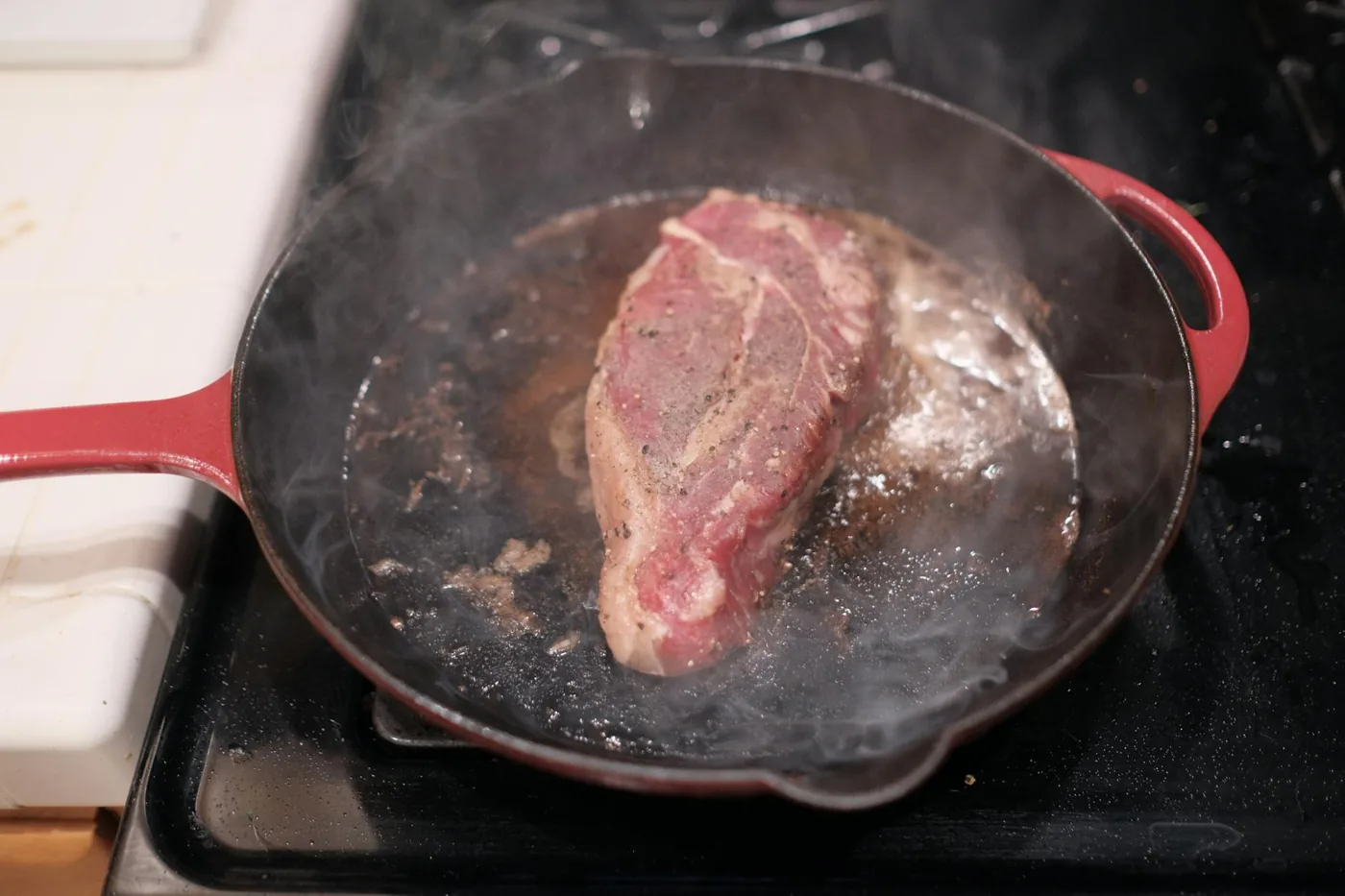
Make sure it is seasoned iron, not enamel
This routine is for bare cast iron protected by baked-on oil, called seasoning. A black cooking surface is not proof: some enameled pans have black satin interiors. Check the product description if you are unsure.
Lodge's enamel instructions say that even its black-interior enameled pieces do not need seasoning. Do not use the rust-scouring method for bare iron on an enamel cooking surface. For the differences in use and upkeep, see cast iron versus stainless steel.
Wash, dry, and protect after cooking
Let the skillet cool until you can handle it safely. Warm is useful; smoking hot is not. Do not carry a heavy skillet to the sink with a wet cloth, or plunge a hot pan into cold water.
- Remove food and excess fat. Scrape leftovers into a container. Let unwanted fat cool enough to handle and collect it for disposal rather than pouring it down the drain.
- Wash all dirty surfaces. Use warm water, a small amount of dish soap, and a brush or non-scratch pad. Include the rim, handle, pour spouts, and exterior where drips have collected.
- Lift stuck pieces. Use a pan scraper or nylon brush. Work at the food residue rather than gouging the surface with a knife.
- Rinse and towel-dry immediately. Dry underneath the pan and around the handle as well as inside. Do not leave it on the draining rack.
- Finish drying with gentle heat if needed. A brief spell over low heat helps evaporate remaining water. Stay with the pan and switch the burner off once dry. Use a dry mitt to handle it.
- Apply a thin protective coat. When safe to handle, spread a little cooking oil across the seasoned surfaces, then buff with a clean cloth until no greasy pools remain.
The wash-dry-oil sequence follows Lodge's cleaning guidance. Field Company's care method also describes stovetop drying and wiping excess oil away to a matte finish. An oily storage film is not the same as a completed oven seasoning cycle.
What is left on the pan?
| Surface clue | What it suggests | What to do |
|---|---|---|
| Raised food pieces after washing | The food has not been removed. | Wet the residue with warm water, scrape or brush promptly, then rinse and dry. |
| Sticky, greasy patches | Excess oil or food residue, not a desirable finish. | Wash thoroughly and buff away oil; assess persistent tackiness before adding more. |
| Orange powder or spots | Likely rust on exposed iron. | Remove the rust and restore protection before cooking. |
| Loose black flakes | Loose seasoning or cooked-on residue. | Scrub away loose material; reseason if iron is exposed. |
| Smooth brown or uneven dark color | Seasoning color alone does not establish damage. | If clean, dry, and not sticky or rusty, continue normal care. |
A little dark transfer on a towel does not identify its cause by itself. Check for actual crumbs, grease, flaking, or orange rust instead of judging the pan only by the towel's color.
For stubborn food, soften before scrubbing harder
Use a little warm water and work on the residue promptly, rather than filling the pan and leaving it overnight. If the pan maker permits a brief simmer to loosen food, supervise it and wash and dry immediately afterward. Do not boil the pan dry.
A small amount of coarse salt can help dislodge residue in a cool or safely warm pan. Use a brush or folded cloth, then rinse the salt away. Salt scrubbing is optional and does not replace washing away grease. Leave steel wool for rust removal or deliberate restoration, not routine cleanup.
Soap is allowed; stripping is usually unnecessary
Mild dish soap is compatible with established seasoning. The University of Illinois Extension cast-iron guide recommends hand-washing with mild or diluted soap and thorough drying. There is no need to preserve yesterday's grease to protect the finish.
If rust is present, use the specific steps in why cast iron rusts. Do not simply oil over it. Widespread bare areas may need oven reseasoning, but a normal wash does not require a full bake afterward. Avoid a self-cleaning oven cycle, open-fire stripping, or casual oven-cleaner treatment as cleanup shortcuts.
Store only when the pan and its surroundings are dry
Allow the skillet to cool before putting it away. Check that another pot is not dripping onto it. If stacking is necessary, use a clean, dry separator and replace it if damp or greasy. Leave a lid slightly ajar so trapped moisture can escape.
Transfer leftover food into suitable storage containers. Keeping a damp, salty meal in the skillet adds a storage problem to tomorrow's cleanup. If the skillet has a crack, a loose handle, or damage you cannot identify, stop using it and ask its maker for advice.
Sources and method
- Lodge: How to clean, for routine washing, soap, rust, and dishwasher limits.
- Field Company: The Field Method, for drying and thin oil application.
- University of Illinois Extension: A guide to cast-iron cookware, for mild-soap care and moisture control.
- Lodge: Enameled cast iron care, for the enamel exception.
This is a researched maintenance reference, not firsthand cleaning or restoration testing. The procedure applies to seasoned bare iron; follow the maker's instructions for other finishes.