Quick Answer
This guide covers if you can leave butter at room temperature, how long it lasts, and the science of keeping butter fresh.
Practical note
For Is It Safe to Leave Butter Out? Guide to Room Temperature Butter, this guide centers on Salted Butter (Warm Kitchen > 75°F), Unsalted Butter, Whipped Butter. Those are the checkpoints we would use first in a normal home kitchen before making a bigger change.
Decision table
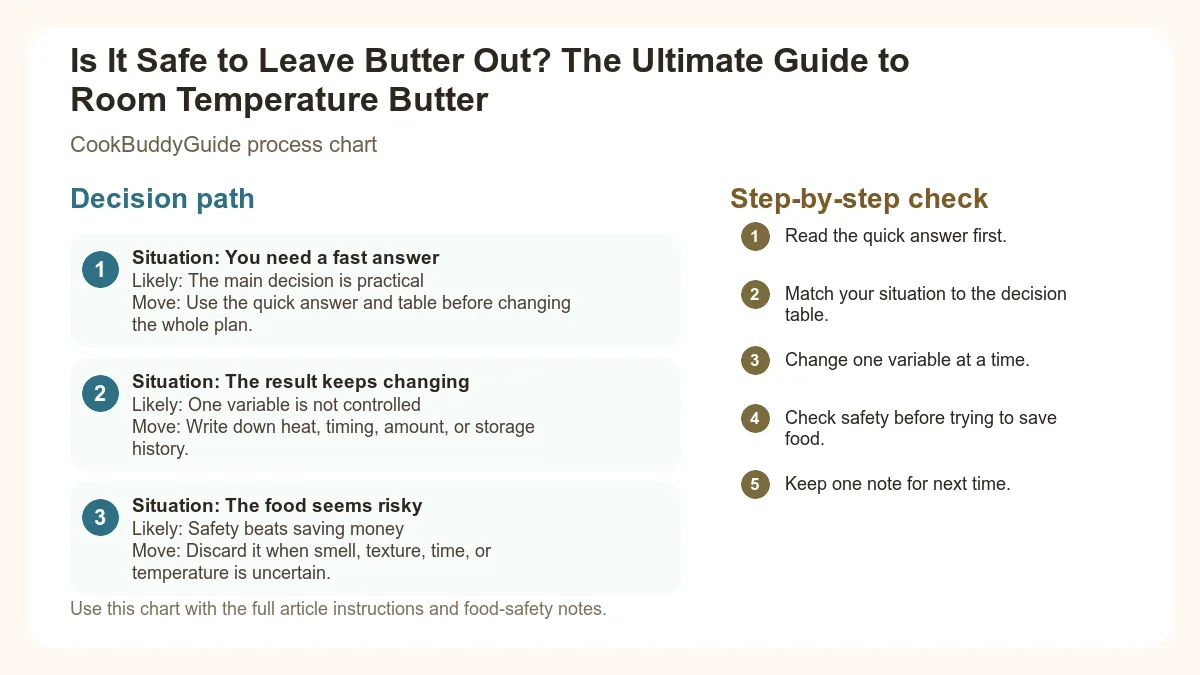
| Situation | Likely cause or meaning | Best move |
|---|---|---|
| You need a fast answer | The main decision is practical | Use the quick answer and table before changing the whole plan. |
| The result keeps changing | One variable is not controlled | Write down heat, timing, amount, or storage history. |
| The food seems risky | Safety beats saving money | Discard it when smell, texture, time, or temperature is uncertain. |
Step-by-step fix
- Read the quick answer first.
- Match your situation to the decision table.
- Change one variable at a time.
- Check safety before trying to save food.
- Keep one note for next time.
Common mistakes
- Skipping the quick answer and changing too much at once.
- Treating quality problems and safety problems the same way.
- Not writing down the detail that caused the repeat problem.
Related topic hubs
Table of Contents
- The Short Answer: Is It Safe to Leave Butter Out?
- The Science of Butter: Why It Doesn’t Spoil Like Milk
- Salted vs. Unsalted Butter: The Critical Difference
- The Three Enemies of Fresh Butter: Heat, Light, and Air
- How Long Can Butter Stay Out? (USDA vs. Real-World)
- Best Storage Practices: Butter Dishes vs. French Butter Crocks
- How to Tell if Your Butter Has Gone Rancid
- Practical Tips for Perfectly Soft Butter Every Time
The Short Answer: Is It Safe to Leave Butter Out?
The Quick Verdict for Busy Cooks
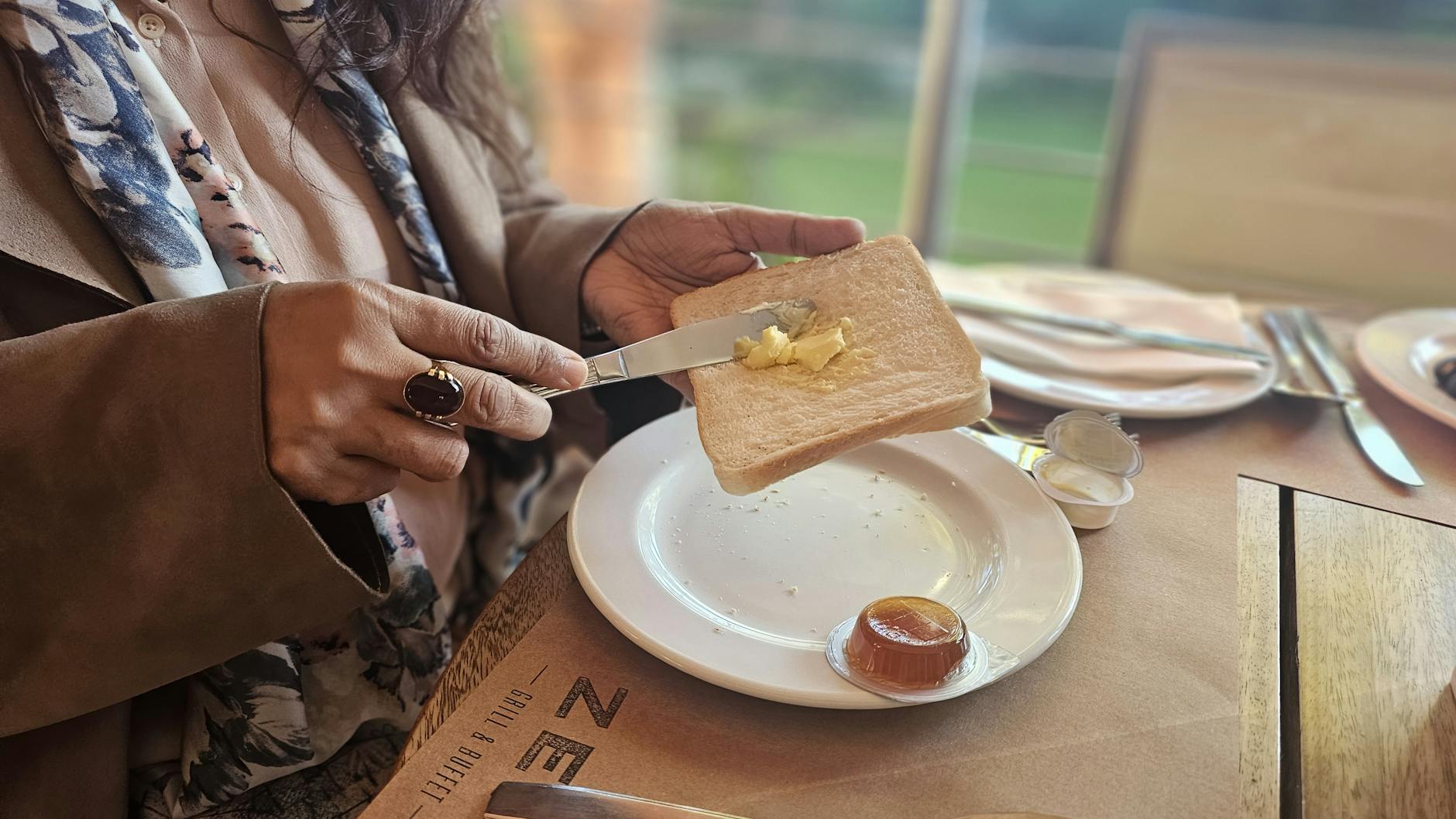
Why This Question Matters for Your Morning Toast
The goal is the perfect emulsification of fat and moisture that allows butter to glide across bread without destroying the crumb. When butter is too cold, the fats are crystalline and hard. When it’s too warm, it collapses into a greasy puddle. Finding the "Goldilocks zone" of safety and spreadability is the holy grail of breakfast meal prep ideas. For more ways to streamline your morning, check out our breakfast meal prep ideas.
The USDA food safety guidelines officially state that while butter is safe at room temperature, leaving it out for more than a day or two can cause it to go rancid, which affects the flavor more than the immediate safety. The FDA, meanwhile, classifies butter as a "potentially hazardous food" if not kept under temperature control, though they acknowledge its low risk compared to other dairy products.
The Science of Butter: Why It Doesn’t Spoil Like Milk
Understanding Water Activity (aw)
To understand why butter is safe on the counter while milk spoils in hours, we have to look at Water Activity (aw). Bacteria need water to grow. While milk is mostly water, butter is a "water-in-oil emulsion." This means that tiny droplets of water are suspended within a massive matrix of fat (usually at least 80% milkfat). Because the water is trapped in these microscopic pockets surrounded by fat, it isn't "available" for bacteria to use. This high fat and butter's resistance to bacteria make it a very hostile environment for most foodborne illness pathogens.
The Role of High Fat Content
Pasteurization: The First Line of Defense
Almost all commercial butter sold in grocery stores today undergoes Pasteurization. This process heats the cream to a specific temperature to kill off any existing harmful microbes before the butter is even churned. This sterile starting point, combined with the low water activity, is why you don't see butter molding overnight like a piece of fruit might.
Kitchen Lab Note: The Churning Effect
Observation: During the churning process, the physical agitation breaks the membranes of the fat globules in cream, allowing them to clump together.
The Result: This process squeezes out the liquid (buttermilk) and leaves behind the solid fat. The remaining water is so finely dispersed that microbes literally cannot travel from one water droplet to another. It’s like a series of tiny, isolated islands in a vast ocean of fat!
Salted vs. Unsalted Butter: The Critical Difference
Salt as an Ancient Preservative
This is where the "can you leave butter at room temperature" debate gets serious. Salt isn't just for flavor; it’s a powerful antimicrobial agent. Salt draws moisture out of bacterial cells through osmosis, effectively killing them. According to data on salted versus unsalted butter, the salt content (usually around 1.5% to 2%) provides a significant safety buffer that unsalted butter simply doesn't have.
Why Unsalted Butter Should Stay Refrigerated
The 'Danger Zone' for Unsalted Varieties
The "Danger Zone" (40°F - 140°F) is the temperature range where bacteria multiply most rapidly. Because unsalted butter has a higher "available" water activity, it enters the danger zone the moment it hits room temperature butter status. If you must leave it out, use it within 4 hours to be 100% safe.
The Three Enemies of Fresh Butter: Heat, Light, and Air
When butter "goes bad" on the counter, it’s usually not because of bacteria. Instead, it’s a chemical process called Lipid Oxidation. This is what leads to Rancidity. To keep your butter fresh, you have to fight three specific enemies.
Oxidation: Why Butter Turns Yellow and Sour
When butter is exposed to oxygen, the unsaturated fatty acids begin to break down. This creates compounds like butyric acid, which have a pungent, "old cheese" smell. If you’ve ever noticed the outside of your butter is a darker, waxy yellow than the pale interior, that is oxygen exposure in action. An airtight container is your best defense here.
The Impact of UV Light on Lipids
Light—especially sunlight and even bright fluorescent kitchen lights—speeds up the oxidation process. This is why those beautiful clear glass butter dishes are actually a terrible idea for long-term storage. UV rays act as a catalyst for the breakdown of fats. Consider opaque ceramic or stainless steel containers to block out the light.
Temperature Fluctuations and Melting Points
Your kitchen temperature is the final variable. Butter starts to soften at 60°F and begins to melt around 90°F. If your kitchen gets hot (like when you're baking or during a summer heatwave), the emulsification can break. Once butter melts and re-solidifies, the texture is never the same—it becomes grainy and prone to rapid spoilage. For those hot days, you might want to stick to no-cook summer meals to keep the kitchen cool.
For a deeper dive into the chemistry of spoilage, check out this guide on factors causing butter rancidity.
How Long Can Butter Stay Out? (USDA vs. Real-World Kitchens)
The Official Government Guidelines
The 1-2 Day Rule for Peak Freshness
The "Counter-Life" Cheat Sheet
- Salted Butter (Cool Kitchen < 70°F): 7 days
- Salted Butter (Warm Kitchen > 75°F): 1-2 days
- Unsalted Butter: 4 hours maximum
- Whipped Butter: Do not leave out (high air/moisture content)
Factors That Shorten the Timeline
- Humidity: High humidity can cause moisture to bead on the surface of the butter, encouraging mold.
- Cross-Contamination: Using a knife that has crumbs or jam on it and then double-dipping into the butter dish introduces organic matter that will grow bacteria.
- Proximity to Heat: Never store your butter dish on top of the fridge (it’s warm up there!) or next to the toaster.
Best Storage Practices: Butter Dishes vs. French Butter Crocks
The Classic Covered Butter Dish
A standard ceramic butter dish with a tight-fitting lid is the most common choice. It’s effective at blocking light and some air, but it’s not truly airtight. If you use this method, only put out half a stick at a time to ensure you finish it before it oxidizes.
The Magic of the French Butter Bell (Crock)
If you want to keep butter out for longer than a couple of days, the butter bell (or French butter crock) is the gold standard. This two-piece system involves packing butter into a bell-shaped lid and inverted it into a base containing a small amount of water. The water creates an airtight seal that completely prevents oxygen exposure. Storing butter in a crock is the best way to keep it fresh for up to two weeks on the counter. You can find more details on storing butter in a crock here.
Where to Place Your Butter in the Kitchen
Location matters. Keep my butter crock in the coolest corner of the pantry, away from the oven, dishwasher, and windows. This stability in kitchen temperature prevents the butter from sweating and keeps the texture consistent.
How to Tell if Your Butter Has Gone Rancid
Even with the best storage, butter will eventually turn. Here is how to use your senses to stay safe.
The Sniff Test: Identifying 'Off' Odors
Fresh butter should smell like sweet cream or nothing at all. Rancid butter has a very distinct, sharp smell. Some people describe it as soapy, metallic, or remarkably like blue cheese. If it makes you wrinkle your nose, toss it.
Visual Cues: Discoloration and Mold
Look at the color. As mentioned, a dark yellow or translucent outer layer is a sign of oxidation. While not necessarily dangerous, it will taste bitter. More importantly, look for mold. While rare in salted butter, tiny black, green, or white spots mean the butter has been contaminated and must be discarded immediately.
The Taste Test: When to Toss It
If the smell is okay but you’re still unsure, take a tiny "sacrificial" scrape from the surface. If it tastes sour, bitter, or leaves a stinging sensation on the back of your tongue, the lipids have oxidized. It’s time for a fresh stick.
Practical Tips for Perfectly Soft Butter Every Time
The "Small Batch" Butter Protocol
- Cut the Stick: Only take out 1/4 or 1/2 of a stick of salted butter at a time.
- Use a Crock: Use a French butter bell with filtered water. Change the water every 2 days to keep it fresh.
- The Grating Hack: If you forget to take butter out, use a box grater to grate cold butter into tiny shreds. It will soften in exactly 5 minutes!
- The Warm Bowl Method: Fill a ceramic bowl with boiling water, let it sit for 2 minutes, dump the water, and invert the warm bowl over your cold butter. It creates a "mini sauna" that softens the butter without melting it.
Seasonal Adjustments for Summer vs. Winter
Emergency Softening Hacks (That Aren't the Microwave)
Whatever you do, avoid the microwave for softening butter for spreading. It heats unevenly, creating "hot spots" that melt the core while the outside stays hard. This destroys the emulsification and leaves you with a greasy mess. Stick to the grating method or the warm bowl method mentioned above for the best results.
Frequently Asked Questions
A: It is not recommended. Without salt, the water activity is high enough for bacteria to grow. If you leave it out for more than 4 hours, it's best to use it for baking where it will be fully cooked, or discard it if it smells off.
A: Yes! Grass-fed butter (like Kerrygold) has a higher percentage of unsaturated fats, which means it has a lower melting point and softens much faster than standard grain-fed butter. It also tends to oxidize slightly faster, so keep it well-covered.
A: Generally, rancid butter won't make you violently ill like salmonella would, but it can cause digestive upset and tastes terrible. Consuming oxidized fats frequently is also not great for long-term health, so it's best to avoid it.
The Bottom Line
So, is it safe to leave butter out? Yes, provided it is salted, kept in an airtight container, and consumed within a reasonable timeframe (1-7 days depending on your kitchen's climate). By understanding the science of lipid oxidation and water activity, you can enjoy the simple luxury of perfectly spreadable butter without any safety concerns. Keep it cool, keep it dark, and keep it covered—your morning toast will thank you!