Quick Answer
Use a reliable compound butter recipe in this guide to 6 flavored butter recipes. It also explains to mix, roll, and freeze for instant gourmet flavor at home.
Practical note
For A Practical Compound Butter Recipe Guide, this guide centers on The Cheese, The Walnuts, flavored butter recipes. Those are the checkpoints we would use first in a normal home kitchen before making a bigger change.
Decision table
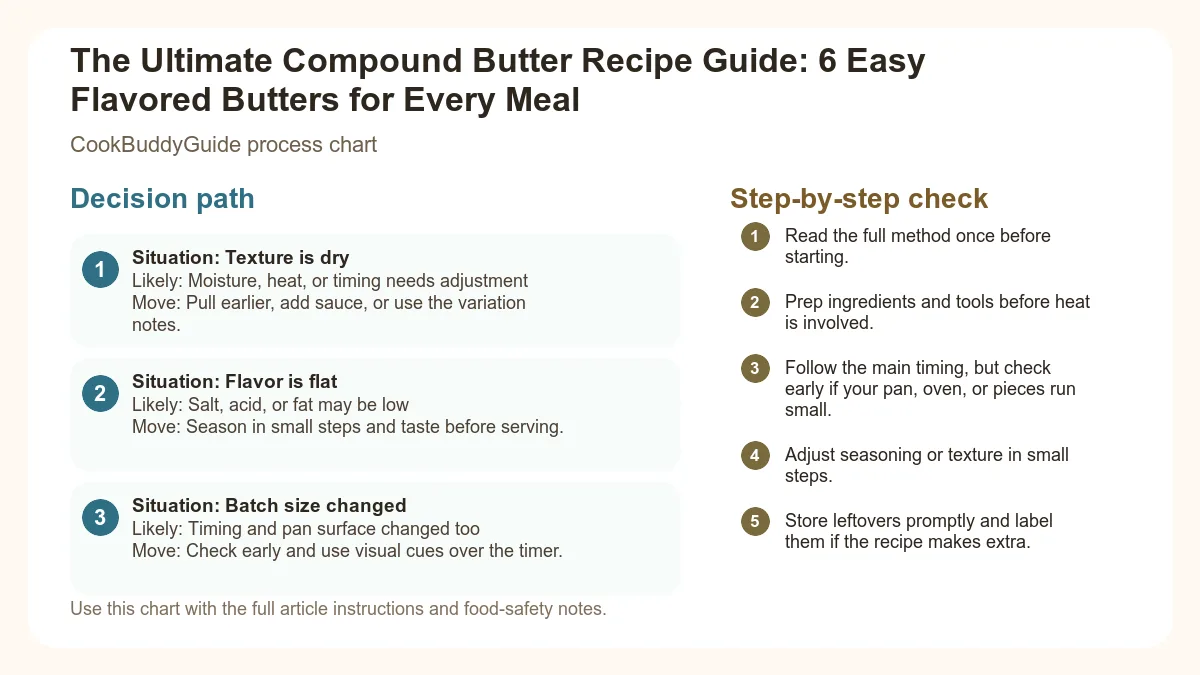
| Situation | Likely cause or meaning | Best move |
|---|---|---|
| Texture is dry | Moisture, heat, or timing needs adjustment | Pull earlier, add sauce, or use the variation notes. |
| Flavor is flat | Salt, acid, or fat may be low | Season in small steps and taste before serving. |
| Batch size changed | Timing and pan surface changed too | Check early and use visual cues over the timer. |
Step-by-step fix
- Read the full method once before starting.
- Prep ingredients and tools before heat is involved.
- Follow the main timing, but check early if your pan, oven, or pieces run small.
- Adjust seasoning or texture in small steps.
- Store leftovers promptly and label them if the recipe makes extra.
Common mistakes
- Changing the recipe before trying the base method once.
- Measuring casually when texture depends on ratios.
- Waiting until the end to fix seasoning.
- Ignoring carryover heat or resting time.
Related topic hubs
That, my friends, is the magic of a compound butter recipe. Known in French cuisine as beurre composé, compound butter is simply high-quality butter creamed together with various sweet or savory ingredients. While it sounds fancy, it is perhaps the single most cost-effective way to elevate your home cooking. Why spend $8 on a tiny tub of "gourmet" garlic herb butter at the specialty grocer when you can whip up six different flavored butter recipes in under an hour for a fraction of the price?
- The Foundation: Choosing and Preparing Your Butter
- Mastering the Technique: Mixing and Shaping
- Recipe 1: Classic Herb Butter with Parsley and Chives
- Recipe 2: Roasted Garlic Butter
- Recipe 3: Blue Cheese and Walnut Butter
- Recipe 4: Honey Cinnamon Butter (Sweet)
- Recipe 5: Zesty Lemon and Dill Butter
- Recipe 6: Sun-Dried Tomato and Basil Butter
- Storage and Food Safety
- Troubleshooting Common Mistakes
The Foundation: Choosing and Preparing Your Butter
Unsalted Butter vs. Salted: Which is Better?
In my practical view, unsalted butter is the only way to go. Using unsalted butter gives you total control over the seasoning. When you use salted butter, the salt content varies wildly between brands, which can ruin a delicate herb butter recipe. By starting fresh, you can add high-quality maldon sea salt at the end for that signature crunch and clean saline finish.
The Importance of High-Quality, European-Style Butter
If you really want to replicate the steakhouse experience, look for European-style butter. Unlike standard American butter, which has about 80% butterfat, European styles (like Kerrygold or Plugra) are churned to at least 82% butterfat. This higher fat content means less water, a creamier mouthfeel, and a better emulsification when you mix in your aromatics. It also has a higher smoke point, which is beneficial if you're using it as a finishing butter on a hot steak to complement the Maillard reaction—that delicious brown crust formed during searing.
While butter is high in saturated fat, it can certainly be part of a balanced diet when used as a flavor enhancer. For those curious about the nutritional trade-offs, the Mayo Clinic offers a great breakdown of butter and heart health compared to other fats.
The Science of Softening: Achieving the Perfect Consistency
Mastering the Technique: Mixing and Shaping
Once your butter is perfectly softened, you need to decide on your mixing method. For small batches (one stick), a bowl and a sturdy spatula are fine. However, for larger batches or when incorporating tougher ingredients like sun-dried tomatoes, food processor mixing is superior. It ensures the ingredients are finely minced and evenly distributed throughout the fat.
The Parchment Paper Roll: How to Get a Perfect Log
To get those beautiful, circular "pats" you see in restaurants, you need to form a compound butter log. Here is my reliable method:
- Place a sheet of parchment paper on your counter.
- Spoon the mixed butter into a rough log shape in the center of the paper.
- Fold the top half of the parchment over the butter.
- Using a bench scraper or a large ruler, tuck the paper under the butter log and push inward while holding the bottom sheet of paper. This creates tension, squeezing the butter into a tight, uniform cylinder.
- Twist the ends like a candy wrapper. For an extra secure hold, you can tie the ends with kitchen twine.
For a visual aid on this specific rolling technique, consider checking out this guide on how to make compound butter, which illustrates the "ruler trick" perfectly.
Recipe 1: Classic Herb Butter with Parsley and Chives
The "Everything" Garlic Herb Butter
This is the gold standard of flavored butter recipes. It’s bright, herbaceous, and works on literally everything from steak butter applications to simple toast.
Ingredients:- 1 cup (2 sticks) unsalted European-style butter, softened
- 3 tbsp fresh Italian parsley, very finely minced
- 2 tbsp fresh chives, snipped small
- 1 clove garlic, grated into a paste
- 1/2 tsp Maldon sea salt
- 1/4 tsp cracked black pepper
Practical note: The secret to a long-lasting herb butter is drying your culinary herbs completely after washing. If they are damp, the water will prevent the herbs from sticking to the fat, and your butter will spoil faster.
Recipe 2: Roasted Garlic Butter
Raw garlic can be sharp and overpowering. For a mellow, caramelized flavor profile, roasted garlic is essential. When you roast garlic, the harsh sulfur compounds transform into sweet, nutty notes through a slow chemical breakdown.
Mellow Roasted Garlic Compound Butter
Ingredients:- 1 cup unsalted butter, softened
- 1 whole head of garlic
- 1 tsp olive oil
- Pinch of salt
Instructions: Slice the top off the garlic head, drizzle with oil, wrap in foil, and bake at 400°F for 45 minutes. Once cool, squeeze the "paste" out of the cloves and mash into your butter. For a deep dive into the science of this process, see this guide on roasting garlic for flavor.
Best Uses: This is the ultimate secret for garlic bread or as a base for sautéing mushrooms.
Recipe 3: Blue Cheese and Walnut Butter
If you are serving a thick ribeye or a filet mignon, this is the butter you want. The "funk" of the cheese combined with the earthy crunch of walnuts creates a sophisticated flavor profile that mimics high-end chophouses.
- The Cheese: Use a creamy blue like Gorgonzola Dolce or a high-quality Roquefort. Avoid pre-crumbled blue cheese, as it's often coated in potato starch to prevent clumping, which ruins the texture of your butter.
- The Walnuts: Always toast your walnuts in a dry pan for 3-5 minutes before chopping. This releases the oils and removes any bitterness.
Recipe 4: Honey Cinnamon Butter (The Sweet Option)
The Ratio: 1 stick of butter to 2 tablespoons of honey and 1 teaspoon of ground cinnamon. Add a tiny pinch of salt to make the honey flavor "pop."
Best Uses: Slather this on warm biscuits, pancakes, or sweet potato mash. It’s also incredible on toasted sourdough for a quick breakfast.
Recipe 5: Zesty Lemon and Dill Butter
Zesty Lemon Dill Butter
Ingredients:- 1 cup unsalted butter
- Zest of 2 large lemons
- 3 tbsp fresh dill, finely chopped
- 1/2 tsp white pepper
Best Uses: This is a helpful shortcut for sheet pan dinner ideas involving salmon or white fish. It also transforms steamed asparagus into a gourmet side dish.
Recipe 6: Sun-Dried Tomato and Basil Butter
Pro-Tip: Add a tablespoon of freshly grated Parmesan cheese to this mix. The cheese acts as a stabilizer and adds a wonderful umami depth. This butter can be tossed directly into hot pasta with a splash of pasta water to create an instant, creamy sauce without any extra cooking.
Storage and Food Safety: Making Your Butter Last
One of the best things about a compound butter recipe is its shelf life. Because butter is mostly fat, it acts as a natural preservative for the herbs and aromatics inside.
Refrigeration
Stored in an airtight container or tightly wrapped in parchment and plastic wrap, compound butter will stay fresh in the refrigerator for up to 5 days. Note that fresh garlic and raw herbs can start to lose their punch after that.
Freezing for Long-Term Use
This is where the real convenience lies. You can store butter in the freezer for a significant amount of time. According to the USDA, butter can be stored in the freezer for six to nine months, though for the best flavor in compound butters, consider using them within 3 months.
Flash Freezing Pro-Tip: Slice your compound butter log into individual pats, place them on a baking sheet lined with parchment, and freeze until solid. Then, transfer the frozen discs to a freezer bag. This allows you to grab exactly one or two servings at a time without thawing the whole log.
Troubleshooting Common Compound Butter Mistakes
This usually happens if you try to mix in too much liquid (like lemon juice or balsamic vinegar) or if the butter was too warm (melted) when you started. To fix a broken emulsion, chill the mixture for 10 minutes, then beat it vigorously with a whisk or hand mixer to bring it back together.
If you’ve added cold ingredients (like blue cheese straight from the fridge), the butter might have firmed up too much. Let the whole mixture sit at room temperature for another 15 minutes before attempting to roll. You need it to be pliable, like modeling clay.
Cold mutes flavor. If you're tasting the butter straight from the fridge, it won't taste as vibrant as it did when you mixed it. Also, don't forget the salt! Salt is a flavor extractor; if your herb butter recipe tastes bland, a pinch of Maldon sea salt is usually the cure.
Conclusion: Your Kitchen's New Secret Weapon
Mastering the compound butter recipe is a rite of passage for any home cook looking to move from "good" to "great." It’s a technique that rewards patience and quality ingredients over complex culinary skills. Whether you’re topping a steak with a disc of garlic herb butter or spreading honey cinnamon butter over a warm waffle, you’re adding a layer of professional polish to your everyday meals.
For more inspiration on how to pair these flavors, the Food Network provides an excellent list of ways to use flavored butter across different cuisines. Now, clear some space in your freezer, grab a couple of sticks of European-style butter, and start experimenting. Your future Tuesday-night self will thank you.