 CookBuddyGuide
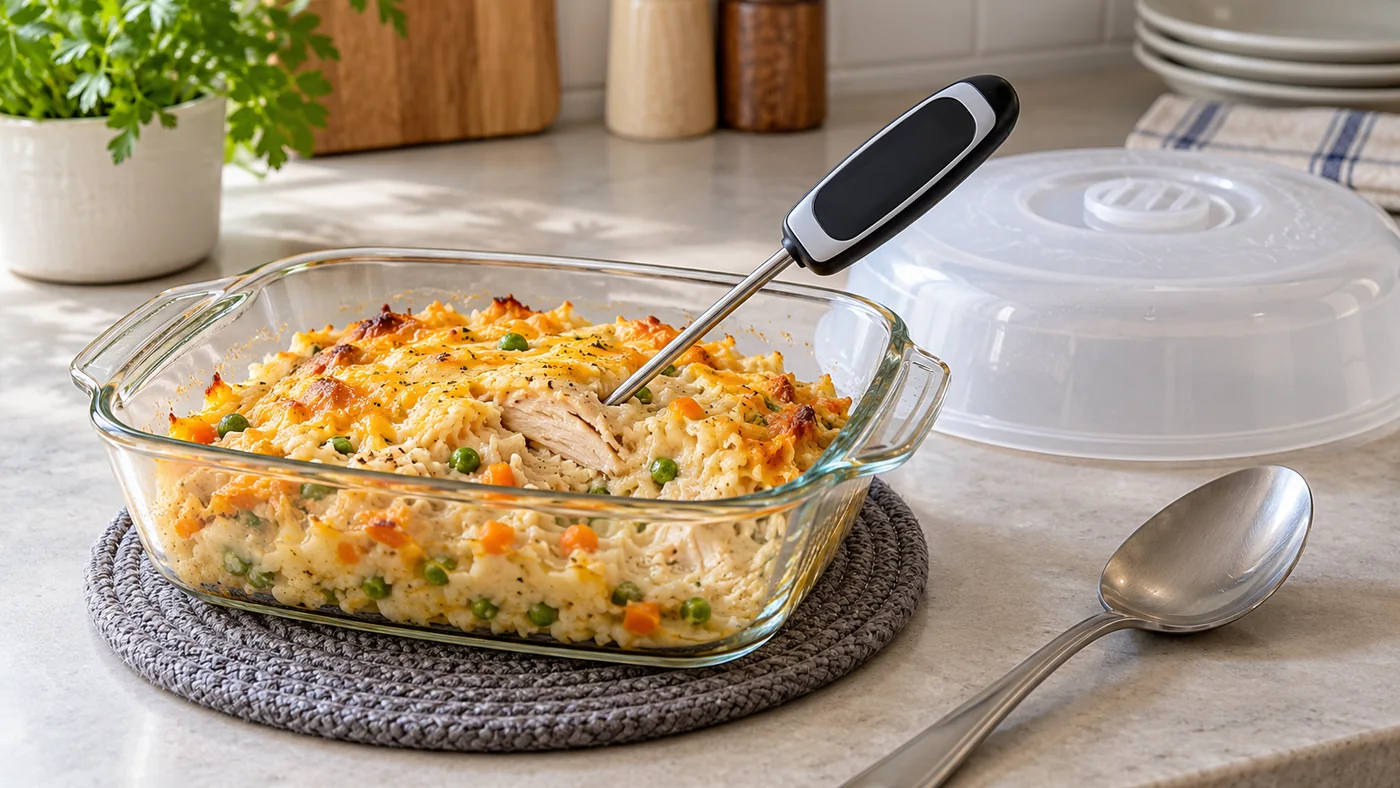
Check the container before choosing the appliance
Start with the cooking date and storage history. Under USDA household guidance, refrigerate perishable leftovers within 2 hours, or 1 hour above 90 F, and use refrigerated leftovers within 3 to 4 days. Keep the refrigerator at 40 F or below.
Discard food that exceeded those limits or has an unknown unsafe history. A normal smell, bubbling sauce, or a hot microwave cycle cannot establish that it was safe to start with. Take out the portion you need and leave the rest cold; there is no need to warm the container on the counter first.
Match the method to the texture
| Food | Useful approach | What to watch |
|---|---|---|
| Soup, stew, gravy, or sauced food | Stovetop or covered microwave container | Stir and check cold spots; bring soups, sauces, and gravies to a rolling boil. |
| Rice and sauced pasta | Covered microwave or suitable covered pan | Add a little compatible liquid if needed; stir and verify 165 F. |
| Pizza, fried chicken, or roasted potatoes | Oven, air fryer, or suitable skillet | A crisp outside does not prove the center reached 165 F. |
| Lasagna or a dense casserole | Smaller portions, covered for most of reheating | Measure the center, not just the bubbling edges. |
| Tacos or assembled bowls | Separate cold toppings from components being reheated | Heat the meat or other perishable cooked component to 165 F before assembling. |
How to use the microwave without cold centers
- Transfer food to a microwave-safe dish unless its original container is explicitly suitable for reheating. Remove foil and unsuitable packaging.
- Arrange an even layer. Break up dense mounds and distribute larger pieces rather than stacking them.
- Cover with a suitable vented cover. For dry rice or pasta, add a small amount of water, broth, or sauce compatible with the dish.
- Stir, rotate, or rearrange during heating as appropriate. Give it the standing time specified by the equipment or product instructions.
- Check several spots with a food thermometer. Continue heating and checking until all portions reach 165 F.
Short bursts make it easier to notice drying, but a timer is not a doneness measurement. Different microwave powers, food depths, and starting temperatures make a universal three-minute instruction unreliable.
Preserving crisp surfaces
A covered microwave traps moisture, which works against a crisp crust. An oven or air fryer can dry the surface more effectively. Arrange food with room for airflow and check it during reheating rather than assuming the appliance's preset is enough. USDA advises an oven setting no lower than 325 F when reheating leftovers. Do not use a slow cooker or chafing dish to bring cold leftovers up to temperature; safe hot holding is a separate job.
A skillet can help a pizza base regain some crispness. For fried chicken, use a method suited to the cut and appliance. In either case, verify 165 F; browned cheese or crackling breading is not the endpoint. The fried-chicken guide separates trapped steam from problems during frying.
A leftover steak is not exempt from the 165 F household reheating recommendation. Warming it to 110 F and briefly searing the outside does not establish that endpoint. Expect the steak to become more done as it reheats. Slicing it or serving it with sauce can make that change easier to accommodate.
Soups and casseroles need different checks
Stir soups, gravies, and sauces while heating and bring them to a rolling boil. Thick mixtures can be much hotter at the bottom than at the surface. Use smaller portions when practical and verify the temperature throughout.
Cut a casserole into manageable portions so the center can heat before the edges dry excessively. Cover where the recipe permits and uncover near the end if a browned topping is wanted. Do not add a fixed quantity of milk to every casserole; sauce, seasoning, and food depth differ.
Can you reheat the same food again?
Each cycle adds handling and more cooking. Reheating only what you will eat is simpler. If reheated food is saved again, it still needs prompt safe cooling and refrigeration; reaching 165 F does not excuse hours on a table. Nor does assembling a new dish from old leftovers erase the original ingredients' age.
Use the leftover-freezing guide to save portions earlier. For rice, read rice storage and reheating: storage matters because reheating is not a reliable remedy for toxins formed during mishandling.
Sources and method
These are researched reheating choices, not appliance-specific tested cooking times. Follow product instructions as well as the safe endpoint.