 CookBuddyGuide
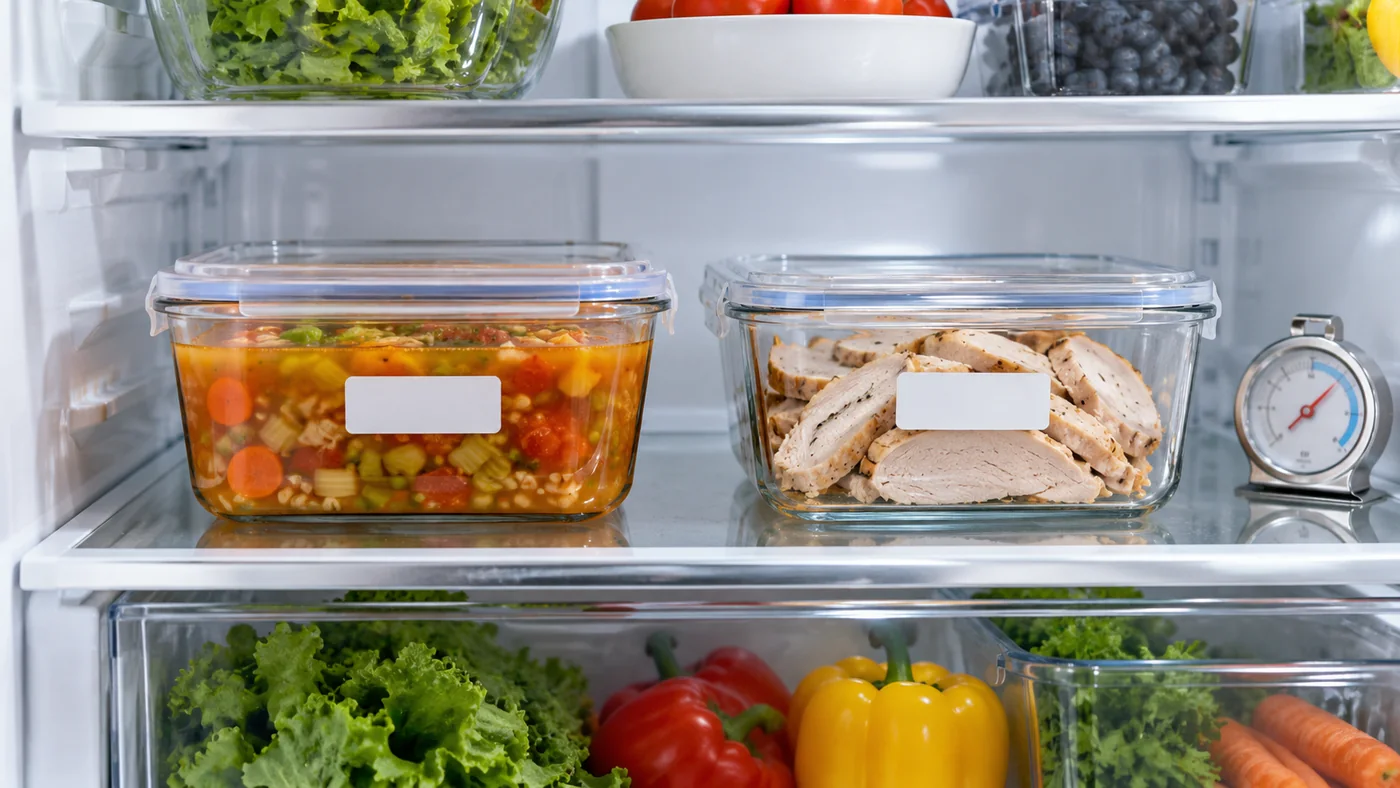
Which soup are you storing?
The federal cold-storage chart gives 3 to 4 days for refrigerated soups and stews with vegetables or meat. Recipe, ingredient, and package instructions may be more restrictive. This is not permission to keep soup with a questionable cooling history.
| Situation | How to handle it |
|---|---|
| Newly cooked broth, vegetable soup, bean soup, or chili | Cool and refrigerate promptly; plan on the 3-to-4-day household window. |
| Soup with noodles, rice, cream, or potatoes | The storage limit does not lengthen; texture may deteriorate sooner. |
| Commercial soup just opened | Refrigerate as directed and follow any shorter label limit. |
| Pot left out overnight | Discard it; boiling again is not a rescue. |
| Undated container with uncertain handling | Do not taste it to decide whether the clock has expired. |
Cool the portions, not a giant pot
A deep stockpot loses heat slowly. USDA recommends shallow containers and prompt refrigeration; hot food can go directly into the refrigerator in suitable smaller portions. The advice is not to leave the pot out until it reaches room temperature.
- Divide the soup into smaller, shallow, food-safe containers. Use containers that tolerate the food's temperature.
- For a large batch, an ice-water bath with stirring can help bring the temperature down promptly. Keep sink water out of the soup.
- Refrigerate within 2 hours of cooking, or within 1 hour when the surrounding temperature is above 90 F. Do not use the ice bath to justify an afternoon on the counter.
- Keep the refrigerator at 40 F or below, avoid crowding it with a single deep hot vessel, and label each portion with its cooking date.
A commercial two-stage cooling schedule is not a household instruction to leave soup unrefrigerated for six hours. Small portions and prompt refrigeration are the practical home approach.
Choose a container you can use safely
A wide, shallow container is more useful for initial cooling than a tall narrow jar. Glass, plastic, and other food-safe materials can work when they are suitable for the temperature and intended use. Do not pour boiling liquid into a cold glass vessel that is not rated for that temperature change.
For freezing, use freezer-suitable containers and leave the expansion space their maker specifies. Label the contents as well as the date: a frozen red sauce can be difficult to distinguish from tomato soup. Portioning also lets you thaw one meal without warming the whole batch.
What changes in the freezer?
The federal chart lists 2 to 3 months as a quality guide for frozen soup and stew. Food kept continuously at 0 F remains safe longer, but this does not repair unsafe handling before freezing.
Noodles can soften further, potatoes can change texture, and some dairy mixtures separate. These are quality limitations rather than proof that every such soup is impossible to freeze. When planning a batch specifically for the freezer, consider freezing the base and adding noodles or dairy during the finishing preparation.
Use freezing leftovers for packaging and portion planning. Freezing earlier is more useful than waiting until you cannot remember when the soup was made.
Reheat the portion you need
Bring soups, sauces, and gravies to a rolling boil when reheating, and verify 165 F throughout. Stir to distribute heat, especially in thick soup and microwave-heated portions. Bubbling at one edge does not establish the temperature of the center.
If rice or noodles absorbed the broth, add a little compatible liquid for consistency. There is no universal quarter-cup correction for every bowl. Add only what the texture needs and heat the whole portion safely. See the reheating guide for dense foods and microwave cold spots.
Does thick or cloudy broth mean it spoiled?
Not by itself. Chilled stock can gel naturally, and ingredients can make a soup cloudy or thick. Those changes do not establish safety either. Use the known cooking date, refrigeration temperature, and handling history.
Discard soup with mold, an abnormal odor, or other spoilage, but do not treat the absence of those signs as clearance for an old container. Soup left out overnight should be discarded even if it smells fine and you plan to boil it.
Sources and method
This guide follows U.S. household storage guidance. It does not report a shelf-life test or validate home canning.