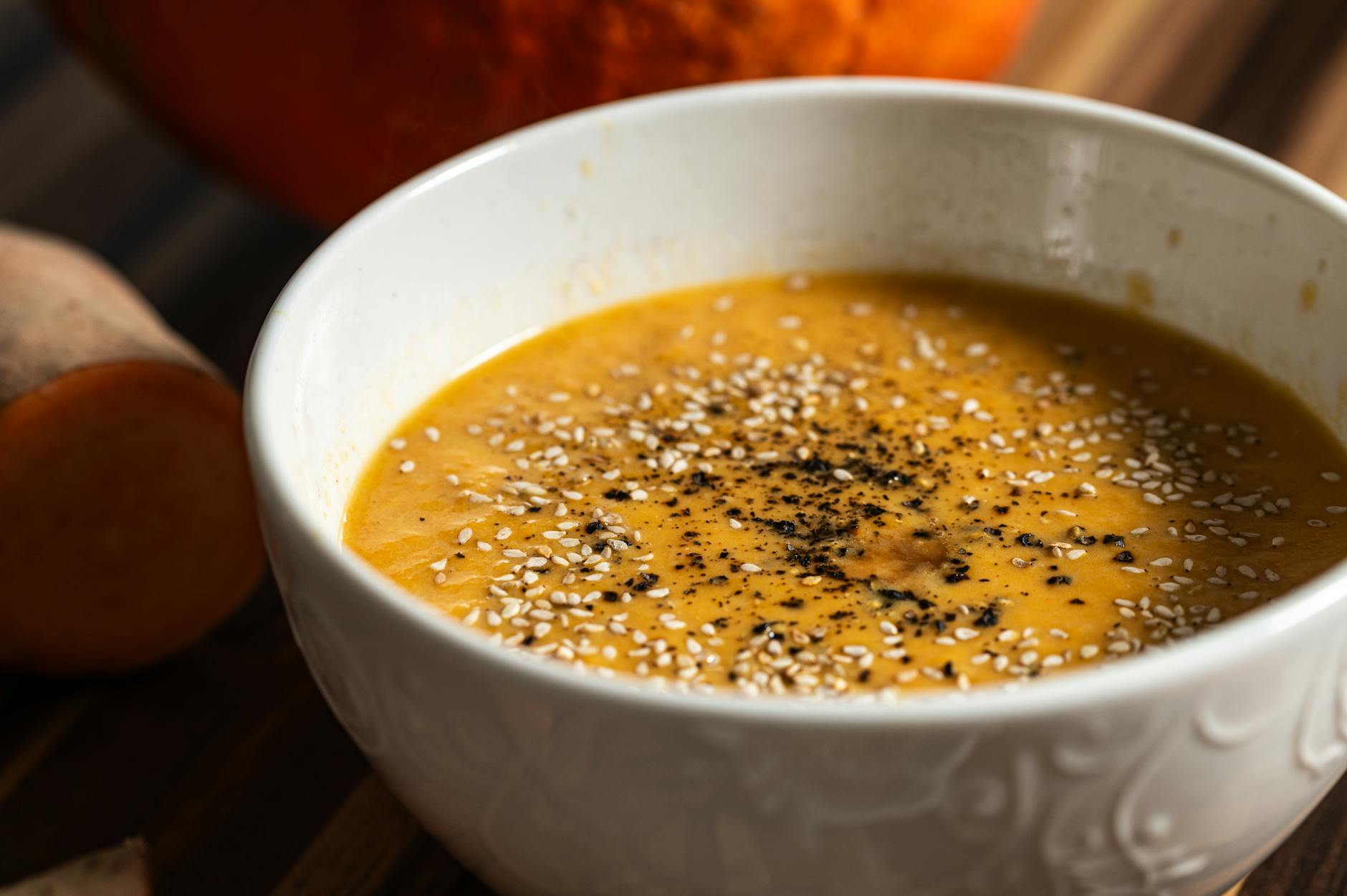
Quick Answer
For too salty soup, stop and diagnose the problem before adding more ingredients or heat. Identify whether the issue is moisture, heat, seasoning, structure, or safety, then make one controlled correction. If safety is uncertain, discard the food instead of trying to rescue it.
Practical note
For too salty soup, this guide centers on Lemon or Lime Juice, Apple Cider Vinegar, Sherry Vinegar or Red Wine Vinegar. Those are the checkpoints we would use first in a normal home kitchen before making a bigger change.
Decision table
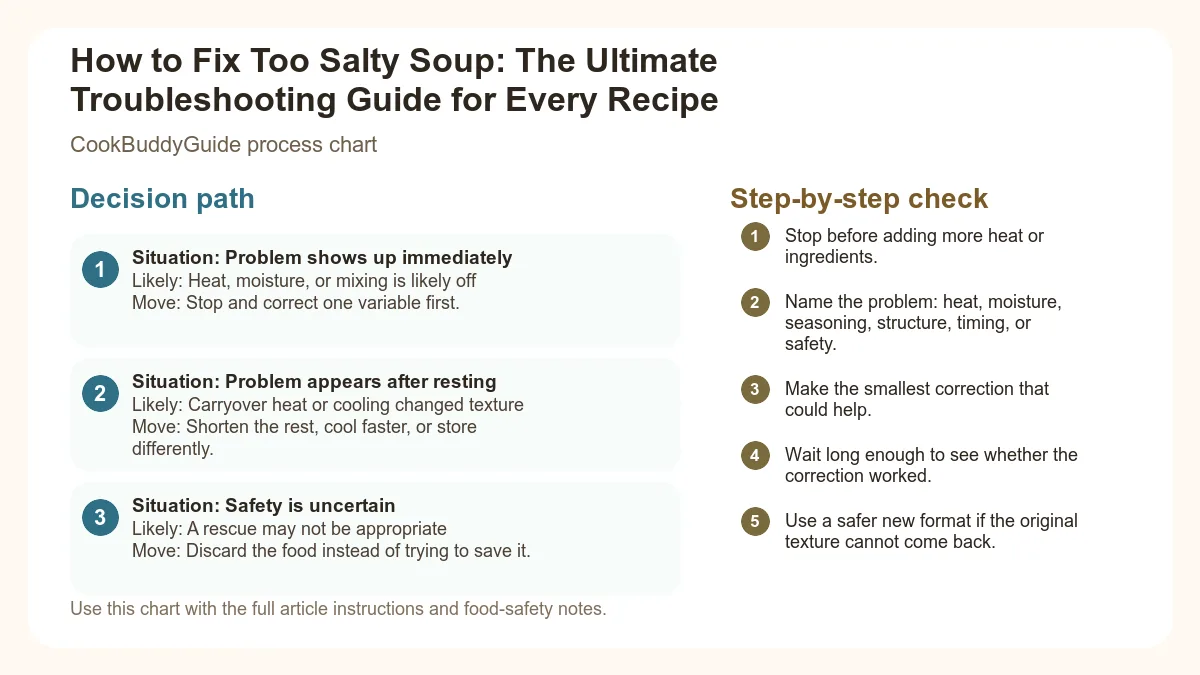
| Situation | Likely cause or meaning | Best move |
|---|---|---|
| Problem shows up immediately | Heat, moisture, or mixing is likely off | Stop and correct one variable first. |
| Problem appears after resting | Carryover heat or cooling changed texture | Shorten the rest, cool faster, or store differently. |
| Safety is uncertain | A rescue may not be appropriate | Discard the food instead of trying to save it. |
Step-by-step fix
- Stop before adding more heat or ingredients.
- Name the problem: heat, moisture, seasoning, structure, timing, or safety.
- Make the smallest correction that could help.
- Wait long enough to see whether the correction worked.
- Use a safer new format if the original texture cannot come back.
Common mistakes
- Adding several fixes at once and losing track of what helped.
- Using high heat to rush a texture problem.
- Trying to rescue food when safety is uncertain.
- Repeating the recipe without writing down the likely cause.
Related topic hubs
- Why is My Soup So Salty? Common Culprits
- Method 1: Dilution (The Most Reliable Fix)
- Method 2: Adding Acid to Balance Perception
- Method 3: Incorporating Fats to Mask Sharpness
- Method 4: Adding Starchy Bulk
- The Raw Potato Myth: Debunked by Science
- Method 5: The "Double the Batch" Strategy
- How to Fix Specific Types of Soup
- Prevention: How to Never Oversalt Again
Introduction: The 'Oh No' Moment in the Kitchen
Salt is the most important ingredient in your kitchen. It is the only rock we eat, and its primary job isn't just to make things "salty"—it’s to unlock the flavor profile of every other ingredient. Salt suppresses bitterness and enhances sweetness. However, there is a very fine line between "perfectly seasoned" and over-seasoned. When you cross that line, the sodium chloride begins to dominate your palate fatigue, making it impossible to taste the delicate notes of thyme, garlic, or mirepoix.
Why is My Soup So Salty? Common Culprits
The Danger of Reduction
Hidden Sodium in Store-Bought Ingredients
If you are using bouillon cubes, canned beans, or store-bought stocks, you are starting with a high baseline of salt. Many commercial broths contain more than 800mg of sodium per cup. According to daily sodium intake recommendations, this can quickly add up to your entire daily limit in one meal. Always opt for "low-sodium" versions so you can control the seasoning yourself, and check the package-specific bouillon cube water ratio before adding another cube.
The Table Salt vs. Kosher Salt Mistake
This is a classic pro-tip: kosher salt vs table salt is not a 1:1 swap. Table salt consists of tiny, dense cubes. Kosher salt (like Diamond Crystal) has large, hollow flakes. One teaspoon of table salt contains nearly twice as much salt by weight as one teaspoon of Diamond Crystal kosher salt. If a recipe calls for kosher and you use table salt, you have effectively doubled the salt in your dish.
Method 1: Dilution (The Most Reliable Fix)
The Dilution Rescue Technique
Ingredients: Unsalted water, low-sodium chicken broth, or homemade vegetable stock.
- Remove 1-2 cups of the salty broth from the pot (save it in a jar for a future base).
- Replace that volume with an equal amount of unsalted liquid.
- Bring the soup back to a simmer for at least 5 minutes to allow the flavors to meld.
- Seasoning to taste: Only add more pepper or herbs after the dilution is complete.
Method 2: Adding Acid to Balance Perception
If your soup is only slightly over the edge, you don't need to add more volume; you need to change the pH balance. Acid doesn't remove salt, but it acts as a chemical "distraction" for your taste buds. This is a culinary sleight of hand that works incredibly well.
- Lemon or Lime Juice: Best for chicken noodle soup, lentil soup, or chili.
- Apple Cider Vinegar: Perfect for pork-based stews or bean soups.
- Sherry Vinegar or Red Wine Vinegar: Ideal for tomato-based soups and beef stews.
The "Drop by Drop" Rule: Never pour acid directly from the bottle into the pot. Add it half a teaspoon at a time. Stir, wait 30 seconds for it to incorporate, and taste. You want to reach a point where the soup tastes "bright" but not "sour."
Method 3: Incorporating Fats to Mask Sharpness
Fat is a miracle worker when it comes to soup too salty how to fix dilemmas. Fat works by coating the tongue, creating a physical barrier between the salt molecules and your taste receptors. This softens the "sting" of the salt and creates a more rounded mouthfeel.
The Dairy Tempering Method
Adding cold dairy to hot soup can cause curdling. To fix a salty soup with fat safely:
- Ladle 1 cup of hot soup into a small bowl.
- Whisk in 1/4 cup of heavy whipping cream, sour cream, or full-fat Greek yogurt.
- Slowly pour the tempered mixture back into the main pot while stirring constantly.
- This ensures a smooth emulsification without any unsightly clumps.
For vegan or dairy-free options, full-fat coconut milk or a swirl of extra virgin olive oil can achieve a similar effect, though coconut milk will significantly alter the flavor toward a Thai or tropical profile.
Method 4: Adding Starchy Bulk
Sometimes the easiest way to fix a salty soup is to give the salt more "work" to do. By increasing the surface area of the solid ingredients, you distribute the salt over more items, effectively lowering the salt-per-bite ratio.
Consider adding unsalted canned beans (rinsed thoroughly), quick-cooking noodles, or pre-cooked rice. These ingredients are flavor sponges. They don't just sit in the broth; they absorb the salty liquid through osmosis. If you are making crockpot freezer meals, you can even toss in an extra bag of frozen cauliflower or mixed vegetables to bulk up the recipe and balance the seasoning.
The Raw Potato Myth: Debunked by Science
We have all heard the old wives' tale: "If your soup is too salty, just drop in a raw potato, let it simmer, and then throw it away. It will suck up all the salt."
The Exception: If you add potatoes and leave them in, you are using Method 4 (Bulking). The potato adds volume to the dish, which helps. But the idea that it acts as a "salt magnet" is pure fiction.
Method 5: The "Double the Batch" Strategy
If you have severely over-seasoned your soup to the point where dilution would make it too watery, there is only one 100% guaranteed fix: make another batch of the soup with zero salt and mix them together.
How to Fix Specific Types of Soup
Clear Broths and Consommés
These are the hardest to fix because there is nowhere for the salt to hide. Dilution is your best friend here. If dilution makes the broth taste "thin," try adding a tiny pinch of sugar. Sugar doesn't neutralize salt, but it can help balance the harshness. A splash of apple cider vinegar can also help restore the flavor profile.
Creamy Pureed Soups
Whether it’s butternut squash or potato leek, these are the easiest to fix. Add more heavy whipping cream or a dollop of unsalted butter. You can also puree a can of unsalted white beans and stir it in; it adds creaminess and bulk without changing the flavor significantly.
Hearty Meat Stews and Chilis
For these heavy hitters, consider adding more "solids." Extra beans, extra browned ground beef (unsalted), or even a handful of frozen corn. A squeeze of lime juice is the classic fix for an over-salted chili, as the acidity cuts right through the umami and salt.
Prevention: How to Never Oversalt Again
- Season in Layers: Add a tiny pinch of salt at every stage (when sautéing onions, when adding meat, etc.), but save the final "seasoning to taste" for the very end of the cooking process.
- The "End of Reduction" Rule: Never salt a soup to perfection at the beginning if you plan on simmering it for a long time. Wait until the reduction (cooking technique) is finished.
- Combat Palate Fatigue: If you have been tasting the soup for an hour, your brain will stop registering the salt accurately. Drink a glass of cold water or step away from the stove for five minutes before your final taste test.
- Use Kosher Salt: Switch to Diamond Crystal or Morton Kosher salt. The larger grains make it much easier to see exactly how much you are adding compared to fine table salt.
Frequently Asked Questions
A: Sugar can help balance the flavor if the soup is only slightly too salty, but it won't "fix" a major mistake. It works best in tomato-based soups where a little sweetness is already expected.
A: Yes. Boiling causes evaporation, which concentrates the salt. If your soup is already salty, keep it at a very low simmer or turn off the heat while you apply your fixes.
A: Not in a way that is safe or practical for home cooking. The only way to lower salt concentration is to increase the volume of other ingredients or dilute with unsalted liquid.
Conclusion: Saving Your Culinary Masterpiece
Finding out your soup is too salty is frustrating, but it is rarely a total loss. Whether you choose the reliable path of diluting with unsalted liquid, the clever trick of adding acid to change the pH balance, or the soothing addition of heavy whipping cream, you have the tools to save your meal.
Remember that cooking is a continuous learning process. Even careful cooks can still over-season a dish. The difference between a beginner and an expert is simply knowing which kitchen hacks to pull out of your sleeve when things go wrong. Next time you’re at the stove, taste often, season late, and keep a carton of low-sodium broth on standby. You’ve got this!
For more troubleshooting guides and easy weeknight meals, stay tuned to CookBuddyGuide.com, where we make home cooking accessible for every busy schedule.