 CookBuddyGuide
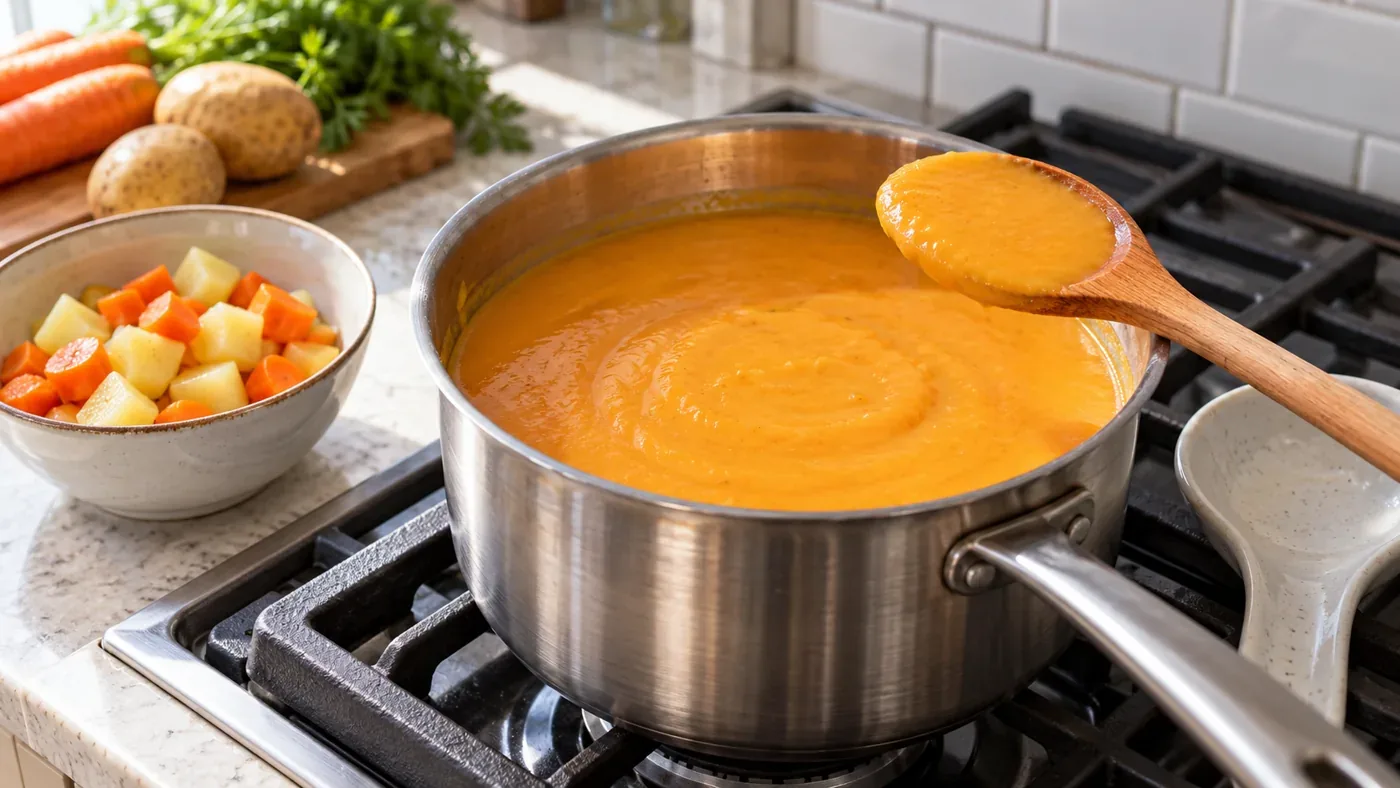
Choose the texture you want
Start with a spoonful at serving temperature. Soup often seems thinner while very hot and thickens as it cools. Check whether it needs more body, less water, or simply more richness; cream and butter do not solve all three problems.
| Current soup | Useful method | Tradeoff |
|---|---|---|
| Bean, lentil, squash, or potato soup | Mash or puree a portion of the cooked solids. | Changes some chunky texture into a fuller base. |
| Broth that should stay relatively glossy | Cold cornstarch slurry | Too much produces a gel-like texture; freezing can cause thinning. |
| Chowder or cream-style soup | Cooked flour-and-fat base | Gives an opaque finish and adds wheat unless the recipe specifies otherwise. |
| Rustic soup needing a small last-minute adjustment | Plain potato flakes | Adds potato flavor and can become pasty if overused. |
| Weak, watery, lightly seasoned broth | Gentle uncovered reduction | Reduces yield and may overcook delicate ingredients. |
| Thin but already salty soup | Unsalted puree or a little starch | Reduction would worsen the salt concentration. |
Use what is already in the soup
For a pot of roughly 4 cups, begin by removing about 1 cup containing plenty of tender beans or vegetables and only enough broth to process it. Mash it for a rustic finish, or puree it using equipment suitable for the temperature. Stir it back and reassess before repeating.
The Exploratorium's cream-free soup guide explains how pureed vegetables contribute starch and fibers to the broth. This works best when there are enough solids to begin with. Blending a cup of mostly clear liquid cannot create much thickness.
Keep meat, bones, bay leaves, and whole spices out of the portion you blend. Avoid prolonged high-speed processing of potato-heavy soup if you want to limit a gluey texture. For a potato-based variation, see potato soup without cream.
Hot-liquid precautions depend on the appliance and container. Vitamix's FAQ, for example, excludes hot blending in its unvented 20-ounce container. Follow your own manual rather than assuming every blender jar or sealed personal cup accepts hot soup.
Add cornstarch in small increments
For about 4 cups of thin soup, 1 tablespoon of cornstarch is a cautious first addition for modest thickening, not a universal finished ratio. Mix it with 2 tablespoons of cold water until smooth. Stir again just before adding because the starch settles.
- Bring the soup to a simmer. If it contains ingredients that cannot tolerate boiling, choose a separately prepared thickened base instead.
- Pour the slurry slowly into the moving liquid while stirring. Scrape around the bottom so no concentrated starch remains there.
- For ordinary cornstarch, follow the product's cooking directions. Argo specifies bringing the mixture to a full boil for 1 minute, then avoiding prolonged cooking.
- Cool a spoonful slightly and assess it before preparing another small slurry. Stop short of a gravy texture unless that is intentional.
Acidic soups and long cooking can reduce cornstarch's thickening effect. Freezing may also leave a watery texture on thawing. If you plan to freeze the soup, consider adding the final slurry after reheating instead of before storage.
Use flour or potato flakes deliberately
A separate flour base
Do not scatter dry flour over finished soup. For a modest first adjustment to about 4 cups, ladle out 1 cup of its broth. In a separate saucepan, melt 2 tablespoons of butter, remove from heat, and stir in 2 tablespoons of all-purpose flour until smooth. Gradually whisk in the reserved broth.
Return the base to medium heat, stirring until it boils. Reduce the heat and cook for 1 minute, then stir it back into the soup gradually. This adapts the white-sauce method in Illinois Extension's 4-H Cooking 201. Using broth from the pot avoids adding a whole extra cup of liquid. Assess the result before making more.
A flour base is easier to inspect before it enters a chunky soup. The same gradual-liquid technique used for preventing lumpy gravy applies. Do not keep adding uncooked flour to chase instant thickness.
Plain potato flakes
Start with 1 tablespoon for a 4-cup pot, stir gently, and allow the flakes to hydrate according to the packet before adding more. The Idaho Potato Commission describes dry mashed potato as a soup thickener. Choose plain flakes and check the ingredients for salt or dairy.
What not to add
Ordinary pasta water adds water as well as starch, so it is not a dependable fix for a watery pot. Cream may add richness without enough thickness, and a large pour can make soup thinner. If you overshoot, loosen the soup with unsalted liquid a little at a time.
Taste after the final texture adjustment. Correct excess salt before any reduction, and address missing flavor separately. A thick soup can still be bland.
Sources and method
- Exploratorium: Creamy Soups Without the Cream.
- Argo: Cooking and Preparation FAQs.
- University of Illinois Extension: 4-H Cooking 201, white sauce.
- Idaho Potato Commission: Quick Fix for Watery Mashed Potatoes.
- Vitamix: Product Support FAQs.
This researched reference compares published thickening principles, not firsthand trials. Quantities are incremental starting suggestions; the solids, acidity, and intended texture determine the final amount.