 CookBuddyGuide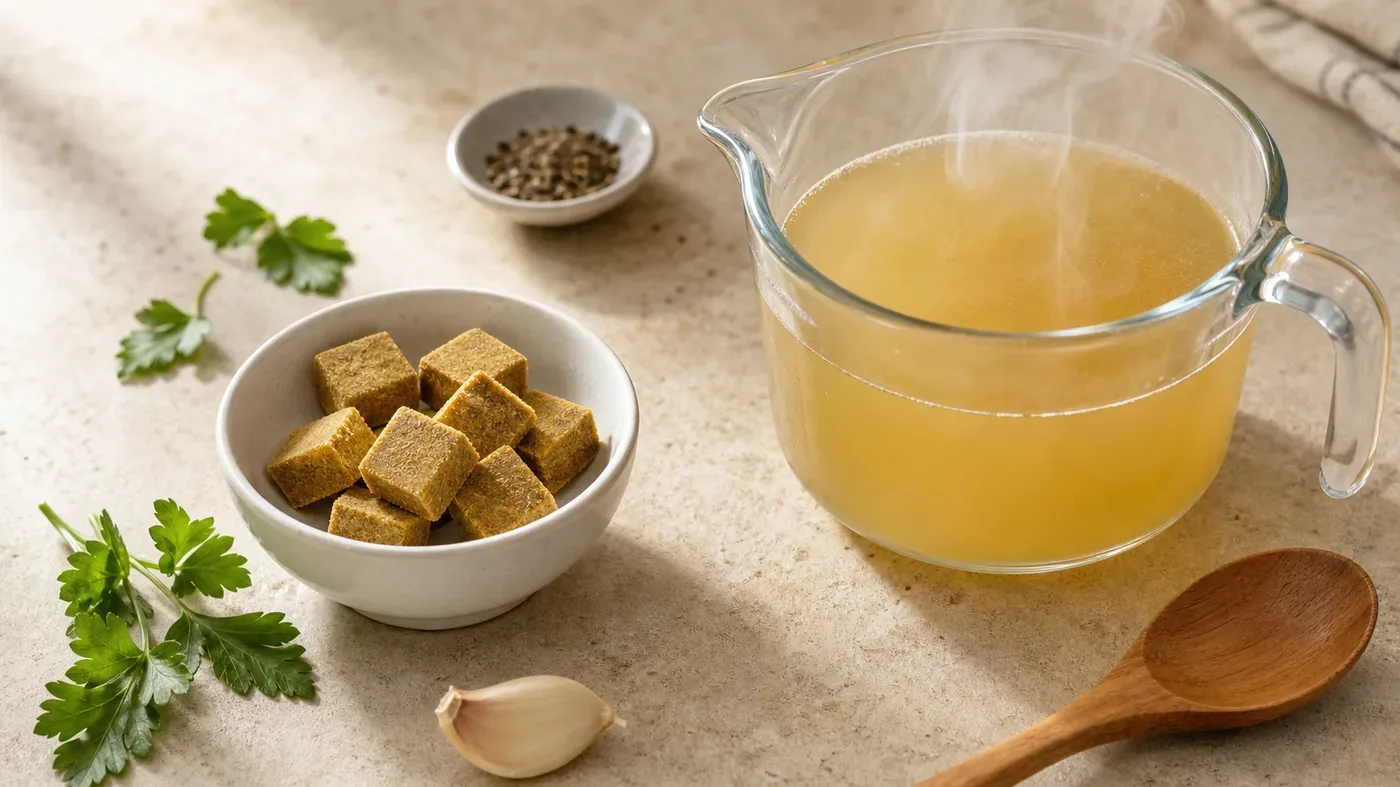
| Liquid needed | Example using a cube labeled for 2 cups | Best practice |
|---|---|---|
| 1 cup broth | 1/2 cube + 1 cup boiling water | Cut the cube cleanly or prepare 2 cups and reserve the rest. |
| 2 cups broth | 1 cube + 2 cups boiling water | Whisk until no firm bits remain. |
| 4 cups broth | 2 cubes + 4 cups boiling water | Start with less cube if other ingredients are salty. |
| 1 cup boxed broth replacement | 1 cup prepared bouillon | Match the finished liquid volume. |
| Direct seasoning | Crush a small portion into the dish | Add gradually and omit other salt until tasting. |
What are chicken bouillon cubes?
Chicken bouillon cubes are compact, shelf-stable seasoning concentrates that dissolve in hot water or melt into moist food. They are designed to provide salt, savory flavor, and chicken-style seasoning quickly. Unlike homemade stock, they do not supply the same natural gelatin or long-simmered flavor.
Ingredients differ by product and market. A cube may contain salt, fat, starch, flavorings, spices, yeast extract, chicken ingredients, or flavor enhancers. That variability is why the package should settle questions about strength, allergens, and whether the product suits a particular diet.
Bouillon, broth, and stock can often fill the same liquid role, but they are not identical. Our broth versus stock guide explains when that difference matters in a finished dish.
How do you choose the right cube-to-water ratio?
Start with the ratio printed on your box, then scale both cube and water together. Knorr's U.S. product page currently directs cooks to dissolve one chicken cube in 2 cups of boiling water, while the current Knorr Canada page lists 3 cups. That difference shows why a universal ratio is unreliable.
Step 1: Read the yield, not just the serving size
Look for wording such as "one cube makes two cups" or "dissolve in 500 mL." The nutrition panel's serving size may describe half a cube or one cup of prepared broth, so it is not always the mixing direction.
Step 2: Measure the water first
Bring the exact amount of water you need to a boil, or at least to steaming hot. Cubes dissolve more evenly in hot liquid. If the recipe already contains water, you can dissolve the cube in a small ladle of that hot liquid before stirring it back into the pot.
Step 3: Dissolve completely
Crush the cube with the back of a spoon, add it to the water, and whisk until no hard pieces remain. This prevents salty pockets. For gravy or a pan sauce, dissolve the cube separately rather than dropping it into thickened liquid.
Step 4: Taste before adding salt
Let the prepared broth cool enough to taste safely. If it seems stronger than the dish needs, add hot water. If it tastes mild, remember that simmering and reduction will concentrate it. Salt the finished dish only after those changes happen.
Where do chicken bouillon cubes work best?
Bouillon cubes work best when the liquid supports other strong ingredients rather than standing alone. They are handy in rice, gravy, casseroles, beans, braises, seasoned vegetables, and weeknight soup. In a clear sipping broth, their salt and seasoning profile will be more obvious.
Soup and stew
Prepare the bouillon at label strength, then add vegetables, meat, noodles, or beans. If the pot also includes canned tomatoes, cured meat, cheese, or salted beans, begin with weaker bouillon. For more ways to build flavor quickly, see these 30-minute soup recipes.
Rice, grains, and pasta
Replace the cooking water with prepared bouillon in the same measured amount. Do not add both full-strength bouillon and the recipe's usual salt. For rice, dissolve the cube before adding the grain so the seasoning spreads evenly.
Gravy and pan sauce
Use prepared bouillon when there are no roasting juices, then thicken it as the recipe directs. Because reduction raises salt concentration, start light. Our gravy without drippings method shows how the liquid fits with fat and flour.
Direct seasoning
A small crushed portion can season sautéed vegetables, meat mixtures, or beans without creating a full cup of liquid. Treat it like seasoned salt: crumble in a little, stir well, and taste. Never rub a concentrated salty cube heavily over meat and then add the normal salt too.
What can you use instead of a chicken bouillon cube?
The easiest substitute is the same volume of prepared chicken broth or stock. If a recipe expects 1 cup of liquid made from a cube, use 1 cup of carton broth. Choose low-sodium liquid when the dish contains other salty ingredients, then adjust at the end.
| Substitute | How to swap it | Best for |
|---|---|---|
| Chicken broth or stock | Use the same finished liquid volume | Soup, rice, gravy, casseroles |
| Chicken base paste | Follow the jar's water directions | Small batches and adjustable strength |
| Granulated chicken bouillon | Use the label's cube equivalent | Direct seasoning and easy measuring |
| Vegetable bouillon | Use the same prepared volume | Meat-free dishes, after checking the label |
| Water plus aromatics | Simmer with onion, garlic, herbs, pepper, and salt to taste | Recipes where chicken flavor is optional |
HERB-OX states that within its product family, one packet, one cube, and one teaspoon of granulated bouillon are equivalent. Do not assume that equivalence applies across brands. Paste bases also have their own directions and may require refrigeration after opening.
If you have no cube, stock, or carton broth, build a lighter soup from water, aromatics, and the ingredients already in the pot. Our chicken soup without stock guide covers that path in detail. For beef-flavored alternatives, use the separate beef broth substitute guide.
How should you manage sodium and allergens?
Bouillon can add a large share of a day's sodium in a small volume, so the label deserves a quick check. The FDA lists the Daily Value for sodium as less than 2,300 milligrams and calls 20% Daily Value or more per serving high.
For better sodium control
- Compare sodium per cup of prepared broth, not just per cube.
- Choose reduced-sodium bouillon when available.
- Use unsalted water, vegetables, grains, and beans around it.
- Make the broth weaker when the dish will reduce.
- Fix a salty pot with more unsalted ingredients or liquid, not sugar.
If dinner is already too salty, pause before adding potatoes or sweeteners. Dilution is usually the practical fix. Our guide to fixing overly salty soup explains how to rebalance the whole pot.
Read the full allergen label every time
Some chicken bouillon products contain wheat, soy, milk, or other ingredients that may not be obvious from the name. The FDA advises reading the entire ingredient list and the "Contains" statement because formulations can change.
Chicken-flavored does not automatically mean gluten-free, dairy-free, halal, or vegetarian. Check the current package for ingredients, allergen statements, certifications, and preparation directions before serving someone with dietary restrictions.
How should you store cubes and prepared broth?
Keep dry cubes in their original wrapping inside a cool, dry pantry, and follow the package's best-by date and storage directions. Discard cubes with damaged wrapping, moisture, mold, pests, or a rancid odor. Dry cubes do not need refrigeration unless their label says otherwise.
Once a cube is dissolved, the prepared broth is perishable. Refrigerate it promptly in a covered container. USDA says leftovers keep 3 to 4 days in the refrigerator. Reheat soup, sauce, and gravy thoroughly; USDA specifically advises bringing those foods to a rolling boil.
If you only need one cup but the cube makes two, cool the extra cup quickly and label it with the date. Use it in rice, sauce, or an enchilada sauce within the safe window, or freeze it in a small covered container.
Common chicken bouillon mistakes
The most common problems come from assuming every cube has the same strength, adding salt too early, or treating prepared broth like a dry pantry product. Each mistake has a direct fix.
- Using one cube per cup automatically: read the box first because the package may make two or three cups.
- Reading the nutrition serving as the mixing ratio: find the preparation directions instead.
- Dropping a whole cube into thick gravy: dissolve it in hot liquid first to avoid concentrated pockets.
- Salting before reduction: wait until the dish has finished simmering.
- Replacing a dry cube without replacing its liquid: match the finished broth volume required by the recipe.
- Ignoring the allergen statement: inspect every package, even if the previous box was suitable.
- Leaving prepared broth on the counter: refrigerate it promptly and use it within 3 to 4 days.
How many cups of broth does one chicken bouillon cube make?
Check the package because cube size and concentration vary. Knorr's current U.S. directions make 2 cups of broth from one cube, so half a cube makes 1 cup at that strength. Other products may direct one cube per cup or use a different volume.
Can chicken bouillon cubes replace chicken broth?
Yes. Dissolve enough cube in boiling water to make the liquid volume required by the recipe, following that product's label. Prepared bouillon works well in rice, casseroles, gravy, and strongly seasoned soup, but its saltier, simpler flavor is more noticeable in clear broth.
What can replace one chicken bouillon cube?
Replace the prepared liquid, not just the dry cube. Use the same volume of low-sodium chicken broth or stock. Within the HERB-OX product line, the manufacturer says one packet, one cube, and one teaspoon of granulated bouillon are equivalent, but always check another brand's label.
Do chicken bouillon cubes need refrigeration?
Unopened dry cubes are usually kept in a cool, dry pantry according to package directions. Once dissolved, treat the liquid like prepared broth: refrigerate promptly in a covered container and use it within 3 to 4 days, following USDA leftover guidance.
Sources used
CookBuddyGuide checked product ratios, label guidance, sodium advice, and prepared-broth storage against current manufacturer and U.S. government references.