 CookBuddyGuide
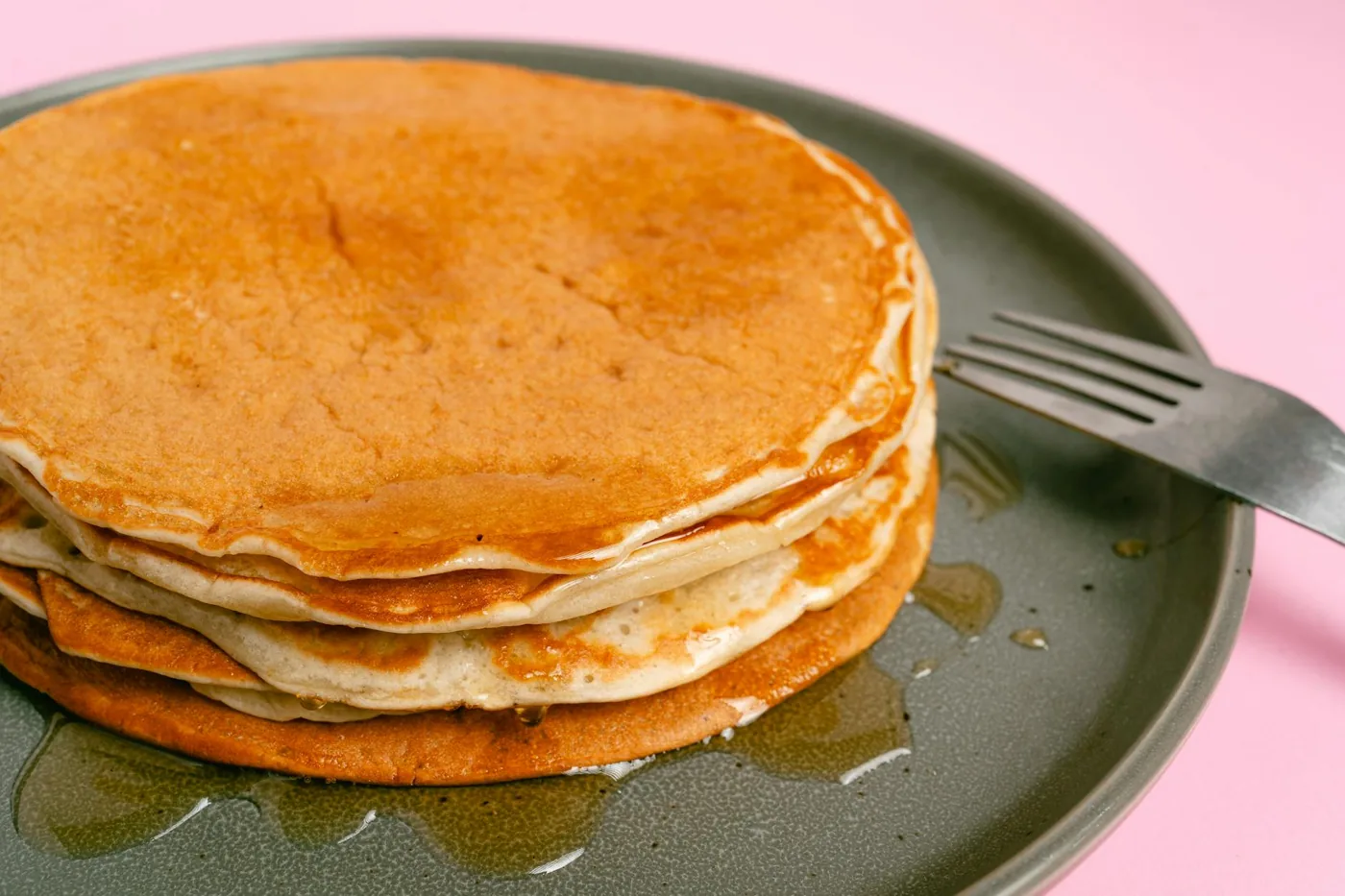
Match the texture before changing the batter
Chewy, dry, and raw-centered pancakes need different corrections. Cut open the first cooked pancake rather than judging only its color.
| Result | Likely contributors | Next action |
|---|---|---|
| Chewy throughout, with few air pockets | Overmixed batter or excess flour | Stop stirring; check measurements before adding anything. |
| Dark underside, wet center | Too much heat or an oversized portion | Lower heat and make smaller pancakes. |
| Pale, dry pancakes after a long cook | Insufficient heat prolonged cooking | Increase heat modestly for the next pancake. |
| Flat pancakes from gently mixed batter | Weak leavener, a substitution, or incorrect ratios | Check the formula and test the baking powder. |
| Tender when fresh, tough after reheating | Moisture loss during holding or reheating | Shorten holding time and reheat only what you need. |
Do not chase every lump
King Arthur Baking's published mixing comparison explains two consequences of excessive stirring: stronger gluten development and loss of gas bubbles. Both can work against a tender, lifted pancake.
- Mix the dry ingredients together before adding liquid so the leavener disperses evenly.
- Mix the eggs, liquid, and fat separately as the recipe directs.
- Combine wet and dry with gentle strokes. Scrape the bowl's bottom to find dry pockets.
- Stop when no large patches of dry flour remain. Small lumps are acceptable in ordinary fluffy pancake batter.
A fixed rule of ten strokes cannot suit every bowl, whisk, or batch size. Use the batter's condition instead. This advice also does not mean that every crepe, gluten-free mix, or souffle pancake should be mixed the same way.
For an overworked batch, stop mixing and cook a small pancake. A short recipe-approved rest may help, but it cannot reliably restore lost bubbles or reverse all gluten development. Do not promise yourself that a 45-minute rest will repair any batter.
Check measurement before thinning
Follow the recipe's flour weight when it supplies one. Otherwise spoon flour into the cup and level it without packing. Bread flour, whole wheat, and all-purpose flour do not behave identically, so keep the named flour until the method is working.
Let batter rest only as its recipe or mix directs. King Arthur's pancake tips describe a brief rest while the griddle heats, during which batter thickens. Thickening is not automatically a fault. Repeatedly adding milk to keep it thin can leave later pancakes flat.
If batter is clearly stiffer than the recipe describes, gently fold in a little of its specified liquid, then cook another sample. There is no universal flour-to-milk volume ratio. A milk-free pancake formula is more dependable than removing milk from an unrelated recipe without replacing its liquid.
Test questionable leavener using the baking-powder freshness check. If you used baking soda instead, review the balance between baking soda and acid; baking soda and baking powder are not interchangeable spoon for spoon.
Adjust the heat using the first pancake
King Arthur's Simply Perfect Pancakes uses a medium-heat skillet or a 375-degree F (190-degree C) electric griddle. Treat that as a recipe example, not an exact setting for every pan and batter.
Preheat according to your cookware's instructions and apply a light film of fat if appropriate. Do not heat a nonstick pan until water beads race around it. All-Clad's nonstick care instructions call for low or medium heat and warn against overheating empty cookware.
Portion consistently, leaving space for spreading. Flip when the underside is golden, bubbles are breaking on top, and the edge begins to look set. Cook the second side until the middle is cooked through. Avoid pressing with the spatula, which compresses the pancake, and avoid repeated flips as a substitute for adjusting the burner.
What can you save once they are cooked?
A cooked, rubbery pancake cannot become fluffy again. Serve a mildly tough but fully cooked batch with yogurt or fruit if the texture is acceptable; stop prolonged cooking from making it drier. For holding and reheating, use the leftover reheating guide rather than repeatedly warming a whole stack.
A wet, raw center needs more cooking, not syrup to disguise it. FDA flour guidance says not to taste raw batter, including batter without eggs.
Sources and method
- King Arthur Baking: Don't make this pancake mistake.
- King Arthur Baking: Best pancake tips.
- King Arthur Baking: Simply Perfect Pancakes.
- All-Clad: Care & Use.
- FDA: Handling Flour Safely.
This reference uses published baking instruction and manufacturer care guidance. Published comparisons belong to their named source; CookBuddyGuide did not test pancake batches for this article.