Quick Answer
The right substitute for brown sugar depends on what that ingredient contributes: flavor, salt, acidity, fat, moisture, or structure. Use the comparison below to choose the closest match and adjust the amount for your recipe.
Practical note
For brown sugar recipes substitutes, we judge swaps by job first: flavor, salt, acid, fat, moisture, or structure. That keeps a substitution from fixing one problem while creating another.
Decision table
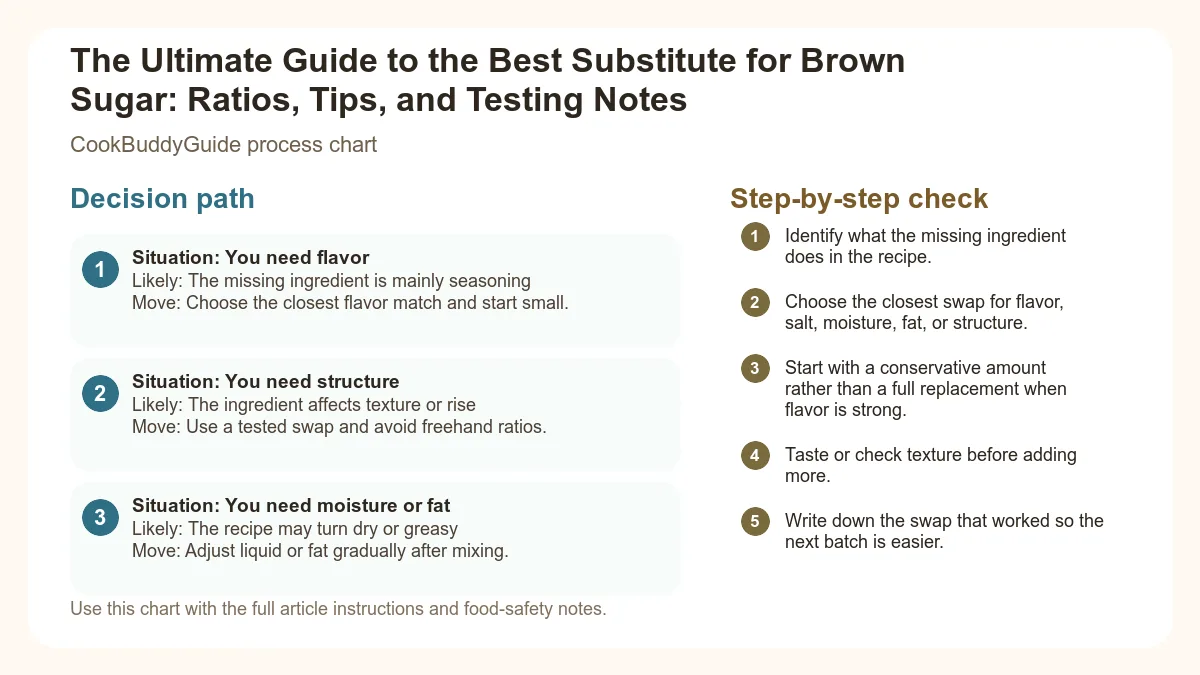
| Situation | Likely cause or meaning | Best move |
|---|---|---|
| You need flavor | The missing ingredient is mainly seasoning | Choose the closest flavor match and start small. |
| You need structure | The ingredient affects texture or rise | Use a practical swap and avoid freehand ratios. |
| You need moisture or fat | The recipe may turn dry or greasy | Adjust liquid or fat gradually after mixing. |
Step-by-step fix
- Identify what the missing ingredient does in the recipe.
- Choose the closest swap for flavor, salt, moisture, fat, or structure.
- Start with a conservative amount rather than a full replacement when flavor is strong.
- Taste or check texture before adding more.
- Write down the swap that worked so the next batch is easier.
Common mistakes
- Replacing a strong ingredient 1:1 before tasting.
- Choosing a flavor match when the recipe actually needs structure.
- Forgetting that salty swaps can change the whole dish.
- Adding extra liquid before the batter, dough, or sauce has time to hydrate.
Related topic hubs
Table of Contents
- Why Brown Sugar is Unique in Baking
- The #1 Best Substitute: White Sugar + Molasses
- Dry Pantry Staples as a Replacement
- Using Honey, Maple Syrup, and Agave
- Specialty Swaps: Muscovado and Piloncillo
- How Substitutes Affect Texture, Spread, and Flavor
- Testing Notes: Our Kitchen Experiments
- Common Mistakes to Avoid
- Quick Reference Ratio Chart
- How to Prevent Brown Sugar from Hardening
Why Brown Sugar is Unique in Baking
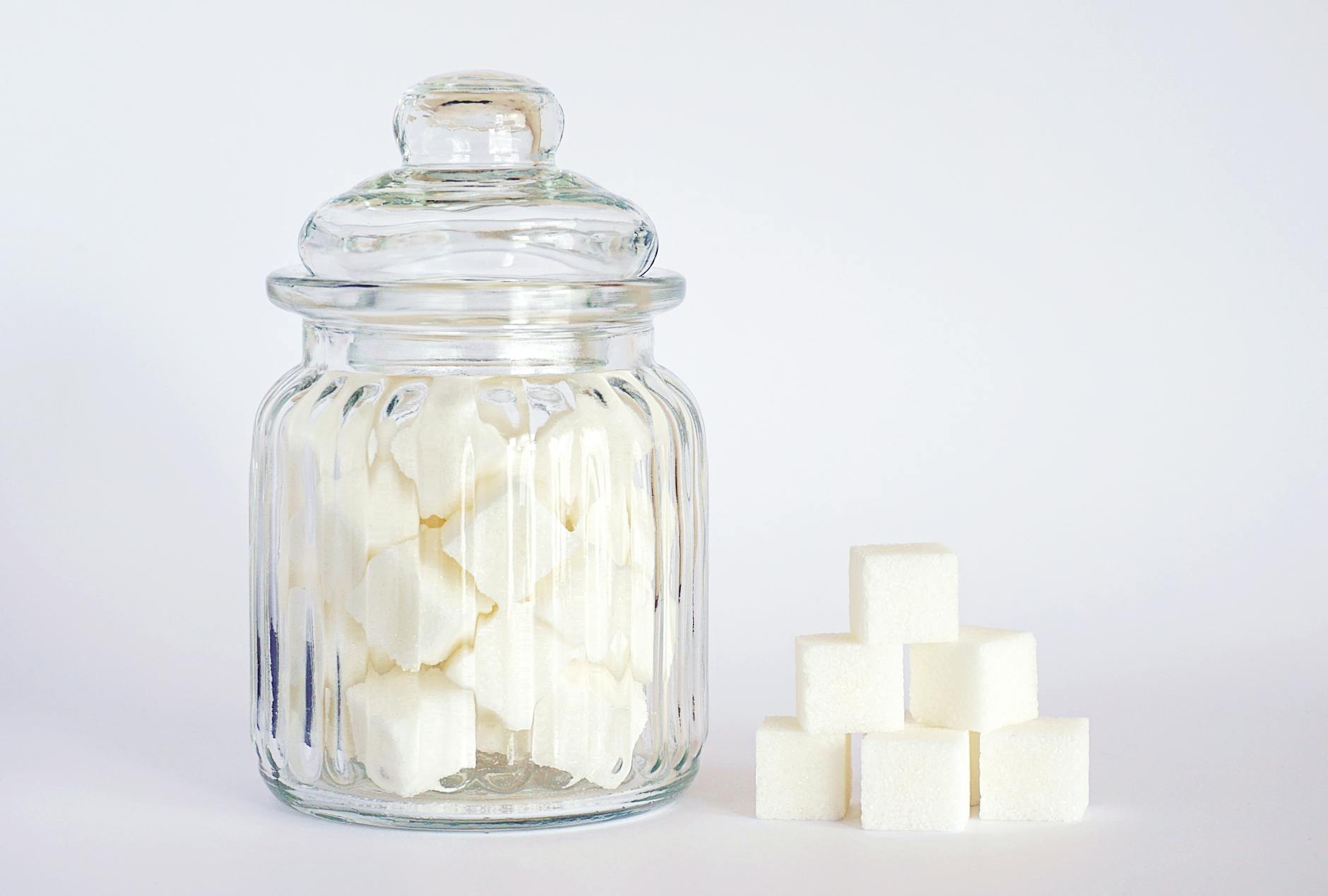
To find a truly effective substitute for brown sugar, we first have to understand what it actually is. Most commercial brown sugar is simply refined sucrose (granulated white sugar) that has had molasses added back into it. This small addition changes everything about how the sugar behaves in your oven.
The Role of Molasses
Molasses is the soul of brown sugar. It provides the characteristic butterscotch flavor and deep color, but its most important role is chemical. Molasses is slightly acidic. In the world of baking science, this acidity is crucial because it reacts with baking soda to produce carbon dioxide. This reaction provides "lift" and leavening to your baked goods. If you swap brown sugar for a neutral sweetener without accounting for this acidity, your cookies may turn out flat or overly dense.
Hygroscopic Properties: Why Texture Matters
The #1 Best Substitute for Brown Sugar: White Sugar + Molasses
DIY Brown Sugar Recipe
For Light Brown Sugar: Mix 1 cup of granulated sugar with 1 tablespoon of molasses.
For Dark Brown Sugar: Mix 1 cup of granulated sugar with 2 tablespoons of molasses.
Instructions: Place the sugar in a medium bowl and drizzle the molasses over the top. Use a fork or a small whisk to mash the molasses into the sugar. Continue mixing until the color is uniform and no dark clumps remain. For large batches, a food processor is your best friend—just pulse for 30 seconds!
Mixing Techniques for Perfect Incorporation
Dry Pantry Staples as a Brown Sugar Replacement
Sometimes, you don't even have molasses. Don't panic. There are several other dry sweetener alternatives hiding in your kitchen pantry that can work in a pinch.
Granulated White Sugar (The Emergency Swap)
Can you use 100% white sugar as a substitute for brown sugar? Yes, but with caveats. Because white sugar lacks the moisture of brown sugar, your cookies will be crispier and have more cookie spread. To mimic the effect of brown sugar, Add an extra teaspoon of liquid (like milk or water) per cup of sugar used. If the recipe calls for baking soda, I also add a 1/2 teaspoon of cream of tartar to provide the missing acidity.
Coconut Sugar: The Best 1:1 Natural Alternative
Turbinado and Raw Sugars
Turbinado sugar (often sold as "Sugar in the Raw") is often confused with brown sugar because of its color. However, as noted in this breakdown of turbinado vs brown sugar, turbinado has much larger crystals and very little moisture. If you use it as a 1:1 brown sugar replacement, it won't dissolve properly in your batter, leading to a gritty texture. Consider pulsing turbinado sugar in a spice grinder or blender for 5-10 seconds before using it in delicate bakes.
Using Honey, Maple Syrup, and Agave
Liquid sweeteners are excellent for flavor but can be tricky for chemistry. Because brown sugar is a solid, replacing it with a liquid changes the hydration level of your entire recipe. This is where most home cooks run into trouble.
The 3/4 Cup Rule for Liquid Swaps
Adjusting Flour and Liquid Ratios
When you use a liquid substitute for brown sugar, you must reduce the other liquids in the recipe to prevent a soggy mess. Usually, remove 2 to 3 tablespoons of liquid (milk, water, or even egg white) for every cup of syrup used. This is a tip I frequently share when developing sweet breakfast meal prep ideas, where consistency is key for reheating later in the week.
Temperature Adjustments to Prevent Burning
Specialty Swaps: Muscovado and Piloncillo
If you happen to have specialty sugars on hand, you might actually end up with a better result than the original recipe intended!
Muscovado: The Intense Choice
Piloncillo: The Mexican Baking Secret
Piloncillo comes in hard, cone-shaped blocks. It is essentially unrefined cane sugar used extensively in Mexican cooking. To use it as a substitute for brown sugar, you must grate the cone using a box grater or a microplane. It has a complex, earthy sweetness that works beautifully in coffee cakes and spiced cookies.
How Substitutes Affect Texture, Spread, and Flavor
- The Science of Cookie Spread: White sugar is more "short," meaning it melts quickly and allows the dough to spread. Brown sugar, because of its acidic reaction with leavening agents, helps the dough set faster, leading to a taller, softer cookie.
- Chewiness vs. Crispness: If you want a "snap," go for white sugar or turbinado. If you want a "bend," you need the moisture of molasses or a liquid brown sugar replacement.
- Maillard Reaction and Color: This is the chemical reaction between amino acids and reducing sugars that gives browned food its distinctive flavor. Brown sugar accelerates this process, giving you that deep "baked" flavor much faster than white sugar.
Testing Notes: Our Kitchen Experiments
At CookBuddyGuide, we don't just write about food; we test it until we get it right. Here are the real-world results from our most recent batch of testing for the best brown sugar substitutes.
The Chocolate Chip Cookie Test
The Quick Bread/Muffin Test
In muffins, maple syrup was the clear winner. It added a depth of flavor that brown sugar simply couldn't match. However, we had to increase the flour by 2 tablespoons to keep the muffins from sinking in the middle. Coconut sugar also performed exceptionally well here, as the moisture from the fruit (bananas or blueberries) compensated for the sugar's dryness.
The Glaze and Sauce Test
Common Mistakes to Avoid
- Packing the Substitute Incorrectly: We are taught to "pack" brown sugar into a measuring cup. You should do the same with coconut sugar and DIY molasses-sugar, but never with granulated white sugar or turbinado.
- Ignoring the Acidity Balance: If you use white sugar and forget to add an acidic component (like a splash of lemon juice or cream of tartar), your baking soda won't activate, and your cake won't rise.
- Over-mixing Liquid Substitutes: When you add liquid sweeteners, you are adding water. Water + Flour = Gluten. If you over-mix a batter using honey or syrup, your final product will be tough and rubbery.
Quick Reference Ratio Chart for Busy Cooks
Save this table to your phone or print it out for your kitchen pantry door! These are the 1-cup equivalents for brown sugar.
| Substitute | Amount per 1 Cup Brown Sugar | Notes |
|---|---|---|
| White Sugar + Molasses | 1 cup sugar + 1 tbsp molasses | Best overall 1:1 replacement. |
| Coconut Sugar | 1 cup | Add 1 tsp liquid if batter is dry. |
| Maple Syrup or Honey | 3/4 cup | Reduce other liquids by 3 tbsp. |
| Granulated White Sugar | 1 cup | Cookies will be crispier/flatter. |
| Muscovado Sugar | 1 cup (lightly packed) | Very moist; intense flavor. |
How to Prevent Brown Sugar from Hardening
The best way to avoid needing a substitute for brown sugar is to keep your supply fresh and soft. Brown sugar hardens because the moisture in the molasses evaporates, causing the sugar crystals to stick together.
The Terra Cotta Disk Method
The Bread Slice Hack
If your sugar is already hard, put a slice of plain white bread in the container and seal it tightly. Within 24 hours, the sugar will have absorbed the moisture from the bread (which will be hard as a rock), and your sugar will be soft again. An apple wedge also works, but be careful—it can mold if left too long!
Proper Airtight Storage
Never leave brown sugar in the plastic bag it came in once it’s opened. Transfer it to a glass jar or a high-quality plastic container with a silicone seal. Squeeze out as much air as possible before sealing.
Frequently Asked Questions
Yes, you can! Just remember that it will add more moisture and a slight molasses flavor. Your baked goods will be softer and darker in color.
The best swap is 1 cup of white sugar plus 2 tablespoons of molasses. If you don't have molasses, use a 1:1 ratio of light brown sugar plus a teaspoon of liquid sweetener like honey to deepen the flavor.
Not significantly. While molasses contains some minerals, the amounts in a serving of brown sugar are negligible. Both are processed sugars and should be used in moderation.
Final Thoughts from the CookBuddyGuide Kitchen
Ready to put your new knowledge to the test? Check out our latest sweet breakfast meal prep ideas for more ways to use these sweeteners in your daily routine.