Quick Answer
This guide explains how to keep bananas fresh longer. It also covers how to store bananas using 10 reliable methods to stop browning and save money today!
Practical note
For How to Keep Bananas Fresh Longer, this guide centers on Check the "Necks", The Green Tip Rule, Avoid the "Dull" Ones. Those are the checkpoints we would use first in a normal home kitchen before making a bigger change.
Decision table
| Situation | Likely cause or meaning | Best move |
|---|---|---|
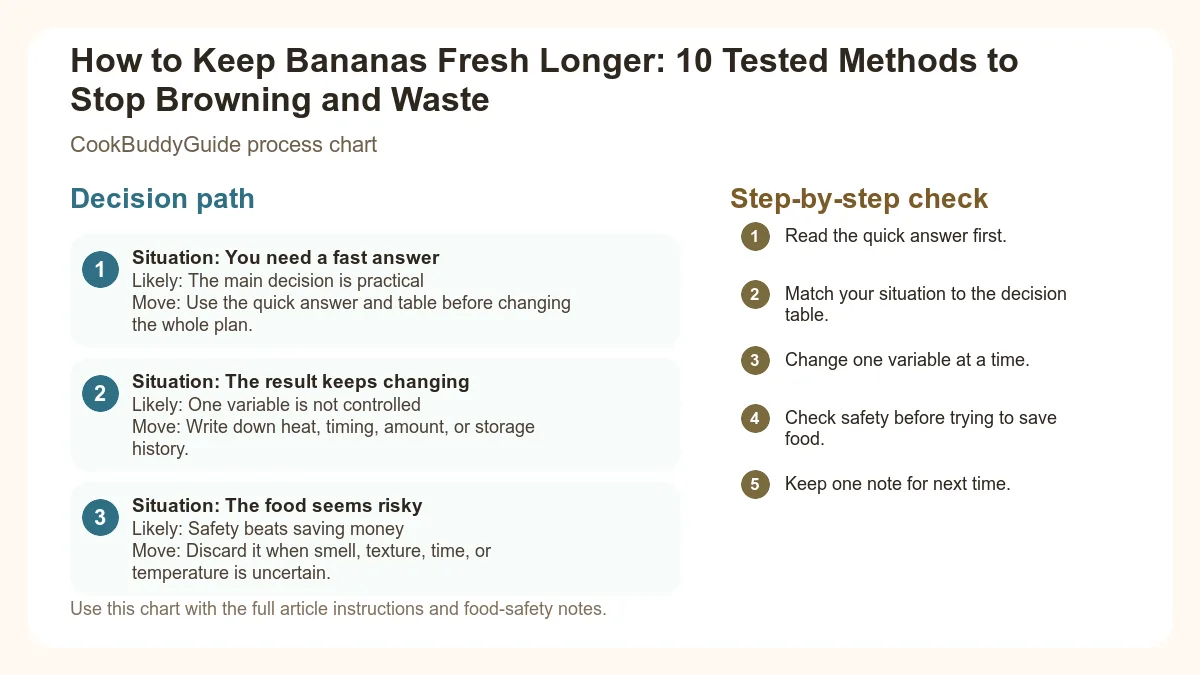
| You need a fast answer | The main decision is practical | Use the quick answer and table before changing the whole plan. |
| The result keeps changing | One variable is not controlled | Write down heat, timing, amount, or storage history. |
| The food seems risky | Safety beats saving money | Discard it when smell, texture, time, or temperature is uncertain. |
Step-by-step fix
- Read the quick answer first.
- Match your situation to the decision table.
- Change one variable at a time.
- Check safety before trying to save food.
- Keep one note for next time.
Common mistakes
- Skipping the quick answer and changing too much at once.
- Treating quality problems and safety problems the same way.
- Not writing down the detail that caused the repeat problem.
Related topic hubs
Table of Contents
The Science of Ripening: Understanding Ethylene Gas
To understand how to store bananas effectively, we have to look at the chemistry happening under that yellow peel. The Cavendish banana—the variety most of us buy at the supermarket—is incredibly sensitive to its environment. As a climacteric fruit, it breathes. During this respiratory process, it releases ethylene gas primarily through the "crown" or the stem where the fruits are joined together.
According to the science of banana ripening, ethylene acts as a signal to the fruit's cells to start breaking down acids and converting starches into sugars. This is why a green banana is starchy and firm, while a brown one is soft and incredibly sweet. However, ethylene is contagious. If one banana in the bunch starts to ripen rapidly, it emits more gas, which then signals the neighboring bananas to speed up their own ripening. This creates a chain reaction that can turn a whole bunch brown overnight.
10 Reliable Methods to Keep Bananas Fresh Longer
Method 1: The Plastic Wrap Stem Trick
Method 2: Using a Banana Hanger for Airflow
Bananas are delicate. When they sit on a hard countertop, the weight of the bunch presses against the bottom fruits, causing "gravity bruises." These bruises damage the cell walls, which releases even more ethylene and invites oxidation. A banana hanger allows for 360-degree airflow, preventing gas from pooling underneath the fruit and eliminating pressure sores. After switching to a hanger, I noticed significantly fewer dark soft spots on the "underside" of my fruit.
Method 3: Strategic Separation from Other Fruits
Method 4: Refrigerating Ripe Bananas
There is a persistent myth that putting bananas in the fridge ruins them. This is only half-true. If you put a green banana in the fridge, the cold will "kill" the ripening enzymes and it will never become sweet. However, once a banana has reached your desired level of ripeness, moving it to the refrigerator is the best way to pause time. While the cold will cause the peel to turn dark brown or black due to a reaction in the skin's pigments, the fruit inside remains firm, pale, and delicious. This is a tip I frequently share when discussing storing bananas in the refrigerator.
Method 5: The Airtight Container Method for Sliced Bananas
If you have already peeled or sliced your fruit, you are fighting oxidation—the reaction of the fruit's enzymes with oxygen. To combat this, place slices in an airtight container. To take it a step further, consider placing a piece of plastic wrap directly onto the surface of the slices before sealing the lid to minimize air contact. This is essential for healthy breakfast meal prep ideas where you want to prep fruit for the week.
Method 6: Citrus Juice Bath (Lemon vs. Pineapple)
Method 7: The "Cool, Dark Place" Strategy
Method 8: Freezing for Long-Term Preservation
When you know you won't get to them in time, the freezer is your best friend. However, never freeze them in the peel! It becomes a slimy mess to remove later. Peel them, slice them into rounds, and flash-freeze them on a baking sheet before transferring them to a freezer bag. This prevents them from clumping into a giant "banana brick," making it much easier to portion out for banana bread or morning shakes.
Method 9: Buying in Ripeness Stages
This is a "pro-shopper" move. Instead of buying one bunch of 6 identical bananas, Often, select 3 very green ones and 3 yellow ones from different displays. By the time you finish the yellow ones, the green ones will have naturally ripened to perfection. This staggered approach ensures you always have a banana at the peak of its nutritional profile.
Method 10: Using Beeswax Wraps for Individual Fruits
Banana Shelf Life Comparison Chart
Based on my extensive kitchen testing, here is what you can expect from various storage methods starting from the day you bring home "Perfectly Yellow" bananas.
| Storage Method | Green Phase | Yellow Phase | Spotted/Ripe | Total Days |
|---|---|---|---|---|
| Countertop (Open Air) | 1-2 Days | 2-3 Days | 1-2 Days | 5-7 Days |
| Wrapped Stems (Individual) | 2-3 Days | 4-5 Days | 2-3 Days | 8-11 Days |
| Banana Hanger | 1-2 Days | 3-4 Days | 2-3 Days | 6-9 Days |
| Refrigerator (Once Ripe) | N/A | N/A | 5-7 Days | 10-14 Days |
| Freezer (Peeled/Slices) | N/A | N/A | 2-3 Months | 90+ Days |
Common Mistakes: What NOT to Do When Storing Bananas
Sometimes, our well-intentioned efforts to save food actually speed up its demise. Avoid these three common pitfalls:
The Plastic Bag Trap
Storing Near the Oven or Toaster
The "Fruit Bowl" Mistake
As mentioned earlier, apples and bananas are "frenemies." While they look beautiful together in a decorative bowl, the apples will kill the bananas. If you must use a fruit bowl, ensure it is a wire mesh style that allows for maximum gas dissipation, and try to keep the bananas on top or hanging over the side.
How to Store Bananas Once They Are Cut
Storing cut bananas is a different challenge altogether. Once the skin is broken, the food preservation focus shifts to preventing oxidation. This is particularly important for parents packing lunchboxes.
The Anti-Browning "Citrus Bath" Technique
Ingredients:
- 1 Ripe Banana, sliced
- 1/2 Cup Cold Water
- 1 Tablespoon Lemon or Pineapple Juice
Instructions:
- Whisk the juice and water together in a small bowl.
- Submerge the banana slices for exactly 30 seconds. Do not soak longer or they will become mushy.
- Drain and pat dry gently with a paper towel.
- Place in an airtight container. These will stay bright and ivory-colored for up to 6 hours in a lunchbox.
What to Do with Overripe Bananas: Beyond Banana Bread
1-Ingredient Banana "Nice Cream"
This is the ultimate healthy hack for overripe fruit. When bananas are spotted and soft, they have the highest sugar content, making them perfect for frozen desserts.
Instructions:
- Peel 3 very ripe bananas and slice them into rounds.
- Freeze in a single layer for at least 4 hours.
- Place the frozen coins into a high-speed blender or food processor.
- Blend on high, scraping down the sides, until the mixture transforms from "crumbly" to "creamy" (about 2-3 minutes). It will have the exact texture of soft-serve ice cream!
For more morning inspiration, you can also use these overripe mashed fruits in our healthy breakfast meal prep ideas, specifically for making 3-ingredient pancakes (1 banana, 2 eggs, a pinch of cinnamon).
Kitchen Tips for Selecting the Best Bananas at the Store
How to keep bananas fresh longer starts at the grocery store. If you buy a bunch that has already been bruised or mishandled, your storage efforts at home will be uphill battles.
- Check the "Necks": Look at the stems. They should be firm and intact. If the stem is split or leaking moisture, the ripening process has already been compromised by air exposure.
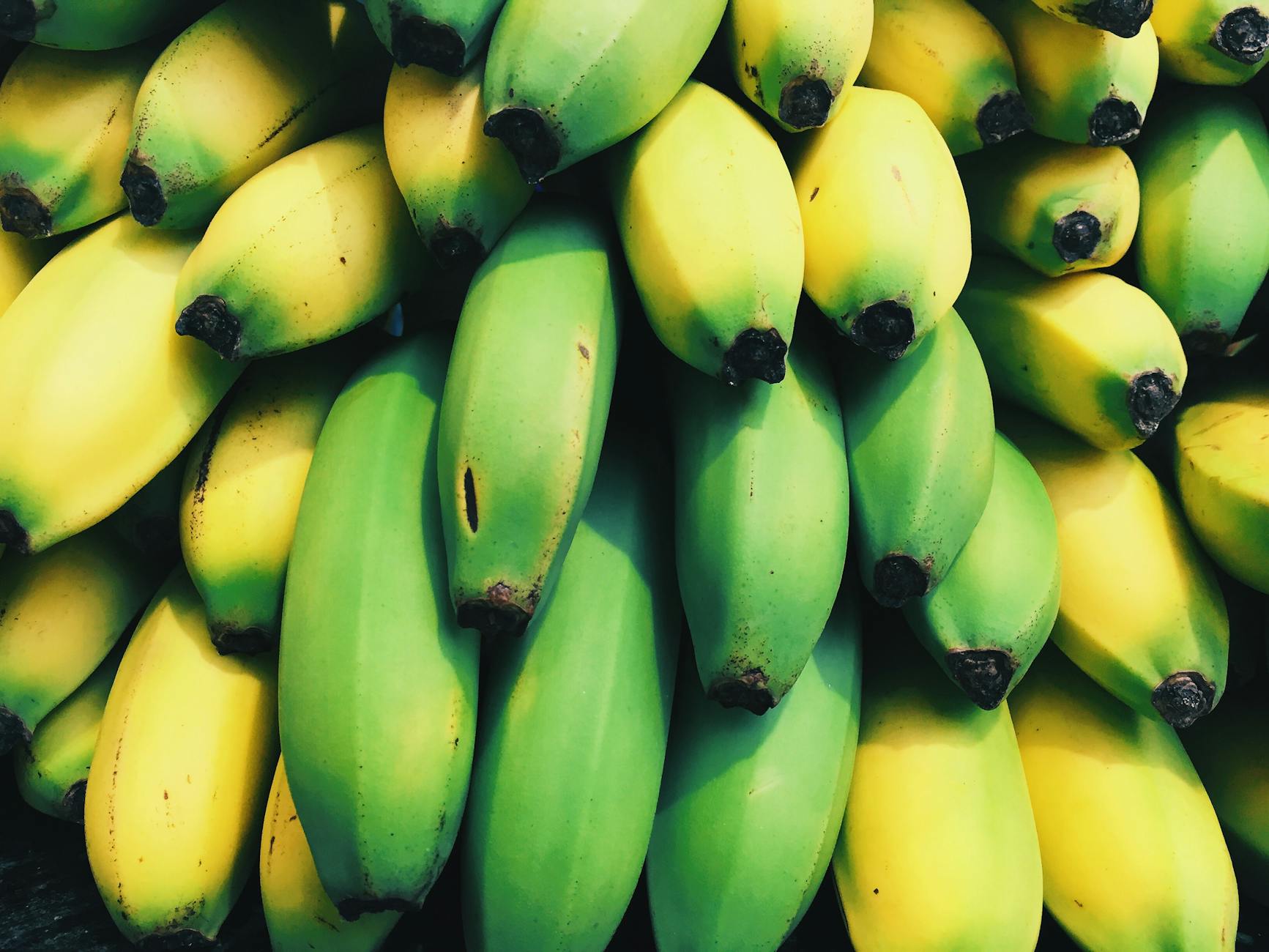
- The Green Tip Rule: For the longest shelf life, look for bananas that are bright yellow in the middle but still have distinct green tips at both ends. These are usually 3-4 days away from peak ripeness.
- Avoid the "Dull" Ones: If a banana looks greyish or dull rather than bright yellow, it may have been chilled during transport. These "chilled" bananas will often go from green to rot without ever becoming sweet or yellow.
- Look for "Full Shoulders": A well-developed Cavendish banana should look plump and rounded. If it looks very angular or "ribbed," it was picked too early and may not ripen evenly.
Frequently Asked Questions
A: Generally, no. Moisture can encourage mold growth at the stem. If you must wash them, dry them thoroughly and immediately. However, since we don't eat the peel, washing is usually unnecessary for preservation.
A: Yes! If you want to speed things up, a brown paper bag with an avocado or apple will concentrate the ethylene gas. But if your goal is long-term storage, keep them far apart.
A: According to the standard banana shelf life guidelines from the USDA, bananas can stay on the counter for 2 to 7 days depending on their initial ripeness and the room temperature.