
Quick Answer
This guide explains how to get rid of kitchen smells fast with 12 natural methods. From fish to burnt food, remove cooking odors using pantry staples like vinegar and soda.
Practical note
For How to Get Rid of Kitchen Smells, this guide centers on The 5-Minute Rule, Cleaning the Filters, The Box Fan Strategy. Those are the checkpoints we would use first in a normal home kitchen before making a bigger change.
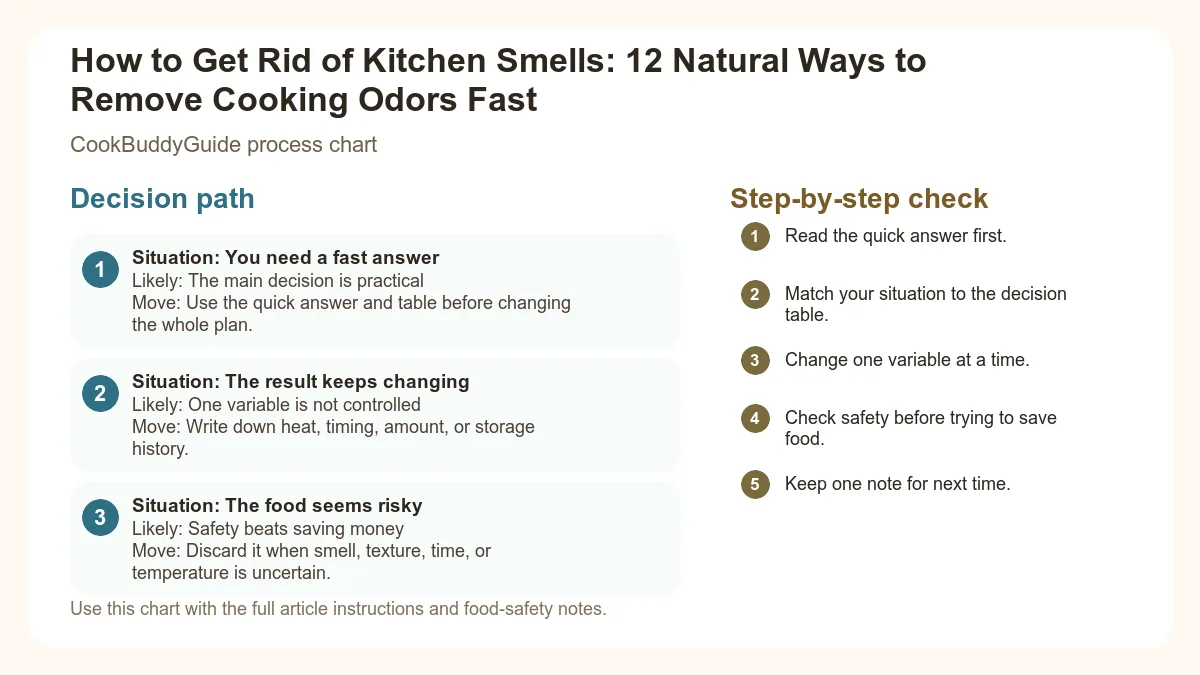
Decision table
| Situation | Likely cause or meaning | Best move |
|---|---|---|
| You need a fast answer | The main decision is practical | Use the quick answer and table before changing the whole plan. |
| The result keeps changing | One variable is not controlled | Write down heat, timing, amount, or storage history. |
| The food seems risky | Safety beats saving money | Discard it when smell, texture, time, or temperature is uncertain. |
Step-by-step fix
- Read the quick answer first.
- Match your situation to the decision table.
- Change one variable at a time.
- Check safety before trying to save food.
- Keep one note for next time.
Common mistakes
- Skipping the quick answer and changing too much at once.
- Treating quality problems and safety problems the same way.
- Not writing down the detail that caused the repeat problem.
Related topic hubs
Why Kitchen Smells Linger: The Science of Cooking Odors
Before we can fix the problem, we have to understand the enemy. When you cook, you aren't just heating food; you are initiating complex chemical reactions. High heat aerosolizes fats, proteins, and sugars, turning them into Volatile Organic Compounds (VOCs). These microscopic particles take flight and settle on every available surface.
Volatile Organic Compounds (VOCs) in the Kitchen
Porosity: Why Your Curtains Smell Like Last Night's Fish
One of the biggest "odor traps" in a standard kitchen layout is the presence of porous materials. Think about your dish towels, window curtains, and even the wooden cabinets near your stove. These materials have microscopic holes that act like sponges for VOCs. Humidity plays a massive role here; moist air traps these odor molecules, preventing them from dissipating. This is why a rainy evening of cooking often results in heavier, more persistent smells than a dry afternoon. Using natural ways to eliminate odors is essential because you need to draw these molecules out of the fabrics, not just cover them up.
12 Natural Methods to Eliminate Kitchen Odors Fast
1. The Stovetop Simmer: Citrus and Herb Potpourri
The "Kitchen Refresh" Simmer Pot
Ingredients:
- 1 lemon, sliced into rounds
- 2 sprigs of fresh rosemary
- 1 tablespoon whole black peppercorns
- 1 teaspoon vanilla extract
- 4 cups water
Instructions:
- Combine all ingredients in a medium saucepan.
- Bring to a gentle boil over medium-high heat.
- Once boiling, reduce heat to the lowest setting to maintain a very low simmer.
- Allow the steam to circulate for at least 60 minutes. Safety Note: Never leave a simmer pot unattended and check the water level every 30 minutes to prevent the pot from boiling dry.
2. Baking Soda: A Practical pH Neutralizer
Sodium Bicarbonate (baking soda) is a weak base. Most unpleasant kitchen odors—like those from rotting vegetables or sour milk—are acidic. When baking soda comes into contact with these acidic molecules, it neutralizes them. According to the science of baking soda absorption, it doesn't just mask smells; it chemically transforms them into odorless salts.
3. White Vinegar Sprays and Bowls
While baking soda handles acids, acetic acid (white vinegar) is the master of neutralizing alkaline odors, such as the "fishy" smell caused by amines. Keep a spray bottle of 50/50 water and white vinegar under my sink at all times. If I’ve been frying, I’ll leave a shallow bowl of straight vinegar on the counter overnight. By morning, the vinegar smell—and the grease smell—will both be gone.
4. Coffee Grounds: Nitrogen for Odor Absorption
5. Activated Charcoal Bags
If you have a pantry or a "mystery" corner that always smells a bit musty, activated charcoal is the answer. This is carbon that has been treated to have thousands of tiny, internal pores. These pores trap VOCs through a process called adsorption. Keep small linen bags of activated charcoal behind my garbage disposal and inside the refrigerator. They are silent workhorses that last for months.
6. The Vanilla Extract Oven Trick
If you need your house to smell like a bakery in 15 minutes because guests are arriving, this is the trick. Place two tablespoons of pure vanilla extract in a small oven-safe dish (like a ramekin). Place it in a 300°F (150°C) oven for 20 minutes. The heat aerosolizes the vanillin, which is a powerful and pleasant scent that can overpower even the most stubborn foul smells.
7. Boiling Cinnamon Sticks for Spicy Warmth
8. Lemon and Salt for the Garbage Disposal
The garbage disposal is often the hidden culprit of kitchen funk. Food particles get trapped under the black rubber flange and rot. To fix this, I throw in half a lemon and a handful of coarse kosher salt. Run the cold water and turn on the disposal. The salt acts as an abrasive to scrub the blades, while the lemon provides citrus steam and acidity to kill bacteria.
9. Essential Oil Diffusing for Immediate Freshness
10. Using Salt to Deodorize Oven Spills
If something bubbles over in your oven and starts to smoke, don't wait for it to cool. Carefully pour a generous layer of table salt over the spill while it’s still liquid. The salt will absorb moisture and prevent the spill from burning further, which stops the smoke and the accompanying burnt smell from filling the house. Once the oven is cool, the salt-crusted spill will scrape right off.
11. The Power of Cross-Ventilation
12. Air-Purifying Houseplants for the Kitchen
While they won't remove cooking odors instantly, plants like the Snake Plant or Peace Lily are excellent at filtering VOCs over time. Keep a small aloe vera plant on my windowsill; it thrives in the kitchen humidity and helps keep the air oxygenated and fresh.
Targeted Solutions for the Toughest Kitchen Smells
How to Get Rid of Fish Smells After Searing
Neutralizing Garlic and Onion Breath (and Air)
Garlic and onions contain sulfur compounds that are notoriously difficult to remove. For your hands, the "stainless steel" trick is king—rub your hands against your stainless steel sink or a "steel soap" bar under cold water. For the air, follow the advice in this guide to banish stubborn cooking smells: use a combination of baking soda bowls and open windows immediately after the aromatics hit the pan.
The Burnt Toast and Scorched Sauce Recovery Plan
Advanced Ventilation Techniques for Home Cooks
- The 5-Minute Rule: Turn your range hood on 5 minutes before you start cooking. This establishes an upward airflow pattern that is much harder to start once the air is already full of heavy steam and grease.
- Cleaning the Filters: If you haven't cleaned your metal mesh filters in a month, they are likely doing nothing. Pop them in the dishwasher on a high-heat cycle once a week.
- The Box Fan Strategy: If you don't have a vented hood (many apartments have "recirculating" hoods that just blow air back into your face), place a box fan in the nearest window facing outward. This creates a negative pressure environment that sucks the odors out of the room.
Preventive Habits: How to Stop Smells Before They Start
The best way to manage odors is to prevent them from settling. This is where the "Clean as You Go" philosophy becomes vital. If you’re looking to reduce your time spent scrubbing and deodorizing, consider trying some one-pot pasta recipes which minimize the number of greasy pans sitting in your sink.
Another great tip for the hot summer months is to pivot to no-cook summer meal ideas. By avoiding the stove entirely, you eliminate the production of VOCs and heat that trap smells in your home.
Splatter Guards: Your First Line of Defense
A fine-mesh splatter guard is an essential tool. It allows steam to escape while trapping the tiny droplets of oil that would otherwise land on your walls and ceiling. Since grease is the primary carrier for lingering odors, keeping it in the pan is half the battle.
Managing Food Scraps and Compost
Kitchen Odor Maintenance Checklist
The Fresh Kitchen Maintenance Schedule
Daily Routine:
- Empty the kitchen trash every night before bed.
- Wipe down the stovetop and backsplash with a vinegar-based cleaner.
- Run the garbage disposal with cold water and a citrus slice.
Weekly Deep Deodorizing:
- Wash all dish towels and floor mats in hot water with a cup of vinegar.
- Clean the range hood filters in the dishwasher.
- Mop the floors with a mixture of hot water, lemon juice, and a drop of dish soap.
Monthly Appliance Maintenance:
- Clean the dishwasher filter (this is a major source of "hidden" smells).
- Replace the baking soda box in the refrigerator.
- Vacuum the refrigerator coils (dust on coils can trap smells and reduce efficiency).
Frequently Asked Questions
A: While ACV has acetic acid, it also contains sugars and solids that can leave a sticky residue. For neutralizing smells in the air or on surfaces, plain white vinegar is much more effective and cheaper.
A: This is usually due to a clogged filter or a dirty door seal. Food particles trap moisture and grow bacteria. Clean the filter and run an empty cycle with a cup of vinegar on the top rack to simmer vinegar for odor removal within the machine.
A: Typically 1-2 years. To "recharge" them, place them in direct sunlight for an hour once a month. The UV rays help release the trapped VOCs, opening up the pores again.