Quick Answer
This guide covers the 20 essential kitchen tools every home cook needs. From knives to pans, these must have kitchen items will elevate your cooking and save you time.
Related topic hubs
Method and key variables
1. The 8-Inch Chef’s Knife: Your Kitchen Workhorse
This is the most important tool in your kitchen organization. From dicing carrots to carving a roast, the 8-inch chef’s knife handles 90% of all cutting tasks. Look for a "full tang" blade (where the metal runs all the way through the handle) for balance and durability.
- Budget Pick: Victorinox Fibrox Pro. It’s the industry standard for entry-level home cooking.
- Quality Pick: Wüsthof Classic 8-Inch. A forged German blade that holds an edge beautifully.
2. The Paring Knife: For Precision and Detail
When the chef’s knife feels too bulky—like when you’re peeling an apple or removing the "vein" from shrimp—the paring knife steps in. It’s essentially a miniature version of the chef’s knife designed for delicate work.
3. The Serrated Bread Knife: More Than Just for Loaves
The saw-like teeth of a serrated knife are essential for slicing through crusty sourdough without crushing the airy interior. However, it’s also the secret weapon for slicing ripe tomatoes or waxy citrus fruits. This is one of those must have kitchen items that prevents a lot of frustration. According to essential kitchen equipment for beginners, a high-quality knife is the single most important investment you can make.
Pro Tip: The Paper Test for Knife Sharpness
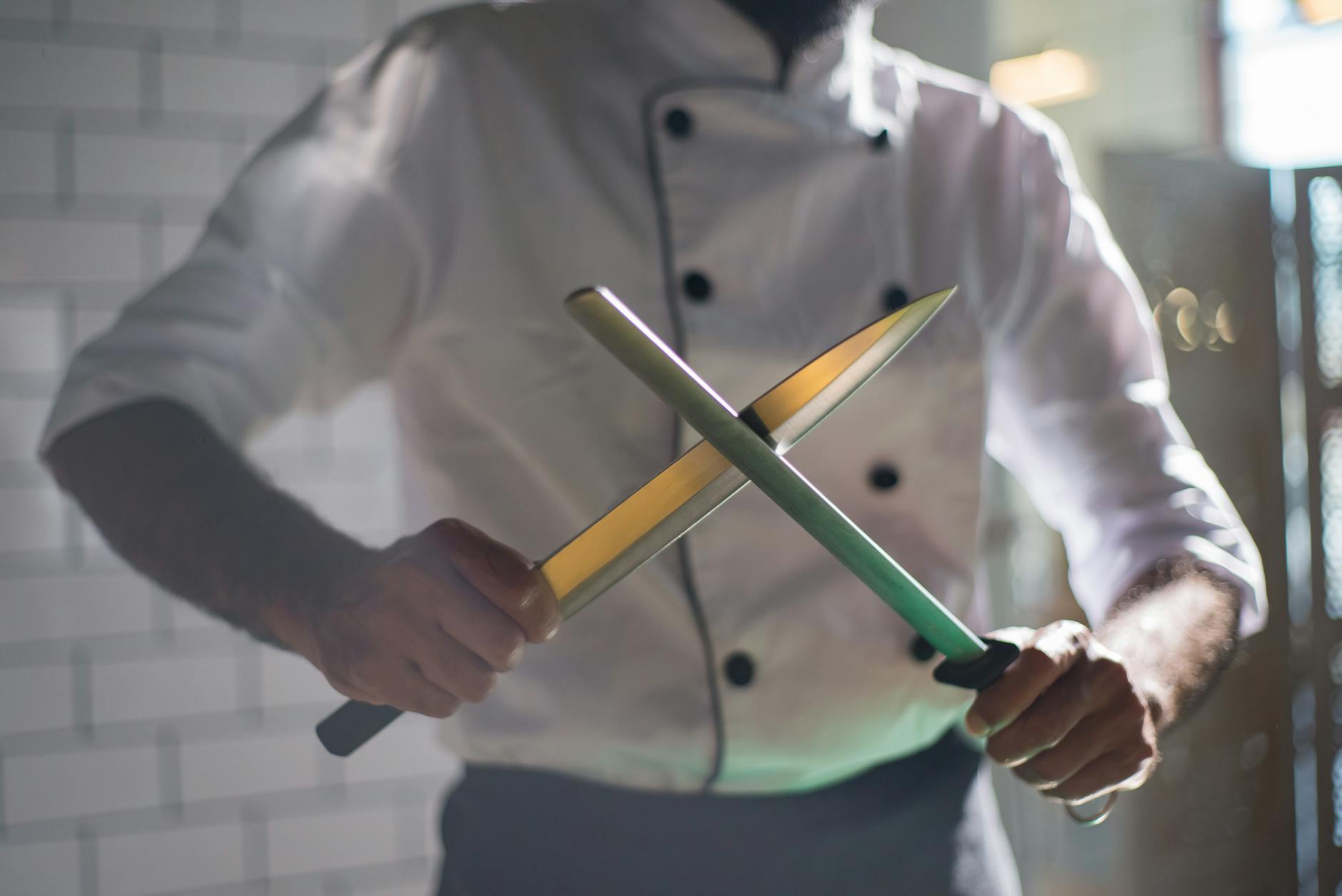
Wondering if your knife is actually dull? Hold a single sheet of printer paper vertically. Try to slice downward through the edge of the paper. A sharp knife will glide through with a clean "hiss." If it tears or snags, it’s time for a professional sharpening or a session with a whetstone. Never put your knives in the dishwasher; the high heat and abrasive detergent will dull the edge and ruin the handle.
The Foundation: Cutting Boards That Protect Your Blades
Your cutting board is the partner to your knife. If you use glass or marble, you are essentially hammering your expensive blade against a rock. This destroys the edge instantly.
4. Wooden Boards: The Gold Standard for Longevity
Wood (especially edge-grain or end-grain maple, walnut, or teak) is naturally antimicrobial and "self-healing." The wood fibers open up to let the knife in and then close back up. Consider a board at least 12x18 inches to give yourself enough room for Mise en place.
5. Plastic Boards: The Choice for Raw Proteins
Cookware Essentials: Pots and Pans That Last a Lifetime
When selecting stainless steel cookware or stainless steel pans, the key word is "Tri-Ply." This means a layer of aluminum (for heat conductivity) is sandwiched between layers of stainless steel (for durability and non-reactivity).
6. The 12-Inch Cast Iron Skillet: The Searing King
7. Stainless Steel Tri-Ply Skillet: For Sauces and Fond
Unlike cast iron, stainless steel responds quickly to temperature changes. It’s essential for making pan sauces where you want to scrape up the "fond" (the brown bits) after searing meat. This is a staple in any kitchen starter kit.
8. The Enameled Dutch Oven: The Most Versatile Pot
A heavy-bottomed Dutch oven is a kitchen miracle. You can sear meat in it, braise a stew for six hours, or even bake a loaf of crusty bread.
- Budget Pick: Lodge Enamel Dutch Oven.
- Quality Pick: Le Creuset Signature Round Dutch Oven.
9. Non-Stick Skillet: The Egg Specialist
Even with the best stainless steel pans, eggs can be tricky. A 10-inch non-stick skillet is a must have kitchen item for omelets, crepes, and delicate fish. Just remember: never use metal utensils on it, or you'll scratch the coating.
10. 8-Quart Stockpot: For Pasta and Soups
You need a large volume pot for boiling pasta, making bone broth, or prepping big batches of chili. Look for one with a thick base to prevent scorching at the bottom. This is where you'll prep the base for many instant pot recipes for beginners if you're doing manual stovetop prep.
Precision and Prep: Measuring Tools and Bowls
Cooking is an art, but baking is a science. Even in savory cooking, precision leads to consistency. If your soup was perfect last time but too salty today, it’s likely a measurement error.
11. Digital Kitchen Scale: Why Volume is the Enemy
Did you know a "cup" of flour can weigh anywhere from 120 to 160 grams depending on how tightly you pack it? That 30% difference is why cakes fail. A digital scale ensures your essential kitchen tools are actually helping you succeed. Consider the Escali Primo for its simplicity and accuracy.
12. Stainless Steel Measuring Cups and Spoons
Avoid plastic; it warps in the dishwasher and the markings rub off. Heavy-duty stainless steel will last forever. Look for spoons with a narrow profile that can fit into spice jars.
13. Nesting Glass or Stainless Mixing Bowls
Proper Mise en place (having everything in its place) is the secret to stress-free cooking. Having a set of 6-10 nesting bowls allows you to prep all your ingredients before you even turn on the stove. This is a core tenet of kitchen organization.
14. The Over-the-Sink Colander
Whether you're rinsing berries or draining five pounds of pasta, a sturdy colander is vital. Choose the over-the-sink versions because they don't sit in the "dirty" sink water while draining.
The "Mise en Place" Minute
Before you start any recipe, spend 5 minutes chopping and measuring everything into your mixing bowls. This prevents the "panic-chopping" that happens when your garlic is burning and you haven't even started peeling the ginger. It makes the actual cooking process incredibly relaxing.
The Workhorse Gadgets: Small Tools with Big Impact
Not all kitchen gadgets are fluff. Some are absolute prep tools that save you hours of labor and ensure food safety.
15. Instant-Read Digital Thermometer: No More Guessing
Stop cutting into your chicken to see if it’s pink. A Digital thermometer is the only way to guarantee juicy, safe meat. The importance of food thermometers cannot be overstated—it’s the difference between a dry turkey and a masterpiece.
- Budget: ThermoPop 2.
- Quality: Thermapen One (reads in 1 second).
16. The Y-Peeler: Speed and Safety
17. Stainless Steel Box Grater
A box grater is a multi-tasking hero. Use the large holes for cheese and potatoes, the small holes for hard cheeses like Parmesan, and the slicing side for quick cucumbers. It’s one of those durable tools that every kitchen needs.
18. 12-Inch Stainless Steel Tongs: Your "Kitchen Hands"
Tongs are an extension of your arm. Use them to flip steaks, toss pasta, or even reach for high-up snacks in the pantry. Look for a pair without silicone tips for better grip on heavy meats, though silicone-tipped ones are safer for non-stick skillets.
19. High-Heat Silicone Spatula
A good spatula should be one solid piece (so the head doesn't pop off) and rated for at least 450°F. It’s essential for scraping every last bit of batter out of a bowl or folding delicate egg whites. These are among the rigorously practical kitchen tools that America's Test Kitchen swears by.
20. The Balloon Whisk
Whether you're making a vinaigrette or whipping cream, a sturdy balloon whisk is non-negotiable. Look for one with a comfortable handle that won't make your wrist ache after two minutes of vigorous whisking.
Essentials vs. Nice-to-Haves: Where to Splurge and Save
When building your kitchen starter kit, you have to decide where to put your hard-earned money. Not every item needs to be top-of-the-line.
Where to Splurge (The "Buy it Once" Category)
- Chef's Knife: A $150 knife will last 40 years. A $20 knife will last two.
- Dutch Oven: The heat retention of high-end enamel is noticeably superior.
- Digital Thermometer: Accuracy matters when it comes to food poisoning.
Where to Save (The "Good Enough" Category)
- Mixing Bowls: Stainless steel bowls from a restaurant supply store are indestructible and cheap.
- Sheet Pans: Aluminum "half-sheet" pans are better than expensive "non-stick" versions.
- Tongs and Spatulas: You can find reliable versions for under $10.
The "Don't Bother" List: Unitaskers to Avoid
Avoid anything that only does one job. Garlic presses are hard to clean (just use your knife), herb scissors are a gimmick, and quesadilla makers are just taking up space where your cast iron skillet should live. Keep your kitchen organization lean and mean.
Pro Tip: The 80/20 Rule of Kitchen Space
If you haven't used a tool in the last 6 months, move it to a "secondary storage" box in the garage or basement. If you don't miss it in another 6 months, donate it. This clears the way for your essential kitchen tools to be easily accessible.
Frequently Asked Questions
A: Almost always individual pans. Most cookware sets include sizes you'll never use. Buying a high-quality 12-inch skillet, a 3-quart saucepan, and an 8-quart stockpot separately is a much better use of your budget.
A: You should "hone" your knife with a steel rod every time you use it to keep the edge straight. For actual sharpening, once or twice a year is usually enough for the average home cook.
A: Yes! Once a cast iron skillet is properly seasoned, metal spatulas are actually preferred because they help smooth out the surface of the pan over time.
Conclusion: Building Your Kitchen One Tool at a Time
Building the perfect kitchen is a marathon, not a sprint. You don't need to go out and buy all 20 of these essential kitchen tools today. If you’re just starting, prioritize the "Big Three": a high-quality Chef’s knife, a large wooden cutting board, and a cast iron skillet. These three items alone will allow you to cook 70% of the recipes on this site, including our famous beginner air fryer chicken recipes (which often require a bit of knife prep first!).
Investing in durable tools is an investment in yourself. When you aren't fighting your equipment, you can focus on the flavors, the techniques, and the people you're feeding. Quality over quantity is the mantra of every successful home cook. Now, clear those cluttered drawers, sharpen that blade, and let’s get cooking!