Table of Contents
- The Quick Answer: How Long Does Hummus Last?
- Store-Bought vs. Homemade: Why the Shelf Life Differs
- The Science of Spoilage: 4 Signs Your Hummus Has Gone Bad
- Pro Storage Tips: How to Keep Hummus Fresh for Longer
- Can You Freeze Hummus? A Step-by-Step Guide
- Common Spoilage Myths and Food Safety Risks
- Frequently Asked Questions
The Quick Answer: How Long Does Hummus Last?
Store-Bought Hummus Timeline
Homemade Hummus Timeline
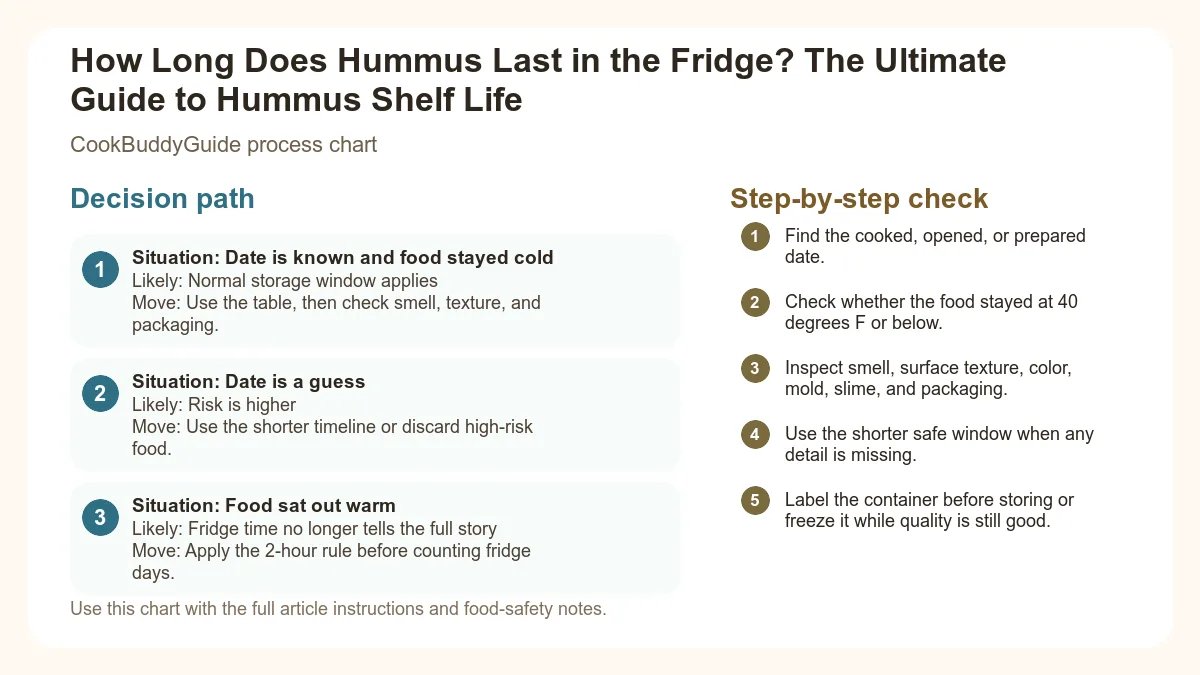
When you make your own homemade hummus recipe storage is a bit more demanding. Because you aren't adding industrial stabilizers, your DIY dip will last 3 to 5 days in the fridge. According to the Food Network hummus guide, the lack of preservatives means the natural sugars in the chickpeas start to break down much faster. Consider labeling your homemade containers with a piece of masking tape and the "made on" date.
The 2-Hour Rule: Room Temperature Safety
Never leave hummus out on the counter during a party for more than 2 hours. According to USDA food safety guidelines, perishable foods sitting between 40°F and 140°F (the "Danger Zone") are breeding grounds for bacteria. If your kitchen is particularly warm (above 90°F), that window shrinks to just 1 hour. If you're hosting, consider placing your serving bowl inside a larger bowl filled with ice to extend that window.
Store-Bought vs. Homemade: Why the Shelf Life Differs
You might wonder why the tub from the grocery store lasts twice as long as the delicious batch you whipped up in your food processor. The answer lies in food science and industrial processing.
The Role of Preservatives (Potassium Sorbate and Sodium Benzoate)
Natural Preservatives: Lemon Juice and Salt
In a homemade recipe, lemon juice preservative qualities and salt are your only lines of defense. The citric acid in lemon juice lowers the pH of the hummus, making it a less hospitable environment for bacteria. When I develop recipes for CookBuddyGuide, consider a slightly higher acidity level if you plan on meal prep tips for the entire week. The salt also acts as a minor dehydrator for microbes, but it isn't nearly as powerful as commercial additives.
The Impact of Pasteurization and HPP (High-Pressure Processing)
Many premium brands now use HPP (High-Pressure Processing) instead of heat pasteurization. This involves putting the sealed tubs under incredible water pressure to kill pathogens like Listeria monocytogenes and Salmonella without changing the taste of the fresh tahini. This technology is why some "fresh" store-bought hummus has a surprisingly long unopened shelf life. Homemade versions, however, are exposed to the air and kitchen surfaces, making them more prone to fermentation signs from the very start.
Pro Tip: The "pH Boost" for Homemade Hummus
- Increase the Acid: Use 1.5x the lemon juice called for in the recipe. This drops the pH level significantly.
- The Boiling Trick: Before blending, boil your canned chickpeas in water with a pinch of baking soda for 10 minutes. This not only makes the hummus smoother but also helps kill any surface bacteria from the canning liquid.
- Salt Balance: Don't skimp on the salt. It’s a natural preservative that helps keep the chickpeas from spoiling too quickly.
The Science of Spoilage: 4 Signs Your Hummus Has Gone Bad
Knowing how long does hummus last in fridge is only half the battle; you also need to know how to spot the signs that it’s time to toss it. Bacteria and yeast don't always wait for the 10-day mark to start their work.
1. The Smell Test: Sour or Fermented Odors
2. Visual Cues: Mold, Discoloration, and Darkening
Check the edges of the container and the underside of the lid. Mold can appear as fuzzy white, green, or even black spots. However, don't just look for fuzz. If the top layer of the hummus has turned a significantly darker brown than the rest of the batch, it has oxidized. While oxidation isn't always dangerous, it usually indicates that the hummus is old and the oils are starting to go rancid.
3. Texture Changes: Sliminess and Water Separation
A little bit of olive oil or water separation is normal—just give it a stir. However, if the hummus feels "slimy" or "filmy" on the tongue, or if the liquid sitting on top is thick and cloudy rather than clear, discard it immediately. This is a sign of bacterial overgrowth that a simple stir won't fix.
4. The Taste Test: When to Trust Your Palate (And When Not To)
Pro Storage Tips: How to Keep Hummus Fresh for Longer
The "Olive Oil Seal" Technique
Choosing the Right Airtight Storage
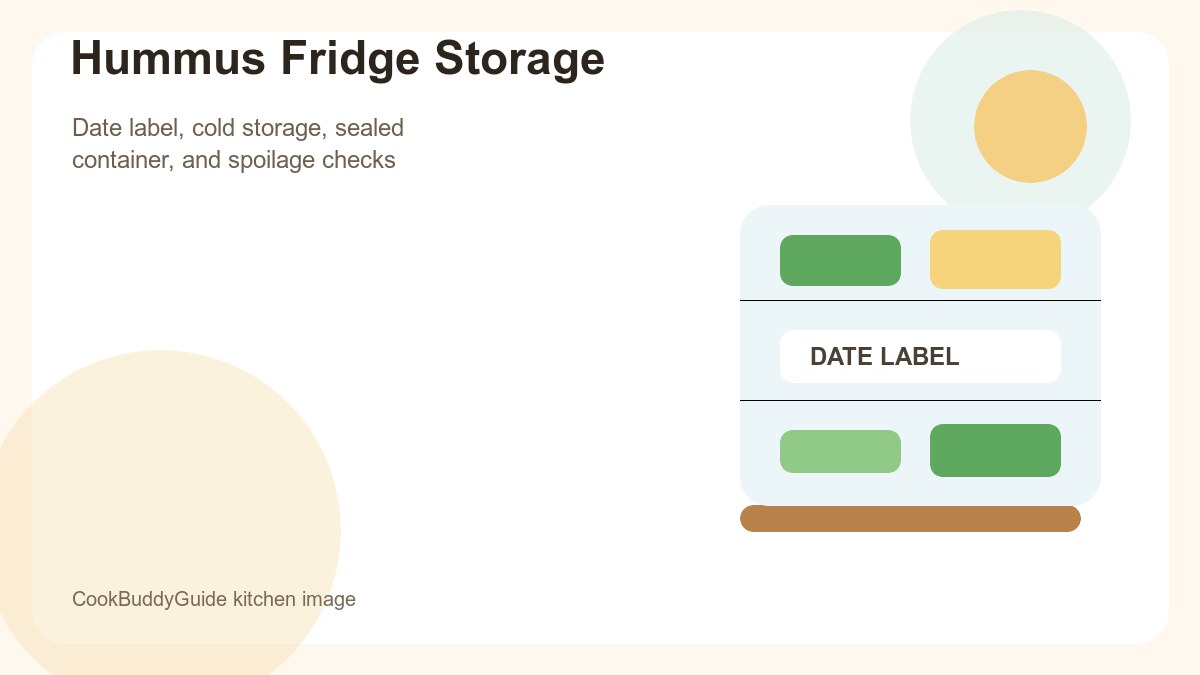
While the plastic tubs hummus comes in are fine, they aren't the best for long-term storage once the foil seal is broken. Choose transferring my hummus to glass containers with locking lids. Glass is non-porous and won't absorb the smells of garlic or cumin, and the silicone seals on locking lids are far superior at keeping air out. Airtight storage is the single most important factor in preventing your hummus from drying out and picking up "fridge flavors."
Cross-Contamination: The Danger of Double-Dipping
We’ve all done it—dipped a carrot or a chip directly into the tub. But if you want your hummus to last, cross-contamination is your enemy. Saliva contains enzymes (like amylase) that start breaking down starches immediately. If you double-dip, you are introducing those enzymes and mouth bacteria into the tub, which will cause the hummus to turn watery and spoil within 24-48 hours. Always scoop what you need into a separate bowl and use a clean spoon every time.
Fridge Placement: Why the Door is the Worst Spot
Can You Freeze Hummus? A Step-by-Step Guide
The short answer is yes! If you found a great deal on Sabra or made a massive batch of homemade hummus recipe storage can include the freezer. However, there are some caveats regarding texture.
Does Freezing Change the Texture?
When you freeze hummus, the moisture in the chickpeas and the fats in the tahini separate slightly. This can lead to a grainier or "pitted" texture once thawed. While it won't be quite as silky as fresh hummus, it is still perfectly delicious for spreading on sandwiches or using in recipes.
How to Freeze Hummus Like a Pro
- Portion It Out: Don't freeze a giant tub. Use silicone muffin liners or small freezer-safe jars to freeze individual portions.
- Leave Headspace: Hummus is mostly water and will expand as it freezes. Leave at least half an inch of space at the top of your container to prevent the lid from popping off.
- Add Oil: Drizzle a thin layer of olive oil on top before sealing to prevent freezer burn.
- Label: Hummus stays good in the freezer for up to 4 months. Label it with the date!
How to Thaw Hummus Without It Getting Grainy
Never thaw hummus on the counter. The outer edges will reach the "danger zone" temperature while the center is still a block of ice. Instead, move it to the fridge 24 hours before you need it. If you're in a rush, you can place the sealed container in a bowl of cold water, changing the water every 30 minutes.
Reviving Thawed Hummus: The Blender Trick
Common Spoilage Myths and Food Safety Risks
Is it Safe to Eat Hummus Past the Expiration Date?
It depends on the type of date. A "Best By" date is a manufacturer's estimate of quality, not safety. An unopened tub is usually safe for 5-7 days past this date. However, a "Use By" or "Expiration" date is more firm. According to Mayo Clinic safety tips, you should generally discard refrigerated leftovers after four days to minimize the risk of food poisoning symptoms like nausea, cramps, and fever.
The Risk of Foodborne Illness (Listeria and Hummus)
Hummus has been the subject of several high-profile recalls, most notably the Sabra hummus recall several years ago due to potential Listeria monocytogenes contamination. Listeria is unique because it can grow even at cold refrigerator temperatures. This is why it is vital to keep your fridge at 40°F or lower and to respect the 10-day limit for opened tubs. High-risk individuals, including pregnant women, the elderly, and those with compromised immune systems, should be especially strict with these timelines.
Why 'Best By' is Not the Same as 'Use By'
A: Absolutely not. Even if it smells fine, bacteria can reach dangerous levels in just a few hours. Throw it away to avoid serious food poisoning.
A: This is a clear sign of fermentation. The sugars in the chickpeas are being eaten by yeast. It is no longer safe or pleasant to eat.
A: Yes, typically 7-10 days compared to 3-5 days for homemade, due to the presence of preservatives and industrial processing like HPP.
A: Yes! Freezing chickpeas (either home-cooked or canned) is a great way to prep for future batches of hummus. They last up to 6 months in the freezer.
The Bottom Line on Hummus Freshness
Next time you're doing your Sunday meal prep, remember these tips. Your taste buds—and your stomach—will thank you! For more kitchen storage guides and easy recipes, keep exploring CookBuddyGuide.com.
Summary Checklist for Hummus Storage
- Opened Store-Bought: 7-10 Days
- Homemade: 3-5 Days
- Unopened: Up to 7 days past "Best By"
- Freezer: Up to 4 Months
- Room Temp: Max 2 Hours
Happy cooking, and stay safe in the kitchen!