Quick Answer
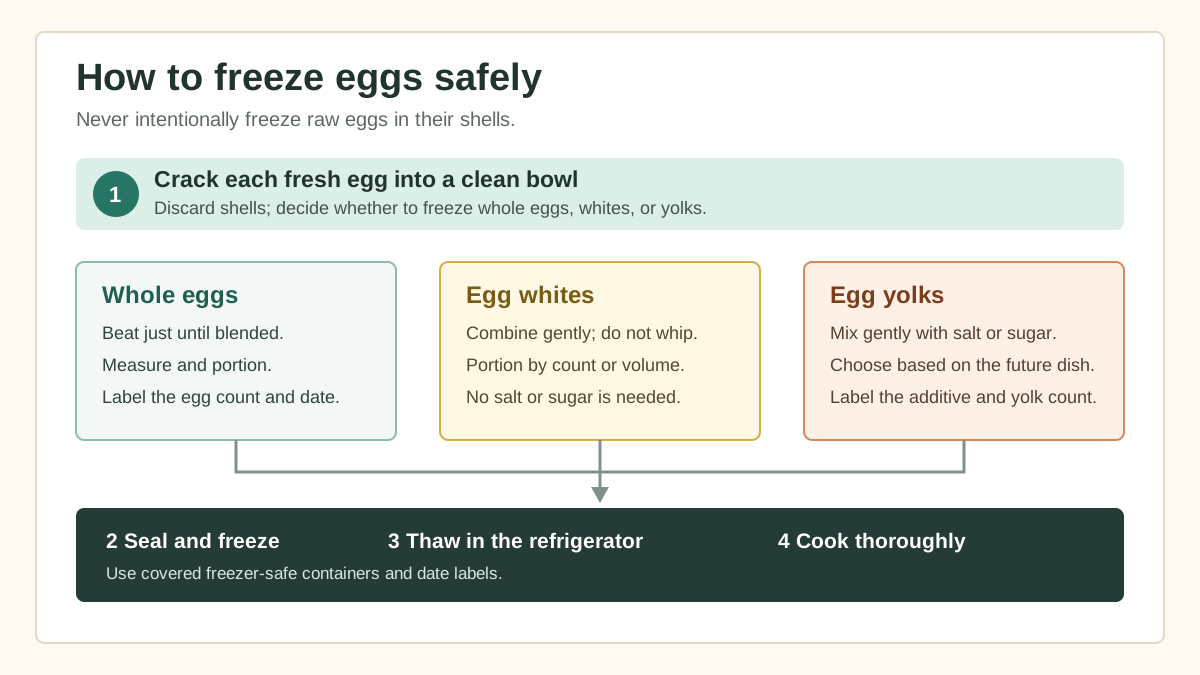
Yes, but crack eggs out of their shells first. Beat whole eggs just until blended, or freeze whites separately. Yolks need salt or sugar mixed in before freezing to reduce gelation; label which one you used. Portion everything in freezer-safe containers and thaw it in the refrigerator.
Practical note
Label portions by number of eggs, not just volume. A note such as "2 whole eggs, beaten" or "4 yolks + sugar" prevents guesswork when you later use them in baking or a savory dish.
Decision table
| Situation | Likely cause or meaning | Best move |
|---|---|---|
| Whole raw eggs | Shells can crack as liquid expands | Crack, beat until blended, portion, and freeze. |
| Egg whites | Whites freeze without a stabilizer | Portion by count or tablespoons and label. |
| Egg yolks | Plain yolks can become thick and gummy | Mix in salt for savory use or sugar for sweet use. |
| Hard-boiled whole eggs | Cooked whites turn rubbery and watery | Refrigerate instead of freezing. |
How to freeze whole raw eggs
- Crack each fresh egg into a clean bowl and discard any shell fragments.
- Beat gently until the whites and yolks are combined without creating excess foam.
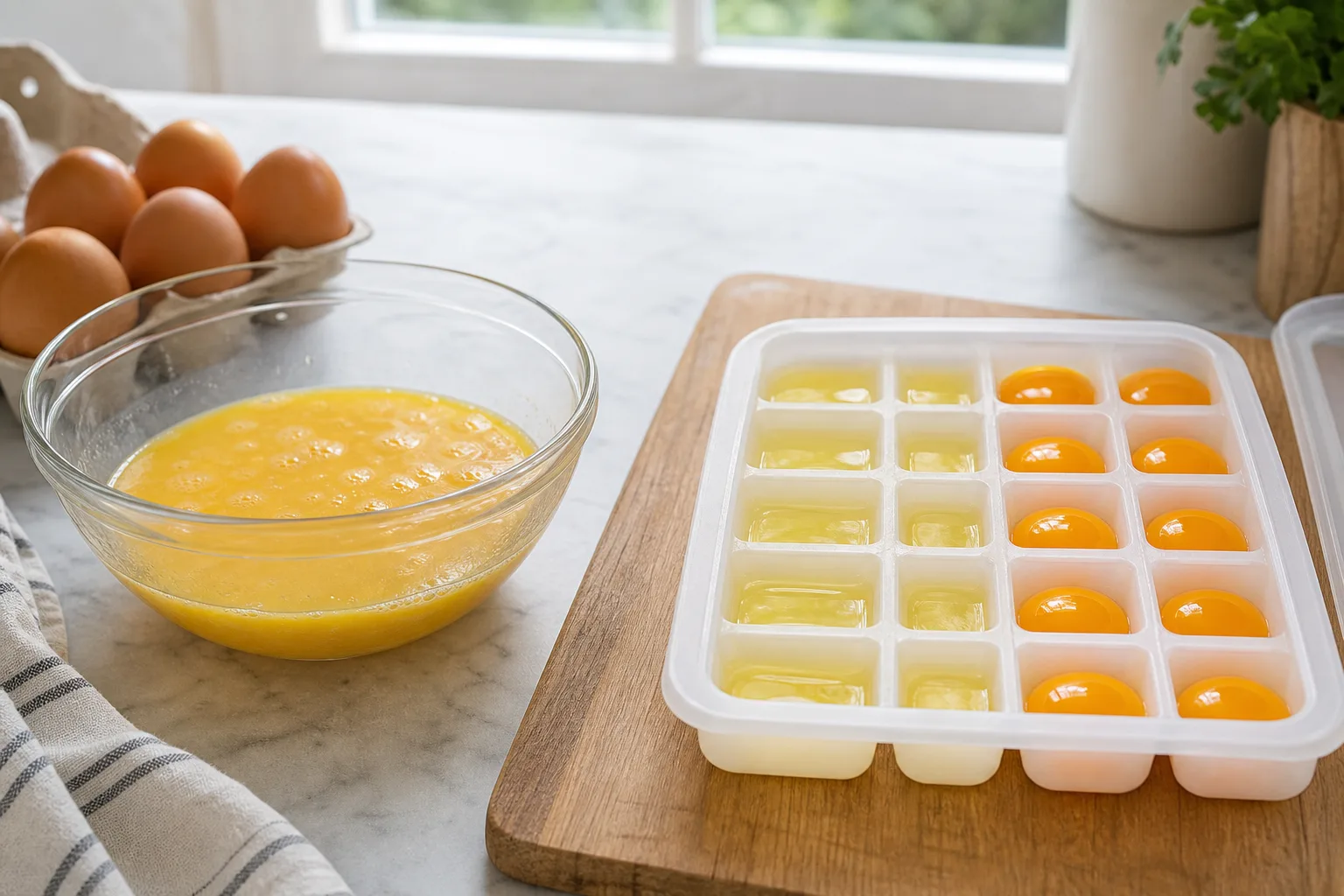
- Measure portions into freezer-safe containers or a silicone tray.
- Freeze solid, then seal portions tightly with as little air as practical.
- Label the egg count and date, then thaw only in the refrigerator.
Common mistakes
- Putting an unopened carton of shell eggs directly in the freezer.
- Freezing plain yolks without salt or sugar to limit gelation.
- Forgetting to label whether yolks were prepared for sweet or savory recipes.
- Thawing raw egg portions on the counter.
Related topic hubs
Can You Freeze Eggs? Guide to Freezing and Using Eggs Safely
Freezing eggs can prevent waste when you have more than you can use, but the preparation depends on whether you are freezing whole eggs, whites, or yolks.
Do not put a carton of shell eggs directly in the freezer. Crack and portion raw eggs first, prepare yolks to limit gelation, and label each container for its intended use.
- Introduction: Why Freezing Eggs is a Helpful Shortcut
- The Golden Rule: Why You Can’t Freeze Eggs in the Shell
- How to Freeze Whole Eggs (Beaten)
- Freezing Egg Whites: The Easiest Method
- Freezing Egg Yolks: Preventing Gelation
- Can You Freeze Cooked Eggs?
- Essential Equipment and Portioning Tips
- Storage Duration and Thawing Safety
- Cooking and Baking with Frozen Eggs
- Common Mistakes to Avoid
- Frequently Asked Questions
When freezing eggs makes sense
Freezing eggs is useful after a bulk purchase or when a recipe leaves extra whites or yolks. Freeze only fresh eggs, work with clean utensils, and keep raw egg away from ready-to-eat food.
Pre-portioned eggs are convenient for baking recipes, scrambled eggs, and breakfast meal prep. Label the number of eggs in each portion so recipe measurements remain accurate.
Frozen and thawed eggs work best in fully cooked dishes such as scrambled eggs, casseroles, and baked goods. They will not reproduce the separate white-and-yolk structure needed for a fried or poached egg.
Why eggs should not be frozen in the shell
Do not intentionally freeze a whole egg in its shell. The liquid expands as it freezes and can crack the shell.
The USDA shell egg storage chart says not to freeze raw eggs in the shell. If an egg freezes accidentally and the shell cracks, discard it. If the shell remains intact, keep it frozen until needed, thaw it in the refrigerator, and use it promptly in a thoroughly cooked dish.
How to Freeze Whole Eggs (Beaten)
Freezing whole eggs after beating is the most flexible method for later cooking and baking.
Whisk just enough to combine the yolks and whites. Avoid creating excessive foam because it makes portions harder to measure and leaves more air at the surface.
- Crack your desired number of eggs into a clean glass bowl.
- Gently whisk until the yolks and whites are fully blended.
- Measure the mixture; about 3 tablespoons of thawed whole-egg mixture replaces one large egg.
- Pour into a freezer-safe container or covered silicone tray, leaving a little room for expansion.
- Seal, label the number of eggs and date, and freeze promptly.
Whole beaten eggs do not require a stabilizer. Salt or sugar is specifically useful when freezing separated yolks because plain yolks can thicken and gel in the freezer.
Portioning example
Beat six whole eggs just until blended, measure the total volume, and divide it into three labeled two-egg portions. Freeze in covered containers. If using a silicone tray, measure the capacity of its cavities instead of assuming one cube equals one egg.
How to freeze egg whites
Egg whites freeze without salt or sugar. Thaw them in the refrigerator and use clean, grease-free equipment if you plan to whip them.
- Separate each white into a small bowl first so a broken yolk does not contaminate the full batch.
- Combine the whites, measure by tablespoon or egg count, and portion them into freezer-safe containers.
- Label the amount and date. Thaw the covered portion overnight in the refrigerator.
- Use thawed whites in fully cooked meringues, baked goods, or egg-white scrambles.
A covered silicone tray can make small portions easier to remove, but tray cavities vary. Measure the egg before freezing and label the actual tablespoon amount or egg count.
How to freeze egg yolks without gumminess
Plain egg yolks can thicken or gel during freezing. Mix them gently with a measured amount of salt or sugar before portioning so they remain easier to blend after thawing.
Illinois Extension egg-storage guidance gives the following amounts for about four large yolks:
- For savory dishes: Add 1/8 teaspoon salt per 1/4 cup yolks.
- For sweet dishes: Add 1 1/2 teaspoons sugar or corn syrup per 1/4 cup yolks.
Labeling note: Mark every yolk container "Yolks + Salt" or "Yolks + Sugar" and include the number of yolks.
Can you freeze cooked eggs?
Whole hard-boiled eggs do not freeze well. Cooked whites become tough, watery, and rubbery after thawing, although cooked yolks can be frozen separately when texture is less important.
Mixed dishes usually hold up better because the egg is supported by other ingredients. Cool cooked food promptly, package it in meal-size portions, and follow the dish's own storage guidance.
- Breakfast burritos: Cool the filling before wrapping so steam does not create excess ice.
- Quiche and frittata: Freeze individual slices for easier thawing and reheating.
- Egg muffins: Wrap portions tightly after they cool.
- Breakfast casseroles: Freeze in the portion size you expect to reheat.
Containers and portioning
Use food-safe containers that close securely. Limiting air exposure protects texture and prevents the eggs from absorbing freezer odors.
Best Freezer-Safe Containers
- Covered silicone trays: These make individual portions easy to remove while limiting odor transfer.
- Heavy-duty freezer bags: Once portions are solid, transfer them to a bag and press out air without bringing the raw egg package near your mouth.
- Freezer-safe rigid containers: Use these for larger measured batches and leave the headspace specified by the container maker.
Measuring Equivalents
For baking recipes, label portions before freezing so you know exactly how much to thaw.
Egg Measurement Conversion Chart
- 1 Whole Egg: 3 tablespoons (approx. 50ml)
- 1 Egg White: 2 tablespoons (approx. 30ml)
- 1 Egg Yolk: 1 tablespoon (approx. 15ml)
These are practical averages for large eggs. Measuring the actual batch before freezing is more reliable when a recipe is sensitive to volume.
Storage duration and safe thawing
Colorado State University Extension lists properly packaged raw whites and yolks for up to 12 months in the freezer. Label every package and use it sooner if quality declines.
Never thaw raw eggs on the counter. Thaw the covered portion in the refrigerator overnight. For a faster option, keep it sealed under cold running water, then cook it immediately.
Nebraska Extension also advises thawing frozen eggs in the refrigerator. Use thawed raw egg only in a dish that will be thoroughly cooked.
Cooking and baking with thawed eggs
Thawed egg yolks may remain slightly thicker than fresh yolks even when prepared with salt or sugar. Stir them well before measuring into a recipe.
For baking recipes, thaw eggs in the refrigerator first. If the recipe calls for room-temperature ingredients, let the sealed portion warm briefly only after it is fully thawed, then cook the finished food promptly.
Good uses include:
- Casseroles: Thawed whole eggs blend easily into the custard base.
- Cookies and brownies: Measure the thawed mixture before adding it.
- French toast: Whisk thawed whole eggs with the other custard ingredients.
- Scrambled eggs: Cook until the egg reaches 160°F.
Common Mistakes to Avoid
These are the mistakes most likely to create safety, measurement, or texture problems:
- Forgetting to label: Always mark the quantity and whether yolks contain salt or sugar.
- Whipping in excess air: Mix whole eggs only until the white and yolk combine so portions remain easy to measure.
- Freezing eggs that are no longer fresh: Freezing does not restore quality or make questionable food safe.
- Expecting a fried egg: Use fresh eggs when a recipe needs an intact yolk and white.
Frequently Asked Questions
Do not intentionally freeze eggs in their shells because the liquid expands and can crack the shell. Crack whole eggs into a bowl, beat just until blended, portion them in freezer-safe containers, label the quantity and date, and thaw them in the refrigerator.
University extension storage charts commonly list properly packaged raw egg whites and prepared egg mixtures for up to 12 months in the freezer. Label the egg type, portion, additives, and date, and use older packages first.
Whole beaten eggs can be frozen as-is. Salt or sugar is most important for separated yolks because it limits thickening: use salt for savory dishes or sugar for sweet dishes, and label the container clearly.
Freezing whole hard-boiled eggs is not recommended because the cooked whites become tough and watery after thawing. Refrigerate hard-boiled eggs instead and use them within one week.
Bottom line
Crack eggs out of the shell, portion and label them, prepare separated yolks with salt or sugar, and thaw the covered portions in the refrigerator. Those four steps make frozen eggs practical for cooked breakfasts and baking while avoiding the most common safety and texture problems.