Quick Answer
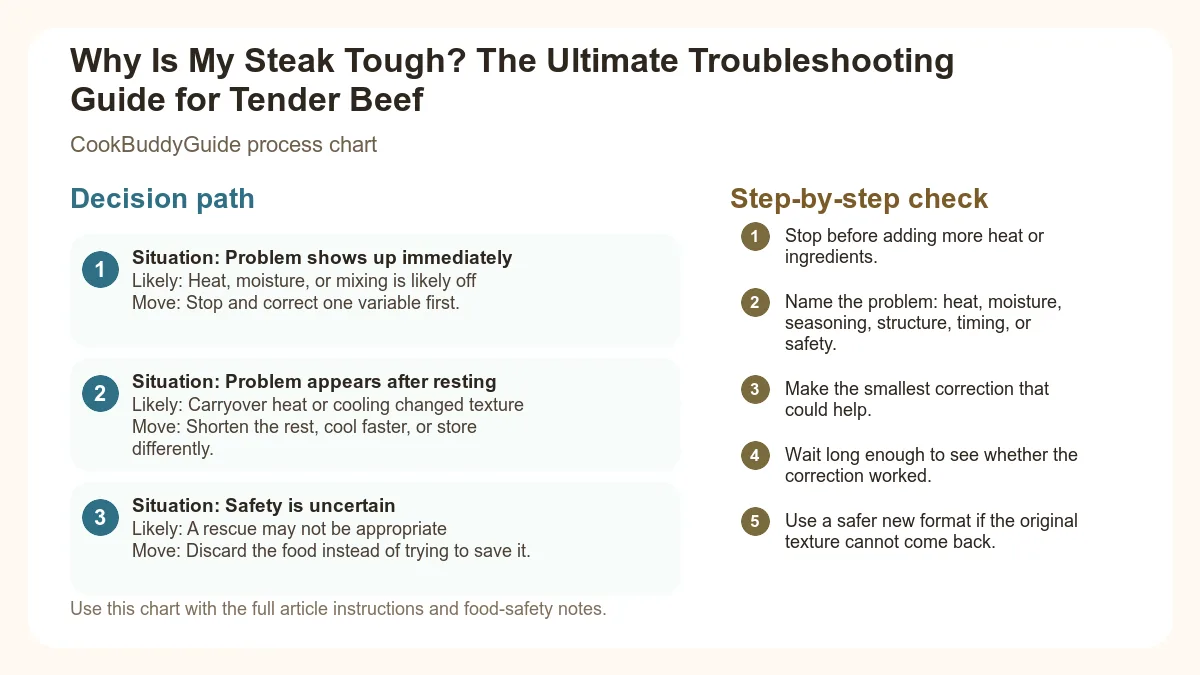
Steak is usually tough because the cut did not match the cooking method, it cooked past the intended doneness, or it was sliced with the grain. Tender cuts suit fast, high-heat cooking; collagen-rich cuts need slow cooking, and every steak benefits from resting and thin slices across the grain.
Practical note
A hard sear cannot turn a braising cut into a tender skillet steak. Check the cut name before blaming the pan: ribeye and strip suit quick cooking, while chuck and many round cuts improve with low, moist heat.
Decision table
| Situation | Likely cause or meaning | Best move |
|---|---|---|
| Lean steak is dry and firm | It cooked too long | Use a thermometer and pull the next steak earlier. |
| Steak is juicy but very chewy | Cut or slicing direction is the issue | Slice thinly across the visible muscle fibers. |
| Chuck or round stays tough | Connective tissue needs time | Braise slowly instead of using a quick sear alone. |
Step-by-step fix
- Match the cut to fast searing or slow braising.
- Pat the surface dry and preheat the cooking surface.
- Cook by internal temperature instead of time alone.
- Rest the steak before cutting so the juices settle.
- Find the grain and slice thinly across it.
Common mistakes
- Using a braising cut for a fast skillet dinner.
- Cooking by minutes without checking thickness or temperature.
- Cutting immediately after the steak leaves the pan.
- Slicing parallel to long muscle fibers.
Related topic hubs
You’ve spent thirty dollars on a beautiful, marbled piece of beef. You’ve seasoned it, fired up the grill, and anticipated that first melt-in-your-mouth bite. But when you finally sit down to eat, it’s a disaster. Instead of a buttery texture, you’re met with a rubbery, resilient mass that feels more like a workout for your jaw than a gourmet meal. You find yourself asking: why is my steak tough?
A tough steak is not always an overcooked steak. The result depends on the cut, connective tissue, final temperature, resting time, and the direction of the slice. Start by identifying whether the meat was firm throughout, dry at the edges, or chewy only in long strands; that symptom points to the most useful fix.
Table of Contents
- Mistake #1: The Wrong Cut for the Method
- Mistake #2: Cooking Straight from the Fridge
- Mistake #3: Failing to Achieve a Proper Sear
- Mistake #4: Cutting With the Grain
- Mistake #5: Skipping the Resting Period
- Mistake #6: Salt Timing and Under-Seasoning
- The Tender Beef Masterclass: Reverse Sear & More
- How to Salvage a Tough Steak
- Frequently Asked Questions
Mistake #1: You Chose the Wrong Cut for the Cooking Method
The most fundamental reason people end up with a chewy dinner is a mismatch between the cut of beef and the cooking technique. Not all muscles on a cow are created equal. Some muscles do a lot of work (like the legs and neck), while others do very little (like the loin).
Braising Cuts vs. Grilling Cuts
If you take a Chuck Roast or a Brisket and try to cook it like a ribeye on a high-heat grill, it will be inedible. These "high-activity" muscles are packed with connective tissue and collagen. Collagen is a tough, structural protein that only breaks down into silky gelatin through long, slow exposure to low heat and moisture (braising). Conversely, "fast" cuts like the New York Strip, Filet Mignon, and Ribeye have very little connective tissue and rely on intramuscular fat (marbling) for tenderness. When shopping, choosing the right cut for your specific recipe is the first step toward success.
The Grass-Fed Factor
Grass-fed beef is often leaner than a highly marbled grain-finished cut, but the difference varies by animal and grade. Do not apply a fixed percentage reduction to the cooking time. Use an instant-read thermometer, begin checking earlier than usual, and remove the steak according to the temperature and doneness you intend.
The Butcher's Cheat Sheet for Tenderness
- Fast Cooking (Grill/Pan): Ribeye, Strip, Filet, T-Bone, Top Sirloin.
- Medium Cooking (Marinate + Sear): Flank steak, skirt steak, Hanger steak.
- Slow Cooking (Braise/Stew): Chuck, Shank, Short Rib, Brisket.
Pro Tip: Look for "white flecks" of fat inside the muscle fibers, not just the thick fat cap on the edge. This is the intramuscular fat that melts during cooking to lubricate the muscle fibers.
Mistake #2: Cooking Steak Straight from the Fridge
It’s 6:00 PM, you’re hungry, and you throw a cold steak onto a hot cast iron skillet. This is a recipe for a "cold core." When a steak is cold, the exterior will overcook and become tough before the interior even reaches a safe temperature. This leads to a thick "gray band" of overcooked meat surrounding a raw center.
The Science of Thermal Shock
When cold muscle fibers hit a hot pan, they undergo thermal shock, causing them to contract violently and squeeze out moisture. This contraction is a primary reason why is my steak tough even if the middle looks pink. Consider the "30-minute rule": take your steak out of the refrigerator, salt it, and let it sit on the counter for at least half an hour. While some argue the internal temperature doesn't rise significantly, bringing steak to room temperature (or at least closer to it) allows the surface to dry out, which is essential for the next step.
Mistake #3: Failing to Achieve a Proper Sear
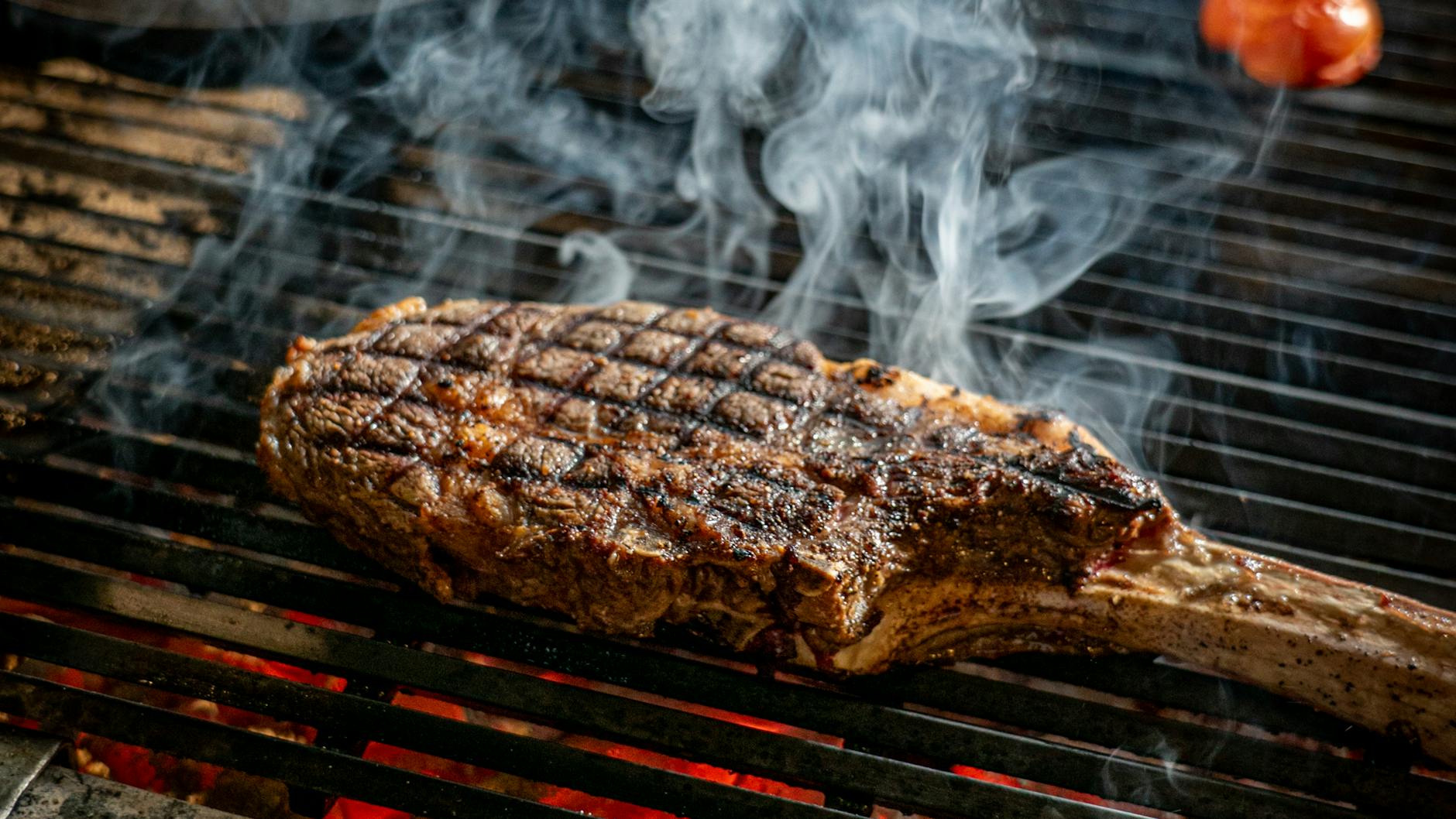
If your steak looks gray and boiled rather than deep brown and crusty, you’ve missed the Maillard reaction. This chemical reaction between amino acids and reducing sugars occurs at temperatures above 300°F (150°C). A proper sear doesn't just add flavor; it creates a structural crust that provides a satisfying textural contrast to the tender interior.
The Importance of Surface Moisture
Mistake #4: Cutting With the Grain Instead of Against It
You can do everything else perfectly—buy the best Wagyu, cook it to a perfect medium-rare—and still end up with a chewy mess if you carve it incorrectly. This is especially true for fibrous cuts like skirt steak or flank steak.
Muscle fibers are like a bundle of rubber bands. Cutting with the grain leaves those fibers long; cutting across them shortens the strands your teeth must separate. Note the grain direction before cooking, because it can become harder to see after browning, then slice the rested steak against the grain.
Mistake #5: Skipping the Crucial Resting Period
The Physics of Meat Juices
During cooking, the heat causes the muscle fibers to tighten and push moisture toward the center of the cut. Resting time allows those fibers to relax and reabsorb the juices. A rested steak is plump and tender; an unrested steak is dry and stringy. As a general rule, rest your steak for at least 5 to 10 minutes. This also accounts for carryover cooking, where the internal temperature continues to rise by 5-8 degrees after being removed from the heat. Understanding the importance of resting your steak is the difference between a good home cook and a pro.
Mistake #6: Under or Over-Seasoning and Salt Timing
Salt is more than a flavor enhancer; it’s a functional ingredient. When you salt a steak, it draws out moisture through osmosis. That moisture dissolves the salt, creating a concentrated brine that then gets reabsorbed into the meat. This process, known as dry brining or salt-brining, breaks down a protein called myosin, which is responsible for the "snap" in meat. By breaking down myosin, the salt effectively tenderizes the steak from the inside out.
However, timing is everything. If you salt your steak and throw it in the pan 10 minutes later, the moisture is still on the surface, and you’ll end up steaming the meat. You should either salt immediately before the steak hits the pan or—ideally—at least 45 minutes (and up to 24 hours) in advance. If you find your meat feels "flat" or lacks that tender "give," you are likely under-seasoning. For more protein-focused inspiration, check out our High Protein Meals for Weight Loss.
How to Avoid Tough Chewy Steak: A Step-by-Step Masterclass
If you want a reliable method to ensure tenderness every single time, consider the Reverse Sear. This method is the opposite of traditional cooking: you start low and slow and finish with a high-heat blast. It is particularly effective for thick-cut ribeyes or strips.
A Practical Reverse Sear Method
- Prep: Season your steak (at least 1.5 inches thick) heavily with kosher salt and black pepper. Let it sit at room temperature for 45 minutes.
- Low Heat: Place the steak on a wire rack over a baking sheet. Put it in an oven set to 225°F (107°C).
- Monitor: Use a meat thermometer. Pull the steak when it reaches 115°F (46°C) for medium-rare.
- The Sear: Heat a cast iron skillet until it is smoking hot. Add a tablespoon of high-heat oil. Sear the steak for exactly 60 seconds per side until a deep crust forms.
- The Finish: Add a knob of butter and a sprig of rosemary in the last 30 seconds, basting the steak. Rest for 10 minutes.
Internal Temperature Guide
- Rare: 120°F - 125°F (Cool red center)
- Medium-Rare: 130°F - 135°F (Warm red center - The Gold Standard)
- Medium: 140°F - 145°F (Warm pink center)
- Medium-Well: 150°F - 155°F (Slightly pink center)
- Well Done: 160°F+ (No pink - likely to be tough!)
If you have the equipment, sous vide is another incredible way to guarantee tenderness. By cooking the steak in a water bath at a precise temperature for 2 hours, you allow the enzymes in the meat to naturally tenderize the fibers without any risk of overcooking.
How to Salvage a Steak That Is Already Tough
We’ve all been there. You’ve plated the dinner, taken a bite, and realized you’ve overcooked it. Don't throw it away! There are several ways to save a "shoe-leather" steak.
1. The Thin-Slice Rescue
If the steak is whole, slice it as thinly as humanly possible against the grain. By reducing the length of the muscle fibers to mere millimeters, you significantly reduce the amount of chewing required. This is the secret to turning a tough steak into a great salad topper.
2. Add Fat and Acid
Toughness is often exacerbated by dryness. Top your overcooked steak with a generous dollop of compound butter (butter mixed with garlic and herbs). The fat will coat the tongue and mimic the sensation of a juicier cut. Alternatively, a splash of chimichurri or lemon juice can help brighten the flavor and distract from the texture.
3. Repurpose the Meat
If it's truly too tough to eat as a steak, chop it into small cubes and use it in one of our Quick Ground Beef Recipes (just substitute the chopped steak). Alternatively, simmer the pieces in a bit of beef broth for 20 minutes to soften them up for tacos or a quick stir-fry.
Frequently Asked Questions
A: Only on the surface. Most marinades don't penetrate more than a few millimeters. However, marinades containing enzymes (like pineapple, papaya, or ginger) or acids (vinegar, yogurt) can help soften the exterior fibers of tougher cuts like flank or skirt steak.
A: This usually happens if you didn't rest the meat or if you cut it with the grain. It can also happen with very lean grass-fed beef that lacks the fat to lubricate the fibers.
A: Yes, for certain cuts! Pounding a steak with a mallet physically breaks the muscle fibers and connective tissue. This is excellent for chicken-fried steak or thin cuts that will be cooked very quickly.
Conclusion: Consistency is Key
The most reliable improvements are straightforward: match the cut to the cooking method, dry the surface, monitor temperature, rest the meat, and slice across the grain. If the cut is naturally rich in connective tissue, switch to a slower, moist cooking method rather than trying to sear it like a tender steak.
Next time you're at the butcher counter, look for that beautiful marbling, grab your cast iron skillet, and remember: against the grain is the only way to go. You've got this!
For more troubleshooting guides and practical tips, stay tuned to CookBuddyGuide.com. Happy cooking!