Quick Answer
Serve steak with a side that contrasts its richest element, then add a starch, vegetable, salad, or sauce that suits the cooking method. The options below are organized by texture, flavor, timing, and the kind of meal you are planning.
Practical note
For serving steak, this guide centers on Fatty Cuts (Ribeye, T-Bone, Porterhouse), Lean Cuts (Filet Mignon, Sirloin), Thin/Marinated Steaks (Flank, Skirt, Hanger). Those are the checkpoints we would use first in a normal home kitchen before making a bigger change.
Decision table
| Situation | Likely cause or meaning | Best move |
|---|---|---|
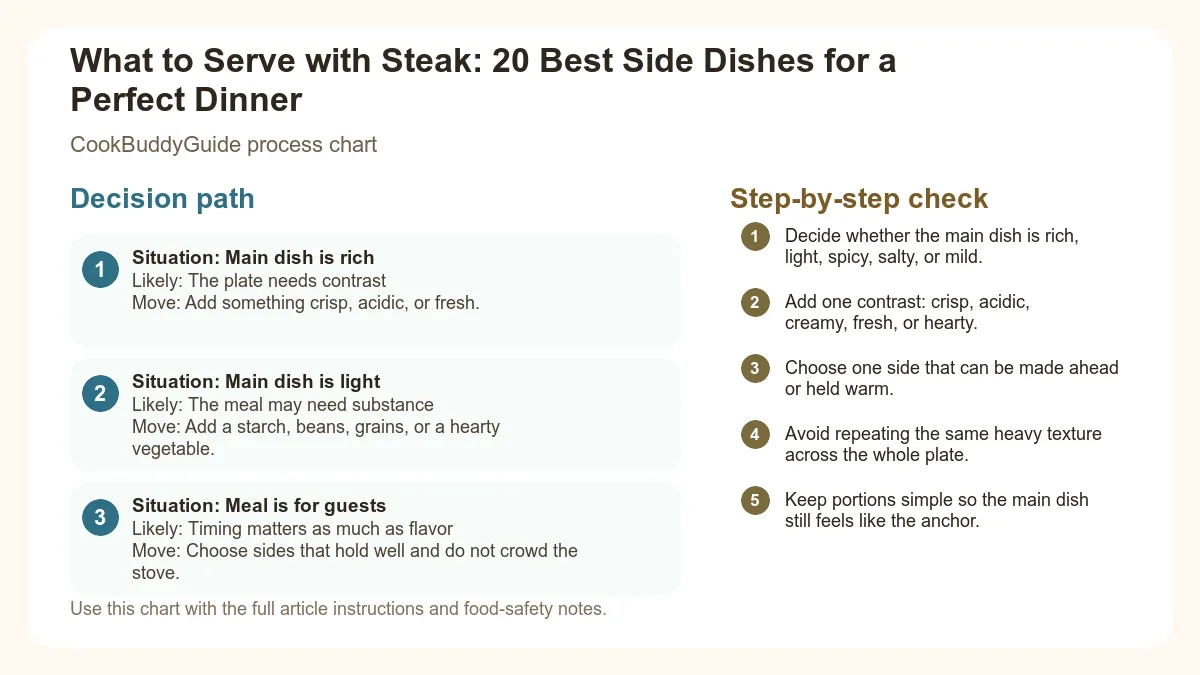
| Main dish is rich | The plate needs contrast | Add something crisp, acidic, or fresh. |
| Main dish is light | The meal may need substance | Add a starch, beans, grains, or a hearty vegetable. |
| Meal is for guests | Timing matters as much as flavor | Choose sides that hold well and do not crowd the stove. |
Step-by-step fix
- Decide whether the main dish is rich, light, spicy, salty, or mild.
- Add one contrast: crisp, acidic, creamy, fresh, or hearty.
- Choose one side that can be made ahead or held warm.
- Avoid repeating the same heavy texture across the whole plate.
- Keep portions simple so the main dish still feels like the anchor.
Common mistakes
- Serving several heavy sides with an already rich main dish.
- Choosing sides that all need last-minute stove space.
- Forgetting acidity, crunch, or freshness.
- Making too many dishes instead of two or three that fit well.
Related topic hubs
Knowing what to serve with steak is about more than just filling the plate; it’s about balancing the intense richness of the beef fat with acidity, texture, and earthiness. Whether you are hosting an elegant dinner party or looking for easy recipes for a Tuesday night, the right pairing transforms a piece of meat into a cohesive meal. This guide explains practical pairing principles, covering everything from decadent comfort food classics to keto-friendly alternatives that won't leave you feeling weighed down.
A Practical Potato Sides (Steakhouse Classics)
1. Loaded Baked Potato
2. Garlic Herb Mashed Potatoes
3. Crispy Parmesan Roasted Potatoes
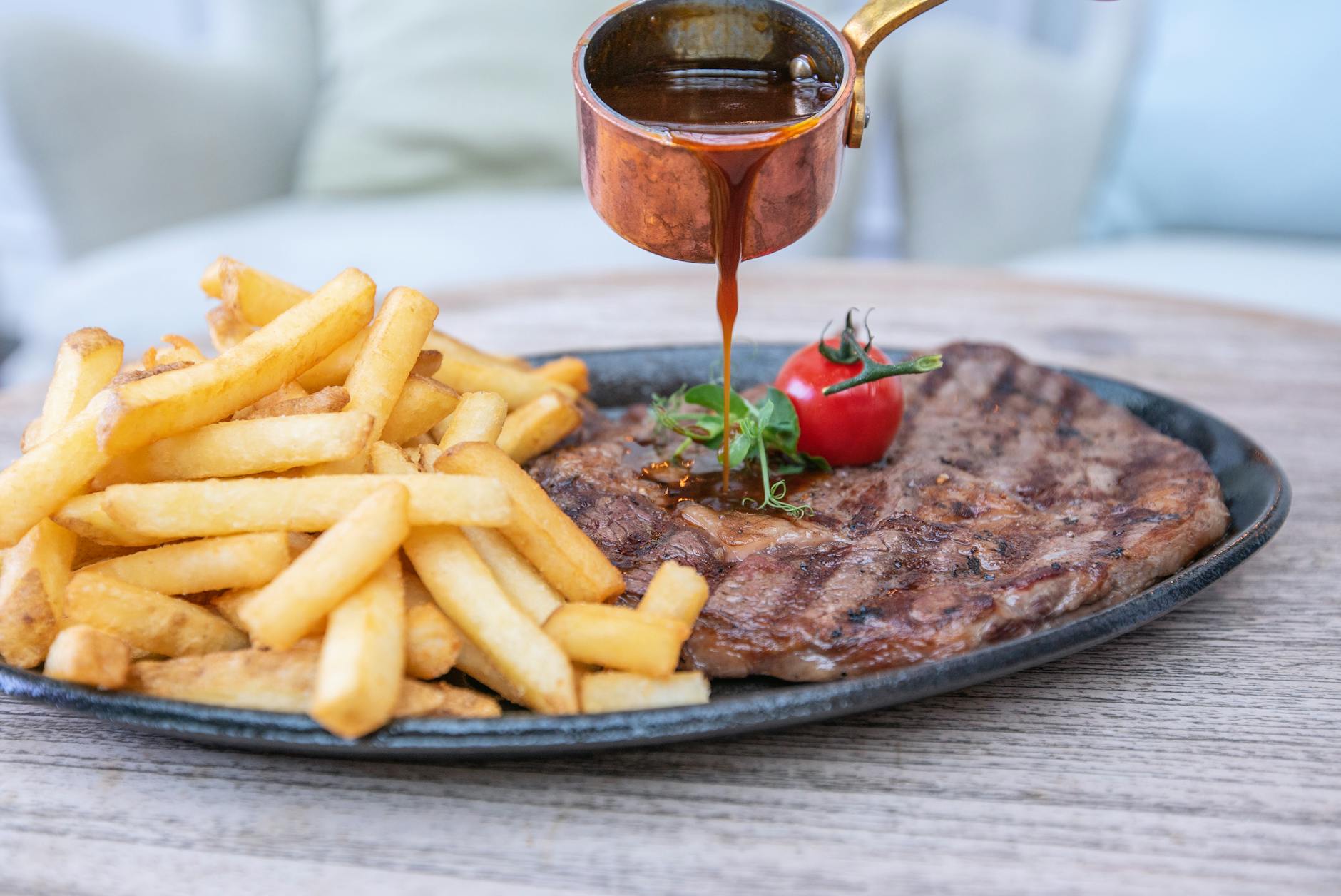
4. Classic Steakhouse Fries
5. Creamy Potatoes Au Gratin
Essential Vegetable Sides for Steak
Vegetables shouldn't just be "filler" on your plate. They provide the necessary fiber and micronutrients to balance a heavy protein meal. When considering what to serve with steak, look for vegetables that can handle high heat or rich sauces.
6. Steakhouse Style Creamed Spinach
7. Garlic Butter Roasted Mushrooms
8. Honey-Glazed Carrots with Thyme
Sometimes you need a hit of sweetness to cut through the salt of the steak. Use whole heirloom carrots, leaving an inch of the green tops for presentation. A simple glaze of honey, butter, and fresh thyme creates a glossy coating that looks beautiful on a plate next to a Filet Mignon. If you're looking for more ways to simplify your evening, these carrots can easily be adapted into easy sheet pan side dishes.
9. Charred Broccolini with Lemon
10. Balsamic Roasted Brussels Sprouts
The trick to Brussels sprouts is high heat (425°F) and placing them cut-side down on the baking sheet. This ensures the outer leaves get crispy while the centers remain tender. I finish mine with a drizzle of balsamic glaze and toasted walnuts. The earthy, slightly bitter profile of the sprouts is a fantastic counterpoint to a well-marbled Ribeye.
11. Grilled Asparagus with Parmesan
12. Creamy Corn Pudding
This is a Southern classic that brings a touch of sweetness to the meal. It’s halfway between a soufflé and a casserole. A useful option is to add diced jalapeños for a subtle heat that wakes up the taste buds. It’s a heavier side, so Usually, pair this with leaner cuts like a Sirloin or a Flank steak to balance the meal's overall fat content.
Light and Refreshing Salad Options
If you’re serving a massive 24-ounce Porterhouse, the last thing you want is a heavy potato side. This is where salads shine. A good salad provides a temperature contrast and much-needed acidity. Incorporating leafy greens into your meal isn't just about health; it's about culinary balance.
13. Classic Wedge Salad with Blue Cheese
14. Peppery Arugula Salad with Lemon Vinaigrette
15. Tomato and Red Onion Salad
Common in Italian steakhouses, this salad relies on the quality of the produce. Use the best vine-ripened tomatoes you can find. I slice them thick, layer them with thinly shaved red onion (soak the onion in ice water for 10 minutes first to remove the "bite"), and drizzle with high-quality balsamic vinegar. It’s the perfect accompaniment to a steak topped with garlic butter.
16. Cucumber Radish Salad
17. Caesar Salad with Homemade Croutons
Modern and Low-Carb Alternatives
For those following a keto-friendly lifestyle or just looking to lighten things up, there are plenty of modern options that don't feel like a sacrifice. These are some of the best side dishes for steak when you want to skip the traditional potato.
18. Sweet Potato Fries with Chipotle Mayo
19. Cauliflower Mash with Roasted Garlic
Kitchen Tip: The biggest complaint with cauliflower mash is that it’s watery. After steaming the cauliflower, I return it to the hot pot for 2 minutes over low heat to "steam off" the excess moisture before blending. I blend it with a whole head of roasted garlic and a splash of heavy cream. The result is so silky and flavorful that many of my guests can’t even tell it’s not potato.
20. Roasted Root Vegetables with Rosemary
A medley of parsnips, rutabaga, and turnips provides a complex, earthy sweetness. I roast them until the natural sugars caramelize, creating a chewy, candy-like exterior. These are hearty enough to replace potatoes while offering a much wider range of vitamins and minerals. For more inspiration on using beef in your weekly rotation, check out our quick ground beef dinner recipes for those nights when you aren't doing a full steak.
The Art of Pairing: Matching Sides to Your Steak Cut
Selecting what to serve with steak becomes much easier when you understand the characteristics of the meat you are cooking. Different cuts of steak have varying levels of fat and tenderness, which dictate the best side dish companions.
- Fatty Cuts (Ribeye, T-Bone, Porterhouse): These steaks are rich and marbled. They need "cut-through" sides—think acidic salads, charred broccolini with lemon, or bitter greens. Avoid overly creamy sides unless you want a very heavy meal.
- Lean Cuts (Filet Mignon, Sirloin): Because these cuts have less fat, they benefit from "added fat" sides. This is the time for Potatoes Au Gratin, Creamed Spinach, or a rich red wine reduction.
- Thin/Marinated Steaks (Flank, Skirt, Hanger): These are often served with bright sauces like chimichurri. Pair them with lighter, grilled vegetables or a refreshing Cucumber Radish salad to maintain the "zesty" theme of the meal.
Regardless of the cut, always ensure you are cooking to a safe temperature. Refer to the USDA safe internal cooking temperatures, though most steak enthusiasts prefer a medium-rare finish at 130-135°F (54-57°C).
Kitchen Management: Timing Your Sides with Your Steak
The 'Resting' Window Strategy
A steak must rest for at least 10 minutes after cooking to allow the juices to redistribute. If you cut into it immediately, the juices will run out, leaving the meat dry. This 10-minute window is your "golden hour." Use this time to:
- Toss your salad with dressing.
- Do a final 2-minute sear on your broccolini or asparagus in the steak pan.
- Whisk your compound butter or pan sauce.
- Plate your potatoes, which can stay hot longer than the meat.
Make-Ahead Side Dishes
If you are hosting a dinner party, don't try to make everything at once. Potatoes Au Gratin and Corn Pudding can be made ahead and kept warm in a low oven (200°F). Mashed potatoes can be kept in a slow cooker on the "warm" setting for up to two hours without losing quality—just add a splash of warm milk before serving to loosen them up.
Frequently Asked Questions
Because the Ribeye is so fatty, consider charred broccolini with lemon or a peppery arugula salad. The acidity and slight bitterness help balance the richness of the marbling.
Never use a food processor or hand mixer. Use a potato ricer or a manual masher, and ensure you are using starchy Russet potatoes. Only mix until the ingredients are just combined.
Yes! Roasted root vegetables and potato casseroles hold heat very well. Salads should be prepped but not dressed until the moment you are ready to eat.
Conclusion: Creating Your Signature Steak Dinner
Mastering the art of what to serve with steak is what separates a good cook from a great one. By choosing sides that offer a variety of textures—crispy potatoes, velvety spinach, and crunchy salads—you create a multi-dimensional dining experience that honors the quality of the beef you’ve prepared. Remember, the goal is balance. If your steak is rich and buttery, go light on the sides. If your steak is lean and simple, go decadent with the pairings.