
Quick Answer
Our guide covers 9 egg substitute baking options with exact ratios for cookies, cakes, and muffins. Save your bake!
Practical note
For What to Substitute for Eggs in Baking, the most useful home checks are temperature, measuring, resting time, and visible texture. Those details tell you more than guessing, especially before adding extra flour, liquid, heat, or leavening.
Decision table
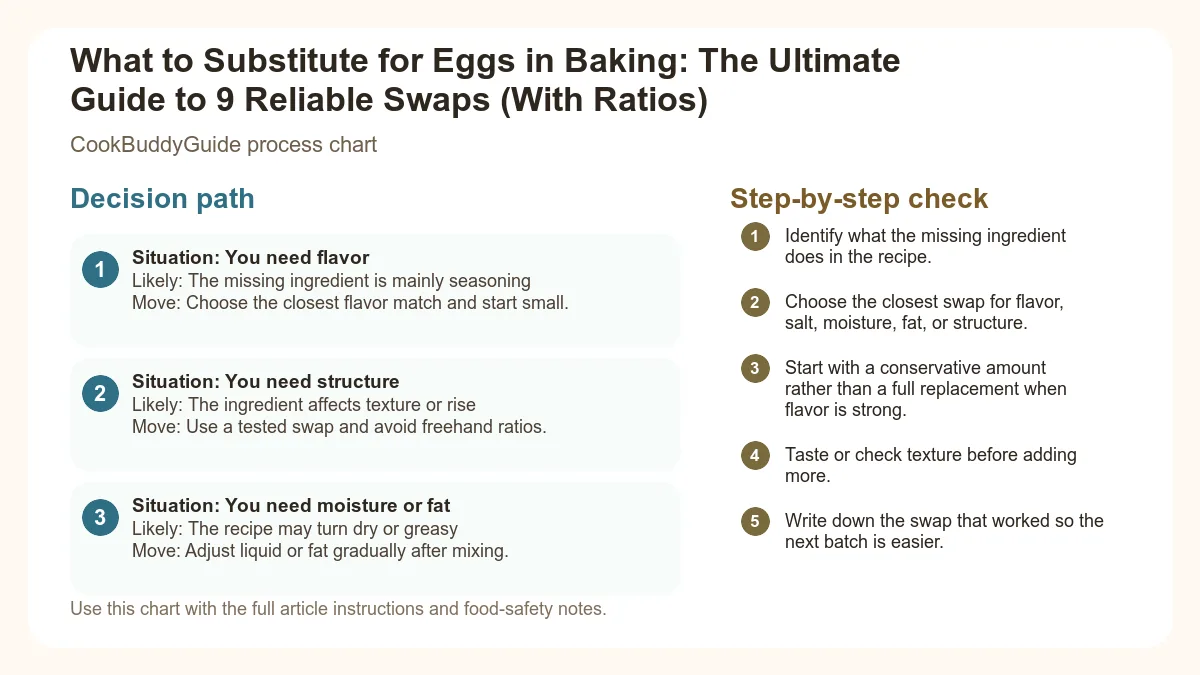
| Situation | Likely cause or meaning | Best move |
|---|---|---|
| You need flavor | The missing ingredient is mainly seasoning | Choose the closest flavor match and start small. |
| You need structure | The ingredient affects texture or rise | Use a practical swap and avoid freehand ratios. |
| You need moisture or fat | The recipe may turn dry or greasy | Adjust liquid or fat gradually after mixing. |
Step-by-step fix
- Identify what the missing ingredient does in the recipe.
- Choose the closest swap for flavor, salt, moisture, fat, or structure.
- Start with a conservative amount rather than a full replacement when flavor is strong.
- Taste or check texture before adding more.
- Write down the swap that worked so the next batch is easier.
Common mistakes
- Replacing a strong ingredient 1:1 before tasting.
- Choosing a flavor match when the recipe actually needs structure.
- Forgetting that salty swaps can change the whole dish.
- Adding extra liquid before the batter, dough, or sauce has time to hydrate.
Related topic hubs
It’s 8:00 PM on a Tuesday, your oven is preheating to 350°F, and you’ve just creamed the butter and sugar for a batch of your favorite chocolate chip cookies. You reach into the refrigerator, only to find an empty carton. We’ve all been there. Whether you’re dealing with a mid-recipe realization that you're out of supplies, managing a serious egg allergy, or transitioning to plant-based baking, knowing what to substitute for eggs in baking is a fundamental skill for every home cook.
- The Science of Baking: Binding vs. Leavening vs. Moisture
- 1. Flax Eggs: The Reliable All-Purpose Binder
- 2. Chia Eggs: Best for Hearty Textures
- 3. Applesauce: The Moisture King
- 4. Mashed Banana: Flavorful and Functional
- 5. Yogurt or Buttermilk: For a Tender Crumb
- 6. Aquafaba: The Miracle Leavener
- 7. Silken Tofu: For Dense and Creamy Bakes
- 8. Commercial Egg Replacers: The practical Solution
- 9. Vinegar and Baking Soda: The Chemistry Hack
- Quick Reference Conversion Table
- Troubleshooting Common Failures
The Science of Baking: Binding vs. Leavening vs. Moisture
To understand an egg substitute baking project, we first have to look at the anatomy of an egg. A large egg is roughly 75% water, 12% protein, and 10% fat. In the oven, those proteins uncoil and bond together, creating a structural web that traps air and holds the shape of your cake. The fats provide richness, and the water creates steam for a rise.
Binding: Holding it All Together
In recipes like cookies or brownies, the egg’s primary job is binding. It acts as the glue that prevents your bake from crumbling into a pile of sweet dust. For these recipes, you need a vegan egg replacement that is viscous and sticky, such as ground flaxseed or chia seeds.
Leavening: Achieving the Perfect Rise
In fluffy cakes, sponges, and muffins, the egg acts as a leavening agent. It helps the batter expand and stay lifted. If you use a heavy binder (like mashed fruit) in a delicate sponge cake without adding extra baking powder, your cake will be heavy and flat. This is where aquafaba or the vinegar-and-soda trick shines.
Moisture: Preventing Dry, Crumbly Bakes
Sometimes, an egg is just there to keep things from drying out. This is common in quick breads and muffins. If the recipe only calls for one egg and has plenty of other dry ingredients, you’re looking for a substitute with high moisture content, like applesauce or yogurt.
1. Flax Eggs: The Reliable All-Purpose Binder
If I could only keep one egg substitute in my pantry, it would be flaxseed meal. It is remarkably consistent and works in about 80% of standard baking recipes. When mixed with water, the soluble fiber in the flax creates a mucilaginous gel that mimics the viscosity of an egg white.
How to Make a Flax Egg
Ratio: 1 tablespoon ground flaxseed + 3 tablespoons warm water = 1 egg
- Whisk the ground flaxseed and water together in a small bowl.
- Let the mixture sit for exactly 10 minutes. Do not skip this! The "gel" period is non-negotiable for proper binding.
- Whisk again before adding to your wet ingredients.
2. Chia Eggs: Best for Hearty Textures
The Ratio: 1 tablespoon chia seeds (whole or ground) + 3 tablespoons water = 1 egg. Like the flax egg, it needs about 10-15 minutes to thicken. If you are making a delicate cake, consider using ground chia seeds. Whole seeds can be distracting in a soft crumb, but they are great for adding texture to brownies or hearty breads.
3. Applesauce: The Moisture King
When you need to keep a cake or brownie moist without adding a strong flavor, reach for the applesauce. This is a classic pantry staple swap that most home cooks already have on hand. According to the best egg substitutes for baking, 1/4 cup of applesauce is the standard replacement for one large egg.
4. Mashed Banana: Flavorful and Functional
Mashed banana is a fantastic binder, but it comes with a caveat: you will taste it. This makes it perfect for pancakes, waffles, and muffins. It’s also a hit in easy toddler dinner ideas like "breakfast for dinner" pancakes.
Ratio: 1/4 cup of well-mashed, very ripe banana = 1 egg. The riper the banana, the better it works as a binder because the starches have converted to sugars, which help with caramelization and browning. If your banana isn't quite ripe enough, microwave it for 30 seconds to soften the fibers before mashing.
5. Yogurt or Buttermilk: For a Tender Crumb
If your goal is a tender, velvety texture and crumb, dairy (or non-dairy) yogurt is your best friend. The acidity in yogurt reacts beautifully with baking soda, creating tiny air bubbles that make for very light muffins and scones.
- Ratio: 1/4 cup plain yogurt or buttermilk = 1 egg.
- Greek vs. Plain: Greek yogurt is much thicker and contains more protein. If you use Greek, your bake will be sturdier; if you use plain, it will be more moist.
- Vegan Option: Soy or almond-based yogurts work just as well as dairy versions.
6. Aquafaba: The Miracle Leavener
Until a few years ago, making a vegan meringue was considered impossible. Then came aquafaba—the liquid found in a can of chickpeas (chickpea brine). This liquid is rich in proteins and starches that mimic egg whites almost perfectly.
Working with Aquafaba
Ratio: 3 tablespoons aquafaba = 1 whole egg; 2 tablespoons = 1 egg white.
As noted in this egg substitutions for baking chart, the ratio must be precise for the chemistry to work.
- For meringues, use a stand mixer and whip the liquid until stiff peaks form.
- Secret Ingredient: Add 1/8 teaspoon of cream of tartar to stabilize the foam.
- The Taste: Don't worry—the "beany" smell disappears completely once baked!
7. Silken Tofu: For Dense and Creamy Bakes
Silken tofu is the secret to the best egg-free brownies and "cheesecakes" you'll ever eat. Because tofu is virtually flavorless once mixed with cocoa or vanilla, it provides a massive amount of structure without changing the taste profile. However, it is heavy.
Ratio: 1/4 cup of pureed silken tofu = 1 egg. You must blend the tofu in a food processor or blender until it is completely smooth. If you try to mash it with a fork, you will end up with white chunks in your brownies. According to this practical guide to egg replacements, silken tofu is best suited for dense baked goods rather than light, airy cakes because it lacks leavening power.
8. Commercial Egg Replacers: The practical Solution
If you bake frequently for someone with an egg allergy, consider keeping a box of commercial egg replacer in your pantry. Brands like Bob’s Red Mill or Ener-G are usually made from a blend of potato starch, tapioca flour, and leavening agents.
These are designed to be shelf-stable and neutral in flavor. They are the most reliable "plug-and-play" option for beginners. It is important to note that these starch-based replacers are different from "egg products" sold in cartons (like Egg Beaters), which actually contain real eggs. As per USDA egg product safety guidelines, real egg products must be refrigerated, whereas vegan replacers are typically dry powders.
9. Vinegar and Baking Soda: The Chemistry Hack
Ratio: 1 teaspoon baking soda + 1 tablespoon white vinegar (or apple cider vinegar) = 1 egg. This binding and leavening egg alternatives guide confirms that this combo is the gold standard for airy textures.
Critical Step: You must get your batter into the oven immediately after mixing in the vinegar. The reaction starts the second the ingredients touch, and if the batter sits on the counter for 10 minutes, your cake will lose its lift and come out flat.
Quick Reference Table: Egg Substitute Conversion Chart
| Substitute | Ratio (for 1 Egg) | Best Use Case |
|---|---|---|
| Flax Egg | 1 tbsp ground flax + 3 tbsp water | Cookies, Muffins, Quick Breads |
| Applesauce | 1/4 cup (unsweetened) | Brownies, Moist Cakes |
| Aquafaba | 3 tbsp (liquid from chickpeas) | Meringues, Macarons, Light Cakes |
| Mashed Banana | 1/4 cup (approx. 1/2 banana) | Pancakes, Waffles, Banana Bread |
| Vinegar + Soda | 1 tsp soda + 1 tbsp vinegar | Cupcakes, Fluffy Chocolate Cake |
| Silken Tofu | 1/4 cup (pureed) | Custards, Dense Brownies, Pies |
Troubleshooting: What to Do When Your Egg-Free Bake Fails
This usually happens with fruit-based substitutes like applesauce or banana. These add a lot of moisture but no structure. Solution: Next time, increase your baking time by 5-10 minutes and reduce the oven temperature by 25°F to allow the center to dry out without burning the edges. Also, ensure you aren't over-measuring the fruit puree.
This is a sign of poor binding. If you used a flax egg, did you wait the full 10 minutes for it to gel? Solution: Chill your dough for at least 30 minutes before baking. Cold dough spreads less, giving the plant-based binders more time to set as they heat up.
You likely used a binder where you needed a leavener. Solution: If a recipe relies on eggs for lift (like a sponge cake), you cannot use tofu or flax alone. Switch to aquafaba or add an extra 1/2 teaspoon of baking powder to your dry ingredients.
Conclusion: Finding Your Personal Favorite
Learning what to substitute for eggs in baking is less about following a strict rule and more about understanding the baking chemistry of your specific recipe. If you’re just starting out, consider keeping ground flaxseed and baking soda/vinegar on hand. Between those two, you can cover almost any baking emergency.
Have you tried any of these swaps? Or did you discover a weird pantry staple that works even better? Share your successes (and your "oops" moments) in the comments below!