
Quick Answer
Master this authentic tzatziki sauce recipe for a creamy homemade greek yogurt dip. It also covers the pro secret to preventing watery sauce and perfect seasoning.
Practical note
For A Practical Authentic Tzatziki Sauce Recipe, this guide centers on Prep the Cucumber, The Big Squeeze, Mix the Base. Those are the checkpoints we would use first in a normal home kitchen before making a bigger change.
Decision table
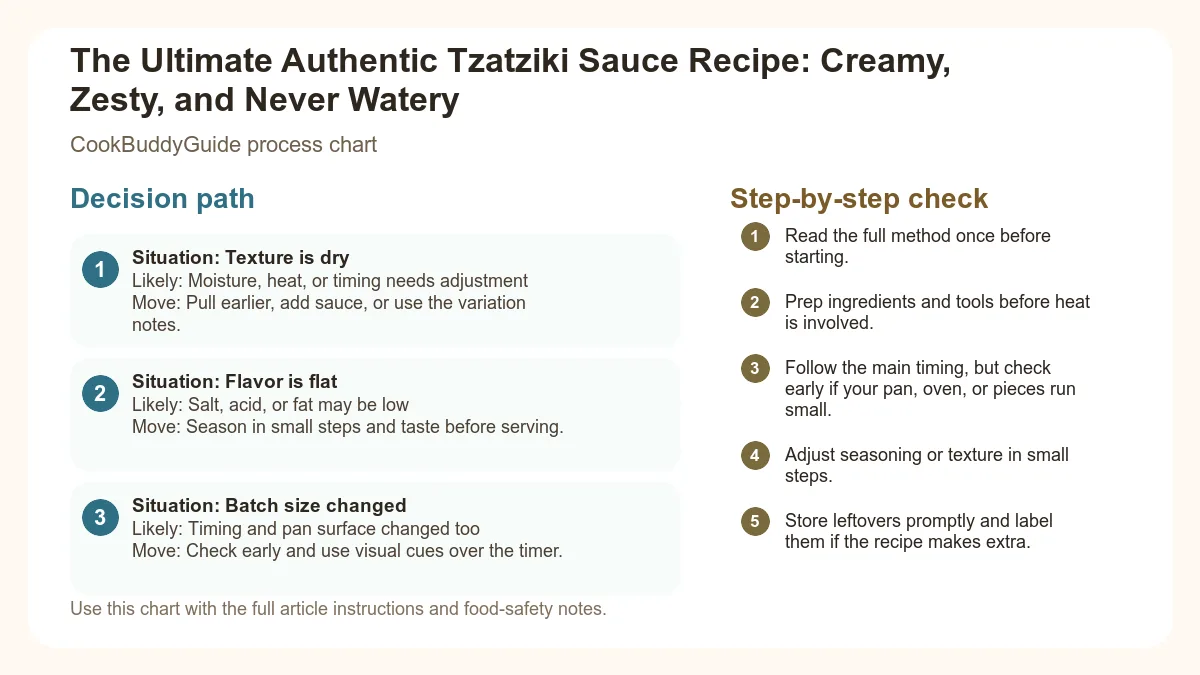
| Situation | Likely cause or meaning | Best move |
|---|---|---|
| Texture is dry | Moisture, heat, or timing needs adjustment | Pull earlier, add sauce, or use the variation notes. |
| Flavor is flat | Salt, acid, or fat may be low | Season in small steps and taste before serving. |
| Batch size changed | Timing and pan surface changed too | Check early and use visual cues over the timer. |
Step-by-step fix
- Read the full method once before starting.
- Prep ingredients and tools before heat is involved.
- Follow the main timing, but check early if your pan, oven, or pieces run small.
- Adjust seasoning or texture in small steps.
- Store leftovers promptly and label them if the recipe makes extra.
Common mistakes
- Changing the recipe before trying the base method once.
- Measuring casually when texture depends on ratios.
- Waiting until the end to fix seasoning.
- Ignoring carryover heat or resting time.
Related topic hubs
Table of Contents
- Why This is the Only Tzatziki Sauce Recipe You’ll Ever Need
- The Essential Ingredients for Authentic Tzatziki
- The Critical Step: How to Prevent Watery Tzatziki
- Step-by-Step Instructions: Making the Dip
- Customizing Your Garlic Strength
- Serving Suggestions and Pairings
- Storage and Meal Prep Tips
- Troubleshooting Common Tzatziki Mistakes
- The Official Recipe Card
Why This is the Only Tzatziki Sauce Recipe You’ll Ever Need
The Science of the Perfect Mediterranean Dip
What Sets This Recipe Apart from Store-Bought Versions
If you look at the back of a plastic tub of store-bought tzatziki, you’ll often see thickeners like guar gum or cornstarch. These are used to mask the fact that the manufacturer didn't take the time to drain the vegetables. Homemade versions are naturally superior because we rely on the mechanical reduction of moisture. Furthermore, store-bought dips often use "natural flavors" instead of fresh garlic cloves and high-quality extra virgin olive oil. By making this homemade greek yogurt dip yourself, you are cutting out preservatives and controlling the sodium, making this a perfect low calorie sauce and a staple for anyone following a keto friendly recipe or the Mediterranean diet.
The Essential Ingredients for Authentic Tzatziki
Choosing the Right Greek Yogurt: Full-Fat vs. Low-Fat
Why Persian Cucumbers are Superior for Texture
When selecting your vegetables, look for Persian cucumbers. These are the small, thin-skinned varieties often sold in packs of five or six. Unlike the large "slicing" cucumbers found in most produce aisles, Persian cucumbers have very few seeds and a much lower water content. Their skins are tender and sweet, meaning you don't have to peel them—which adds beautiful green flecks to your sauce. If you can't find Persian, an English (hothouse) cucumber is your next best bet. Avoid the standard American waxy cucumber if possible; the seeds are too large and the skin is too bitter for a refined tzatziki sauce recipe.
Fresh vs. Dried Herbs: The Dill and Mint Debate
The Role of High-Quality Extra Virgin Olive Oil
The Critical Step: How to Prevent Watery Tzatziki
The Salt and Squeeze Method Explained
This is the "make or break" moment for your sauce. Once you have grated cucumber, you must salt it. Use about half a teaspoon of kosher salt for one large cucumber. The salt draws out the moisture through a process called osmosis. As explained in this brilliant breakdown of the science of salting cucumbers, this step is non-negotiable if you want a creamy result. I let the salted cucumber sit in a colander for at least 15 to 30 minutes. You will be shocked to see how much liquid collects in the bowl below—usually 1/4 to 1/3 cup!
Why Draining the Yogurt Matters (Even for Greek Yogurt)
Even though Greek yogurt is already strained, not all brands are created equal. Some "Greek-style" yogurts contain thickeners rather than being truly strained. If you tilt your yogurt container and see liquid pooling at the edges, you should drain it further. Consider lining a sieve with cheesecloth or a paper towel and letting the yogurt sit over a bowl for 30 minutes while your cucumbers drain. This extra step ensures that your homemade greek yogurt dip has a consistency closer to a spread than a soup.
Equipment Needed: Cheesecloth vs. Fine Mesh Strainers
Step-by-Step Instructions: Making the Dip
Prepping the Aromatics and Herbs
Start by finely mincing your garlic cloves. Choose using a Microplane grater for this. It turns the garlic into a paste, which distributes the flavor evenly without leaving anyone with a large, spicy chunk of raw garlic. Next, zest your lemon before juicing it. The lemon zest contains the essential oils that provide that "bright" flavor, while the juice provides the "sour" note. Finely chop your dill, discarding the thick stems, and set everything aside.
The Emulsification Process: Mixing for Consistency
In a large mixing bowl, combine the thickened yogurt, the bone-dry cucumber, minced garlic, lemon zest, red wine vinegar, and herbs. Slowly stream in the olive oil while stirring with a whisk or a heavy spoon. You’ll notice the yogurt take on a glossy sheen. This is the emulsification happening. Taste as you go. Depending on the tartness of your yogurt, you might need an extra pinch of salt or a tiny bit more vinegar.
The Resting Period: Why Flavors Need Time to Meld
If you eat the tzatziki immediately, it will taste mostly like yogurt and raw garlic. It needs time. Consider a minimum of 2 hours in the refrigerator, but overnight is even better. According to culinary experts, letting the flavors meld allows the garlic to mellow and the herbs to infuse the fats in the yogurt. This creates a cohesive flavor profile where no single ingredient overpowers the others.
Customizing Your Garlic Strength
Mellowing Raw Garlic for Sensitive Palates
Raw garlic can be aggressive. If you find it too "bitey," here is a pro tip: macerate the minced garlic in the lemon juice and vinegar for 10 minutes before adding it to the yogurt. The acid "cooks" the garlic slightly, neutralizing the enzymes that cause that sharp, lingering heat. This is a trick Use when making this dip for kids or for guests who aren't huge garlic fans.
The Grating vs. Mincing Debate
Warning about Garlic "Blooming" in the Fridge
Be careful: garlic "blooms" or gets stronger the longer it sits in the yogurt. If you are making this a day in advance, consider using one fewer clove than you think you need. You can always stir in more the next day, but you can't take it out once it has infused the entire batch!
Serving Suggestions and Pairings
Classic Pita and Veggie Dip Ideas
The most common way to enjoy this tzatziki sauce recipe is as a dip. Arrange it in a shallow bowl, create a well with a spoon, and fill it with a pool of olive oil and a sprinkle of paprika. Serve alongside warm, fluffy pita bread, sliced bell peppers, and crunchy radishes. It’s a staple of any mezze platter and a crowd-pleaser for parties.
A Practical Gyro and Souvlaki Sauce
Tzatziki is the essential souvlaki sauce. Whether you are grilling chicken, lamb, or pork, the cool yogurt cuts through the fatty richness of the meat perfectly. If you’re looking for a quick weeknight meal, try pairing this with my quick 15-minute chicken recipes. Simply dollop a generous amount over the grilled chicken and wrap it in a pita with some red onions and tomatoes.
Modern Grain Bowls and Salad Dressings
Tzatziki as a Marinade for Grilled Meats
Because of the lactic acid in the yogurt and the enzymes in the cucumber, tzatziki actually makes a brilliant marinade. Coating chicken thighs in a thin layer of this sauce for 4 hours before grilling results in incredibly tender, flavorful meat. The yogurt sugars caramelize on the grill, creating beautiful charred spots.
Storage and Meal Prep Tips
How Long Does Homemade Tzatziki Last?
Stored in an airtight glass container, your homemade greek yogurt dip will stay fresh for up to 4 days. Choose glass over plastic because garlic and onion flavors can sometimes "stain" plastic containers, making them smell even after a wash. After day 2, you might notice a tiny bit of liquid separation—this is normal. Just give it a quick stir.
Can You Freeze Tzatziki? (The Honest Truth)
In short: No. Please don't. Freezing destroys the cellular structure of the cucumber and causes the yogurt to break and become grainy upon thawing. The result is a watery, separated mess that no amount of whisking can fix. This is a recipe best made fresh or a few days in advance.
Refreshing Leftover Dip: A Quick Fix
If your leftovers have lost their "zing" by day three, add a fresh squeeze of lemon and a tiny pinch of salt. The flavors tend to dampen as they sit in the cold fridge, and a little hit of acid usually wakes the whole dish back up.
Troubleshooting Common Tzatziki Mistakes
What to Do if Your Sauce is Too Salty
If you were too heavy-handed with the salt during the cucumber draining process, don't panic. The best fix is to add more yogurt. This dilutes the salt concentration. If you don't have more yogurt, a dollop of sour cream or even a little bit of heavy cream can help balance the palate.
Fixing a Thin or Runny Consistency
If you forgot to squeeze the cucumbers and your sauce is looking like soup, you can try to save it by whisking in a little bit of Labneh (extra-thick Middle Eastern yogurt) or even a small amount of softened cream cheese. In the future, remember that the "squeeze" is the most important part of the tzatziki sauce recipe.
Balancing Overpowering Garlic or Acid
If the garlic is burning your throat, add a teaspoon of honey or agave. A tiny bit of sweetness can neutralize the "heat" of the garlic without making the dip taste sweet. If it’s too acidic, add more olive oil; the fat will coat your tongue and dampen the sharpness of the vinegar.
A Practical Authentic Tzatziki Sauce
Yields: Approx 2.5 cups
Ingredients
- 2 cups (500g) Full-Fat Greek Yogurt (Strained)
- 1 large English Cucumber or 3 Persian Cucumbers
- 3-4 Garlic Cloves, finely grated (using a Microplane)
- 2 tbsp Extra Virgin Olive Oil (plus more for garnish)
- 1 tbsp Fresh Lemon Juice
- 1 tsp Lemon Zest
- 1 tsp Red Wine Vinegar
- 1/4 cup Fresh Dill, finely chopped
- 1/2 tsp Kosher Salt (for draining) plus more to taste
- Freshly ground black pepper to taste
Instructions
- Prep the Cucumber: Grate the cucumber using the large holes of a box grater. Place the shredded cucumber in a fine-mesh sieve set over a bowl. Sprinkle with 1/2 tsp salt and toss to coat. Let sit for 30 minutes.
- The Big Squeeze: After 30 minutes, transfer the cucumber to a clean kitchen towel or cheesecloth. Twist and squeeze with all your strength until no more liquid comes out. You want a dry "ball" of cucumber.
- Mix the Base: In a medium bowl, combine the Greek yogurt, squeezed cucumber, grated garlic, lemon juice, lemon zest, and red wine vinegar.
- Emulsify: While stirring, slowly drizzle in the extra virgin olive oil. Fold in the fresh dill and black pepper.
- Taste and Adjust: Taste the sauce. Add more salt or vinegar if needed. Remember, flavors will intensify as it sits.
- The Rest: Cover and refrigerate for at least 2 hours before serving. Garnish with a drizzle of olive oil and a sprig of fresh dill.
Frequently Asked Questions
A: Yes, but you must strain it yourself. Line a colander with 4 layers of cheesecloth, add the regular yogurt, and let it drain over a bowl in the fridge for at least 4 hours (or overnight) until it reaches the thickness of Greek yogurt.
A: Absolutely! It is a high-protein, low calorie sauce that is packed with probiotics from the yogurt and vitamins from the cucumber and garlic. It’s a staple of the Mediterranean diet.
A: If using Persian or English cucumbers, there is no need to peel. If using a standard thick-skinned cucumber, consider peeling it as the skin can be bitter and tough.