Quick Answer
Master this easy tahini sauce recipe for a creamy garlic tahini dressing. It also explains how to fix seizing, adjust thickness, and elevate every meal in minutes.
Practical note
For Tahini Sauce Recipe, this guide centers on Mellow the Garlic, Combine, Emulsify. Those are the checkpoints we would use first in a normal home kitchen before making a bigger change.
Decision table
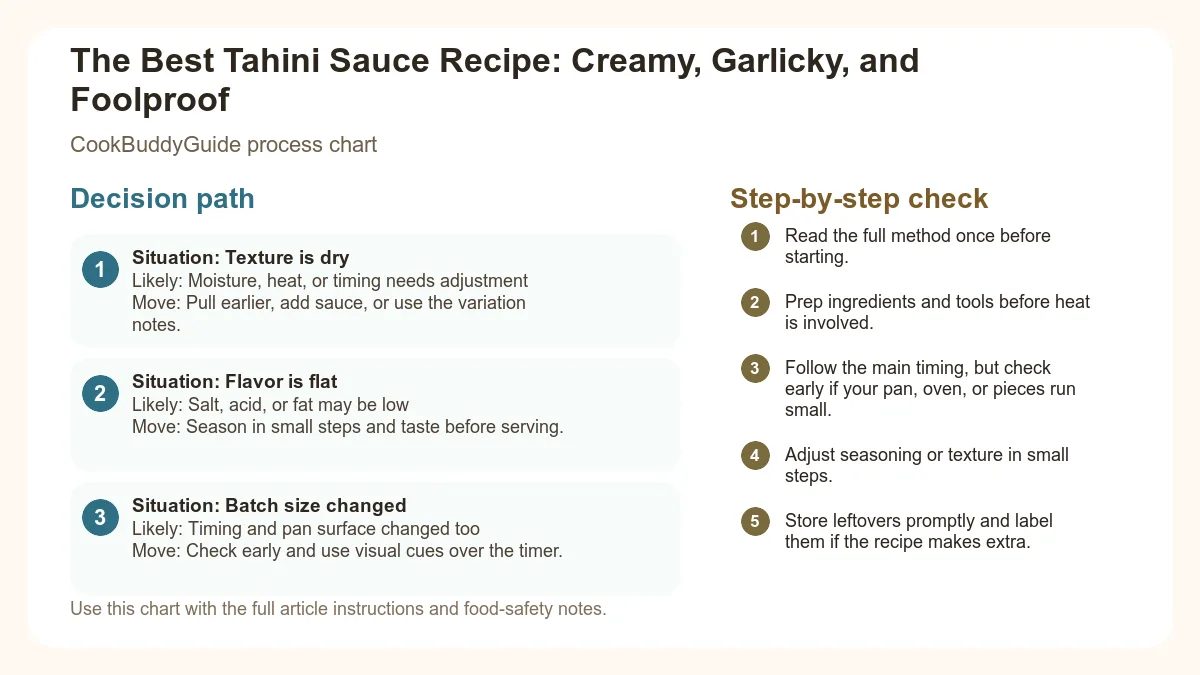
| Situation | Likely cause or meaning | Best move |
|---|---|---|
| Texture is dry | Moisture, heat, or timing needs adjustment | Pull earlier, add sauce, or use the variation notes. |
| Flavor is flat | Salt, acid, or fat may be low | Season in small steps and taste before serving. |
| Batch size changed | Timing and pan surface changed too | Check early and use visual cues over the timer. |
Step-by-step fix
- Read the full method once before starting.
- Prep ingredients and tools before heat is involved.
- Follow the main timing, but check early if your pan, oven, or pieces run small.
- Adjust seasoning or texture in small steps.
- Store leftovers promptly and label them if the recipe makes extra.
Common mistakes
- Changing the recipe before trying the base method once.
- Measuring casually when texture depends on ratios.
- Waiting until the end to fix seasoning.
- Ignoring carryover heat or resting time.
Related topic hubs
- Why This is the Only Tahini Sauce Recipe You Need
- The Anatomy of the Perfect Creamy Garlic Tahini Dressing
- The Science of Seizing: Why Tahini Turns Into a Paste
- Step-by-Step: How to Make Tahini Sauce Like a Pro
- Mastering Consistency: From Thick Dip to Thin Drizzle
- Troubleshooting Common Tahini Mistakes
- Flavor Variations to Elevate Your Sauce
- Serving Ideas: How to Use Your Creamy Tahini
- Storage and Meal Prep Tips
Introduction: Why This is the Only Tahini Sauce Recipe You Need
The Versatility of a Great Tahini Dressing
The beauty of this vegan dressing lies in its chameleon-like ability to adapt. With a slight adjustment in viscosity, it transforms from a thick, spreadable dip for pita into a light, pourable consistency that coats a kale salad perfectly. It is naturally dairy-free, gluten-free, and packed with plant-based protein. According to the nutritional profile of sesame tahini, it’s also a powerhouse of healthy fats and minerals like calcium and magnesium, making it a staple of the Mediterranean diet.
The Anatomy of the Perfect Creamy Garlic Tahini Dressing
To achieve a world-class tahini sauce recipe, you must start with high-quality components. Because this is a "raw" sauce, there is nowhere for low-quality ingredients to hide.
Quality Matters: Choosing the Right Tahini
Fresh Lemon Juice vs. Bottled
The Secret Power of Garlic and Salt
For this recipe, we use fresh garlic cloves. Consider using a microplane to grate the garlic directly into the lemon juice. This creates a garlic paste that distributes evenly throughout the sauce. If you prefer a milder flavor, you can smash the cloves and let them steep in the lemon juice for 10 minutes before straining them out, but for a true creamy garlic tahini dressing, the grated method is king. As for salt, always use kosher salt. Its larger grains are easier to control, and it lacks the metallic aftertaste of iodized table salt.
The Science of Seizing: Why Tahini Turns Into a Paste
If you’ve ever tried to make tahini sauce by adding a splash of lemon juice to the paste, you’ve likely seen it happen: the mixture suddenly turns from a liquid into a thick, unworkable sludge. This is known as "seizing," and it’s the number one reason home cooks give up on making their own dressing.
Understanding the Chemical Reaction with Acidity
Tahini is an emulsion of tiny sesame solids suspended in oil. When you add a small amount of water or lemon juice, the carbohydrates in the sesame solids grab onto that moisture and swell. Because there isn't enough liquid to fully surround the particles, they clump together. This science of tahini emulsification explains that the key to overcoming this "ugly phase" is to keep adding liquid and whisking vigorously until the solids are fully hydrated and the emulsion stabilizes.
The Role of Water in Emulsification
The Master Tahini Sauce Recipe
Ingredients:
- 1 cup high-quality raw tahini (stirred well)
- 1/2 cup fresh lemon juice (about 2-3 large lemons)
- 2-4 garlic cloves, grated or finely minced
- 1/2 tsp kosher salt (plus more to taste)
- 1/2 cup to 3/4 cup ice water (added gradually)
- Optional: 1/4 tsp ground cumin for earthiness
Instructions:
- Mellow the Garlic: In a medium bowl, combine the lemon juice and grated garlic. Let it sit for 5 minutes. This allows the acid to neutralize the harsh enzymes in the garlic.
- Combine: Add the tahini and salt to the bowl. Start whisking. The mixture will likely seize and look grainy—don't panic!
- Emulsify: Add the ice water one tablespoon at a time, whisking constantly. Watch as the color shifts from tan to a pale ivory.
- Adjust: Continue adding water until you reach your desired pourable consistency. Taste and add more salt or lemon juice if needed.
Step-by-Step: How to Make Tahini Sauce Like a Pro
The Hand-Whisked Method
Choose the hand-whisked method for everyday meal prep. It gives you total control over the viscosity. Use a balloon whisk and a heavy bowl (or place your bowl on a damp kitchen towel so it doesn't slide). The physical act of whisking incorporates air, which is vital for that "fluffy" texture. If you find your arm getting tired, you’re doing it right—that vigorous movement is what builds a stable emulsion.
The Blender or Food Processor Shortcut
If you are making a double or triple batch, or if you are incorporating fresh herbs (like in a green tahini sauce), the blender is your best friend. Simply throw the garlic and lemon juice in first and pulse to pulverize the garlic. Add the tahini and salt, then stream the ice water in through the top while the motor is running. This results in an incredibly smooth texture that is almost impossible to achieve by hand.
Mastering Consistency: From Thick Dip to Thin Drizzle
The Ratio for Falafel and Wraps
The Ratio for Salad Dressings and Grain Bowls
When using this as a creamy garlic tahini dressing for a kale salad or a warm grain bowl, you want it to be much thinner—think heavy cream. You should be able to drizzle it off a spoon in a continuous stream. For this, you’ll likely need 3/4 cup to 1 cup of water per cup of tahini. Remember that tahini naturally thickens as it sits in the fridge, so if you're making this for meal prep, lean toward a thinner consistency initially.
Troubleshooting Common Tahini Mistakes
Even with careful planning, I occasionally run into issues. Here is how I fix the most common problems.
How to Fix Bitter Tahini
If your sauce tastes overly bitter, it’s usually due to the brand of tahini or using unhulled seeds. To fix this, add a tiny pinch of sugar or a teaspoon of maple syrup. The sweetness counteracts the bitter notes without making the sauce "sweet." Alternatively, an extra pinch of kosher salt can often mask bitterness by tricking the taste buds.
What to Do if Your Sauce is Too Runny
If you’ve over-watered your sauce, don't worry. The easiest fix is to whisk in another tablespoon of raw tahini. If you’re out of tahini, you can also whisk in a little bit of full-fat Greek yogurt (if not vegan), which will thicken the sauce and add a nice tang.
Rescuing a Broken Emulsion
If the oil is separating and the sauce looks curdled, it usually means the water was added too quickly. To rescue it, put a fresh tablespoon of tahini in a clean bowl and slowly whisk the broken sauce into the new tahini, one teaspoon at a time. This "resets" the emulsion process.
Flavor Variations to Elevate Your Sauce
Once you’ve mastered the base tahini sauce recipe, you can start experimenting. A useful option is to keep a few jars of different variations in my fridge for the week.
- Herbed Tahini: Blend in a large handful of fresh parsley, cilantro, or dill. This creates a vibrant green sauce that is incredible on grilled fish or roasted chicken.
- Golden Turmeric Tahini: Add 1/2 teaspoon of turmeric and a pinch of black pepper. This variation is not only beautiful but also anti-inflammatory. It pairs perfectly with cauliflower.
- Miso Tahini: Replace the salt with a tablespoon of white miso paste. This adds an incredible umami depth that makes it the ultimate vegan dressing for earthy grain bowls.
Serving Ideas: How to Use Your Creamy Tahini
A Practical Grain Bowl Companion
Elevating Roasted Root Vegetables
There is something magical about the combination of charred, caramelized vegetables and cool, tangy tahini. Serve this over roasted carrots or brussels sprouts. The citric acid from the lemon juice cuts through the sweetness of the roasted veggies perfectly.
The Classic Falafel and Pita Pairing
This is the most traditional use of the sauce. For a pro tip, smear the tahini on the inside of the pita bread before stuffing it with falafel. This creates a moisture barrier that keeps the bread from getting soggy while ensuring you get tahini in every single bite.
Storage and Meal Prep Tips
Because this sauce contains fresh garlic and lemon juice, it does have a shelf life. Consider storing it in a glass mason jar with a tight-fitting lid. It will stay fresh in the refrigerator for up to 7 days. Note that the garlic flavor will intensify over time, so if you’re sensitive to garlic, you might want to use a little less if you plan on eating it on day 5 or 6.
How to Revive Leftover Sauce
When you take your tahini sauce out of the fridge the next day, you’ll notice it has thickened significantly. This is normal. Simply add a teaspoon of warm water and give it a vigorous whisk to bring it back to that smooth texture. Do not microwave it, as high heat can cause the emulsion to break and the lemon juice to lose its brightness.
Safety and Allergens
It is important to remember that while tahini is a healthy plant-based food, sesame is now recognized as a major allergen. If you are serving this at a gathering, always inform your guests. You can find more information on sesame as a major allergen to ensure you are keeping your kitchen safe for everyone.
Frequently Asked Questions
Yes! Lime juice works beautifully, especially if you are making a spicy version with cilantro. Orange juice can also work but lacks the necessary acidity, so Consider mixing it with a little apple cider vinegar.
In addition to a sweetener, try adding a tablespoon of toasted sesame oil. It reinforces the nutty flavor and can help mask the bitterness of lower-quality pastes.
Final Thoughts: Your New Secret Ingredient
Mastering this tahini sauce recipe is a helpful shortcut for any home cook. It’s the bridge between "boring" and "brilliant" meals. Whether you’re drizzling it over a sheet pan dinner or using it as a dip for your afternoon snack, its creamy, garlicky goodness is sure to become a staple in your rotation. Remember: start with good tahini, don't fear the "seize," and always use ice water for that perfect, fluffy finish. Happy cooking!