Quick Answer
This authentic Tabbouleh Salad Recipe is herb-heavy and refreshing. It also explains how to make easy homemade tabbouleh with bulgur or quinoa for a perfect healthy side.
Practical note
For A Practical Authentic Tabbouleh Salad Recipe, this guide centers on easy homemade tabbouleh, Middle Eastern salad, fine bulgur #1. Those are the checkpoints we would use first in a normal home kitchen before making a bigger change.
Decision table
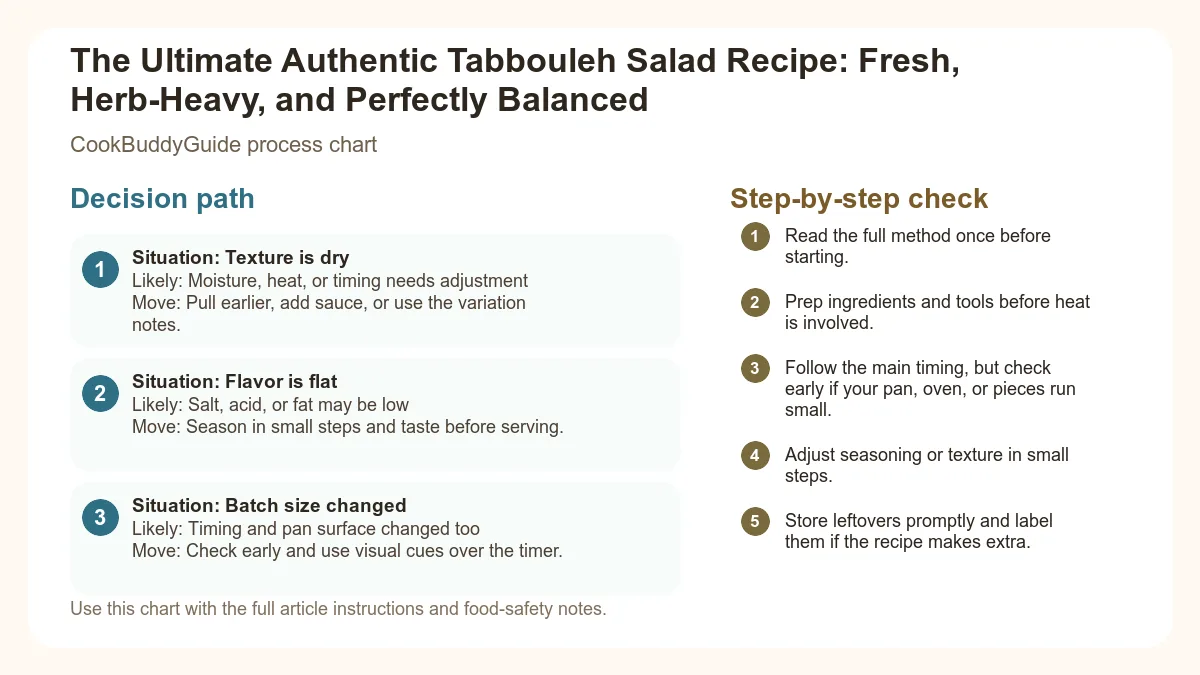
| Situation | Likely cause or meaning | Best move |
|---|---|---|
| Texture is dry | Moisture, heat, or timing needs adjustment | Pull earlier, add sauce, or use the variation notes. |
| Flavor is flat | Salt, acid, or fat may be low | Season in small steps and taste before serving. |
| Batch size changed | Timing and pan surface changed too | Check early and use visual cues over the timer. |
Step-by-step fix
- Read the full method once before starting.
- Prep ingredients and tools before heat is involved.
- Follow the main timing, but check early if your pan, oven, or pieces run small.
- Adjust seasoning or texture in small steps.
- Store leftovers promptly and label them if the recipe makes extra.
Common mistakes
- Changing the recipe before trying the base method once.
- Measuring casually when texture depends on ratios.
- Waiting until the end to fix seasoning.
- Ignoring carryover heat or resting time.
Related topic hubs
Table of Contents
- Defining Authentic Tabbouleh: A Parsley Salad
- The Core Ingredients: Quality Matters
- Step-by-Step: Preparing the Perfect Base
- The Easy Homemade Tabbouleh Dressing
- Dietary Variations: Making it Gluten-Free
- Practical Tips for Success and Common Mistakes
- Meal Prep and Storage Guide
- Serving Suggestions and Pairings
Introduction: Why This is the Only Tabbouleh Recipe You’ll Ever Need
Defining Authentic Tabbouleh: It’s a Parsley Salad, Not a Grain Salad
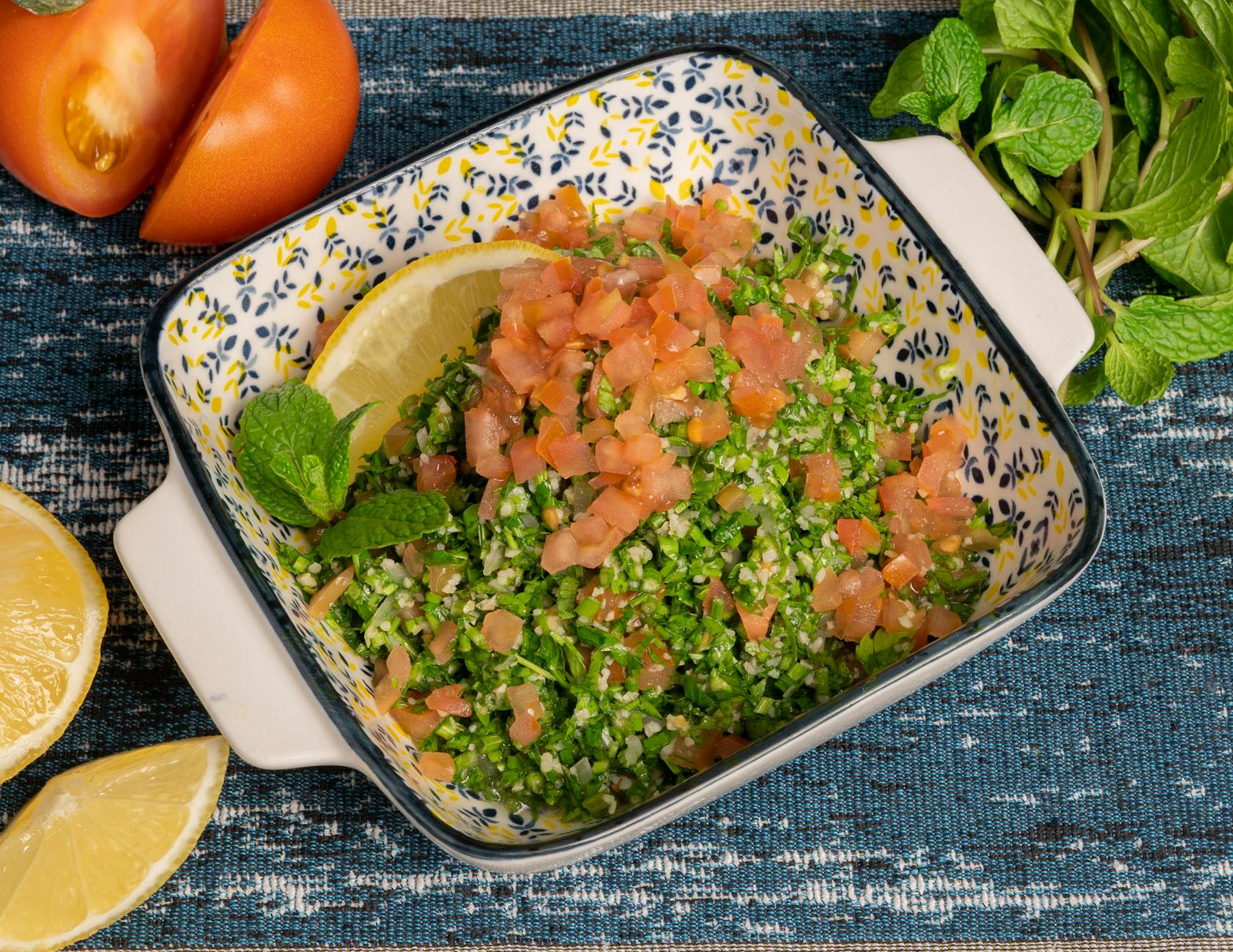
In Lebanon, tabbouleh is a source of national pride. The "authentic" version requires a massive bunch of parsley—usually three or four—finely minced until they resemble green confetti. The grain used is strictly fine bulgur #1, which is small enough to soften almost instantly without needing to be boiled. When you look at the bowl, you should see a sea of green with tiny red jewels of tomato and white specks of bulgur. This tabbouleh salad recipe honors that tradition while streamlining the process for busy home cooks who need refreshing no-cook summer meals.
The Core Ingredients: Quality Matters
Because this Middle Eastern salad has so few ingredients, there is nowhere for low-quality produce to hide. You cannot use bottled lemon juice or dried herbs here. It simply won't work.
The Star of the Show: Flat-Leaf Parsley vs. Curly Parsley
Fresh Mint: The Secret Brightener
Choosing the Right Bulgur: Fine #1 is Essential
Bulgur is cracked wheat that has been parboiled and dried. It comes in four grades: #1 (fine) to #4 (extra coarse). For an easy homemade tabbouleh, you must use fine bulgur #1. If you use coarse bulgur, you'll end up with hard, crunchy bits that stick in your teeth. Fine bulgur is delicate and absorbs the salad dressing perfectly. If you're unsure how to handle this grain, check out this guide on preparing bulgur wheat correctly.
Tomato Selection: Firmness and Juiciness
Step-by-Step: Preparing the Perfect Base
The secret to a world-class tabbouleh salad recipe isn't in the mixing—it's in the preparation of the herbs. If your herbs are wet when you chop them, they will bruise and turn into a dark green paste. If they are dry, they will remain fluffy and light.
The Master Tabbouleh Prep Guide
Ingredients:
- 3 large bunches flat-leaf parsley (about 4-5 cups finely chopped)
- 1 bunch fresh mint (about 1 cup finely chopped)
- 1/2 cup fine bulgur #1
- 4 firm Roma tomatoes, finely diced
- 1 bunch green onions (scallions), white and green parts finely sliced
- 1/2 cup extra virgin olive oil
- 1/2 cup fresh lemon juice (about 2-3 lemons)
- 1 tsp salt (plus more to taste)
- 1/4 tsp Lebanese 7-spice or ground allspice (optional)
The Art of Washing and Drying Herbs
Mastering the Fine Chop: Knife Skills for Texture
Prepping the Bulgur: To Soak or Not to Soak?
Most recipes tell you to soak bulgur in water. I disagree. To maximize flavor, I place the dry fine bulgur #1 in a small bowl and pour the lemon juice and the juices from the diced tomatoes over it. Let it sit for 15-20 minutes. The bulgur will absorb the acidity and the tomato essence, softening into tender, flavorful pearls. This technique is a helpful shortcut for anyone looking for an easy homemade tabbouleh that packs a punch.
The Easy Homemade Tabbouleh Dressing
The dressing for a tabbouleh salad recipe is deceptively simple, but the ratios must be precise. It is essentially a vinaigrette where the "vinegar" is replaced by fresh lemon juice.
The Golden Ratio: Extra Virgin Olive Oil and Fresh Lemon
Use a 1:1 ratio of extra virgin olive oil to lemon juice. This might seem like a lot of lemon, but remember: the parsley is very "green" and earthy; it needs that high acidity to brighten the flavors. Always use the best olive oil you can afford. Since we aren't heating it, the nuances of a peppery, cold-pressed Lebanese or Greek oil will really shine through.
Seasoning Beyond Salt: The Optional Pinch of Allspice
When to Dress the Salad for Maximum Freshness
Salt draws moisture out of vegetables. If you dress the salad too early, the tomatoes will release all their water and the parsley will wilt. Consider mixing the herbs, bulgur, and onions together, but holding off on the oil, lemon, and salt until about 30 minutes before serving. This "resting period" allows the flavors to meld without the salad becoming soggy.
Dietary Variations: Making it Gluten-Free
While bulgur wheat is traditional, many home cooks today require a gluten-free option. Fortunately, the herb-heavy nature of this salad makes it very adaptable to grain swaps.
The Quinoa Swap: How to Prep Quinoa for Tabbouleh
Quinoa is the most popular substitute because it mimics the size and texture of bulgur. However, you must cook it "al dente." If the quinoa is too soft, it will clump together. Consider using white quinoa for the most authentic look. There are many benefits of using quinoa, including its status as a complete protein, which turns this side dish into a powerhouse healthy lunch ideas for work.
Other Grain Alternatives (Hemp Hearts, Cauliflower Rice)
Practical Tips for Success and Common Mistakes to Avoid
- Mistake #1: Too Much Grain. If the salad looks white or light green, stop! You’ve added too much bulgur. It should look like a bowl of chopped herbs with a few highlights of grain.
- Mistake #2: Wet Herbs. I cannot stress this enough. If you see a pool of green liquid at the bottom of your bowl, your parsley wasn't dry enough. Use that salad spinner!
- Mistake #3: Oversized Tomato Chunks. Tabbouleh is a refined salad. Large chunks of tomato feel clumsy. Take the time to dice them into 1/4-inch pieces.
Meal Prep and Storage Guide
Tabbouleh is often cited as a great meal prep dish, but there is a trick to doing it right. If you mix everything together on Monday, by Wednesday you will have a brown, wilted mess. According to safe cold food storage guidelines, prepared salads are safe for 3-5 days, but quality drops much faster.
The "Deconstructed" Storage Method for 3-Day Freshness
If you want to include tabbouleh in your healthy lunch ideas for work, store the components separately. Keep the chopped herbs and onions in one airtight glass container with a paper towel on top to absorb moisture. Keep the diced tomatoes in another. Mix the dressing and the bulgur in a small jar. When you're ready to eat, combine them. This keeps the herbs vibrant and the texture perfect.
Can You Freeze Tabbouleh?
The short answer is: No. Freezing parsley and tomatoes destroys their cellular structure. When thawed, they will turn into a mushy, unappealing paste. This is a dish that celebrates the "now"—freshness is its entire identity.
Serving Suggestions: What to Pair with Your Tabbouleh
In Lebanese cuisine, tabbouleh is rarely eaten alone. It is part of a "mezze" (appetizer) spread designed to be shared.
The Classic Mezze Platter
Serve your easy homemade tabbouleh alongside creamy hummus, smoky baba ganoush, and warm pita bread. The high acidity of the salad cuts through the richness of the tahini-based dips perfectly. I also love serving it with Romaine lettuce leaves. In many parts of the Middle East, you don't use a fork; you use the lettuce leaves as little "scoops" to eat the salad.
Protein Pairings
Tabbouleh is the ultimate partner for grilled meats. The lemon and parsley act as a palate cleanser between bites of charred Chicken Tawook or grilled lamb kebabs. If you're keeping it vegan, try it with falafel or as a topping for a roasted sweet potato bowl.
Frequently Asked Questions
A: Avoid it. It bruises the herbs and makes the salad soggy. A sharp knife is the only way to get the correct texture.
A: Once dressed, it is best within 24 hours. Undressed, the components can last up to 3 days if stored properly.
A: Yes! It is incredibly nutrient-dense, high in fiber, and low in calories, making it a perfect healthy side dish.
Conclusion: Embrace the Green
Mastering this tabbouleh salad recipe is a rite of passage for any home cook interested in vibrant, healthful eating. It teaches you the importance of patience (the drying of the herbs), precision (the fine chop), and balance (the lemon-to-oil ratio). Once you taste the difference between a grain-heavy supermarket version and this herb-heavy authentic Lebanese version, there is no going back. It’s fresh, it’s bright, and it’s the perfect addition to your weekly rotation. So, grab your sharpest knife, a few bunches of parsley, and start chopping—your taste buds will thank you!