Quick Answer
This guide covers the best cucumber salad recipe with our easy marinated cucumber salad guide. It also explains the salting secret for maximum crunch and a viral tangy dressing.
Practical note
For A Practical Crunchy Cucumber Salad Recipe, this guide centers on 5 Minutes, 15 Minutes, 45 Minutes. Those are the checkpoints we would use first in a normal home kitchen before making a bigger change.
Decision table
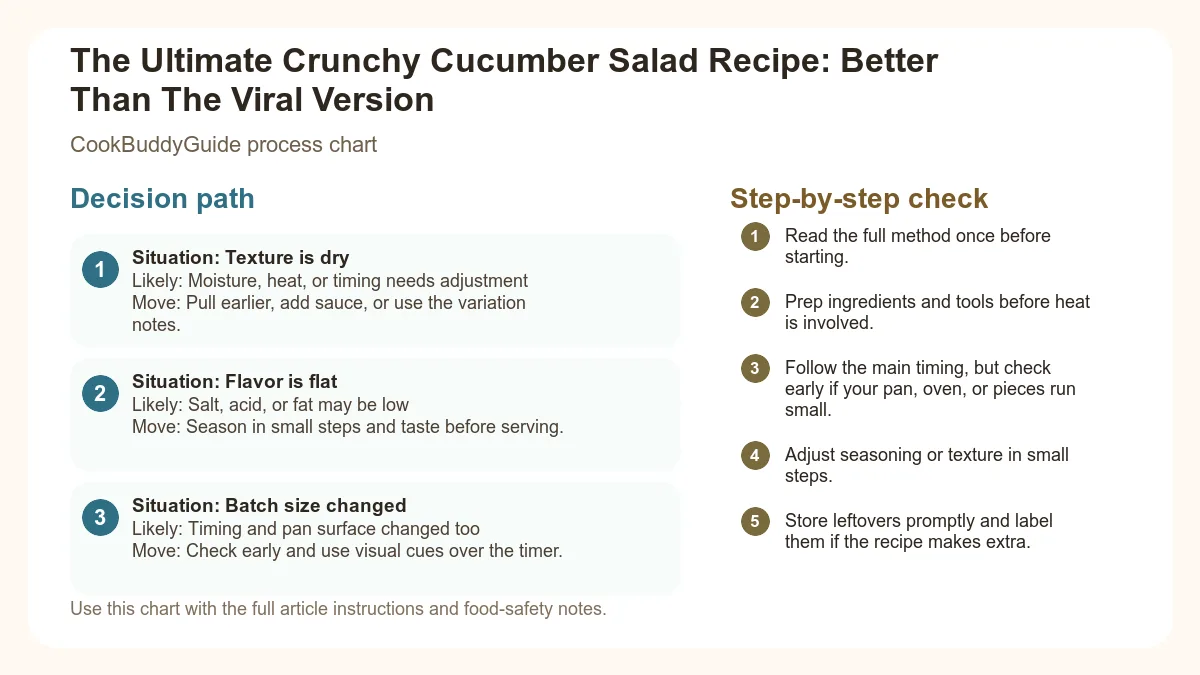
| Situation | Likely cause or meaning | Best move |
|---|---|---|
| Texture is dry | Moisture, heat, or timing needs adjustment | Pull earlier, add sauce, or use the variation notes. |
| Flavor is flat | Salt, acid, or fat may be low | Season in small steps and taste before serving. |
| Batch size changed | Timing and pan surface changed too | Check early and use visual cues over the timer. |
Step-by-step fix
- Read the full method once before starting.
- Prep ingredients and tools before heat is involved.
- Follow the main timing, but check early if your pan, oven, or pieces run small.
- Adjust seasoning or texture in small steps.
- Store leftovers promptly and label them if the recipe makes extra.
Common mistakes
- Changing the recipe before trying the base method once.
- Measuring casually when texture depends on ratios.
- Waiting until the end to fix seasoning.
- Ignoring carryover heat or resting time.
Related topic hubs
- Why This is the Only Cucumber Salad Recipe You’ll Ever Need
- The Secret Step: Why We Salt Our Cucumbers First
- Choosing Your Hero: English vs. Persian vs. Garden
- The Master Dressing: A Perfect Ratio Every Time
- Step-by-Step: How to Make This Easy Marinated Cucumber Salad
- The Viral Korean-Inspired Twist: Spicy Gochujang Variation
- Flavor Upgrades: Add-ins and Substitutions
- The Quick Pickling Method for Long-Term Freshness
- Common Mistakes (And How to Avoid a Soggy Mess)
- Meal Prep and Storage: Can You Make This Ahead?
- What to Serve with Cucumber Salad
Why This is the Only Cucumber Salad Recipe You’ll Ever Need
The Science of the Perfect Crunch
Most home cooks treat cucumbers like any other salad green—slice them, toss them in dressing, and serve. However, cucumbers are roughly 95% water. The moment you introduce salt or acid (the two main components of any dressing), that water begins to leak out. This dilutes your flavors and softens the cell walls of the vegetable, leading to that dreaded "soggy bottom" in your salad bowl.
My method focuses on structural integrity. By treating the cucumber as a vegetable that needs "curing" rather than just a raw ingredient, we create a refreshing summer side dish that maintains its snap. We aren't just making a salad; we are performing a controlled, light pickling process that seasons the vegetable from the inside out.
Why Our Practical Method Beats the Viral Trends
The Secret Step: Why We Salt Our Cucumbers First
Understanding Osmosis in Vegetables
To get that world-class crunch, we have to talk about Osmosis. When you sprinkle salt on a cucumber slice, the salt concentration outside the cucumber cells becomes higher than the concentration inside. Nature wants to balance this out, so it draws the water out of the cells to dissolve the salt. This process of drawing out excess moisture is the single most important step in any cucumber salad recipe.
How Long to Salt for Maximum Texture
Rinsing vs. Not Rinsing: Our Test Results
This is where many recipes differ. After salting and draining the liquid, should you rinse the cucumbers? If you are using a standard table salt, you must rinse, or the salad will be a salt bomb. However, if you use Kosher salt (which has larger grains), you can simply pat them dry with a clean kitchen towel. Choose the "pat dry" method because it leaves just enough residual salt to season the dressing without needing to add more later.
Choosing Your Hero: English vs. Persian vs. Garden
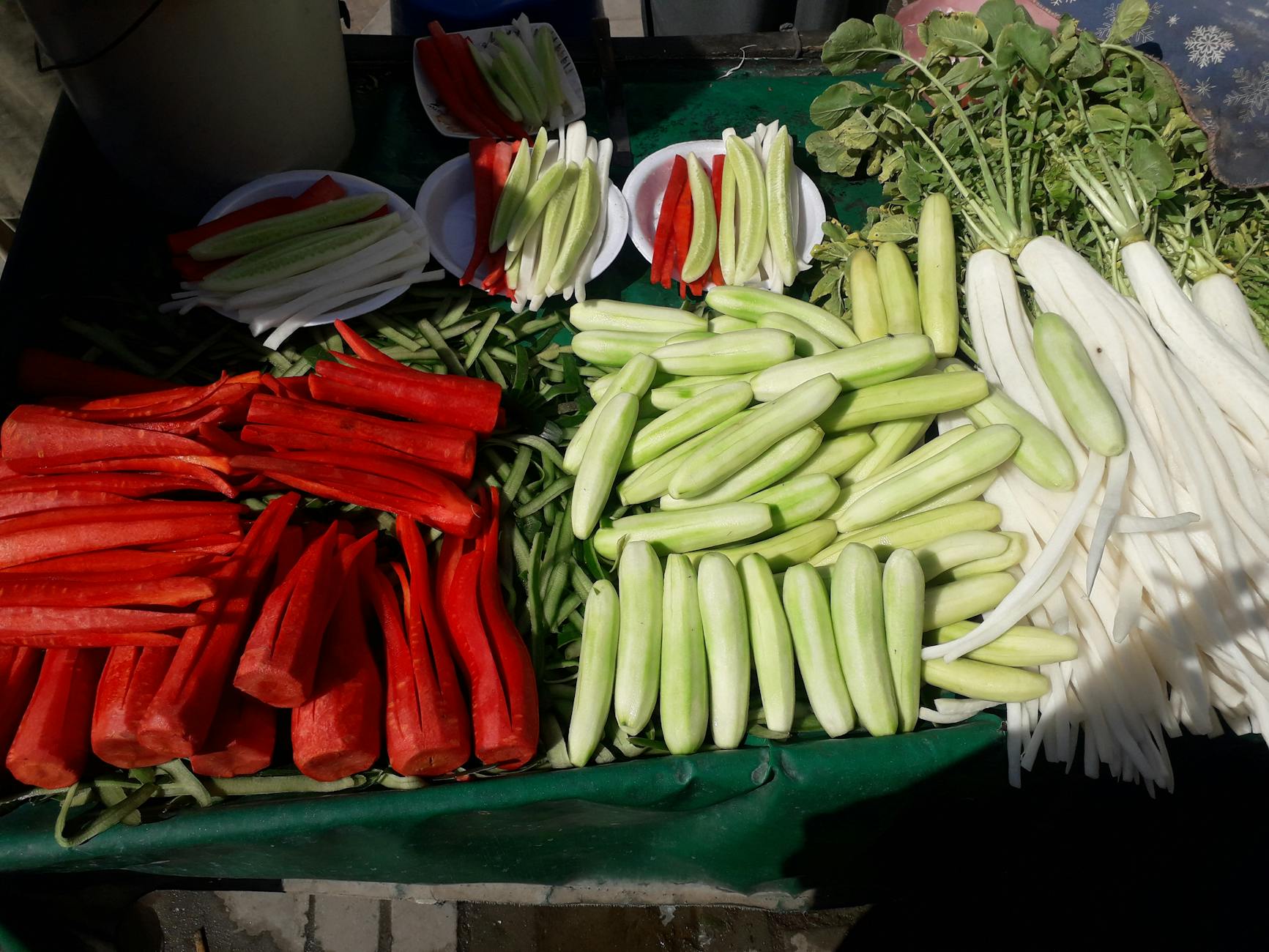
Not all cucumbers are created equal. While the health benefits of cucumbers remain consistent across varieties—high in Vitamin K and hydration—the culinary applications vary wildly.
Why Seedless Varieties Rule the Salad Bowl
For this easy marinated cucumber salad, I exclusively recommend English cucumbers (often sold in plastic wrap) or Persian cucumbers (the small, snack-sized ones). These varieties are "burpless" and have very thin skins and tiny, underdeveloped seeds. Large seeds hold a significant amount of water and can become slimy when marinated. By using a seedless variety, you ensure every bite has a consistent crunchy texture.
When to Peel and When to Keep the Skin
If you are using English or Persian varieties, leave the skin on! The skin provides color, fiber, and a structural "frame" for the slice. However, if you are using standard "slicing" or garden cucumbers, you must peel them. These often have a thick, bitter, and waxy coating used for preservation during shipping. If you must use garden cucumbers, consider peeling them in "stripes" to leave some color while removing the toughest parts of the skin.
Using a Mandoline vs. Knife Skills
The Master Dressing: A Perfect Ratio Every Time
The Role of Rice Wine Vinegar
Rice wine vinegar has an acidity level of about 4%, compared to the 5-6% found in white or apple cider vinegar. This allows you to use more of it without making the salad unpleasantly sharp. When balancing the vinegar dressing, the goal is to hit three notes: Acid, Sweet, and Umami.
The 3:2:1 Master Dressing Ratio
This ratio works for any volume. Use a tablespoon, a cup, or a ladle as your "part."
- 3 Parts: Rice Wine Vinegar (Unseasoned)
- 2 Parts: Sweetener (Sugar, Honey, or Agave)
- 1 Part: Aromatics & Oil (Toasted sesame oil, grated garlic, ginger)
- The "Plus": A splash of soy sauce or a pinch of red pepper flakes for depth.
Emulsifying for a Better Coat
Don't just pour the ingredients over the cucumbers. Whisk the sugar into the vinegar until it is completely dissolved before adding the toasted sesame oil. This ensures that every slice is coated in a balanced film of flavor rather than getting a hit of pure oil followed by a hit of pure acid.
Step-by-Step: How to Make This Easy Marinated Cucumber Salad
- Preparation and Slicing: Wash your English cucumbers. Using a Mandoline slicer or a sharp chef's knife, cut them into 1/8-inch rounds. If you want to get fancy, slice them on a slight bias (diagonal) to increase the surface area for the dressing to cling to.
- The Salting and Draining Process: Place the slices in a large colander over a bowl. Toss with 1 teaspoon of Kosher salt. Let them sit for 15-20 minutes. You will be shocked at how much water (up to 1/4 cup!) collects in the bowl below.
- Whisking the Dressing: While the cucumbers drain, combine your rice wine vinegar, sugar, grated garlic, and toasted sesame oil in a small bowl. Whisk until the sugar granules have vanished.
- The Final Toss and Chill Time: Pat the cucumbers dry with a paper towel and transfer them to a clean bowl. Pour the dressing over the top and toss gently. Pro Tip: A 30-minute chill time in the refrigerator is non-negotiable. This allows the flavors to penetrate the vegetable.
The Viral Korean-Inspired Twist: Spicy Gochujang Variation
If you want to take this from a side dish to the star of the show, you need to try the "Oi Muchim" style. This is the spicy Korean-inspired variation that has taken the internet by storm, and for good reason.
What is Gochujang and Why You Need It
Gochujang is a fermented red chili paste that is a staple of Korean cuisine. It isn't just spicy; it’s savory, slightly sweet, and packed with "funk" from fermented soybeans. Adding just one tablespoon to your master dressing transforms the dish entirely.
Adjusting Heat Levels for the Family
Gochujang can vary in heat. If you are cooking for kids, start with half a tablespoon and increase the honey. To get that signature bright red look without overwhelming heat, use Gochugaru (Korean red chili flakes) in addition to the paste. They provide a smoky flavor and beautiful color with a manageable spice level.
Adding Toasted Sesame Seeds and Scallions
Flavor Upgrades: Add-ins and Substitutions
- The Red Onion Factor: Red onions add a beautiful purple hue, but their "bite" can be overwhelming. Pro Tip: Slice the onions thinly and soak them in ice water for 10 minutes before adding them to the salad. This removes the sulfurous compounds that cause "onion breath" while keeping the crunch.
- Fresh Herbs: If you aren't going the Asian-inspired route, swap the sesame oil for olive oil and add a handful of fresh dill. Cucumber and dill are a classic European pairing that feels incredibly sophisticated. Mint or cilantro also work well for a Thai-inspired twist.
- Adding Protein: To turn this into a healthy lunch idea for work, Add a can of rinsed chickpeas or a cup of shelled edamame. The cucumbers act as a "dressing" for the protein as they sit together in your container.
The Quick Pickling Method for Long-Term Freshness
Transitioning from Salad to Quick Pickle
To turn this into a refrigerator pickle, increase the acidity and follow published refrigerator-pickling guidance. Use the vinegar strength and ratio specified by a university-extension recipe rather than improvising a shelf-stable preservation method.
Mason Jar Storage Tips
Pack your salted and drained cucumbers tightly into a clean mason jar. Pour the dressing over them until they are completely submerged. If the cucumbers are floating, use a small weight or even a folded piece of parchment paper to keep them under the liquid. This prevents oxidation and keeps the color vibrant.
Common Mistakes (And How to Avoid a Soggy Mess)
If you use a standard garden cucumber and skip the salt-and-drain step, your dressing will be watery within 5 minutes. Always salt! If you're in a rush, even 5 minutes of salting is better than none.
Cucumbers have a natural sweetness. If your dressing tastes like syrup, add a teaspoon of lime juice or a splash more vinegar. The goal is "tangy," not "candy."
If you are bringing this to a BBQ, keep the dressing in a separate small jar and the salted/dried cucumbers in a bowl. Toss them together right when you arrive. While they can sit, they are at their peak crunch within the first hour of dressing.
Meal Prep and Storage: Can You Make This Ahead?
Yes, but with caveats. As a healthy meal prep option, this salad is fantastic because it’s a low calorie salad that actually tastes better as it marinates—up to a point.
Before slicing, keep your produce dry and protected using the best method for storing whole and cut cucumbers. Starting with a firm cucumber matters more than trying to restore crunch after it softens.
The 24-Hour Rule
Best Containers for Keeping Veggies Crisp
Always use glass containers. The acidity in the vinegar based dressing can react with certain plastics over time, leading to off-flavors. Glass also stays colder in the fridge, which helps maintain the vegetable's crispness. If you notice a lot of liquid has accumulated on day two, simply drain it off and add a fresh teaspoon of toasted sesame oil to "refresh" the flavors.
What to Serve with Cucumber Salad
This salad is the ultimate "balancer." Because it is high in acid and crunch, it pairs perfectly with rich, fatty, or spicy foods.
- Grilled Meats: Serve this alongside a fatty ribeye steak or grilled salmon. The vinegar cuts right through the fat, cleansing your palate between bites.
- Spicy Asian Dishes: This is the traditional accompaniment to Bulgogi (Korean BBQ) or Bibimbap. The cool cucumber tames the heat of the chili.
- Summer BBQ Menu: Move over, heavy mayo-based pasta salads! This refreshing summer side dish is the perfect light alternative to potato salad at your next cookout.
The Final Word from the Kitchen
Making the perfect cucumber salad recipe isn't about following a viral trend—it's about respecting the ingredient. By taking the extra 15 minutes to salt and drain your cucumbers, you are ensuring a result that is professional, delicious, and incredibly satisfying. Whether you go for the classic easy marinated cucumber salad with rice wine vinegar or the spicy gochujang version, your taste buds (and your dinner guests) will thank you. Happy cooking!