Quick answer
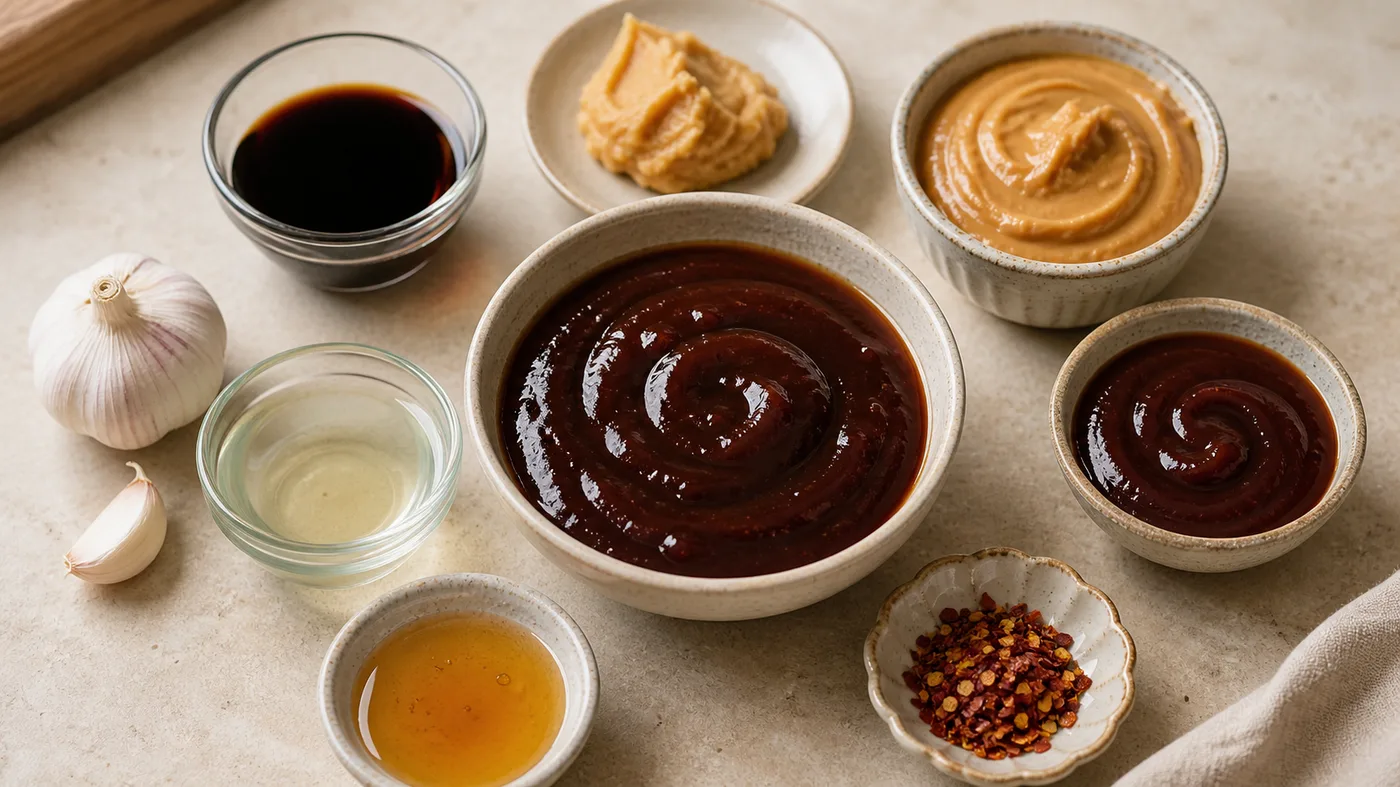
For 1/4 cup hoisin sauce, whisk together 2 tablespoons soy sauce, 1 tablespoon smooth peanut butter or miso, 2 teaspoons honey or molasses, and 1 teaspoon rice vinegar. The mixture supplies salt, fermented depth, sweetness, tang, and enough body to cling to food.
Use barbecue sauce 1:1 when you need a fast one-bottle glaze. Teriyaki sauce works 1:1 in marinades and stir-fries, while oyster sauce needs a little sweetener. None tastes identical, so choose according to the dish rather than chasing one universal replacement.
| Substitute | Starting ratio for 1/4 cup hoisin | Best for | Main difference |
|---|---|---|---|
| Soy sauce, peanut butter or miso, honey, and vinegar | 2 tbsp + 1 tbsp + 2 tsp + 1 tsp | Stir-fries, dips, marinades, glazes | Closest all-purpose pantry blend |
| Barbecue sauce | 1:1 | Ribs, chicken, roasted vegetables, glaze | Smokier and more tomato-forward |
| Oyster sauce plus honey | 3 tbsp sauce + 1 tsp honey | Beef, mushrooms, broccoli, stir-fries | Saltier, less sweet, not vegetarian |
| Teriyaki sauce | 1:1 | Marinades, noodles, quick pan sauces | Thinner and more soy-forward |
| Soy sauce plus honey or molasses | 3 tbsp sauce + 1 tbsp sweetener | Marinades and cooked sauces | Thin; lacks fermented-paste body |
| Miso, honey, vinegar, and water | 2 tbsp + 2 tsp + 1 tsp + 1 tsp | Vegetarian dips, noodles, glazes | Cloudier and more fermented |
| Plum or sweet chili sauce | 1:1, then add soy sauce to taste | Dipping, lettuce wraps, light glaze | Sweeter and less savory |
In this guide
What does hoisin sauce do in a recipe?
Hoisin is thick, dark, sweet, salty, tangy, and gently spiced. It can season a stir-fry, coat grilled meat, flavor a marinade, or sit on the table as a dip. A useful replacement should copy the qualities that matter in that particular dish, even if it does not reproduce every note.
Food Network's guide to hoisin explains that no direct substitute covers both its distinct flavor and texture. The expert interviewed there points to soy sauce for flavor and miso paste for body, with a combination coming closer than either one alone.
A current Lee Kum Kee hoisin sauce ingredient list shows why the profile is hard to copy: sugar, fermented soybean paste, starch, sweet potato, sesame paste, spices, garlic, chili, and acetic acid all contribute. Formulas vary by brand, but sweetness plus fermented savoriness is the center of the flavor.
CookBuddy Kitchen Note: Taste a hoisin replacement on a bite of the actual food, not only from a spoon. A soy-heavy blend can seem too salty alone but balance against plain rice or vegetables. A glaze that tastes perfect cold may become sweeter and saltier after it reduces in the pan.
The seven best hoisin sauce substitutes
1. A soy, miso or peanut butter, honey, and vinegar blend
This is the most complete pantry replacement. Mix 2 tablespoons soy sauce, 1 tablespoon smooth peanut butter or mild miso, 2 teaspoons honey or molasses, and 1 teaspoon rice vinegar. It makes about 1/4 cup, so you can use it 1:1 for hoisin in most recipes.
Peanut butter gives a smooth, rich body. Miso tastes more fermented and is the better peanut-free choice when its ingredients suit the eater. Add a pinch of garlic powder, chili flakes, or Chinese five-spice only when the original recipe does not already include strong aromatics.
2. Barbecue sauce for the fastest thick glaze
Use barbecue sauce 1:1 on ribs, chicken, tofu, meatballs, or roasted vegetables. Food Network's ingredient substitution guide lists barbecue sauce as a direct hoisin substitute. It matches the sweetness and cling, which matter most in a cooked glaze.
The tradeoff is flavor. Most American barbecue sauces taste smokier, more tomato-based, and sharper than hoisin. Choose a mild sauce, then add 1/2 teaspoon soy sauce per 1/4 cup if the glaze needs more savory depth. Our homemade barbecue sauce can be adjusted the same way.
3. Oyster sauce plus sweetener for savory stir-fries
For 1/4 cup hoisin, start with 3 tablespoons oyster sauce and 1 teaspoon honey or brown sugar. This works with beef, mushrooms, broccoli, bok choy, and other savory stir-fries. Add another teaspoon of sweetener only after the sauce coats the food and you have tasted it.
Oyster sauce is generally less sweet and more intensely savory. It may also be thinner or saltier depending on the brand. It is not a vegetarian substitute and is not appropriate for anyone avoiding its seafood ingredients. Check the exact label rather than relying on the product name alone.
4. Teriyaki sauce for marinades and quick pan sauces
Use teriyaki sauce 1:1 in marinades, noodle sauces, and stir-fries. It supplies soy-based saltiness and sweetness, but it is usually thinner and less earthy. If the recipe needs a sticky coating, simmer it briefly or whisk 1 teaspoon miso into each 1/4 cup.
Teriyaki works especially well when the recipe already includes ginger or garlic. If you have five minutes, the balance in our homemade teriyaki sauce gives you more control over sweetness and thickness.
5. Soy sauce plus honey or molasses in a cooked sauce
Mix 3 tablespoons soy sauce with 1 tablespoon honey or molasses to make 1/4 cup. This is useful in marinades and sauces that will cook with other ingredients. Molasses gives darker color and a deeper caramel note; honey tastes cleaner and sweeter.
This mixture is much thinner than hoisin and can taste salty in a dip. Food Network also suggests soy sauce with honey or molasses, although its published version uses 1/4 cup soy sauce plus 1 to 2 tablespoons sweetener. For a lower-salt direction, begin with a suitable option from our soy sauce substitute guide.
6. Miso, honey, vinegar, and water for a peanut-free blend
Whisk 2 tablespoons mild miso, 2 teaspoons honey or brown sugar, 1 teaspoon rice vinegar, and 1 teaspoon warm water. The result is thick enough for noodle sauce, lettuce wraps, a vegetable glaze, or dipping. Add water by drops if the miso is especially firm.
This blend is more opaque and noticeably fermented. Most miso contains soy, and some products include grains or share equipment with allergens. Check the label if you need soy-free or gluten-free food.
7. Plum sauce or sweet chili sauce for dips and light glazes
Use plum sauce or sweet chili sauce 1:1 when the dish mainly needs a glossy, sweet condiment. They work with spring rolls, lettuce wraps, roasted vegetables, and quick glazes. Stir in 1/2 teaspoon soy sauce per 1/4 cup when you want more savory depth.
Plum sauce tastes fruitier, while sweet chili sauce is brighter and hotter. Neither copies fermented soybean flavor. They are better deliberate variations than emergency stand-ins for a recipe where hoisin supplies most of the savory backbone.
How do you make the best substitute step by step?
- Identify the job. Decide whether hoisin is acting as a thick dip, a marinade, a stir-fry seasoning, or a glaze that must cling.
- Choose the body ingredient. Use peanut butter for smooth richness or miso for a more fermented, peanut-free direction.
- Add salt and savoriness. Measure 2 tablespoons soy sauce. Use a labeled alternative if soy or wheat is excluded.
- Balance with sweetness and acid. Whisk in 2 teaspoons honey or molasses and 1 teaspoon rice vinegar.
- Check the texture. For dipping, leave it thick. For a marinade, loosen it with 1 to 2 teaspoons water.
- Taste it on the food. Coat a small cooked piece, then adjust sweetness, salt, or vinegar in 1/4-teaspoon steps.
- Cook gently. Add sweet sauces late in a hot stir-fry so the sugars glaze instead of scorching.
If the blend becomes too thin, a short simmer can concentrate it. The visual cues in our guide to reducing a sauce help you stop before a glaze turns sticky or overly salty. For a stir-fry, add the substitute during the last minute and toss until the food looks evenly lacquered.
Which replacement works best by recipe?
| Recipe | Best first choice | How to adjust it |
|---|---|---|
| Stir-fry | Homemade blend or oyster sauce plus honey | Add during the final minute; loosen with water if needed |
| Ribs or chicken glaze | Mild barbecue sauce | Add a little soy sauce; brush on near the end to limit burning |
| Marinade | Teriyaki or soy-honey blend | Use 1:1 and reduce other sweeteners in the recipe |
| Pancake or spring-roll dip | Thick homemade blend | Use miso or peanut butter; do not add water |
| Noodles | Miso blend | Thin with noodle water one teaspoon at a time |
| Fried rice | Teriyaki or soy-honey blend | Start with half the called-for hoisin, then taste |
| Vegetarian lettuce wraps | Miso blend or labeled vegetarian sauce | Add rice vinegar if the filling tastes too sweet |
In a simple stir-fry sauce, the replacement must balance against broth, vinegar, and sesame oil. In fried rice without soy sauce, choose a soy-free base first, then add only enough sweetness to mimic the intended hoisin finish.
What should you check for allergies or dietary needs?
Read every ingredient list and any Contains statement each time you buy a sauce. The FDA's food allergy label guidance names soybeans, wheat, peanuts, and sesame among the nine major allergens and warns that formulas can change.
Commercial hoisin may contain soy, wheat, or sesame. A peanut-butter blend introduces peanut. Regular soy sauce often contains wheat, while miso and teriyaki formulas vary. Oyster sauce is unsuitable for a vegetarian dish and requires a separate seafood check. A label that worked last month is not a permanent guarantee.
Do not call a homemade hoisin substitute allergy-safe based only on one swapped ingredient. Check the soy sauce, miso or seed butter, sweetener, vinegar, and any prepared sauce. For severe allergies, also consider cross-contact and follow the person's established medical guidance.
If sesame is the ingredient you are avoiding, do not add tahini or sesame paste for body. The same separation between flavor and allergy needs appears in our sesame oil substitute guide. For soy-free cooking, the framework in stir-fry without soy sauce helps rebuild salt, sweetness, acid, and aroma separately.
Common hoisin substitution mistakes
- Using plain soy sauce 1:1: the dish becomes thin and salty because soy sauce lacks hoisin's sugar and starch-thickened body.
- Replacing only the sweetness: honey, ketchup, or plum sauce alone cannot supply fermented savoriness.
- Adding too much five-spice: start with a small pinch per 1/4 cup; it can quickly dominate the sauce.
- Reducing a salty blend too far: evaporation concentrates the salt along with the flavor.
- Applying a sugary glaze too early: honey, molasses, and barbecue sauce can scorch over direct high heat.
- Assuming oyster sauce and teriyaki are interchangeable: oyster sauce is more savory, while teriyaki is usually sweeter and thinner.
- Ignoring the label on the replacement: peanut, soy, wheat, sesame, or seafood ingredients may be different from the original bottle.
FAQ
What is the best substitute for hoisin sauce?
For 1/4 cup hoisin sauce, whisk 2 tablespoons soy sauce, 1 tablespoon smooth peanut butter or miso, 2 teaspoons honey or molasses, and 1 teaspoon rice vinegar. This blend covers hoisin's salty, sweet, tangy, and thick qualities better than a single ingredient. Check every label when allergies apply.
Can I use oyster sauce instead of hoisin sauce?
Yes, especially in stir-fries and savory marinades. For 1/4 cup hoisin, start with 3 tablespoons oyster sauce plus 1 teaspoon honey or brown sugar. Oyster sauce is usually saltier, less sweet, and less spiced, so taste before adding more. It is not suitable for a vegetarian or shellfish-free dish.
Can teriyaki sauce replace hoisin sauce?
Teriyaki sauce can replace hoisin 1:1 in marinades, stir-fries, and glazes. It is usually thinner and more soy-forward, so simmer it briefly or add a small amount of miso when you need a clingy coating. It is less convincing as a thick dip for pancakes or spring rolls.
Is hoisin sauce the same as barbecue sauce?
No. Both are sweet, dark, and thick, but American barbecue sauce is usually more tomato-forward, smoky, and acidic. Hoisin gets much of its savory character from fermented soybean paste. Barbecue sauce still works 1:1 in cooked glazes when that flavor change fits the dish.
How do I make a hoisin substitute without peanut butter?
Use 2 tablespoons soy sauce, 1 tablespoon miso, 2 teaspoons honey or molasses, and 1 teaspoon rice vinegar for about 1/4 cup. If soy is also excluded, choose a clearly labeled soy-free barbecue or plum sauce and season it to fit the recipe instead of forcing a fermented-soy flavor.
Sources used
CookBuddyGuide checked hoisin's ingredient profile, culinary uses, substitution logic, and allergen guidance against current culinary, manufacturer, and government sources.