Quick Answer
Master this easy matcha latte recipe! Learn to make a homemade matcha latte hot and iced with practical tips on sifting, whisking, and choosing the best matcha powder.
Practical note
For A Practical Matcha Latte Recipe, this guide centers on Sift, Hydrate, Whisk. Those are the checkpoints we would use first in a normal home kitchen before making a bigger change.
Decision table
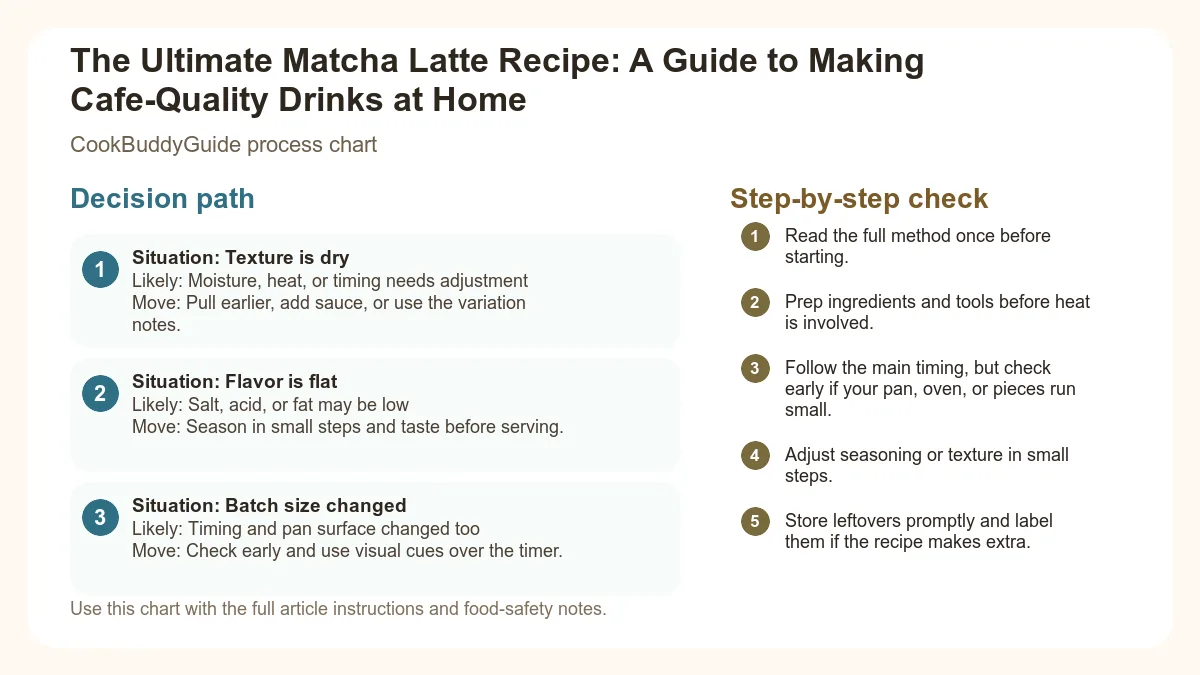
| Situation | Likely cause or meaning | Best move |
|---|---|---|
| Texture is dry | Moisture, heat, or timing needs adjustment | Pull earlier, add sauce, or use the variation notes. |
| Flavor is flat | Salt, acid, or fat may be low | Season in small steps and taste before serving. |
| Batch size changed | Timing and pan surface changed too | Check early and use visual cues over the timer. |
Step-by-step fix
- Read the full method once before starting.
- Prep ingredients and tools before heat is involved.
- Follow the main timing, but check early if your pan, oven, or pieces run small.
- Adjust seasoning or texture in small steps.
- Store leftovers promptly and label them if the recipe makes extra.
Common mistakes
- Changing the recipe before trying the base method once.
- Measuring casually when texture depends on ratios.
- Waiting until the end to fix seasoning.
- Ignoring carryover heat or resting time.
Related topic hubs
Table of Contents
- Why This is the Only Matcha Latte Recipe You’ll Ever Need
- Ceremonial vs. Culinary Grade: Which Matcha Should You Choose?
- Essential Tools for a Clump-Free Matcha Latte
- The Master Hot Matcha Latte Recipe
- How to Make an Iced Matcha Latte (The No-Clump Method)
- Frothing Milk Without an Espresso Machine
- Sweetener Guide: Finding Your Perfect Ratio
- Troubleshooting Common Matcha Problems
Why This is the Only Matcha Latte Recipe You’ll Ever Need
The Science of the Perfect Sip
Ceremonial vs. Culinary Grade: Which Matcha Should You Choose?
What is Ceremonial Grade Matcha?
When to Use Culinary Grade Matcha
The Color Test: How to Spot Low-Quality Powder
The easiest way to tell if your matcha is fresh is the color. It should be a vibrant, electric green. If the powder looks dull, yellowish, or brownish, it has oxidized. This happens when the powder is exposed to heat, light, or air. Oxidized matcha loses its Antioxidants and develops a hay-like taste. Always look for tins rather than bags, as they provide a better airtight seal.
Essential Tools for a Clump-Free Matcha Latte
The Traditional Bamboo Whisk (Chasen)
Modern Alternatives: Handheld Frothers and Blenders
The Secret Weapon: The Fine-Mesh Sifter
If you take nothing else away from this guide, remember this: you must sift your matcha. Because the powder is so fine, it naturally clumps due to static electricity. Sifting the powder through a fine mesh sifter into your bowl ensures that the water can fully encapsulate every particle. This is the single most important step for a clump-free matcha latte recipe. You can see this technique in action in this guide on sifting and whisking matcha.
The Master Hot Matcha Latte Recipe
Ingredients:
- 1 to 1.5 teaspoons Ceremonial Grade Matcha powder
- 2 oz (1/4 cup) hot water (strictly 175°F / 80°C)
- 6 to 8 oz milk of choice (Oat or Whole milk recommended)
- 1 to 2 teaspoons sweetener (Maple syrup or honey)
Instructions:
- Sift: Place your fine mesh sifter over a whisking bowl. Use a spoon to push the matcha powder through the mesh.
- Hydrate: Pour the 175°F water over the powder. Pro tip: If you don't have a thermometer, let boiling water sit for 2 minutes before pouring.
- Whisk: Using a bamboo whisk or frother, whisk vigorously in a zig-zag motion (forming a 'W' or 'M' shape) for about 30-60 seconds. Avoid circular motions, which don't incorporate enough air. You want a thick, frothy layer of bubbles.
- Heat and Froth Milk: Heat your milk until steaming but not boiling. Froth using your preferred method (see the frothing section below).
- Combine: Pour the frothy milk slowly into the matcha concentrate. Top with any remaining foam and a dusting of matcha powder.
Temperature Control: Avoiding the 175°F Mistake
The most common mistake home cooks make is using boiling water (212°F). High heat "scorches" the leaves, releasing excess tannins and destroying the delicate Umami flavor. According to research on the optimal water temperature for matcha, 175°F is the "sweet spot" that extracts the flavor without the bitterness. If you are looking for more ways to upgrade your morning, check out these healthy breakfast meal prep ideas that pair perfectly with a hot latte.
How to Make an Iced Matcha Latte (The No-Clump Method)
The Cold-Whisk Technique
Even for an iced latte, consider starting with a tiny amount of warm water (just enough to cover the powder) to create a smooth paste. Once the paste is formed, you can add cold water or milk. This ensures the green tea powder is fully dissolved before it hits the ice. If you skip this, the ice will "lock" the clumps in place, and you'll be chewing on dry powder.
The Mason Jar Shake Hack
If you’re in a rush before heading to work—perhaps after packing one of these healthy lunch ideas for work—the mason jar method is a lifesaver. Add your sifted matcha, 2 oz of warm water, and your sweetener to a jar. Secure the lid and shake like a cocktail for 30 seconds. Add ice and milk, shake again, and you’re done. It creates a surprisingly good froth without any extra tools.
Layering for the Aesthetic
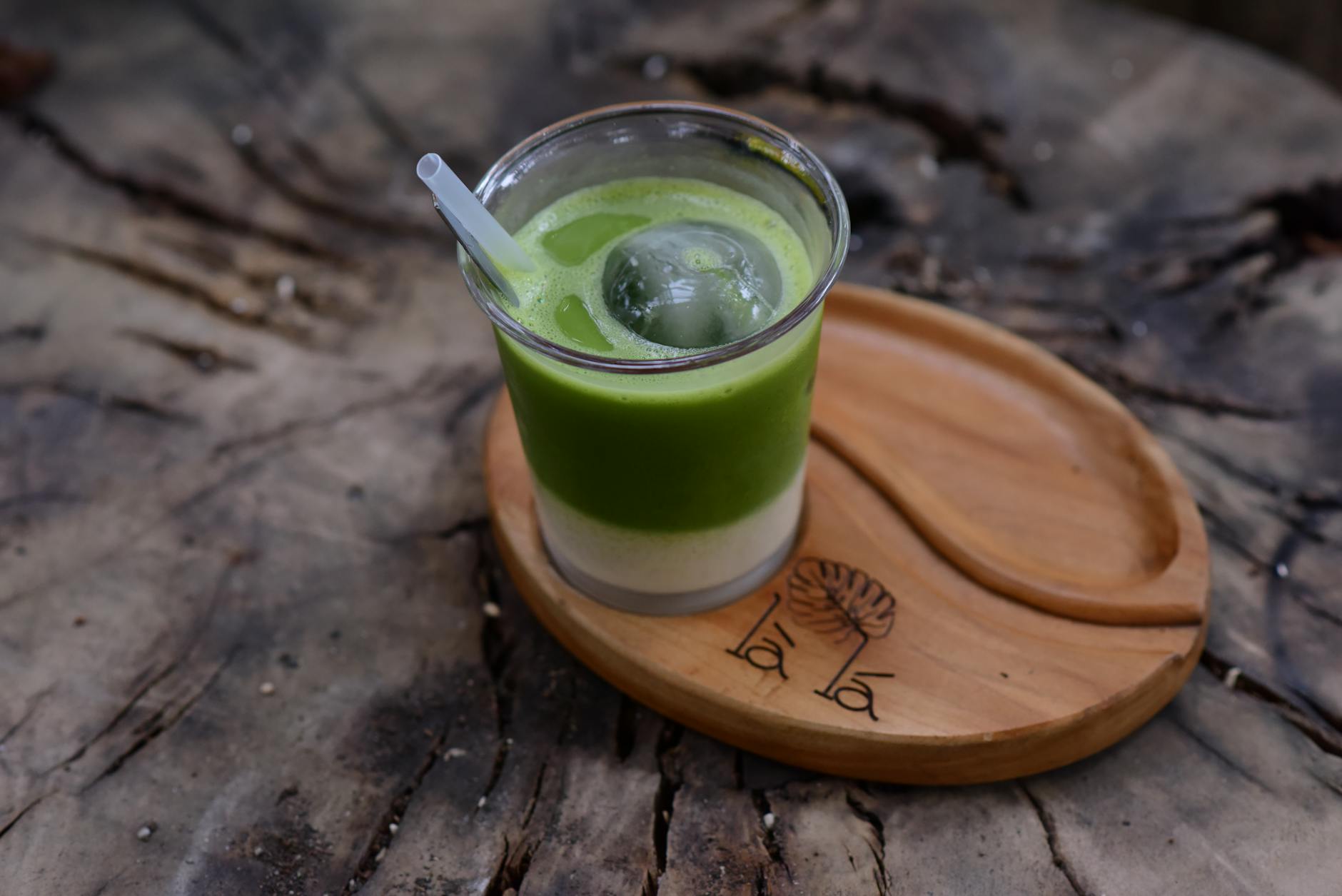
To get that beautiful green-and-white layered look you see on Instagram, follow this order:
- Pour your prepared matcha concentrate into the bottom of the glass.
- Fill the glass to the brim with ice.
- Slowly pour the milk over the back of a spoon onto the ice. The milk will gently settle through the matcha, creating a marbled effect.
Frothing Milk Without an Espresso Machine
The French Press Frothing Method
Choosing the Best Milk: Oat, Almond, or Dairy?
The type of milk you choose will drastically change the flavor of your matcha latte recipe.
- Coconut Milk: Adds a lovely tropical sweetness and a rich mouthfeel. It pairs exceptionally well with iced matcha.
- Dairy Milk: Whole milk provides the best foam. The natural lactose in dairy complements the Umami of the tea.
- Almond Milk: Often too thin to froth well, and the nutty flavor can sometimes clash with the earthiness of the tea.
Sweetener Guide: Finding Your Perfect Ratio
Natural Sweeteners: Honey vs. Maple Syrup
Making a Simple Matcha Syrup
If you like a "Starbucks style" drink, you can make a vanilla simple syrup. Boil equal parts sugar and water with a splash of vanilla extract. Keep this in the fridge and add a tablespoon to your homemade matcha latte hot and iced. It disperses much more evenly than granulated sugar.
The 1/2 Teaspoon Rule
If you are new to matcha, start with 1 teaspoon of sweetener. As you get used to the flavor of the green tea powder, you might find you prefer only 1/2 teaspoon, or even none at all. High-quality ceremonial grade matcha has a natural sweetness that is easily overwhelmed by too much sugar.
Troubleshooting Common Matcha Problems
This is almost always due to water temperature. If your water is boiling, it will be bitter. Another culprit is using low-quality culinary powder for a drink. Try switching to a ceremonial grade and keeping your water at 175°F.
You likely skipped the fine mesh sifter. Even with vigorous whisking, once those clumps are wet, they are nearly impossible to break apart. Sift first, every single time.
Your matcha has likely oxidized. Check the expiration date and ensure you are storing it in a cool, dark place (even the fridge is okay!). Also, ensure you aren't using too much milk, which can "wash out" the color of the green tea powder.
Storage and Freshness
Matcha is a ground leaf, not a dried bean like coffee. It is highly sensitive. Once you open a tin, try to use it within 1-2 months. Keep it away from the stove or windows. The more it is exposed to oxygen, the more the Chlorophyll breaks down, leading to that dull color and loss of health benefits of matcha as noted by health benefits of matcha researchers.
Final Thoughts on the Perfect Matcha Latte
Mastering the matcha latte recipe is a journey of patience and precision. It’s about more than just a caffeine fix; it’s a morning ritual that forces you to slow down for three minutes. By focusing on the zig-zag motion of your whisk, the exact water temperature, and the quality of your ceremonial grade powder, you aren't just making a drink—you're crafting an experience. Whether you prefer your homemade matcha latte hot and iced, remember that the best cup is the one that makes you feel energized and ready to tackle your day. Grab your Chasen, find your favorite mug, and start whisking!