Quick Answer
Use plenty of boiling water, stir as soon as the pasta goes in and several times during the first two minutes, and keep the water at a steady boil. Drain when al dente and combine with sauce promptly; oil in the cooking water is unnecessary and can make sauce slide off.
Practical note
For How to Prevent Pasta From Sticking, this guide centers on Long Pasta (Spaghetti, Fettuccine), Short Pasta (Penne, Fusilli), keep pasta from sticking. Those are the checkpoints we would use first in a normal home kitchen before making a bigger change.
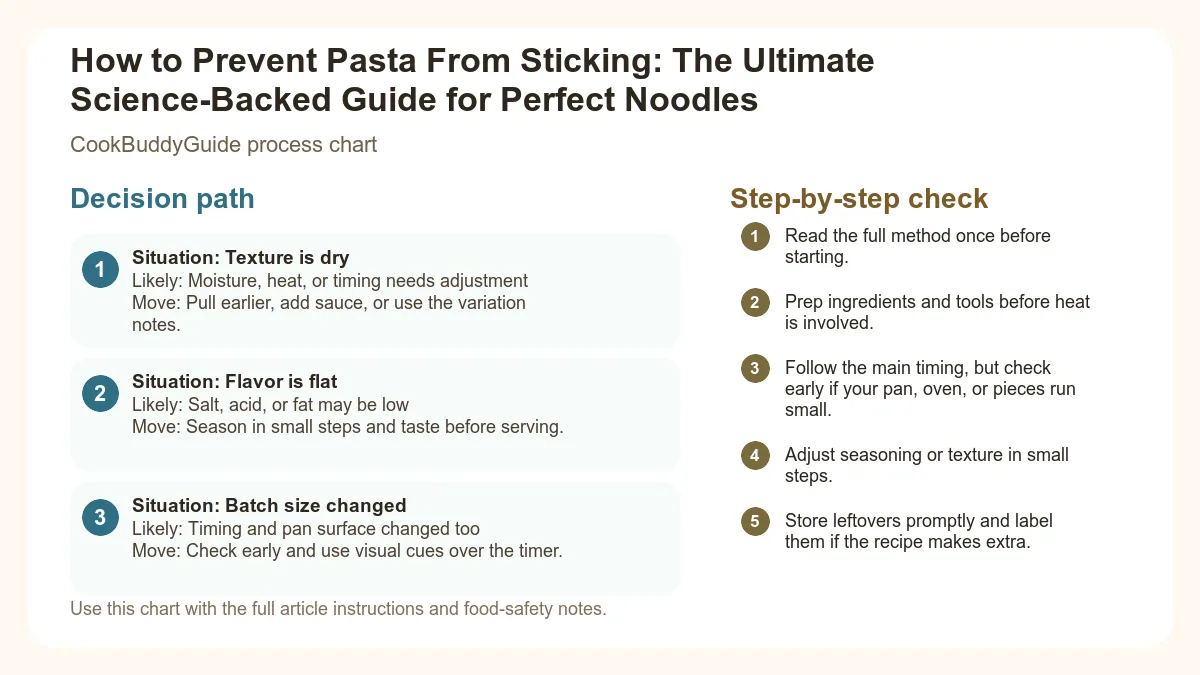
Decision table
| Situation | Likely cause or meaning | Best move |
|---|---|---|
| Texture is dry | Moisture, heat, or timing needs adjustment | Pull earlier, add sauce, or use the variation notes. |
| Flavor is flat | Salt, acid, or fat may be low | Season in small steps and taste before serving. |
| Batch size changed | Timing and pan surface changed too | Check early and use visual cues over the timer. |
Step-by-step fix
- Read the full method once before starting.
- Prep ingredients and tools before heat is involved.
- Follow the main timing, but check early if your pan, oven, or pieces run small.
- Adjust seasoning or texture in small steps.
- Store leftovers promptly and label them if the recipe makes extra.
Common mistakes
- Changing the recipe before trying the base method once.
- Measuring casually when texture depends on ratios.
- Waiting until the end to fix seasoning.
- Ignoring carryover heat or resting time.
Related topic hubs
Table of Contents
- The Science of the Sticky Situation
- Method 1: The Golden Ratio of Water to Pasta
- Method 2: The Critical First Two Minutes
- Method 3: The Myth of Oil in the Water
- Method 4: The Power of Salt and Structural Integrity
- Method 5: To Rinse or Not to Rinse?
- Method 6: The "Marriage" - Saucing Immediately
- Method 7: Post-Cooking Storage Secrets
- Shape Matters: Specific Tips for Different Pastas
- Troubleshooting: How to Fix Stuck Pasta
- Frequently Asked Questions
Introduction: The Science of the Sticky Situation
Why Pasta Sticks: The Role of Surface Starch
To solve the problem, we first have to understand the enemy. When dried pasta—typically made from semolina flour and water—hits boiling water, a process called starch gelatinization begins almost instantly. Pasta is packed with starch granules, specifically amylopectin and amylose. As the water heats these granules, they swell and eventually burst, releasing a sticky, glue-like starchy residue onto the surface of the noodle.
The Frustration of the "Pasta Brick"
The goal is always an al dente texture—firm to the bite with individual strands that carry the sauce rather than clumping into a ball. When pasta sticks, it cooks unevenly. The parts that are stuck together remain hard and chalky, while the outer edges become mushy. By mastering the techniques below, you’ll ensure that every noodle has the space it needs to hydrate and cook perfectly from the inside out.
Method 1: The Golden Ratio of Water to Pasta
Why a Large Pot is Non-Negotiable
When you cook pasta, it sheds starch into the water. If you use too little water, that water quickly becomes a thick, "starchy slurry." This slurry acts like a literal glue, coating the noodles and encouraging clumping. By using a large volume of water, you dilute that starch, keeping the surface of the noodles cleaner and more distinct.
The CookBuddy Standard Water Ratio
For every 1 pound (450g) of dried pasta, use:
- 4 to 6 quarts of fresh, cold water.
- A pot that allows the water to reach no higher than 3/4 of the way to the rim to prevent boil-overs.
Pro Tip: Using a large volume of water also helps the pot return to a boil faster after you add the pasta. A drop in temperature extends the "sticky phase" of the starch, so keeping the water at a rolling boil is essential.
The Impact of Starch Concentration
Method 2: The Critical First Two Minutes
The "Agitation" Phase
As soon as those noodles hit the water, the clock starts. According to the experts at America's Test Kitchen, stirring pasta during cooking is the single most effective way to prevent the strands from bonding. Consider stirring immediately upon entry and then every 30 seconds for the first two minutes.
This "agitation" prevents the noodles from settling against each other while the surface starch is at its stickiest. Once the outer layer of starch has been washed away into the boiling water and the protein structure of the semolina flour begins to set, the risk of sticking drops significantly.
Stirring Techniques for Long vs. Short Pasta
- Long Pasta (Spaghetti, Fettuccine): Use a pair of long tongs or a pasta fork. Don't just swirl; lift the noodles and let them fall back into the water to ensure they aren't nesting.
- Short Pasta (Penne, Fusilli): Use a large wooden spoon to create a whirlpool effect. This keeps the pasta shapes in constant motion, preventing them from sinking to the bottom and sticking to the pot.
Method 3: The Myth of Oil in the Water
Why Oil Doesn't Stop Sticking
This guide will say this definitively: Stop putting olive oil in your pasta water. It is perhaps the most persistent myth in home cooking. Science tells us that oil and water don't mix; oil is less dense than water, so it floats in a layer on the surface. Unless you are dipping each individual noodle through that oil layer like a professional car waxer, the oil never actually touches the pasta while it’s submerged and cooking.
I’ve conducted side-by-side tests, and the pasta cooked with oil stuck just as much as the pasta cooked without it if the water volume was too low. For a deeper dive into the chemistry of this, check out this excellent breakdown of oil in the pasta water from Serious Eats.
The Downside: Sauce Slippage
The real reason to avoid oil is what happens after you drain pasta. As you pour the pasta into the colander, it passes through that floating layer of oil. The oil coats the noodles, creating a waterproof barrier. When you go to add your beautiful Bolognese or Alfredo, the sauce can’t "grip" the noodle. It simply slides off to the bottom of the bowl, leaving you with oily, flavorless pasta. To keep your sauce where it belongs, keep the oil in the pantry until the pasta is cooked.
Method 4: The Power of Salt (and Why it Matters)
Flavor vs. Structural Integrity
We’ve all heard that pasta water should be "salty like the sea." While the primary reason for salting is flavor—pasta is incredibly bland without it—there is a secondary benefit. Salt acts as a bridge for the semolina flour proteins, helping to limit the excessive swelling of starch granules. While it won't magically stop a crowded pot from sticking, it does contribute to a firmer, less "mushy" noodle surface.
How Much Salt is Actually Necessary?
Method 5: To Rinse or Not to Rinse?
The Only Times You Should Rinse Pasta
Rinsing is the enemy of a good hot pasta dish. When you rinse cooked pasta under the tap, you wash away all the remaining surface starch. This starch is exactly what you need to help your sauce emulsify and stick to the noodles. As the team at The Kitchn points out, rinsing your cooked pasta is a habit you should break for 90% of your recipes.
The exception: The only time I ever rinse pasta is for a cold pasta salad. In that specific scenario, you want to stop the cooking process immediately and remove the excess starch so the noodles don't turn into a gummy clump as they cool. For everything else—keep that starch!
The Importance of "Liquid Gold"
Before you drain your pasta, always reserve about a cup of the pasta water. This cloudy, starchy liquid is the secret ingredient in home kitchens. It contains the amylopectin that has leached out during boiling. When added to your sauce, it acts as an emulsification agent, binding the fats in the sauce to the water and the noodles. If you’re looking for a quick way to use this technique, try it with one of our easy one-pot pasta recipes.
Method 6: The "Marriage" - Saucing Immediately
The 30-Second Rule
The #1 reason pasta sticks *after* it has been drained is air. As soon as the water is gone, the residual heat causes the remaining moisture on the surface of the noodles to evaporate, leaving behind a concentrated starch glue. If the pasta sits in the colander for even two minutes, it will begin to fuse.
Finishing Pasta in the Sauce Pan
The "No-Stick" Finishing Technique
- Set your sauce to a low simmer in a wide skillet while the pasta boils.
- One minute before the pasta is done, use tongs to move it directly from the pot to the sauce.
- Add 1/4 cup of starchy pasta water.
- Toss vigorously for 60 seconds. The sauce will thicken and cling to the noodles.
- Serve immediately.
This method is perfect for busy weeknights, especially when paired with simple 5-ingredient dinner recipes that focus on high-quality ingredients and proper technique.
Method 7: Post-Cooking Storage Secrets
Storing Plain Pasta for Meal Prep
Sometimes you need to cook pasta ahead of time for meal prep or a large party. If you aren't saucing it immediately, you have to intervene to keep pasta from sticking in the fridge. In this case, and *only* in this case, oil is your best friend.
After draining the pasta, toss it immediately with a small amount of neutral oil (like grapeseed) or a light olive oil. Use about 1 teaspoon per half-pound of pasta. This creates a physical barrier that prevents the noodles from touching. For more professional storage tips, see this guide on storing leftover cooked pasta.
Reheating Tips to Revive the Texture
When you’re ready to eat your stored pasta, don't just microwave it in a dry bowl. To revive the individual strands, place the pasta in a colander and dip it into a pot of boiling water for exactly 30 seconds. This melts the oil, rehydrates the starch, and brings the noodle back to life without overcooking it.
Shape Matters: Specific Tips for Different Pastas
Not all pasta shapes are created equal. The surface-area-to-volume ratio changes how much starch is released and how easily they clump. Understanding the science of pasta starch can help you adjust your technique based on what's in your pantry.
Long Strands (Spaghetti, Fettuccine, Linguine)
These are the most prone to sticking because they have so much surface area in contact with each other. Use the "fan" drop: hold the bundle of dry noodles vertically over the pot and twist your hands in opposite directions as you release. The noodles will fan out in a circle around the edge of the pot, preventing them from landing in one big clump.
Tubular Shapes (Penne, Rigatoni, Ziti)
These shapes can trap air inside, causing them to float. If they float too early, the tops don't cook and the bottoms get gummy. Stir these more frequently to ensure water is flowing through the centers of the tubes.
Fresh vs. Dried Pasta Considerations
Fresh pasta (made with eggs) is a completely different beast. It contains much more protein and moisture. It cooks in 2-3 minutes and releases starch much faster than dried pasta. When cooking fresh pasta, you must stir *constantly* from the moment it hits the water until it’s done. There is no "occasional stir" with fresh fettuccine!
Troubleshooting: How to Fix Stuck Pasta
If you’ve ignored the advice above and ended up with a clumped mass, don't throw it out! I’ve successfully rescued many "pasta disasters" using these two kitchen tips:
The Hot Water Bath Rescue
- Boil a fresh kettle of water.
- Place the clumped pasta in a large bowl.
- Slowly pour the boiling water over the clump while using two forks to gently "tease" the strands apart.
- The heat will re-gelatinize the starch glue, allowing you to separate the noodles without tearing them.
- Drain immediately and sauce.
The Sauce Steam Method
If the pasta is only mildly stuck, add it to a skillet with a thin, watery sauce (like a marinara thinned with a bit of water). Cover the pan with a lid for 60 seconds. The steam trapped inside will soften the bonds, and a vigorous toss will usually set the noodles free.
Frequently Asked Questions
A: Not directly, but heat retention does. A heavy stainless steel or enameled cast iron pot will maintain a boil better than a thin aluminum pot. Consistent heat means less time in the "sticky starch" phase.
A: It’s very difficult. Slow cookers don't reach a rolling boil, which is necessary to keep the noodles moving and the starch diluted. If you must, use "no-boil" varieties or add the pasta only in the last 20-30 minutes of cooking.
A: Gluten-free pasta (made from rice, corn, or quinoa) lacks the protein structure of semolina flour. It releases significantly more starch and is much more fragile. For GF pasta, you need even more water and even more frequent stirring.
Conclusion: Your Path to Pasta Perfection
Mastering how to prevent pasta from sticking is one of those foundational skills that instantly elevates your home cooking. By respecting the cooking process, understanding the role of starch gelatinization, and ditching the "oil in the water" myth, you are well on your way to serving perfect, al dente meals every single time.
Remember: use a large stockpot, stir religiously for the first two minutes, and always—always—marry your pasta to the sauce immediately after you drain pasta. These small adjustments require no extra money and very little extra time, but the results are undeniably better. Now, go put a pot of water on the stove and put these tips to the test. Your dinner guests (and your taste buds) will thank you!