Quick Answer
This guide covers 15 healthy breakfast ideas that are delicious and filling. These quick healthy breakfast under 300 calories options are perfect for busy mornings.
Practical note
For 15 Healthy Breakfast Ideas Under 300 Calories, this guide centers on Batch Cook Grains, The "Grab-and-Go" Station, Avoid the "Topping Trap". Those are the checkpoints we would use first in a normal home kitchen before making a bigger change.
Decision table
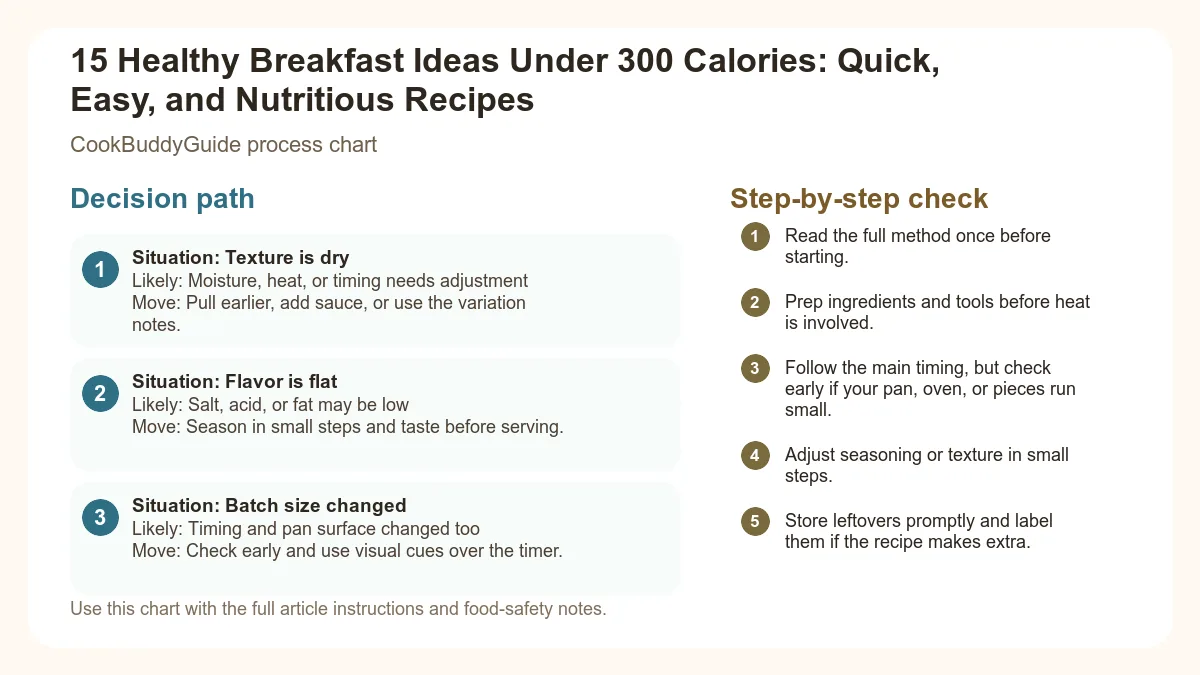
| Situation | Likely cause or meaning | Best move |
|---|---|---|
| Texture is dry | Moisture, heat, or timing needs adjustment | Pull earlier, add sauce, or use the variation notes. |
| Flavor is flat | Salt, acid, or fat may be low | Season in small steps and taste before serving. |
| Batch size changed | Timing and pan surface changed too | Check early and use visual cues over the timer. |
Step-by-step fix
- Read the full method once before starting.
- Prep ingredients and tools before heat is involved.
- Follow the main timing, but check early if your pan, oven, or pieces run small.
- Adjust seasoning or texture in small steps.
- Store leftovers promptly and label them if the recipe makes extra.
Common mistakes
- Changing the recipe before trying the base method once.
- Measuring casually when texture depends on ratios.
- Waiting until the end to fix seasoning.
- Ignoring carryover heat or resting time.
Related topic hubs
Table of Contents
Why a Balanced Breakfast Matters (Even Under 300 Calories)
The Power Trio: Protein, Fiber, and Healthy Fats
A balanced meal requires a combination of lean protein (to preserve muscle and trigger fullness hormones), dietary fiber (to slow digestion), and a small amount of healthy fat (for nutrient absorption). According to the Mayo Clinic, the benefits of a healthy breakfast include improved concentration and better long-term weight management. By hitting these three markers, you can stay under 300 calories while still feeling like you've eaten a substantial meal.
How Low-Calorie Breakfasts Can Keep You Full Until Lunch
Protein-Packed Egg Breakfasts (Under 250 Calories)
1. A Practical Egg White Scramble with Spinach and Feta
- 1 cup egg whites (liquid or from about 6 eggs)
- 2 cups fresh baby spinach
- 1 tbsp crumbled light feta cheese
- Pinch of red pepper flakes
Instructions: Heat your non-stick pan over medium heat. Sauté the spinach until wilted (about 60 seconds). Pour in the egg whites and let them sit for 30 seconds before gently folding with a silicone spatula. Just before they are set, sprinkle the feta on top. The residual heat will soften the cheese without it disappearing into the eggs.
2. Muffin Tin Veggie Frittatas
These are perfect for meal planning. Usually, make a batch of 12 on Sunday evening. Use a mix of 3 whole eggs and 1.5 cups of egg whites to keep the macronutrients balanced while lowering the fat content.
3. Soft-Boiled Eggs with Asparagus "Soldiers"
This is a sophisticated, simple ingredients meal that feels like a brunch treat. Instead of bread, use lightly blanched asparagus spears for dipping. It adds incredible fiber and micronutrients for very few calories.
Testing Note: To get the perfect jammy yolk, bring water to a boil, lower the eggs in gently, and simmer for exactly 6 minutes and 30 seconds. Immediately plunge them into an ice bath to stop the cooking process.
Fiber-Rich Oats and Grains to Power Your Morning
When people think of healthy breakfast ideas, oats are usually at the top of the list. But the "instant" packets are often loaded with sugar. By using whole grains like steel-cut or rolled oats, you get the benefit of complex carbohydrates that provide a slow-release energy boost. Harvard Health highlights the importance of dietary fiber for heart health and satiety, making these recipes a staple in any morning routine.
4. Classic Berry Overnight Oats
If you struggle with time in the morning, this is your solution. Consider using this guide to making overnight oats to master the base ratio of 1:1 liquid to oats. For my 300-calorie version, Use 1/2 cup rolled oats, 1/2 cup unsweetened almond milk, and a teaspoon of chia seeds. Experience Tip: Use frozen berries instead of fresh. As they thaw overnight in the fridge, they release their juices, creating a beautiful natural syrup that flavors the entire jar without added sugar.
5. Savory Oatmeal with Soy Sauce and Scallions
6. Warm Quinoa Breakfast Bowl with Cinnamon
Quinoa isn't just for salads. It’s a complete plant-based protein. Use leftover quinoa from dinner. Reheat it with a splash of almond milk, a dash of cinnamon, and half a sliced banana. It has a delightful nutty texture that provides more satiety than traditional porridge.
Creamy Greek Yogurt and Chia Seed Puddings
7. Greek Yogurt & Hemp Seed Bowl
Combine 3/4 cup of plain Greek yogurt with 1 tablespoon of hemp seeds. Hemp seeds are an underrated plant-based protein source that adds a mild, nutty flavor. Add 1/2 cup of raspberries for fiber. My Discovery: If the yogurt is too tart, add a pinch of salt instead of honey. It counterintuitively cuts the acidity and brings out the natural sweetness of the dairy.
8. Vanilla Bean Chia Seed Pudding
9. Cottage Cheese and Pineapple Bowl
Cottage cheese is making a huge comeback, and for good reason. It’s incredibly high in casein protein, which digests slowly. Pair 1 cup of low-fat cottage cheese with 1/2 cup of fresh pineapple chunks. The bromelain in pineapple can also aid in digestion, making this a great nutritious start to your day.
Low-Calorie Toast and Savory Bread Options
Yes, you can eat bread and still stay under 300 calories! The trick is choosing the right bread and managing your toppings. Look for sprouted grain bread or sourdough, which often have a lower glycemic index and more whole grains.
10. Smashed Avocado on Sourdough (The One-Slice Hack)
11. Smoked Salmon Rye Toast
Thinly sliced rye bread or crispbreads are excellent for low calorie breakfast options. Spread 1 tablespoon of light cream cheese, top with 2 oz of smoked salmon, and add plenty of cucumber slices and fresh dill. It feels like a fancy hotel breakfast but takes only minutes to assemble.
12. Almond Butter and Sliced Strawberry Toast
When you need something sweet, skip the jam. Use 1 tablespoon of almond butter spread thinly over a slice of sprouted grain toast. Top with 4-5 sliced strawberries and a sprinkle of chia seeds. The healthy fats from the almond butter are crucial for satiety, ensuring you aren't looking for a snack 30 minutes later.
Refreshing Smoothies and Liquid Breakfasts
Smoothies can be a "calorie trap" if you aren't careful with portions. However, they are one of the most effective quick healthy breakfast under 300 calories options for those who commute. According to the Academy of Nutrition and Dietetics, choosing nutrient-dense breakfast foods like fruits and vegetables in smoothies can help stabilize blood sugar.
13. The "Green Machine" Metabolism Booster
Technique Tip: Always blend your greens (spinach or kale) with the liquid base first before adding the frozen fruit. This ensures you don't end up with leafy chunks in your straw. Use 1 cup spinach, 1/2 cup frozen pineapple, 1/2 a green apple, and a scoop of unflavored collagen peptides for protein.
14. Berry Blast Protein Shake
15. Iced Coffee Protein Latte
For the person who only wants coffee in the morning, this is the perfect compromise. Blend 1 cup of cold brew coffee with a pre-made vanilla protein shake (like Premier Protein or similar) and ice. It’s a high-protein, low-calorie way to get your caffeine fix and a nutritious start simultaneously.
Meal Prep Strategies for Busy Mornings
- Batch Cook Grains: On Sunday, cook a large pot of quinoa or steel-cut oats. Portion them into individual containers. In the morning, all you have to do is add a splash of milk and microwave for 60 seconds.
- The "Grab-and-Go" Station: Dedicate a small bin in your fridge for breakfast items. Pre-wash your berries, hard-boil your eggs, and portion out your yogurt. When the alarm goes off and you're running late, you don't have to think—just grab a container and go.
Kitchen Tips for Customizing Your Breakfast
Every body is different, and your healthy breakfast ideas should be adaptable to your specific needs. Whether you are following a vegan diet or need more volume to feel full, these tips will help you stay on track.
Swaps for Vegan and Gluten-Free Diets
Most of these recipes are easily adaptable. For eggs, try a tofu scramble with turmeric and nutritional yeast. For yogurt, look for high-protein almond or soy-based alternatives (check the label for added sugars!). If you are gluten-free, ensure your oats are certified GF, as cross-contamination is common in processing plants.
How to Adjust Calories if You're Still Hungry
If 300 calories isn't enough for your activity level, don't just reach for a donut. Use the USDA building a balanced plate guidelines to add more volume. Great "volume fillers" include:
- Zucchini: Grated into oatmeal (Zoats!) adds massive volume for almost zero calories.
- Cucumber: A great crunchy side for savory breakfasts.
- Hydration: Sometimes hunger is actually dehydration. Always drink a large glass of water with your fiber-heavy meals to help the fiber do its job in your digestive system.
Frequently Asked Questions
A: While weight loss depends on your total daily caloric intake, starting with a high-protein, high-fiber breakfast prevents overeating later in the day. It sets a positive tone for your morning routine.
A: From a meal planning perspective, it’s very efficient! However, consider rotating between at least three different options to ensure you're getting a variety of micronutrients.
A: There is no "perfect" time, but most research suggests eating within 2 hours of waking to help regulate blood sugar and provide an energy boost for your morning tasks.
Final Thoughts from the Kitchen
Happy cooking, and here's to a more energized, nutritious morning!