Quick Answer
For browned roasted vegetables, dry them well, cut similar vegetables to a consistent size, coat them lightly with oil, and leave space between pieces. Roast at high heat and turn once; crowded or wet vegetables steam instead of developing crisp edges.
Practical note
For Easy Roasted Vegetables, this guide centers on Bare Metal, Parchment Paper, Silicone Mats (Silpat). Those are the checkpoints we would use first in a normal home kitchen before making a bigger change.
Decision table
| Situation | Likely cause or meaning | Best move |
|---|---|---|
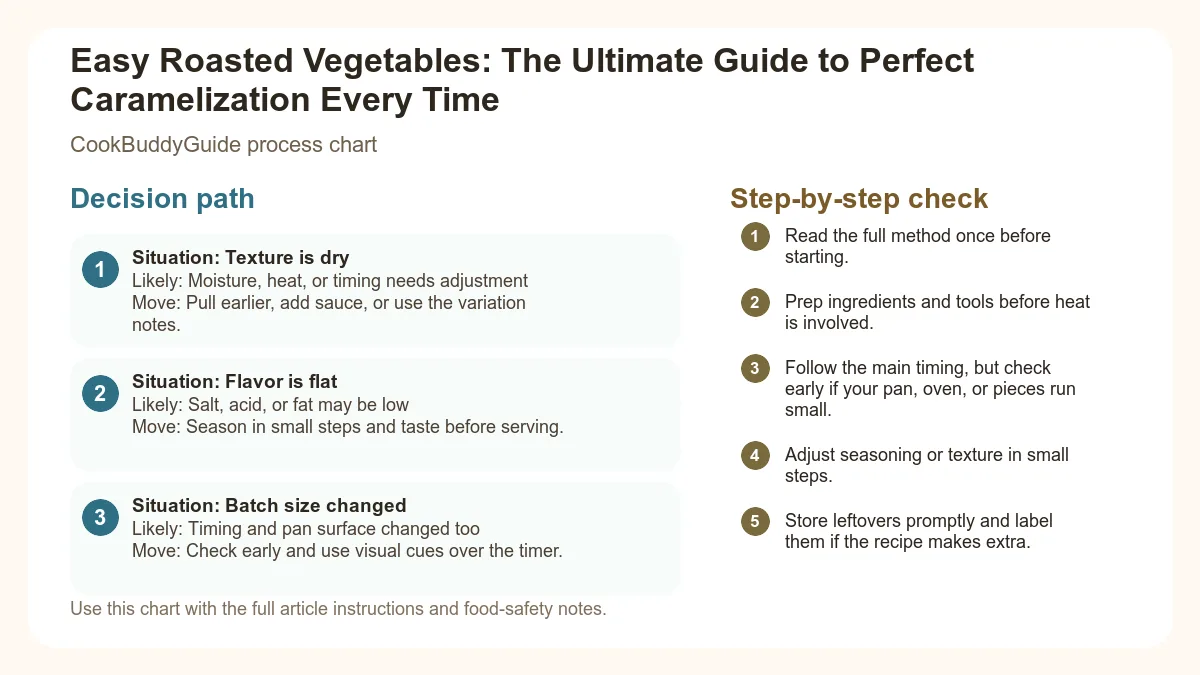
| Texture is dry | Moisture, heat, or timing needs adjustment | Pull earlier, add sauce, or use the variation notes. |
| Flavor is flat | Salt, acid, or fat may be low | Season in small steps and taste before serving. |
| Batch size changed | Timing and pan surface changed too | Check early and use visual cues over the timer. |
Step-by-step fix
- Read the full method once before starting.
- Prep ingredients and tools before heat is involved.
- Follow the main timing, but check early if your pan, oven, or pieces run small.
- Adjust seasoning or texture in small steps.
- Store leftovers promptly and label them if the recipe makes extra.
Common mistakes
- Changing the recipe before trying the base method once.
- Measuring casually when texture depends on ratios.
- Waiting until the end to fix seasoning.
- Ignoring carryover heat or resting time.
Related topic hubs
Table of Contents
- Why Roasting is the Ultimate Kitchen Superpower
- Essential Equipment for Success
- The Golden Rules of Prep
- The Master Ratio: Oil and Seasoning
- The Temperature Matrix: Timing by Vegetable Type
- The Cardinal Sin: Overcrowding the Pan
- Achieving Perfect Caramelization
- 5 Signature Seasoning Combinations
- Meal Prep Mastery
- Troubleshooting Common Mistakes
Why Roasting is the Ultimate Kitchen Superpower
The Science of the Maillard Reaction
When we talk about the deep, savory "umami" flavor of a perfectly roasted carrot or the nutty sweetness of a charred floret of broccoli, we are talking about the Maillard reaction. This is a chemical reaction between amino acids and reducing sugars that gives browned food its distinctive flavor. Unlike boiling, which caps your cooking temperature at 212°F (100°C), roasting utilizes high heat—usually 400°F and above—to trigger this reaction. According to the science of roasting vegetables, this process transforms simple starches into complex aromatic compounds that our brains are hardwired to crave.
Why Roasting Beats Steaming or Boiling
Essential Equipment for Success
The Best Sheet Pans for Even Heat
If you use a convection oven, you have a distinct advantage. The fan circulates hot air more efficiently, which helps strip away surface moisture even faster. If you’re using convection, consider dropping the temperature by 25°F from the standard recipe to prevent burning the outsides before the insides are tender.
Parchment Paper vs. Silicone Mats vs. Bare Metal
- Bare Metal: Provides the absolute best browning. The direct contact between the vegetable and the aluminum creates the most intense sear. However, cleanup is a nightmare.
- Silicone Mats (Silpat): Avoid these for roasting. Silicone is an insulator; it actually prevents the bottom of the vegetable from getting hot enough to brown properly. You’ll end up with soft, pale bottoms.
The Golden Rules of Prep
Uniform Cutting for Even Cooking
Vegetable prep should be precise:- Root vegetables: Aim for 1-inch cubes.
- Brussels sprouts: Halve them through the root to keep them intact.
- Broccoli/Cauliflower: Cut into bite-sized florets, but keep a flat side for maximum pan contact.
- Carrots: Slice on a bias (diagonal) to increase the surface area for browning.
The Importance of Drying Your Vegetables
The Master Ratio: Oil and Seasoning
How Much Oil Do You Actually Need?
For high-heat roasting, you need an oil with a high smoke point. Olive oil (specifically refined or "pure" olive oil, not necessarily your most expensive extra virgin) is great up to 400°F. For the 425°F+ range, consider Avocado oil or Grapeseed oil. These oils won't break down or create "off" flavors at high temperatures.
Salt: The Flavor Multiplier
Don’t be shy with the salt. Salt doesn't just add flavor; it helps draw out internal moisture, allowing the surface to crisp up more effectively. Choose using Kosher salt because the larger grains are easier to pinch and distribute evenly. According to the step-by-step guide to roasting, seasoning should happen immediately after oiling to ensure the salt adheres to the surface.
The Temperature Matrix: Timing by Vegetable Type
Not all vegetables are created equal. Some can stand the heat of a 450°F oven for 40 minutes, while others will vanish into a puff of smoke in ten. Here is my tried-and-true timing matrix for a standard 425°F (220°C) oven.
The Roasting Time Guide (at 425°F)
- Root Vegetables (Potatoes, Carrots, Beets, Parsnips): 35–45 minutes. These are dense and need time for the internal temperature to reach a point where the starches soften.
- Cruciferous Vegetables (Broccoli, Cauliflower, Brussels Sprouts): 20–25 minutes. You want the tips of the florets to be dark brown, almost charred.
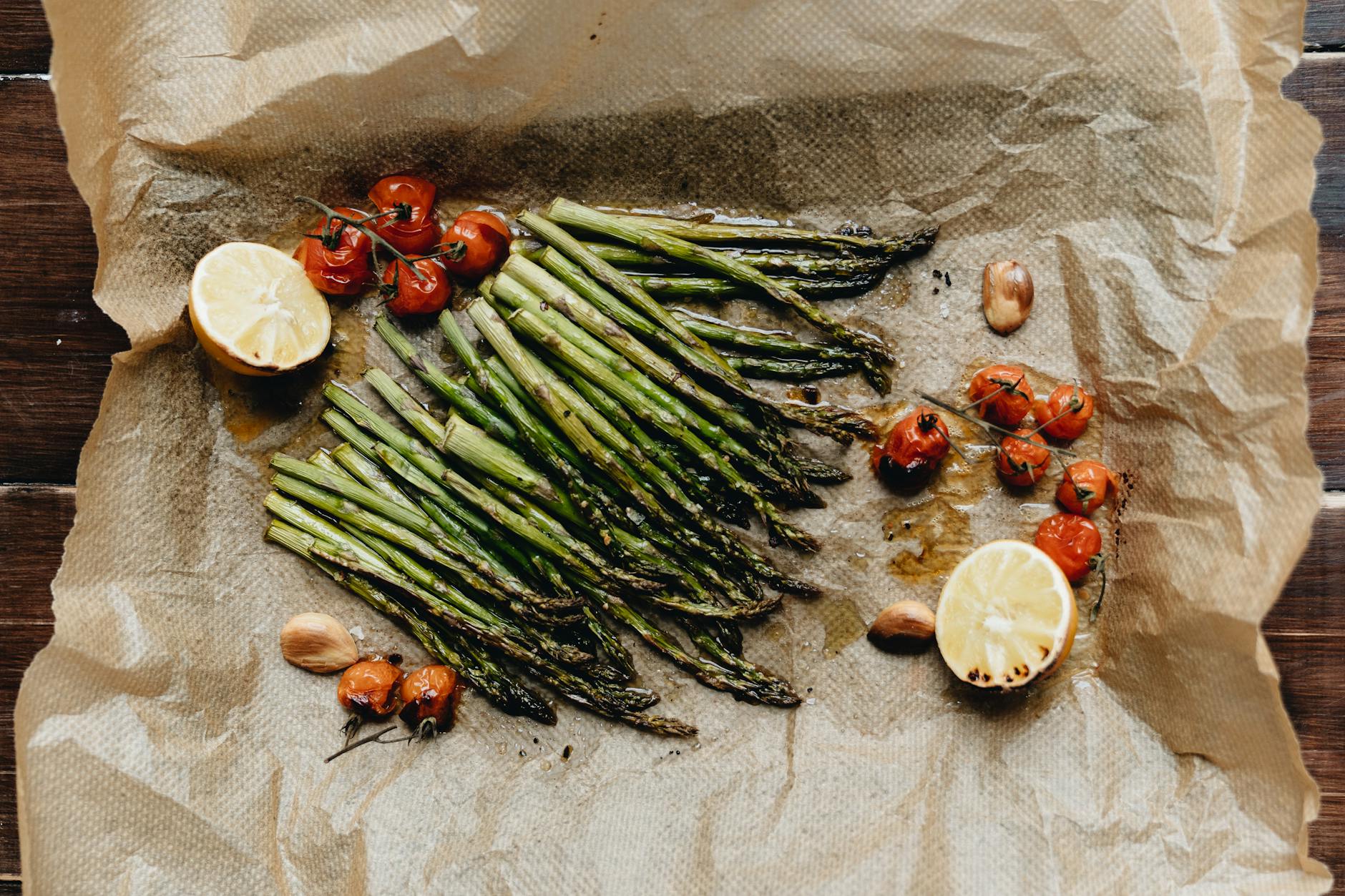
- Soft & Delicate Vegetables (Zucchini, Bell Peppers, Asparagus): 10–15 minutes. These have high water content and can go from perfect to mushy very quickly.
- Leafy Greens (Kale, Swiss Chard): 5–8 minutes. These turn into "chips" almost instantly. Watch them like a hawk!
If you’re looking to combine these into a full meal, check out our guide on simple sheet pan dinners. The key is to start the root vegetables first and add the quicker-cooking items to the pan later.
The Cardinal Sin: Overcrowding the Pan
Why Airflow Matters
If there is one thing you take away from this oven roasted vegetables guide, let it be this: Do not overcrowd the pan. When vegetables roast, they release steam. If they are packed tightly together or overlapping, that steam gets trapped between the pieces. Instead of roasting, they end up steaming each other. This is the primary reason for "soggy" roasted vegetables.
The "One-Inch Rule" for Spacing
Pro Tip: If you are using two pans at once, place them on the upper-middle and lower-middle racks and swap their positions halfway through the cooking time. This ensures that the pan on the bottom doesn't get too much direct heat from the heating element while the top pan gets all the browning from the rising heat.Achieving Perfect Caramelization
When to Flip (and When to Leave Them Alone)
The Middle vs. Bottom Rack Debate
5 Signature Seasoning Combinations
1. The Classic Mediterranean
Best for: Zucchini, Peppers, Onions
- 1 tsp dried oregano
- 1/2 tsp garlic powder
- A pinch of red pepper flakes
- Finish with: A squeeze of fresh lemon juice
2. Zesty Lemon-Garlic-Parmesan
Best for: Broccoli, Asparagus
- 2 cloves minced garlic (add in the last 10 mins to prevent burning)
- 1/4 cup grated Parmesan cheese (add in the last 5 mins)
- Lemon zest (added after roasting)
3. Smoky Maple-Chipotle
Best for: Sweet Potatoes, Carrots
- 1 tbsp maple syrup
- 1/2 tsp smoked paprika
- 1/4 tsp chipotle powder
4. Everything Bagel Blend
Best for: Cauliflower, Brussels Sprouts
- 2 tbsp "Everything Bagel" seasoning
- Ensure you use a bit extra oil so the seeds stick to the vegetables!
5. Balsamic & Rosemary
Best for: Beets, Red Potatoes, Mushrooms
- 1 tbsp chopped fresh rosemary
- 2 tbsp balsamic glaze (drizzled over the hot veggies after they leave the oven)
Meal Prep Mastery: Using Roasted Veggies All Week
Storage Tips to Prevent Sogginess
The biggest hurdle with meal prepping roasted vegetables is that they tend to get soft in the fridge. To minimize this:
- Cool completely: Never put hot vegetables into a sealed container. The residual heat will create condensation, which leads to soggy veggies. Let them sit on the counter for at least 30 minutes.
- Use glass: Glass containers tend to keep roasted vegetables crisper than plastic.
- Reheating: Avoid the microwave if possible. A quick 5-minute toss in a dry skillet or a 400°F toaster oven will bring back a lot of that original texture.
Creative Ways to Repurpose Leftovers
- Grain Bowls: Toss roasted sweet potatoes and kale with quinoa and a tahini dressing.
- Omelets/Frittatas: Fold roasted peppers and onions into your morning eggs.
- Pasta: Toss roasted broccoli and garlic with penne, olive oil, and extra Parmesan.
- Blended Soups: If they finally do get too soft, throw them in a blender with some vegetable broth for an instant "roasted" soup.
Troubleshooting Common Roasting Mistakes
Your oven temperature is too high for the size of the vegetable. This often happens with large chunks of potatoes or whole carrots. Lower the temperature to 400°F and cut the vegetables into smaller, more uniform pieces. Also, ensure you aren't using a dark-colored non-stick pan, which can absorb too much heat and burn the bottoms.
This is almost always due to overcrowding or not drying the vegetables properly before roasting. Refer back to the "One-Inch Rule." Additionally, check your oil ratio—too much oil can essentially "confit" the vegetable rather than roasting it, leading to a soft texture.
You likely didn't use enough oil, or your oven temperature was too low (below 375°F). Without enough oil to conduct heat and protect the surface, the moisture inside the vegetable evaporates before the outside can brown, leading to a "leathery" texture.
For more foundational tips, consider checking out how to roast any vegetable, which provides excellent baseline charts for beginners.