Quick Answer
Master carbonara without cream using this authentic carbonara recipe. It also explains the emulsification secret for a silky sauce using only eggs, cheese, and pasta water.
Practical note
For Carbonara Without Cream, this guide centers on Boil the Water, Prepare the 'Paste', Render the Fat. Those are the checkpoints we would use first in a normal home kitchen before making a bigger change.
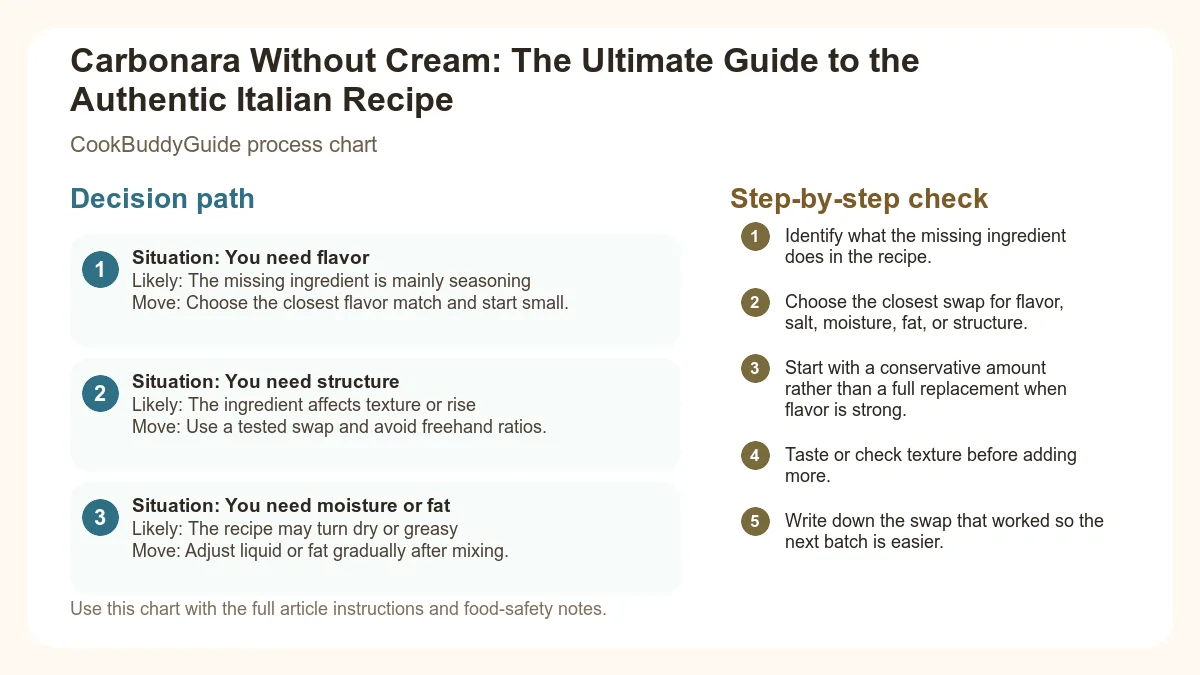
Decision table
| Situation | Likely cause or meaning | Best move |
|---|---|---|
| You need flavor | The missing ingredient is mainly seasoning | Choose the closest flavor match and start small. |
| You need structure | The ingredient affects texture or rise | Use a practical swap and avoid freehand ratios. |
| You need moisture or fat | The recipe may turn dry or greasy | Adjust liquid or fat gradually after mixing. |
Step-by-step fix
- Identify what the missing ingredient does in the recipe.
- Choose the closest swap for flavor, salt, moisture, fat, or structure.
- Start with a conservative amount rather than a full replacement when flavor is strong.
- Taste or check texture before adding more.
- Write down the swap that worked so the next batch is easier.
Common mistakes
- Replacing a strong ingredient 1:1 before tasting.
- Choosing a flavor match when the recipe actually needs structure.
- Forgetting that salty swaps can change the whole dish.
- Adding extra liquid before the batter, dough, or sauce has time to hydrate.
Related topic hubs
The magic of an authentic carbonara recipe doesn't come from a carton; it comes from a scientific reaction between rendered pork fat, high-quality egg yolks, and starchy pasta water. In my early days as a chef, I ruined more plates of pasta than I care to admit—usually resulting in a bowl of dry noodles with bits of scrambled eggs. But through those failures, I mastered the emulsification technique that transforms four humble ingredients into a glossy, velvet-like sauce. Today, This guide will teach you exactly how to achieve that creamy texture every single time without ever touching a drop of cream.
Table of Contents
- Why Authentic Carbonara Never Needs Cream
- The 5 Essential Ingredients for Success
- The Golden Rule: Mastering Pasta Water Temperature
- Step-by-Step: How to Make Carbonara Without Cream
- Common Mistakes: How to Avoid Scrambled Eggs
- Kitchen Tools for the Perfect Carbonara
- Variations and Practical Substitutions
- Serving and Storage Tips
Why Authentic Carbonara Never Needs Cream
The History of Spaghetti alla Carbonara
There is a persistent myth that carbonara was invented by American GIs in Italy during WWII who combined their rations of eggs and bacon with local pasta. While that makes for a lovely story, most culinary historians point toward the Roman pasta dishes of the Apennine mountains. The name "Carbonara" likely derives from carbonaro (charcoal burner), suggesting it was a hearty meal for men working outdoors. In its purest form, it was a dish of necessity, relying on shelf-stable cured meats and hard cheeses. Cream was a luxury that didn't belong in the mountains, and it certainly doesn't belong in your skillet today if you want to respect the dish's heritage.
The Science of the Emulsion
The 5 Essential Ingredients for Success
Guanciale vs. Pancetta: Making the Right Choice
Pecorino Romano vs. Parmigiano Reggiano
The traditional choice is 100% Pecorino Romano, a sheep's milk cheese that is salty, tangy, and sharp. However, for many palates, pure Pecorino can be overwhelmingly salty. Consider a 70/30 split: 70% Pecorino for the "punch" and 30% Parmigiano Reggiano for a nutty, mellow finish. This balance in cheese selection ensures the sauce is savory without being caustic. Always grate your cheese by hand using a fine grater; pre-shredded cheese is coated in potato starch, which will ruin your emulsion.
The Importance of High-Quality Eggs
Coarse Black Pepper: The 'Carbon' in Carbonara
The black pepper isn't just a garnish; it’s a primary flavor profile. It represents the "charcoal" flakes the dish is named after. For the best results, toast whole peppercorns in a dry pan for 2 minutes until fragrant, then crush them coarsely in a mortar and pestle. The heat and bite of freshly cracked pepper cut through the richness of the pork fat and eggs beautifully.
The Golden Rule: Mastering Pasta Water Temperature
Why Boiling Water Ruins the Sauce
Never add your egg mixture to a pan that is still sitting over an active flame. The direct heat of the burner is far too intense for the delicate egg proteins. Instead, we use the tempering eggs method. By adding a small amount of warm (not boiling) pasta water to your egg and cheese paste before it hits the noodles, you gently raise the temperature of the eggs, making them more resilient to the heat of the pasta.
The 'Off-Heat' Technique
A Practical Carbonara Without Cream
Ingredients:
- 200g (7 oz) Spaghetti or Rigatoni (high-quality bronze-cut)
- 100g (3.5 oz) Guanciale or thick-cut Pancetta, sliced into batons
- 3 Large Egg Yolks + 1 Whole Egg (room temperature)
- 50g (1.75 oz) Pecorino Romano, finely grated
- 20g (0.75 oz) Parmigiano Reggiano, finely grated
- 2 tsp Coarsely cracked black pepper
- Sea salt (for the pasta water)
Instructions:
- Boil the Water: Bring a large pot of water to a boil. Salt it lightly—remember, the cheese and pork are already very salty. Drop the pasta.
- Prepare the 'Paste': While the pasta cooks, whisk the eggs, yolks, and both cheeses in a small bowl until they form a thick, pale yellow paste. Add half of the black pepper here.
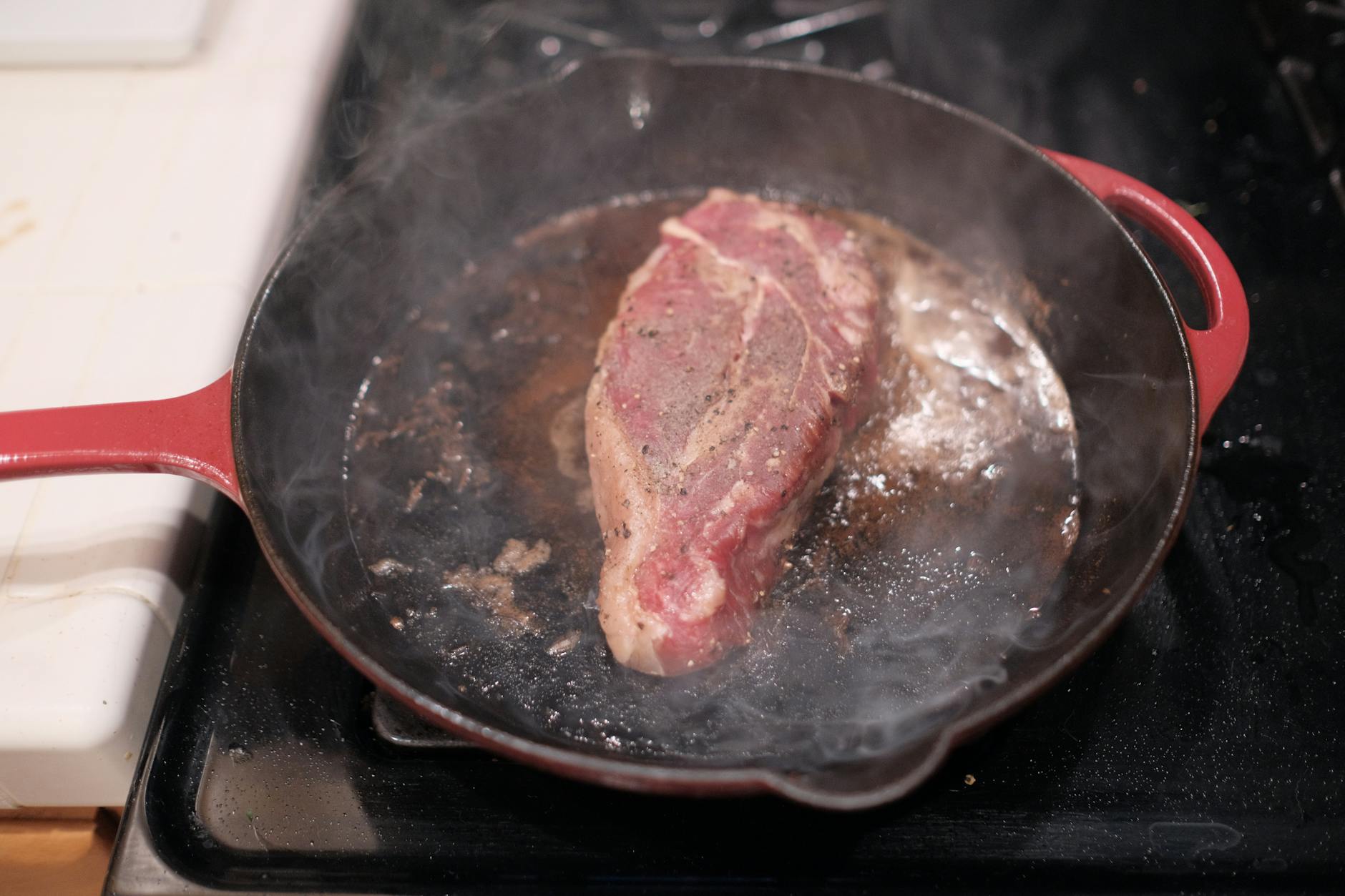
- Render the Fat: In a wide skillet over medium heat, add the guanciale. Cook slowly until the fat has rendered out and the pork is golden and crispy (about 8-10 minutes). Turn off the heat and move the pan to a cool burner.
- The Tempering: About 2 minutes before the pasta is al dente, take a half-cup of the starchy pasta water. Slowly whisk 2 tablespoons of this water into your egg/cheese paste to loosen it.
- The Marriage: Use tongs to transfer the pasta directly from the water into the skillet with the pork fat. Do not drain the pasta; you want some of that water clinging to the strands.
- Mantecatura: Toss the pasta in the pork fat for 30 seconds to coat. Now, pour in the egg mixture. Using a whisking technique or rapid tossing motion with tongs, stir vigorously. The residual heat will transform the paste into a glossy sauce. If it looks too thick, add another tablespoon of pasta water.
- Finish: Serve immediately with the remaining black pepper and an extra sprinkle of Pecorino.
Step-by-Step: How to Make Carbonara Without Cream
Prep Work: Grating and Whisking
Rendering the Fat
Don't rush the pork. Start the guanciale in a cold pan and turn the heat to medium-low. This allows the fat to render out slowly, ensuring the meat becomes crispy throughout rather than burnt on the outside and raw on the inside. You should have about 2-3 tablespoons of clear, liquid gold in the pan by the time you're done.
The Al Dente Finish
The Final Emulsion
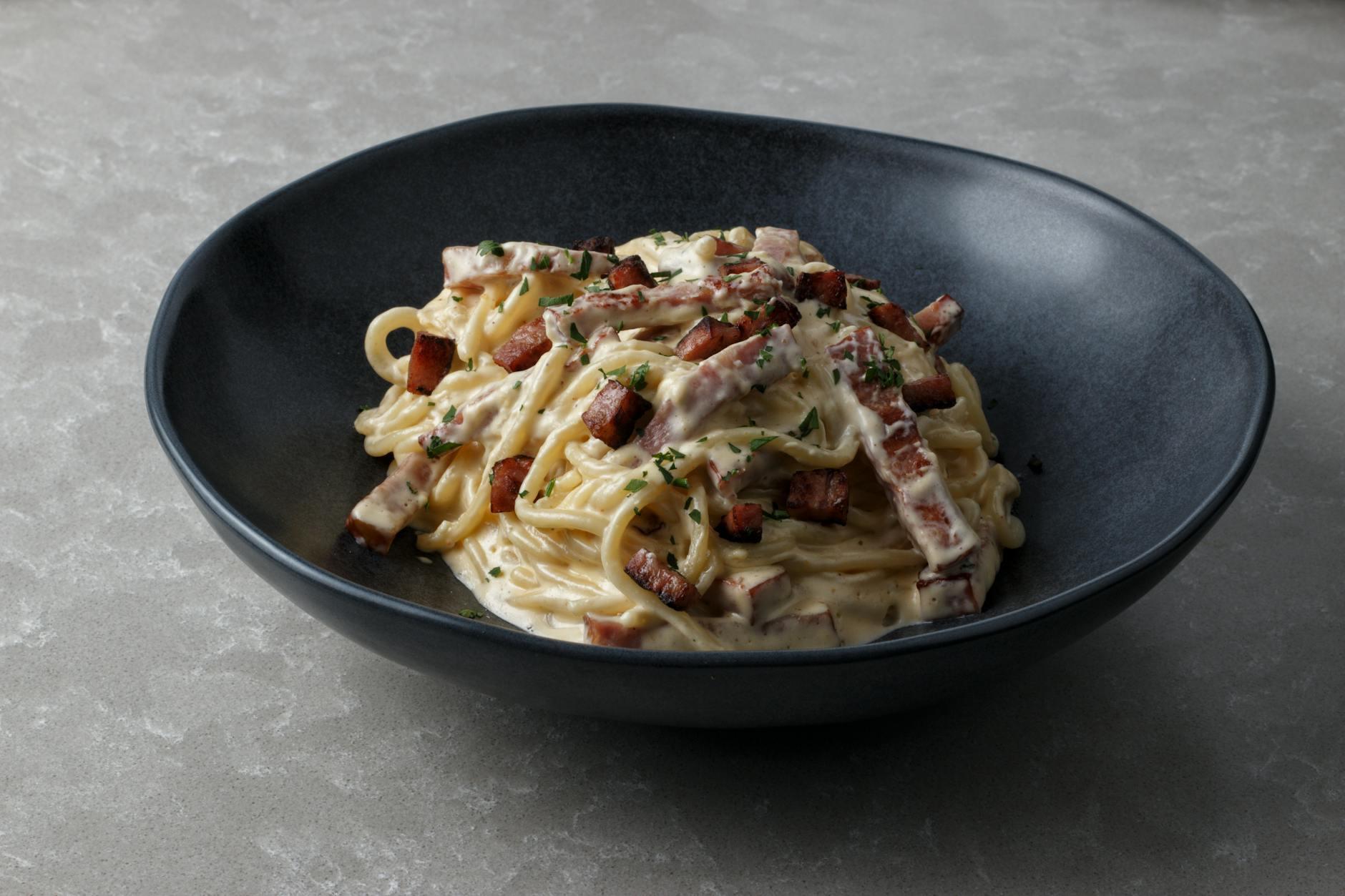
This is the "make or break" moment. When you add the egg mixture, you must keep the pasta moving. This constant agitation encourages the emulsification. Think of it like making a mayonnaise—you are suspending fat in a protein-rich liquid. The result should be a sauce that coats the back of a spoon and clings to every strand of spaghetti.
Common Mistakes: How to Avoid Scrambled Eggs
We’ve all been there—staring down a plate of "breakfast pasta" because the eggs curdled. It’s a common pitfall, but easily avoidable if you know the signs. Many common carbonara cooking mistakes stem from heat management and moisture control.
- The Heat is Your Enemy: If you see steam rising aggressively from the pan when you add the eggs, it’s too hot. Let the pan sit for a minute off the heat before combining.
- The Importance of Constant Movement: You cannot walk away during the final stage. Use a wooden spoon or tongs to keep the pasta "swirling." This prevents any one part of the egg mixture from sitting against the hot pan for too long.
Kitchen Tools for the Perfect Carbonara
You don't need a fancy kitchen, but two specific tools will make your life significantly easier when attempting an authentic carbonara recipe.
The Best Pan for Tossing
Consider a wide, high-sided stainless steel or aluminum skillet. Non-stick pans are fine, but stainless steel allows for better heat distribution. A wide pan gives you more surface area to toss the pasta, which is crucial for releasing the starch and creating that creamy texture.
Why a Microplane Matters
A standard box grater produces "shreds." A Microplane produces "dust." In carbonara, you want dust. The finer the cheese, the more easily it integrates with the egg yolks to form a homogenous paste. If the cheese is too thick, it won't melt; it will just clump together in the heat, leaving you with a stringy mess.
Variations and Practical Substitutions
While the authentic Italian carbonara recipe is strict, I realize that not everyone has a specialty Italian grocer nearby. Here is how I adapt when my pantry isn't perfectly stocked.
What to do if you can't find Guanciale
As mentioned, Pancetta is the best substitute. If you must use bacon, choose a thick-cut, unsmoked variety. Because bacon is often saltier than guanciale, do not add any salt to your pasta water. I've also made a "Smoky Carbonara" using high-quality smoked bacon and extra black pepper, which, while not authentic, is delicious in its own right.
Adjusting for Different Pasta Shapes
While Spaghetti alla carbonara is the classic, Rigatoni is a fantastic alternative. The ridges on the outside and the hollow center act as "sauce traps," ensuring you get a massive hit of creamy egg and cheese in every bite. If you use a shorter pasta, increase your pasta water reserve slightly, as the increased surface area tends to soak up the sauce faster.
Serving and Storage Tips
The 'Eat Immediately' Rule
Carbonara is a "live" dish. The emulsion is at its peak the moment it leaves the pan. As it sits, the starch continues to absorb moisture and the proteins in the egg begin to set further. Within 10 minutes, a perfect carbonara can become dry. Have your guests seated and your wine poured before you finish the sauce.
Can You Reheat Carbonara?
This is the one downside: carbonara without cream does not reheat well in a microwave. The high heat will scramble the eggs instantly. If you have leftovers, the best way to revive them is in a skillet over very low heat with a splash of water and a tiny knob of butter, tossing constantly until just warm. It won't be as good as day one, but it beats throwing away such a masterpiece.
Frequently Asked Questions
A: You can, but the sauce will be thinner and more prone to scrambling. The yolks provide the fat that creates the "creaminess" you're looking for.
A: Yes, the residual heat of the pasta (which is around 200°F when it leaves the pot) is more than enough to bring the eggs to a food-safe temperature of 140°F-150°F without curdling them.
A: Most likely your cheese was grated too coarsely or your pan was too hot. Next time, try the "double boiler" method by placing your mixing bowl over the steaming pasta water to melt the cheese into the eggs before adding to the pasta.
Conclusion: The Reward of Technique
Mastering carbonara without cream is a rite of passage for any home cook. It teaches you the importance of temperature control, the value of high-quality ingredients, and the magic of simple culinary chemistry. Once you taste the interplay of funky Pecorino, spicy black pepper, and rich rendered pork fat, you will never go back to the heavy, muted flavors of cream-based versions. So, the next time it's 7:00 PM on a Tuesday, skip the dairy aisle. Grab your eggs, find some good cheese, and make something truly authentic. Your taste buds—and the city of Rome—will thank you.