 CookBuddyGuide
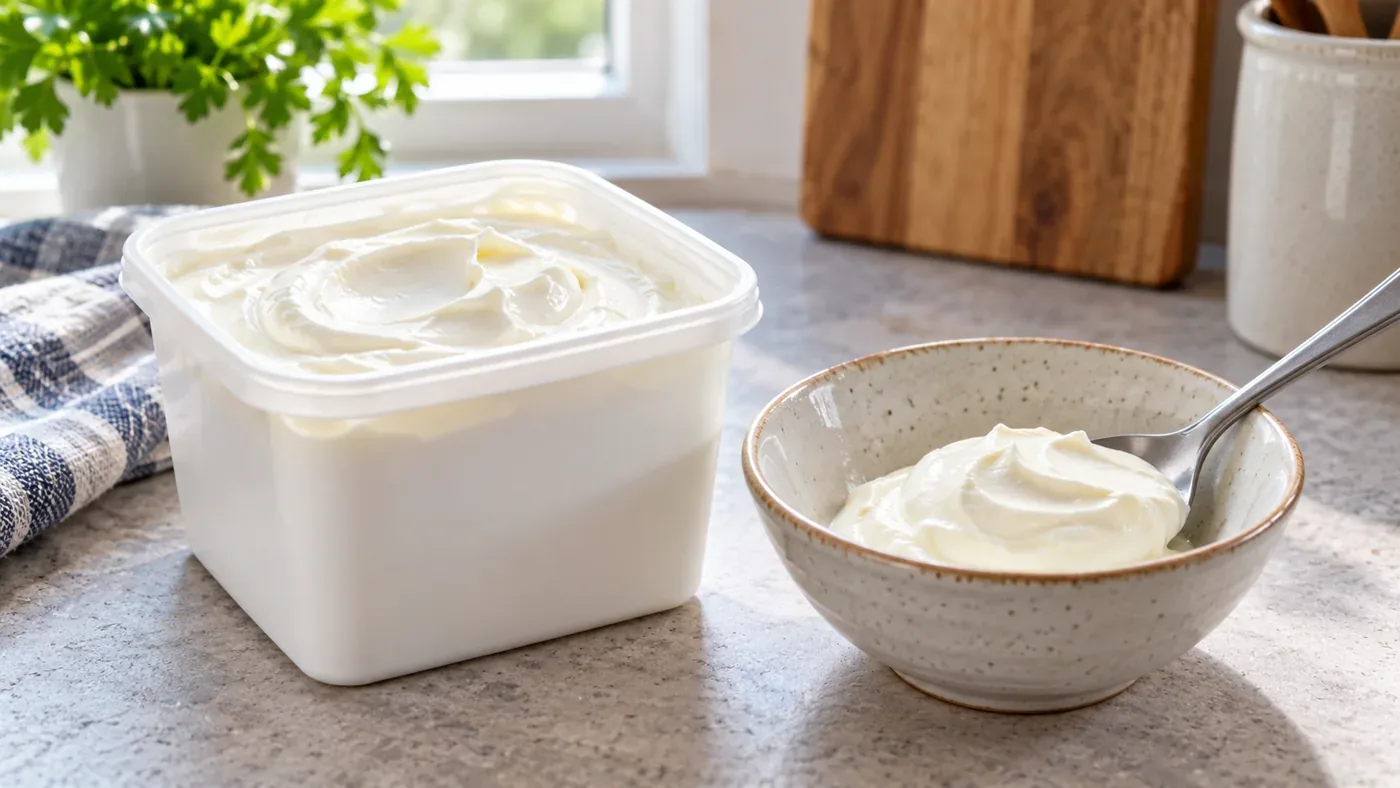
Should you freeze it?
The most reliable choice is to use sour cream while it is fresh rather than freeze it. The National Center for Home Food Preservation says sour cream should not be frozen because it separates and does not blend back together acceptably. Oregon State University Extension also lists thawed sour cream as separated and watery.
| Your situation | Best decision | Reason |
|---|---|---|
| You need a taco topping, dip, dressing, or garnish | Do not freeze it | Separation stays visible and the texture may be watery or grainy. |
| You have sound sour cream but cannot use it before the package guidance | Use it in a recipe now, share it, or freeze only if you accept the quality loss | Freezing is a last-choice waste reduction step, not a way to preserve the original texture. |
| The container froze accidentally | Check its time and temperature history, then thaw it in the refrigerator if it remained safely cold | Freezing changes quality. Safety still depends on how the food was handled. |
| It has mold, an off odor, unusual discoloration, or an unknown storage history | Discard it | Freezing does not make spoiled or mishandled food safe. |
If your real question is whether the open container is still within a reasonable refrigerator window, use the separate guide to sour cream refrigerator storage and follow the product label. A freezer cannot reset time already spent in the refrigerator or on the counter.
What should you do if it is already frozen?
Keep it frozen until you can move it to the refrigerator. USDA FSIS thawing guidance identifies the refrigerator, cold water, and microwave as safe thawing methods, with immediate cooking after cold-water or microwave thawing. For a tub of sour cream, refrigerator thawing is the simplest choice because it keeps the entire container cold and does not require immediate use.
- Put the sealed container on a plate or in a shallow bowl to catch leaks.
- Thaw it in the refrigerator, not on the counter. The time will depend on the amount and container shape.
- Open it after it has thawed and check for mold, an off odor, unusual color, or package damage.
- Stir it once. Expect liquid separation and a grainy or curdled look; stirring may distribute the liquid but will not restore the original body.
- Test one spoonful in the planned cooked dish before adding the rest.
Do not add cornstarch, heat, or vigorous blending with the promise of rebuilding fresh sour cream. Those steps may make a particular sauce look thicker, but they do not reverse the change described by the preservation sources. They can also alter the recipe.
If you still choose to freeze it
Freeze only sour cream that has been kept cold and is still in good condition. FDA storage guidance says to keep the refrigerator at 40°F or below, the freezer at 0°F, and perishable food out of room temperature for no more than two hours, or one hour when the air temperature is above 90°F. If the sour cream exceeded that limit, discard it instead of freezing it.
- Choose recipe-size portions. This avoids thawing more than you can use at once.
- Transfer each portion to a clean, freezer-safe container with a tight lid. Leave a little room for expansion.
- Label the container with the food and freezing date, then freeze it promptly at 0°F or below.
- Thaw in the refrigerator and judge it as a changed ingredient, not as fresh sour cream.
There is no useful best-quality freezer timeline to promise here. The primary sour-cream guidance recommends against freezing it in the first place. A date label helps you identify the portion, but it does not guarantee that the thawed texture will be acceptable.
Where might thawed sour cream still work?
A cooked dish is the most realistic place to try thawed sour cream because a perfectly smooth dollop is not the goal. Soup, a casserole filling, a batter, or a sauce may tolerate some separation. Results still depend on the recipe, and the official sources do not promise that every cooked use will work.
Start small. Stir a spoonful into a small amount of the dish and check the texture before using the whole portion. Avoid serving it cold as a dip, salad dressing, baked-potato topping, or taco garnish. For a cold use, fresh plain yogurt or another recipe-appropriate option may work better; compare the choices in the sour cream substitute guide.
A prepared dish that contains sour cream is a separate case. Its other ingredients and cooking method affect how it freezes. Follow tested instructions for that recipe rather than applying advice for a tub of plain sour cream to every casserole, soup, or baked good.
Can you refreeze thawed sour cream?
USDA says food thawed in the refrigerator can generally be refrozen without cooking, although another freeze and thaw may cause more quality loss. That corrects the common but inaccurate claim that every thawed food is automatically unsafe to refreeze. See the agency's refreezing guidance.
For sour cream, refreezing is rarely worthwhile. Its texture is already prone to separation, so another cycle is likely to make the quality problem worse. Do not refreeze sour cream left outside refrigeration for more than two hours. Portioning before the first freeze is the practical way to avoid this decision.
When should you discard it?
Discard sour cream with visible mold, an off odor, unexpected pink, green, or dark discoloration, a damaged or leaking package, or a storage history you cannot verify. Also discard it if it sat at room temperature beyond the FDA time limits. Do not taste it to decide whether it is safe.
Normal smell and appearance do not prove safety. USDA explains that freezing does not kill all microbes; once food thaws, surviving microbes can become active again. Freezing can pause growth while the food stays frozen, but it cannot repair earlier temperature abuse.
Sources and method
CookBuddyGuide reviewed current university Extension, National Center for Home Food Preservation, FDA, and USDA consumer guidance. The recommendations above distinguish official quality advice from practical options for a container that has already frozen. This article reports a source review and does not claim a CookBuddyGuide freezer test.
- National Center for Home Food Preservation: Freezing Sour Cream
- Oregon State University Extension: Foods that do not freeze well
- FDA: Are You Storing Food Safely?
- USDA FSIS: How do you thaw food safely?
- USDA FSIS: Is it safe to refreeze food that has thawed?
- USDA FSIS: Does freezing food kill bacteria?