Quick Answer
Pink color does not tell you whether ground beef is safe. Measure the center with a food thermometer and cook ground beef to 160°F (71°C); discard it if it was stored unsafely, even if the color looks normal.
Practical note
For Can You Eat Pink Ground Beef? A Practical Food Safety Guide for Home Cooks, this guide centers on Deoxymyoglobin (Purple), Oxymyoglobin (Cherry Red), Metmyoglobin (Brown). Those are the checkpoints we would use first in a normal home kitchen before making a bigger change.
Decision table
| Situation | Likely cause or meaning | Best move |
|---|---|---|
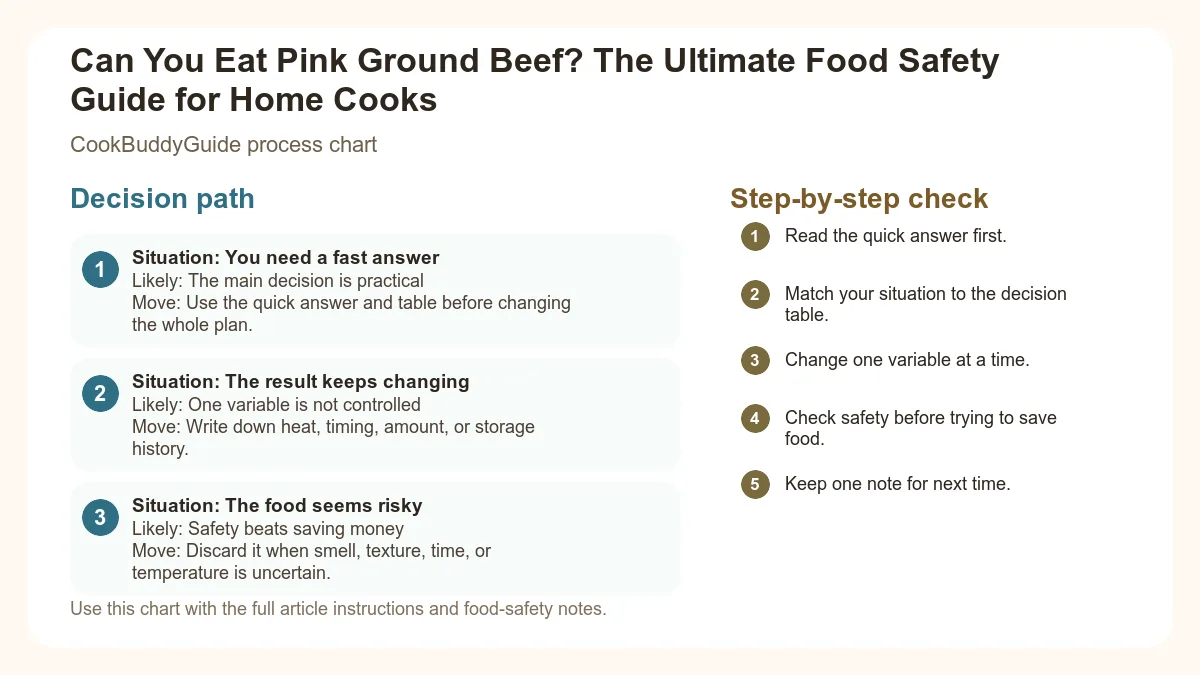
| You need a fast answer | The main decision is practical | Use the quick answer and table before changing the whole plan. |
| The result keeps changing | One variable is not controlled | Write down heat, timing, amount, or storage history. |
| The food seems risky | Safety beats saving money | Discard it when smell, texture, time, or temperature is uncertain. |
Step-by-step fix
- Read the quick answer first.
- Match your situation to the decision table.
- Change one variable at a time.
- Check safety before trying to save food.
- Keep one note for next time.
Common mistakes
- Skipping the quick answer and changing too much at once.
- Treating quality problems and safety problems the same way.
- Not writing down the detail that caused the repeat problem.
Related topic hubs
You’re standing over the grill, the mouth-watering scent of searing ground chuck filling the air. It’s 6:30 PM on a Tuesday, the family is hungry, and you’ve just flipped the burgers. You press down slightly, and a hint of pink juice bubbles to the surface. You pull one patty off, slice it down the middle, and see a rosy, pink center. Your instinct says "delicious," but your brain flashes a warning signal: can you eat pink ground beef, or are you courting a night of food poisoning symptoms?
This guide is designed to strip away the myths and provide you with the hard science of food safety. We will explore why is pink ground beef safe in some contexts but deadly in others, the role of myoglobin, the hidden truth behind grocery store packaging, and why a $15 tool is the only thing standing between you and a foodborne illness. If you are looking for ways to use your beef safely tonight, you might also want to check out our quick ground beef recipes for inspiration.
Table of Contents
- The Science of Meat Color: Myoglobin and Oxygen
- Why Ground Beef is Riskier Than Steak
- The 160°F Rule: The Only Way to Guarantee Safety
- When Pink Ground Beef IS Safe to Eat
- The Industry Secret: Carbon Monoxide Packaging
- The Danger of Premature Browning
- Practical Notes: Real-World Kitchen Tips
- Quick Reference Safety Table
- Safe Handling and Storage Best Practices
The Science of Meat Color: Why Beef Turns Pink, Red, or Brown
To understand if you can eat pink ground beef, we first have to understand what makes meat red in the first place. Many people mistakenly believe the red liquid in a package of beef is blood. In reality, almost all blood is removed during processing. That red liquid is actually a mixture of water and a protein called myoglobin.
The Role of Myoglobin and Oxygen
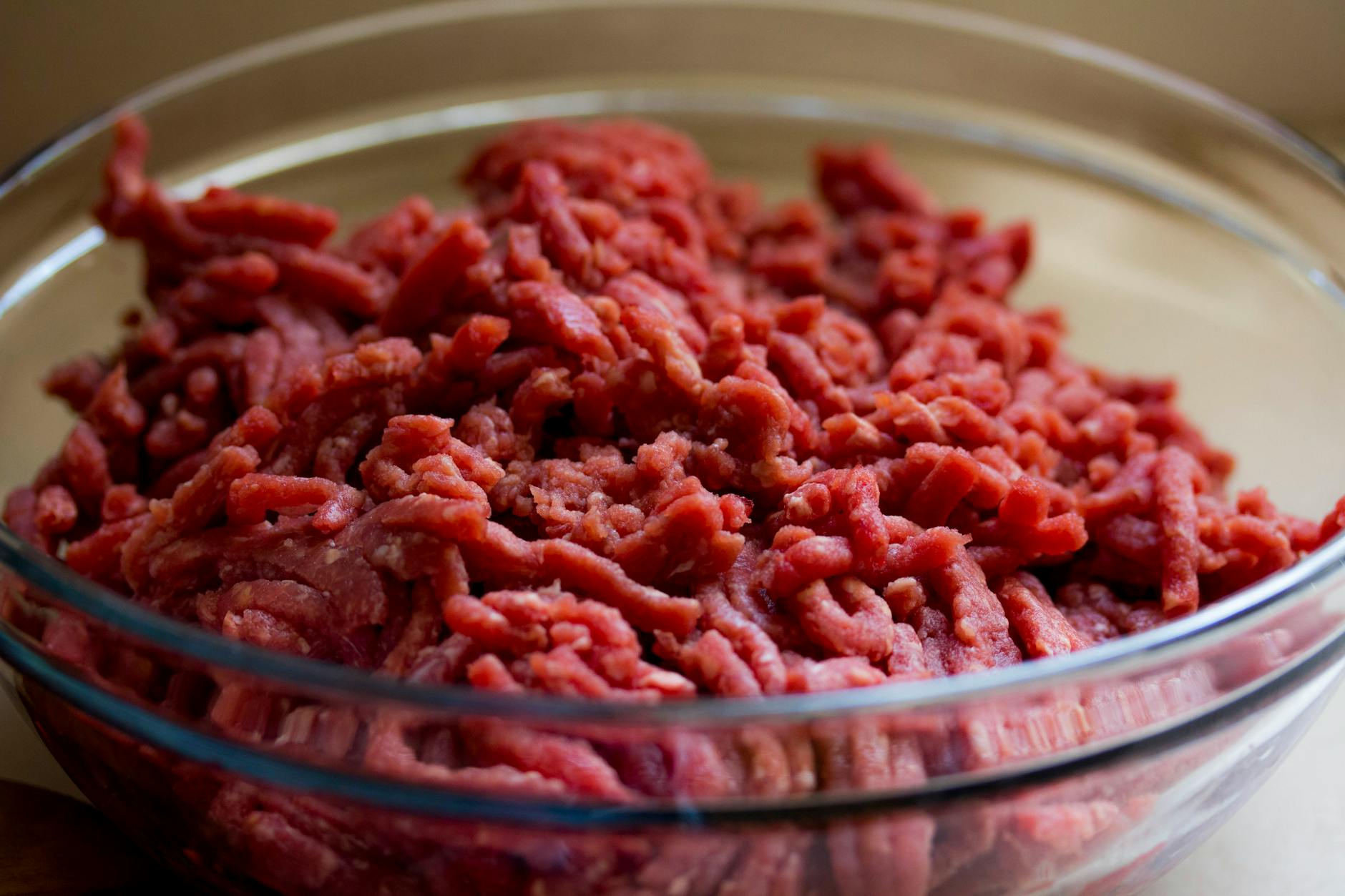
- Deoxymyoglobin (Purple): When beef is first cut and hasn't been exposed to oxygen, it is actually a deep purplish-red. You often see this in vacuum sealed packaging.
- Oxymyoglobin (Cherry Red): Once the meat is exposed to the air, the myoglobin reacts with oxygen to turn that classic "supermarket red" we all look for.
- Metmyoglobin (Brown): After a few days of oxygen exposure, the iron in the myoglobin oxidizes further, turning the meat a dull grayish-brown.
Why Vacuum-Sealed Beef Looks Different
If you’ve ever bought high-quality beef online or from a specialty butcher, you’ve likely noticed it looks darker, almost maroon. This is because the vacuum seal removes oxygen. Once you open that package and let it sit on the counter for 15 minutes, it will "bloom" into a brighter red. This is a natural chemical reaction and has nothing to do with spoilage. However, because we rely so heavily on color, many cooks throw away perfectly good meat because it looks "too dark" or "too brown" inside the package.
Why Ground Beef is Riskier Than Steak
One of the most common points of confusion for home cooks is why they can eat a steak medium-rare but are told a medium-rare burger is a health hazard. As a food writer, I cannot emphasize this enough: ground beef is an entirely different beast than a whole muscle cut.
The Surface Area Problem
Bacteria like Escherichia coli (E. coli) and Salmonella typically live on the surface of the meat. When you have a New York Strip steak, those pathogens are only on the outside. When that steak hits a hot cast-iron skillet, the intense heat kills those surface bacteria instantly, even if the inside remains cool and red. This is why a rare steak is generally safe for healthy adults.
How Grinding Distributes Pathogens
When you take that same piece of beef and put it through a grinder to make ground chuck, you are taking all that surface bacteria and mixing it throughout the entire mass. Every single nook and cranny of that burger patty now potentially contains pathogens. This is why ground beef is riskier and requires a different approach to heat. You aren't just searing the surface; you must ensure the center reaches a temperature high enough to kill bacteria that have been "folded" into the middle.
The E. Coli Factor
Specific strains of E. coli, such as O157:H7, are particularly dangerous. They can cause severe abdominal cramping, bloody diarrhea, and in extreme cases, kidney failure. Unlike some other bacteria, it doesn't take much E. coli to make you sick. This is why the "pink" question is so vital—it’s not just about preference; it’s about preventing a serious foodborne illness.
The 160°F Rule: The Only Way to Guarantee Safety
The Pro’s Guide to Using a Digital Meat Thermometer
- Calibrate: Once a month, stick your thermometer in a glass of ice water. It should read 32°F.
- The Insertion: For a burger, do not go in from the top. Insert the probe through the side of the patty so the sensor reaches the very center without touching the hot pan.
- The Target: The USDA and medical experts agree that the safe internal temperature for ground beef is 160°F (71°C).
- The Hold: Ensure the temperature holds at 160°F for at least a few seconds to effectively neutralize pathogens.
The Myth of "Clear Juices"
When Pink Ground Beef IS Safe to Eat
Now, here is where it gets interesting. Is pink ground beef safe if the thermometer says 160°F? Yes. This is known as the "persistent pink" phenomenon. It can be incredibly confusing to see a burger that looks medium-rare but is technically well-done.
The Impact of pH Levels and Nitrites
Certain factors can prevent the myoglobin from turning brown, even at high temperatures. If the beef has a high pH level (low acidity), the myoglobin is heat-stable and will stay pink even past 160°F. Additionally, if there are nitrites present—which can occur naturally in some water sources or as additives—the meat will stay pink, similar to how corned beef or ham stays pink after cooking.
Vegetables and Natural Nitrates in Meatloaf
Have you ever noticed that your meatloaf stays pink even after an hour in the oven? This often happens if you use a lot of onions, celery, or bell peppers. These vegetables contain natural nitrates that react with the meat to "cure" it slightly during the cooking process, maintaining a rosy hue. If your thermometer reads 160°F, that pink meatloaf is perfectly safe to eat. This is a great tip to keep in mind when preparing our budget friendly dinner recipes, as meatloaf is a staple for cost-conscious cooks.
The Industry Secret: Carbon Monoxide Packaging
Atmospheric Packaging Explained
The meat industry often uses Modified Atmosphere Packaging (MAP). They replace the oxygen in the package with a gas mixture that includes a tiny, safe amount of carbon monoxide. This carbon monoxide binds to the myoglobin even more strongly than oxygen does, creating a stable pigment called carboxymyoglobin. This keeps the meat looking "fresh" and red even if it is technically past its prime.
This is why carbon monoxide in meat packaging can be deceptive. The meat might stay pink even after it is cooked to 160°F because the carbon monoxide bond is very heat-resistant. Conversely, it can also hide the fact that the meat is old. Always check the "use by" date and rely on your nose rather than just the color.
How to Spot Truly Spoiled Meat
Since color is a liar, how do you know if your beef is bad? Look for these three meat spoilage signs:
- The Smell: Fresh ground beef has a mild, metallic scent. Spoiled beef will have a sour, ammonia-like, or "funky" odor. If you have to ask "does this smell okay?", it probably isn't.
- The Texture: Fresh beef is moist but not slimy. If the meat feels tacky, sticky, or has a film of slime on it, toss it.
- The Appearance: While some browning is normal, if the meat has turned a distinct greenish or yellowish hue, it is a sign of bacterial growth.
The Danger of Premature Browning
While we worry about pink meat being raw, the opposite problem is actually more dangerous: brown meat that is still raw. This is called "premature browning."
Practical Notes: Real-World Kitchen Tips
The 'Resting' Factor: Carryover Cooking
Testing Different Fat Ratios (80/20 vs. 90/10)
Common Mistakes Home Cooks Make
The biggest mistake? Crowding the pan. If you put four large patties in a small skillet, the temperature of the pan drops, and the meat starts to steam in its own juices rather than sear. This results in a "gray" burger that looks overcooked on the outside but might still be dangerously raw on the inside. Cook in batches!
Quick Reference Safety Table
Use this table as a quick guide during your next cookout. Remember, the "Safety Status" is always dependent on the temperature, not the color.
| Cooking Method | Visual Appearance | Internal Temp | Safety Status |
|---|---|---|---|
| Grill / Pan-Sear | Bright Pink Center | 135°F - 145°F | UNSAFE - High risk of E. coli |
| Grill / Pan-Sear | Slightly Pink / Rosy | 160°F | SAFE - Pathogens neutralized |
| Oven (Meatloaf) | Persistent Pink | 160°F+ | SAFE - Likely due to pH/vegetables |
| Any Method | Brown / Grey | 140°F | UNSAFE - Premature browning occurred |
| Any Method | Brown / Grey | 165°F | SAFE - Well-done |
Safe Handling and Storage Best Practices
Safety doesn't start at the stove; it starts the moment you put the meat in your grocery cart. To prevent cross-contamination prevention, follow these essential steps.
The Two-Hour Rule
Ground beef is highly perishable. Never leave it out on the counter for more than two hours (or one hour if the temperature is above 90°F). Bacteria thrive in the "Danger Zone" between 40°F and 140°F, doubling every 20 minutes.
Thawing Ground Beef Safely
- In the Fridge: Plan ahead! A pound of ground beef takes about 24 hours to thaw in the refrigerator.
- Cold Water: Place the meat in a leak-proof bag and submerge it in cold tap water, changing the water every 30 minutes.
- Microwave: Use the defrost setting, but you must cook the meat immediately afterward, as some areas may have started to cook during the defrosting process.
Cross-Contamination in the Kitchen
This is where most people slip up. If you use a plate to carry raw burgers to the grill, do not put the cooked burgers back on that same plate. Wash your hands for a full 20 seconds after touching raw meat, and sanitize any surfaces (cutting boards, counters) that the raw beef touched. Using a dedicated "meat" cutting board is a great way to stay organized and safe.
Frequently Asked Questions
A: While grinding at home is safer because you control the cleanliness of the equipment and the quality of the meat, the risk is never zero. If you choose to eat a medium-rare burger, ensure you are using very fresh, high-quality whole muscle cuts and sear the exterior of the steak before grinding to kill surface bacteria.
A: Usually, it’s the opposite! If it's brown on the inside and red on the outside, it's just a lack of oxygen. If it's brown on the outside, it might be older. Check for a slimy texture or off-odor. If it smells fine and isn't slimy, it's likely safe to cook to 160°F.
A: This is usually due to high fat content or overworking the meat. When fat melts and proteins contract, the burger shrinks. To minimize this, make a small indentation (a thumbprint) in the center of the patty before cooking.
The Final Verdict: Trust the Tool, Not the Eye
So, can you eat pink ground beef? The answer is a definitive yes—but only if you have verified the temperature with a digital thermometer. In the world of home cooking, color is a suggestion, but 160°F is a rule. By understanding the science of myoglobin, the deception of carbon monoxide packaging, and the importance of carryover cooking, you can serve burgers that are both juicy and safe.
Don't let the fear of undercooking turn your family dinners into dry, flavorless pucks. Invest in a good thermometer, practice safe handling, and enjoy your meals with confidence. For more kitchen wisdom and reliable recipes, keep exploring CookBuddyGuide.com. Happy (and safe) cooking!