 CookBuddyGuide
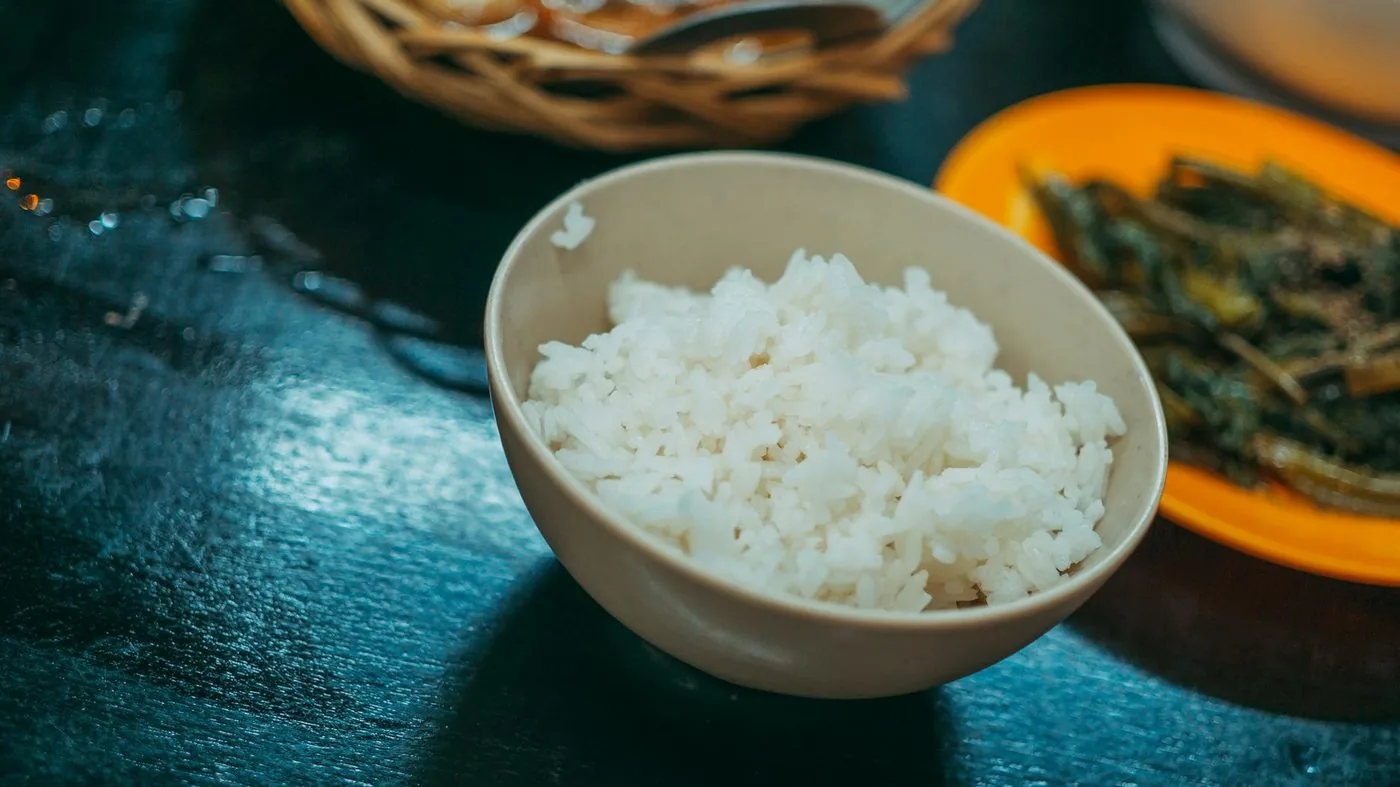
Is the rice wet, sticky, or collapsed?
Sticky rice is not automatically overcooked. Short-grain rice may cling together while individual grains remain tender and intact. Judge against the variety and dish you intended, not a universal picture of separate long grains.
| What you find | What it suggests | Next move |
|---|---|---|
| Tender grains sitting in loose water | More liquid than the finished rice needs | Drain gently and vent the rice. |
| Intact but damp grains, no puddle | Surface moisture or trapped condensation | Fluff once and spread briefly on a tray. |
| Gluey clumps that smear when stirred | Released starch and damaged grains | Stop stirring; drying has limited benefit. |
| Few recognizable grains, paste-like texture | Severe overcooking | Repurpose; separate grains cannot be restored. |
| Soft outside, chalky or hard center | Uneven hydration or inadequate cooking | Use a controlled steam rescue, not a large water addition. |
| Good after cooking, wet after standing covered | Condensation and retained steam | After the required rest, release steam and serve promptly. |
For hard centers, follow the undercooked-rice method. Adding heat without enough moisture can damage the outside further while the center stays firm.
Salvage the current batch
For freshly cooked rice, turn off the heat first. If tender grains are submerged in free water, pour them carefully into a fine-mesh strainer. Do not press, shake hard, or rinse automatically; fragile grains break easily.
- Let free liquid drain. Use a fork or rice paddle to lift the rice gently rather than beating it.
- Spread it in a thin layer on a clean rimmed tray so steam can escape. For a barely damp batch, check after about 5 minutes.
- If the grains remain intact but visibly wet, brief oven drying is optional. For rice that is still hot from cooking, try a 325 F oven, check after 5 minutes, and stop once the surface is no longer wet.
- Serve promptly, or transfer to shallow containers for rapid refrigeration. Do not leave the tray on the counter to dry for hours.
Oven drying removes surface moisture; it does not rebuild burst grains. The short interval above is an inspection point, not a promise of fluffy rice. It is also not a complete reheating instruction for refrigerated leftovers.
If the rice is already paste-like, make congee or a soup base, or use a rice pudding recipe if the seasoning suits it. Severely mushy rice is a poor fried-rice base: chilling firms it temporarily but does not restore its structure. Choose a leftover-rice use that welcomes softness.
Track water, handling, and cookware
Begin the next batch with the package instructions for that rice and cooking method. Keep the same pot and batch size while adjusting one variable. A ratio copied from another variety or from a rice cooker may not transfer to the stove.
The USA Rice culinary guide identifies pot shape, lid fit, batch size, and rinsing as factors that change cooking. A fitted lid retains moisture; a wide pot or loose lid loses more. Larger batches also do not necessarily need liquid scaled in exactly the same proportion.
Rinsing is not always required
Follow the bag's instructions. Rinsing may remove loose starch, but USA Rice notes that rinsing enriched U.S. white rice can wash away added nutrients. If you rinse or soak, drain consistently and account for retained water. Do not replace measuring with the finger-joint rule across different pots and batch sizes.
Finish the rest, then release steam
Use a gentle simmer for covered absorption cooking and avoid stirring softened grains. Complete the recipe's covered rest before fluffing. Then lift long-grain rice once to release steam; leaving a finished pot tightly closed on the table can make the surface damp again. These are different stages, not conflicting instructions about the lid.
In a rice cooker, match the supplied cup, correct water markings, and program to the manual. Zojirushi's grain instructions are model-specific; do not simply ignore the bowl markings for every long-grain rice. For an alternative to absorption cooking, compare stovetop rice methods, including the nutrient-loss tradeoff of excess-water cooking.
Drying does not reset safe storage
Rice can support Bacillus cereus growth after cooking. Torbay Council's food-safety guidance explains that reheating does not destroy the heat-resistant toxin formed during poor storage. The Food Standards Agency's rice guidance advises cooling quickly, ideally within 1 hour, refrigerating, using within 24 hours, and reheating only once. These are its conservative rice-specific recommendations. Read the cooked-rice storage guide for additional storage context; texture and normal smell are not safety checks.
Sources and method
- USA Rice: How to Cook Rice.
- USA Rice: Rice in the Culinary Classroom, Part III.
- Zojirushi: Know Your Rice, model-specific cooking guidance.
- Food Standards Agency: Home Food Fact Checker, Rice.
- Torbay Council: Handling Rice Safely.
This researched reference uses primary cooking, appliance, and food-safety guidance. It does not report firsthand testing. Oven-drying intervals are inspection suggestions, not validated guarantees of grain separation.