Quick Answer
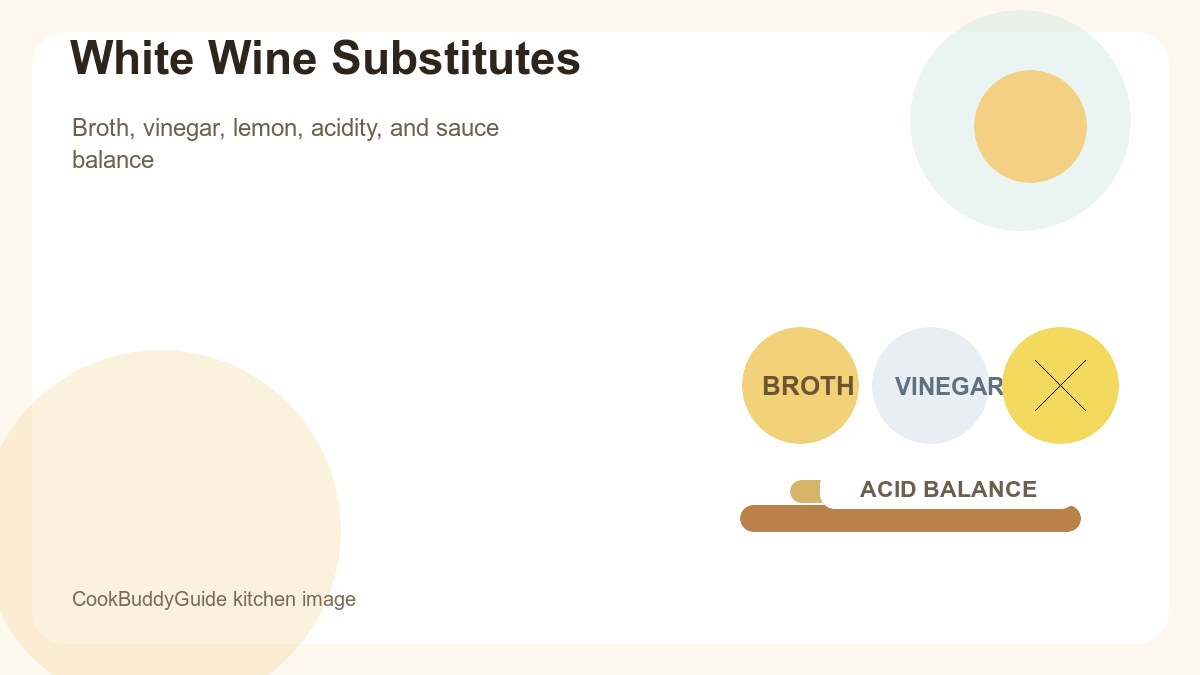
The right substitute for white wine in cooking depends on what that ingredient contributes: flavor, salt, acidity, fat, moisture, or structure. Use the comparison below to choose the closest match and adjust the amount for your recipe.
Practical note
For white wine in cooking recipes substitutes, we judge swaps by job first: flavor, salt, acid, fat, moisture, or structure. That keeps a substitution from fixing one problem while creating another.
Decision table
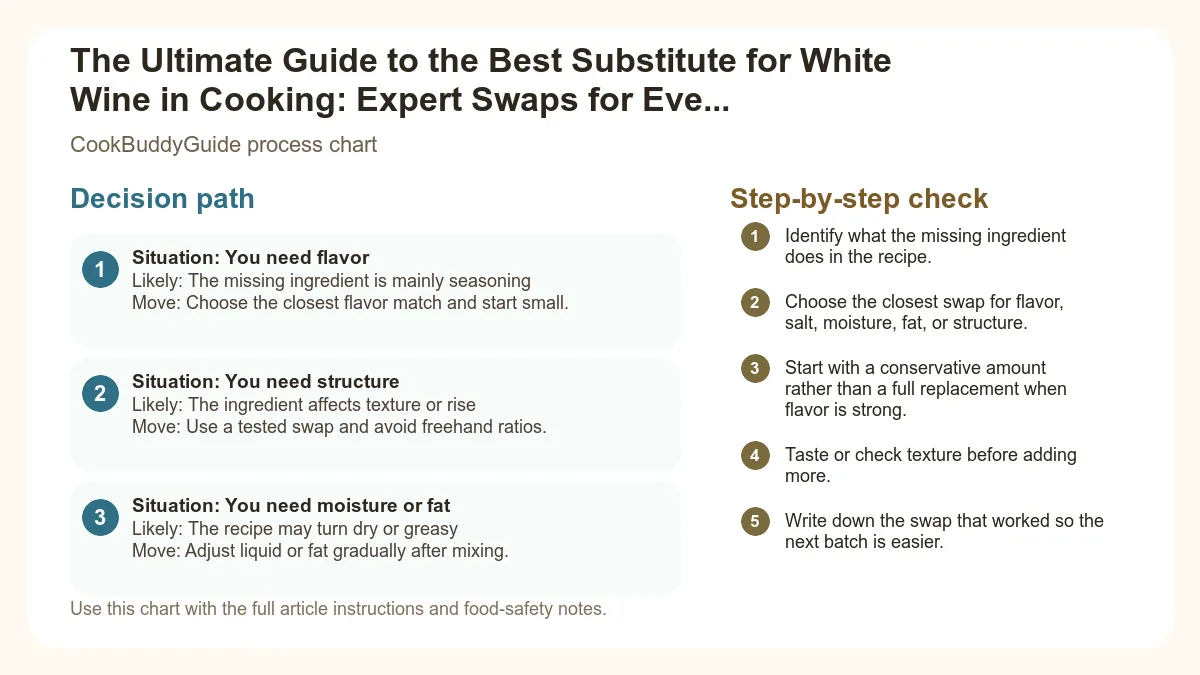
| Situation | Likely cause or meaning | Best move |
|---|---|---|
| You need flavor | The missing ingredient is mainly seasoning | Choose the closest flavor match and start small. |
| You need structure | The ingredient affects texture or rise | Use a practical swap and avoid freehand ratios. |
| You need moisture or fat | The recipe may turn dry or greasy | Adjust liquid or fat gradually after mixing. |
Step-by-step fix
- Identify what the missing ingredient does in the recipe.
- Choose the closest swap for flavor, salt, moisture, fat, or structure.
- Start with a conservative amount rather than a full replacement when flavor is strong.
- Taste or check texture before adding more.
- Write down the swap that worked so the next batch is easier.
Common mistakes
- Replacing a strong ingredient 1:1 before tasting.
- Choosing a flavor match when the recipe actually needs structure.
- Forgetting that salty swaps can change the whole dish.
- Adding extra liquid before the batter, dough, or sauce has time to hydrate.
Related topic hubs
It’s 6:30 PM on a Tuesday. You’ve got the shallots finely minced, the butter is foaming in the pan, and you’re ready to deglaze that beautiful golden fond from your skillet. You reach into the pantry for that bottle of dry white wine, only to realize you finished it with dinner two nights ago. Panic sets in. Does the recipe fail without it? Do you have to run to the store?
- Why We Reach for White Wine (and Why We Sometimes Can't)
- The Science of Flavor: What White Wine Actually Does to Food
- The 'Big Five' Universal Substitutes for White Wine
- Best White Wine Replacement Cooking by Dish Type
- Advanced Substitution Strategies: Balancing the Palate
- Common Mistakes When Replacing White Wine
- Conclusion: Mastering the Art of the Swap
Introduction: Why We Reach for White Wine (and Why We Sometimes Can't)
The Role of White Wine in the Culinary Arts
In the culinary world, white wine is often treated as a seasoning rather than just a liquid ingredient. It serves three primary functions: it provides acidity to brighten heavy flavors, it offers aroma through its complex fruit and mineral notes, and it acts as a powerful deglazing liquid. When you pour wine into a hot pan, the alcohol and water work together to dissolve the browned bits of protein (the fond) stuck to the bottom, incorporating that concentrated flavor back into your sauce.
According to the Culinary Institute of America, acidity and depth of flavor are the two most critical contributions wine makes to a recipe. Without that acidic "bite," a cream sauce can feel cloying, and a braise can taste flat and one-dimensional.
Common Reasons for Seeking a Substitute
- Dietary or Health Restrictions: Many people choose to avoid alcohol for health or personal reasons.
- Religious Beliefs: Halal or other religious dietary laws may prohibit the use of wine.
- The "Empty Pantry" Syndrome: You simply forgot to restock.
- Alcohol Sensitivity: While much of the alcohol burns off, a small percentage remains, which can be a concern for some. In fact, research on alcohol retention in cooked dishes shows that even after simmering for 30 minutes, about 35% of the alcohol can remain in the food.
The Science of Flavor: What White Wine Actually Does to Food
Acidity and Brightness
The magic of a dry white wine like Sauvignon Blanc lies in its pH level. Most white wines have a pH between 3.0 and 3.4. This high acidity acts as a foil to fats. If you are making a buttery quick chicken breast recipe, the wine cuts through the richness, preventing the palate from feeling "greasy." When we look for a culinary substitute, we must match this acidity level to achieve the same balance.
Sugar Content and Caramelization
Even the driest wines contain trace amounts of residual sugar. During a long reduction process, these sugars concentrate and caramelize. This adds a subtle sweetness that rounds out savory flavors. If you use a substitute that is completely sugar-free (like plain water), your dish will lack that underlying "soul" that wine provides. Conversely, if you use a substitute that is too sugary (like undiluted apple juice), you risk turning your savory dinner into a dessert.
The Deglazing Process and 'Fond'
Deglazing is the act of adding liquid to a hot pan to loosen the fond. Alcohol is a solvent, meaning it dissolves certain flavor compounds that water cannot. While you can deglaze with chicken stock or water, the chemical reaction isn't quite the same. This is why, when using a non-alcoholic substitute, consider adding a splash of something acidic to help mimic that "lifting" effect of the alcohol.
The 'Big Five' Universal Substitutes for White Wine
1. Chicken or Vegetable Broth: The Reliable Workhorse
If you are looking for the safest non-alcoholic swap, chicken stock or vegetable broth is your best friend. It provides the necessary liquid volume and a savory base. However, broth lacks the acidity of wine.
- The Ratio: 1:1 swap for the wine.
- The Pro Tip: For every cup of broth used, add 1 tablespoon of white wine vinegar or lemon juice to mimic the wine's acidity.
2. Apple Cider Vinegar: The Acidity Champion
Apple cider vinegar (ACV) is a fantastic substitute for white wine in cooking because it shares the fruity fermented notes of wine. However, it is much more acidic than wine and can easily overpower a dish.
- The Ratio: Dilute ACV with water or broth. Use 1 part vinegar to 1 part liquid.
- Best For: Pork dishes, heavy stews, and deglazing pans for dark meats.
3. White Grape Juice: The Body and Sweetness Match
For recipes that call for a slightly sweeter white wine (like a Riesling or Pinot Grigio), white grape juice is an excellent choice. It provides the exact flavor profile of the grapes used in winemaking.
- The Ratio: 1:1 swap, but you must add an acid.
- The Pro Tip: Mix 1 cup of white grape juice with 1 tablespoon of lemon juice to prevent the dish from becoming too sweet. This is one of the most popular non-alcoholic wine substitutes for French-style sauces.
4. Dry Vermouth: The Professional Chef's Secret
If you aren't avoiding alcohol but simply don't have a bottle of wine open, dry vermouth is the ultimate white wine replacement cooking hack. Vermouth is a fortified wine, meaning it has a higher alcohol content and a longer shelf life. Keep a bottle in my pantry specifically for cooking.
- The Ratio: 1:1 swap.
- Why it works: It is herbal, dry, and stays fresh for months in the cupboard, unlike a standard bottle of Sauvignon Blanc which oxidizes in days.
5. Lemon Juice and Broth: The Dynamic Duo
When you need to brighten a flavorful one-pot pasta recipe, nothing beats the combination of fresh lemon juice and stock. This duo provides the acidity balance that wine usually offers.
- The Ratio: 1/2 cup chicken stock + 1 tablespoon lemon juice for every 1/2 cup of wine.
The "Perfect Balance" Wine Substitute Blend
Use this blend when you want to mimic the exact complexity of a dry white wine without any alcohol.
- 1 cup Low-sodium chicken or vegetable broth
- 1 tablespoon White wine vinegar (for fermented depth)
- 1 teaspoon Fresh lemon juice (for top-note brightness)
- 1/2 teaspoon Sugar (to mimic residual grape sugars)
Instructions: Whisk all ingredients together in a small bowl. Use this mixture as a 1:1 replacement for white wine in any savory recipe, especially pan sauces and braises.
Best White Wine Replacement Cooking by Dish Type
The Best Substitute for White Wine in Risotto
Risotto is perhaps the trickiest dish to swap wine in. The wine is added early, after the rice is toasted, to provide a "bite" that cuts through the starch and butter. If you use just broth, the risotto can taste "muddy."
Deglazing Pan Sauces for Chicken and Pork
When making a pan sauce, you need a liquid that can withstand high heat and reduce quickly. According to the experts at Splendid Table, mimicking the depth of wine in a reduction requires a balance of fermented acid and savory liquid.
Seafood and Shellfish: Keeping it Light and Briny
Seafood is delicate. A heavy apple juice substitute will ruin a clam linguine. You need something that mimics the mineral qualities of a crisp Pinot Grigio.
Braises and Slow-Cooked Roasts
In a braise, the wine provides volume and helps break down connective tissues in the meat. Since the liquid will be cooking for hours, the nuances of the wine are often lost, making this the easiest category for substitution.
Advanced Substitution Strategies: Balancing the Palate
The 'Acid + Sugar' Rule
If you find your culinary substitute isn't quite hitting the mark, remember the golden rule of flavor balance. White wine is a balance of acid and sugar. If your sauce tastes flat or "heavy," add 1/2 teaspoon of white wine vinegar. If it tastes too sharp or sour, add 1/2 teaspoon of granulated sugar or honey. This micro-adjustment is what separates home cooks from experienced cooks.
Using Aromatics to Compensate for Lost Depth
Wine has "legs" and "nose"—the aromatic qualities that fill the kitchen. When you skip the wine, you lose those floral and herbal notes. To compensate, consider "beefing up" your aromatics. Add an extra clove of smashed garlic, a sprig of fresh thyme, or a bay leaf to the pan when you add your substitute liquid. This fills the flavor gap left by the missing cooking alcohol.
When to Use Water (and When Not To)
Common Mistakes When Replacing White Wine
This is my biggest pet peeve. Grocery store "cooking wine" is loaded with salt and preservatives. It is essentially low-quality wine with enough sodium to make it shelf-stable. If you use it, your dish will likely end up over-salted and have a chemical aftertaste. Avoid it at all costs! Use a chicken stock and vinegar blend instead.
If you are using apple juice or white grape juice as a white wine replacement cooking option, make sure it is 100% juice with no added sugars. Even then, be cautious. If the recipe calls for a large amount of wine (like a cup or more), using pure juice will make the dish cloyingly sweet. Always cut juice with broth or water.
While it is an acid, red wine vinegar has tannins and a deep color that will turn your beautiful white cream sauce a muddy pink. Stick to white wine vinegar, apple cider vinegar, or rice vinegar for white wine substitutions.
Conclusion: Mastering the Art of the Swap
The safest and most effective all-around substitute is a combination of chicken or vegetable broth and lemon juice. It provides the savory base, the necessary liquid for deglazing, and the bright acidity balance that makes flavors pop.
As a final "CookBuddy" tip: Consider keeping a small bottle of dry vermouth in your pantry or a jar of high-quality bouillon in the fridge. These staples ensure that even when the wine rack is empty, your dinner will still be spectacular. Cooking is an art, but it's also a science—and now you have the formula to master every swap. Happy cooking!