Quick Answer
Master the art of stir fry without soy sauce. Our soy free stir fry recipe guide covers coconut aminos, fish sauce, and pantry swaps for maximum umami flavor.
Practical note
For Stir Fry Without Soy Sauce, this guide centers on Salt, Acid, Sweet. Those are the checkpoints we would use first in a normal home kitchen before making a bigger change.
Decision table
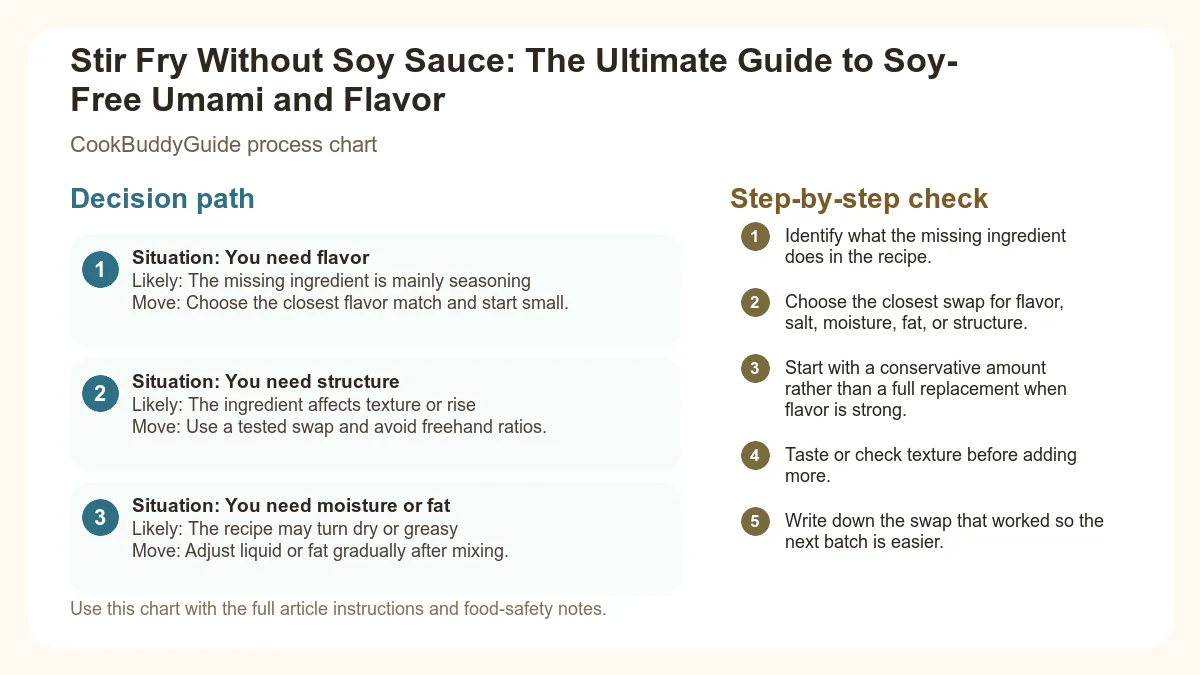
| Situation | Likely cause or meaning | Best move |
|---|---|---|
| You need flavor | The missing ingredient is mainly seasoning | Choose the closest flavor match and start small. |
| You need structure | The ingredient affects texture or rise | Use a practical swap and avoid freehand ratios. |
| You need moisture or fat | The recipe may turn dry or greasy | Adjust liquid or fat gradually after mixing. |
Step-by-step fix
- Identify what the missing ingredient does in the recipe.
- Choose the closest swap for flavor, salt, moisture, fat, or structure.
- Start with a conservative amount rather than a full replacement when flavor is strong.
- Taste or check texture before adding more.
- Write down the swap that worked so the next batch is easier.
Common mistakes
- Replacing a strong ingredient 1:1 before tasting.
- Choosing a flavor match when the recipe actually needs structure.
- Forgetting that salty swaps can change the whole dish.
- Adding extra liquid before the batter, dough, or sauce has time to hydrate.
Related topic hubs
You’re standing at the stove, your wok is beginning to shimmer with heat, and the vegetables are prepped and ready. Then it hits you: the guest arriving in thirty minutes has a severe soy allergy, or perhaps you’ve recently committed to a Paleo lifestyle. You reach for the dark, salty bottle that usually defines your Asian cooking, but today, it’s off-limits. Most home cooks panic at this moment, fearing that a stir fry without soy sauce will be nothing more than a bland pile of sautéed vegetables.
Why You Might Need a Stir Fry Without Soy Sauce
Managing Soy Allergies and Sensitivities
Reducing Sodium Intake Without Sacrificing Flavor
The Paleo and Whole30 Connection
The Science of Umami: Replicating the Soy Sauce Profile
What Makes Soy Sauce Special?
The Role of Glutamates in Savory Cooking
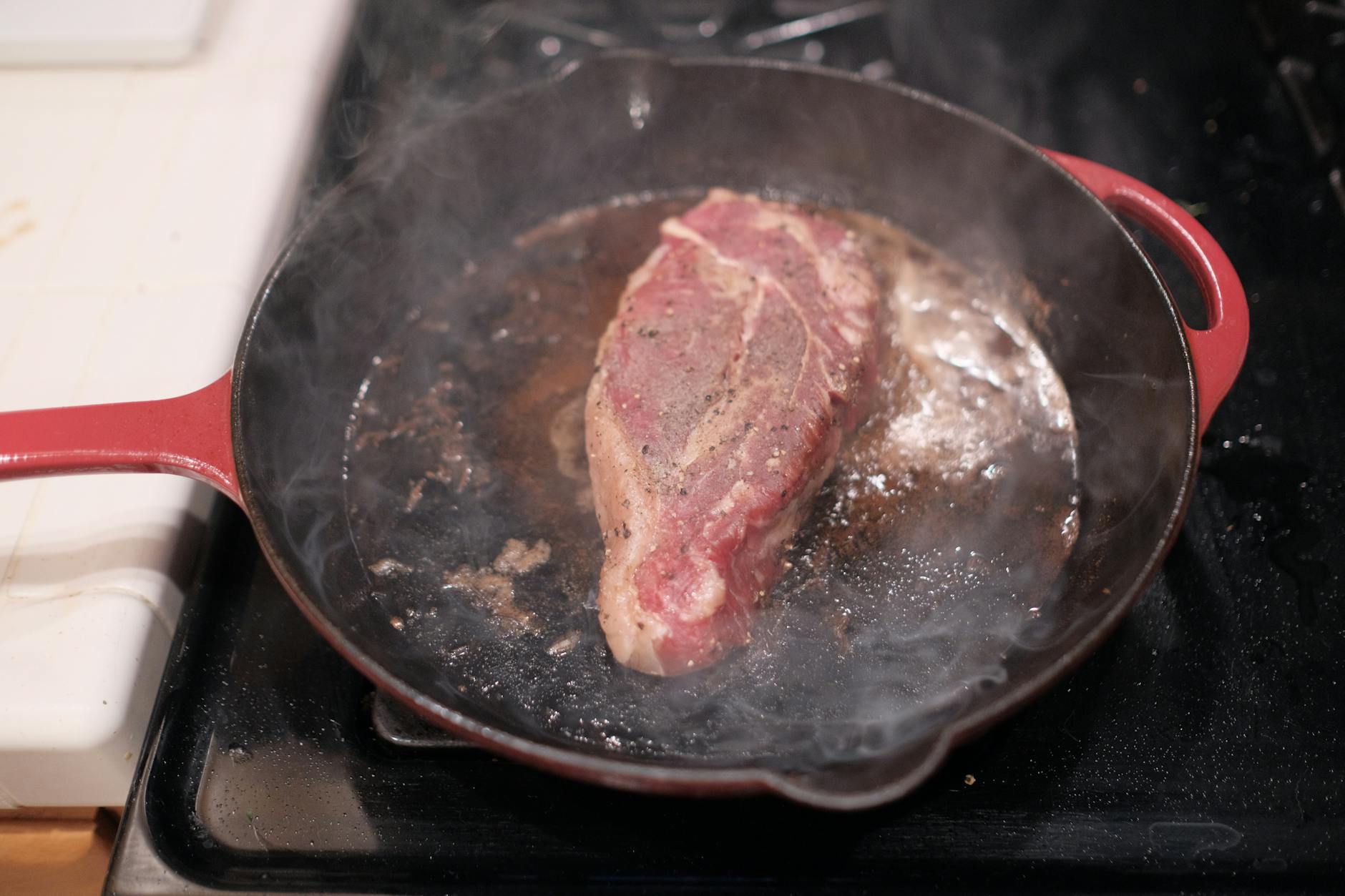
When we cook a soy free stir fry recipe, we need to find other sources of glutamates. Ingredients like mushrooms, aged meats, and certain fermented fish products are packed with these compounds. When these ingredients hit a hot pan, they undergo the Maillard reaction, a chemical reaction between amino acids and reducing sugars that gives browned food its distinctive flavor. This is why Consider searing your proteins at a very high temperature before adding your liquid substitutes.
Balancing Salt, Acid, and Sweetness
Soy sauce is naturally salty, slightly acidic, and has a hint of sweetness from the wheat (in traditional shoyu). When building a soy-free sauce, Use a "triangle" approach:
- Salt: Sea salt or fish sauce.
- Acid: Rice vinegar or lime juice.
- Sweet: Honey, molasses, or the natural sugars found in coconut aminos.
Top 5 Substitutes for Soy Sauce in Stir Fry
1. Coconut Aminos: The 1:1 Soy-Free King
2. Fish Sauce: The Umami Powerhouse
Don't let the smell of the bottle scare you. Once it hits the heat, the "fishiness" evaporates, leaving behind an incredible depth of flavor from fish sauce. It is extremely salty, so use a 1:3 ratio (1 teaspoon of fish sauce for every 3 teaspoons of soy sauce called for). It provides that fermented "funk" that coconut aminos sometimes lack.
3. Worcestershire Sauce: The Surprising Pantry Alternative
Many people don't realize that Worcestershire sauce is essentially a fermented anchovy sauce with vinegar and tamarind. It works surprisingly well as an oyster sauce substitute or soy sauce replacement in beef-based stir fries. Note: Always check the label for soy or gluten if you have a strict allergy.
4. Beef or Mushroom Broth Reductions
For a completely nightshade-free and legume-free option, Often, simmer 1 cup of beef bone broth with a tablespoon of balsamic vinegar and a teaspoon of molasses until it reduces by half. This creates a dark, syrupy liquid that mimics the color and body of dark soy sauce beautifully.
5. Tamari: The Gluten-Free (But Not Soy-Free) Option
It is vital to distinguish between soy-free and gluten-free. Many people use tamari for gluten-free cooking because it is traditionally brewed without wheat. However, Tamari is made from soybeans. If you are cooking for someone with a soy allergy, Tamari is not a safe substitute. It is only for those avoiding gluten.
The Taste Test: Comparing Soy-Free Alternatives
| Substitute | Flavor Profile | Best For... | Color Depth |
|---|---|---|---|
| Coconut Aminos | Sweet, mild, light salt | Chicken and Veggies | Medium Brown |
| Fish Sauce + Honey | Salty, funky, complex | Shrimp and Pork | Light Amber |
| Beef Broth/Molasses | Rich, savory, earthy | Beef and Broccoli | Deep Dark Brown |
| Liquid Aminos | Closest to soy flavor | General Purpose | Dark Brown |
My Winner: For a general stir fry without soy sauce, a combination of 80% coconut aminos and 20% fish sauce provided the most balanced, "restaurant-style" flavor. The coconut aminos provide the body and sweetness, while the fish sauce provides the necessary salt and umami punch.
Essential Aromatics: Boosting Flavor Without Soy
The Holy Trinity: Garlic, Ginger, and Scallions
Ginger and garlic are non-negotiable. Consider grating them into a paste rather than mincing them. This allows them to melt into the sauce and distribute flavor evenly. Always add your aromatics to the oil for exactly 30 seconds before adding your other ingredients; this "blooms" the flavors in the fat.
Using Toasted Sesame Oil for Depth
Sesame oil is your secret weapon. While it isn't a replacement for the salt in soy sauce, its nutty, toasted aroma provides a sensory experience that tricks the brain into thinking the dish is more "Asian-inspired" than it might actually be. Just be careful: toasted sesame oil has a low smoke point, so add it at the very end of cooking as a finishing oil.
The Power of Fresh Chilies and Citrus
If your dish feels like it's "missing something," it’s usually acid. A squeeze of fresh lime or a splash of rice vinegar can brighten the entire palate. For heat, Choose fresh Thai bird's eye chilies or a soy-free chili paste (check labels carefully for soybean oil!).
The Master Soy-Free Stir Fry Recipe
Ingredients
- 1 lb chicken breast, thinly sliced against the grain
- 1 tbsp cornstarch (for velveting)
- 2 tbsp avocado oil (high smoke point)
- 1 head of broccoli, cut into small florets
- 1 red bell pepper, sliced
- 3 cloves garlic, grated
- 1 tbsp fresh ginger, grated
- The Sauce:
- 1/3 cup coconut aminos
- 1 tsp fish sauce (omit for vegan, use 1/4 tsp extra salt)
- 1 tsp rice vinegar
- 1/2 tsp toasted sesame oil
- 1 tsp honey or maple syrup
- 1 tsp cornstarch (to thicken)
Instructions
- Velvet the Chicken: In a small bowl, toss the sliced chicken with 1 tbsp cornstarch and a pinch of salt. Let it sit for 10 minutes. This creates a protective barrier that keeps the meat juicy.
- Prepare the Sauce: Whisk all sauce ingredients in a small jar. Ensure the cornstarch is fully dissolved.
- Sear the Protein: Heat your wok or large skillet over high heat until a drop of water dances and evaporates instantly. Add 1 tbsp oil, then the chicken. Spread it out and let it sear undisturbed for 2 minutes to get that Maillard reaction browning. Flip and cook for 1 more minute, then remove from the pan.
- Stir Fry Veggies: Add the remaining oil to the pan. Toss in the broccoli and peppers. Stir fry for 3-4 minutes until crisp-tender.
- Bloom Aromatics: Push the veggies to the side. Add the ginger and garlic to the center. Cook for 30 seconds until fragrant.
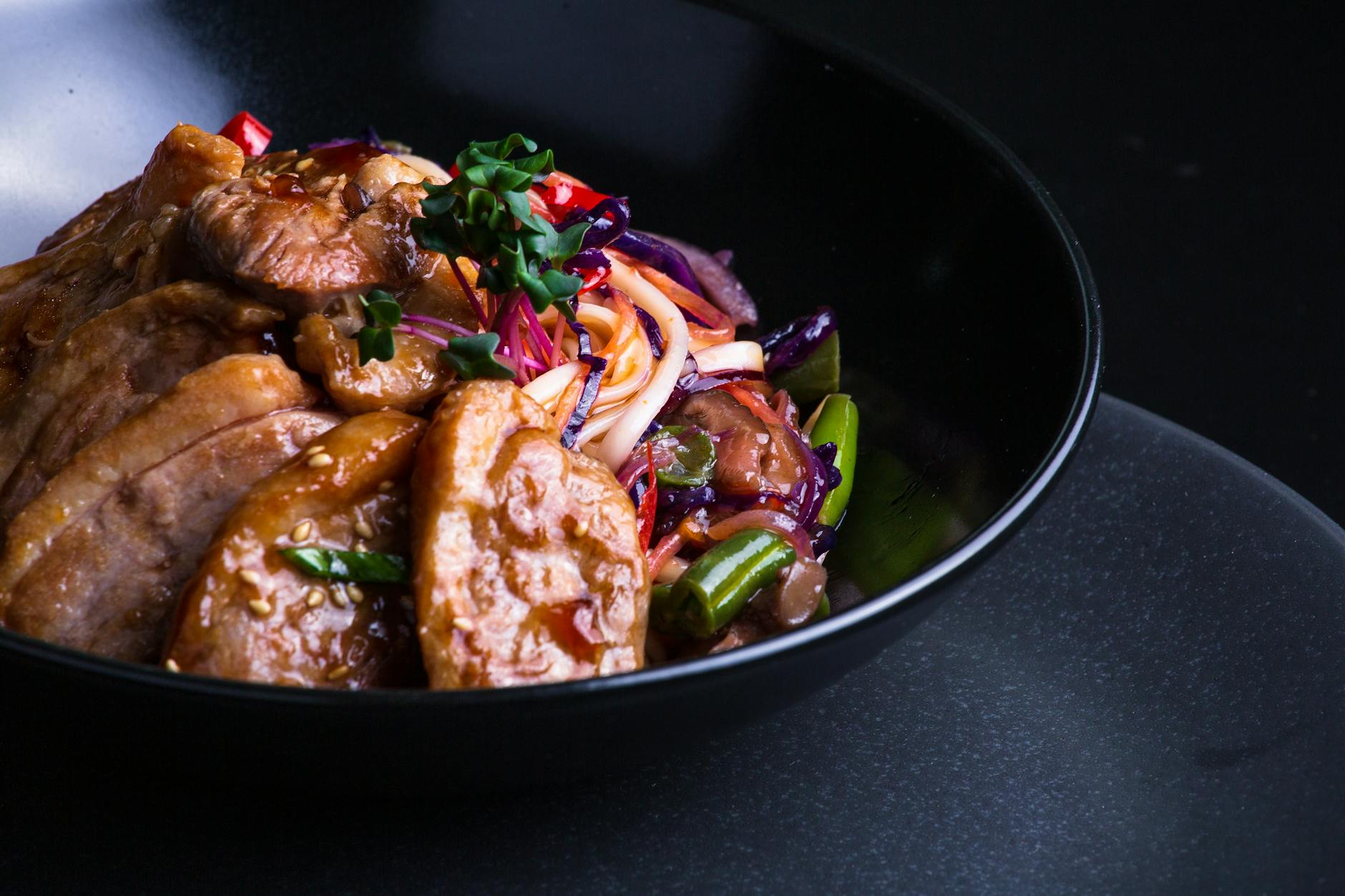
- The Finish: Return the chicken to the pan. Give the sauce a final whisk and pour it over everything. Toss constantly for 1-2 minutes until the sauce bubbles and turns into a glossy, thick glaze.
- Serve: Garnish with sliced scallions and serve over cauliflower rice or white rice.
If you're looking for more inspiration for fast dinners, take a look at our 15-minute chicken breast recipes for more soy-free ideas.
Common Mistakes When Making Soy-Free Stir Fry
Overcrowding the Pan
This is the cardinal sin of stir frying. When you put too many vegetables in the pan at once, the temperature drops, and the vegetables begin to steam in their own juices rather than sear. This results in a soggy mess. Consider cooking in batches—meat first, then vegetables—and combining them only at the very end when adding the sauce. Following essential stir fry techniques like these ensures you get the right texture every time.
Using the Wrong Oil Smoke Point
Because we are using high heat cooking, you cannot use extra virgin olive oil or butter. They will smoke and turn bitter before the pan is hot enough. Use avocado oil, grapeseed oil, or refined coconut oil. These can handle temperatures up to 450°F, which is necessary for that authentic wok flavor.
Forgetting the Acid Balance
Meal Prep and Storage Tips
How to Store Soy-Free Stir Fry Sauce
Reheating Without Losing Texture
Stir fry is notorious for getting soggy in the microwave. If you are reheating leftovers, consider using a skillet over medium-high heat. Add a teaspoon of water to loosen the cornstarch slurry glaze, and toss for 2-3 minutes until heated through. This preserves the "snap" of the vegetables much better than a microwave ever could.
Frequently Asked Questions
A: On its own, no—it’s too acidic. However, if you mix 1 tablespoon of balsamic with 1/2 teaspoon of molasses and a pinch of salt, it creates a very convincing "dark soy sauce" substitute for beef dishes.
A: No. Many brands (including some versions of Lea & Perrins in certain regions) may contain soy or gluten. Always read the label if you have a clinical allergy.
A: You likely didn't let the sauce reach a full boil. Cornstarch only activates its thickening power once it reaches approximately 203°F (95°C). Ensure the sauce bubbles for at least 30 seconds.
Conclusion: Mastering the Soy-Free Wok
Making a stir fry without soy sauce doesn't mean you have to settle for less flavor. By understanding the science of umami and utilizing powerhouses like coconut aminos and fish sauce, you can create meals that are actually more complex and vibrant than their traditional counterparts.
The key is in the preparation: grate your ginger and garlic fresh, use a high-smoke-point oil, and don't be afraid of the heat. Whether you're cooking for a health goal or an allergy, your wok is still your best friend in the kitchen. Now, get that pan screaming hot and start cooking!