Quick Answer
Master this easy Sriracha mayo recipe in 2 minutes. Our 3-ingredient spicy mayo sauce recipe is perfect for sushi, burgers, and fries. Better than store-bought!
Practical note
For A Practical 3-Ingredient Sriracha Mayo Recipe, this guide centers on Kewpie Mayo, Hellmann’s/Best Foods, Homemade. Those are the checkpoints we would use first in a normal home kitchen before making a bigger change.
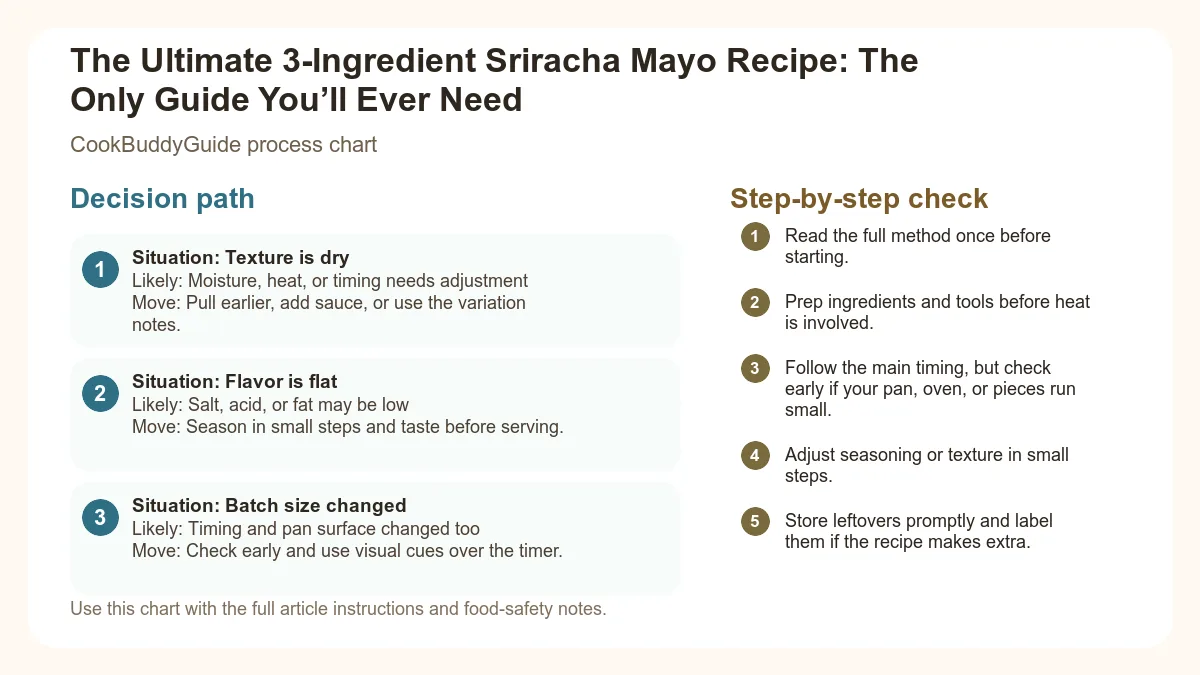
Decision table
| Situation | Likely cause or meaning | Best move |
|---|---|---|
| Texture is dry | Moisture, heat, or timing needs adjustment | Pull earlier, add sauce, or use the variation notes. |
| Flavor is flat | Salt, acid, or fat may be low | Season in small steps and taste before serving. |
| Batch size changed | Timing and pan surface changed too | Check early and use visual cues over the timer. |
Step-by-step fix
- Read the full method once before starting.
- Prep ingredients and tools before heat is involved.
- Follow the main timing, but check early if your pan, oven, or pieces run small.
- Adjust seasoning or texture in small steps.
- Store leftovers promptly and label them if the recipe makes extra.
Common mistakes
- Changing the recipe before trying the base method once.
- Measuring casually when texture depends on ratios.
- Waiting until the end to fix seasoning.
- Ignoring carryover heat or resting time.
Related topic hubs
It’s 6:15 PM on a Tuesday. You’ve just pulled a tray of crispy air fryer chicken out of the oven, but something is missing. The plate looks beige, and your palate is craving that specific hit of creamy, spicy, and tangy flavor that defines modern fusion cuisine. You reach for a bottle of store-bought "spicy aioli," only to realize it’s expired, or worse, it tastes like nothing but sugar and preservatives.
- Why This Recipe Beats Store-Bought
- The Science of the Perfect Emulsion
- The 3-Ingredient Core: Choosing Your Components
- Step-by-Step Instructions
- The Heat Scale: Customizing Your Ratios
- Elevating the Flavor: Pro Add-Ins
- A Practical Pairing Guide
- Dietary Adaptations and Substitutions
- Storage and Food Safety
- Common Mistakes and Troubleshooting
Why This Sriracha Mayo Recipe Beats Store-Bought Versions
The Cost-Effectiveness of Homemade Spicy Mayo
Control Over Ingredients and Preservatives
Commercial condiments are designed for shelf stability, not peak flavor. This often means they are loaded with potassium sorbate, calcium disodium EDTA, and excessive amounts of high-fructose corn syrup. When you whisk up your own spicy mayo sauce recipe, you control the quality. You can choose a non-GMO oil base, avoid unnecessary sugars, and ensure that the "zing" comes from real fruit rather than lab-created citric acid.
The Freshness Factor: Why Citrus Matters
The Science of the Perfect Spicy Mayo Sauce Recipe
Understanding the Emulsion: Why Mayo is the Perfect Base
At its heart, mayonnaise is an emulsion—a stable mixture of two liquids that normally wouldn't mix (oil and water/lemon juice). The egg yolk acts as the emulsifier. When we add sriracha to this base, we are essentially "flavor-loading" an existing emulsion. To understand how these molecules interact, it’s helpful to look at the science of mayonnaise emulsions. Because the oil droplets are so finely dispersed, they provide a creamy texture that coats the tongue, creating a physical barrier between your taste buds and the heat.
The Role of Capsaicin in Sriracha
Sriracha gets its kick from red jalapeño peppers, which contain capsaicin. This compound binds to the heat-sensing receptors on your tongue. Interestingly, capsaicin is fat-soluble. This is why drinking water doesn't help when you eat something spicy, but drinking milk does. In our sriracha mayo recipe, the high fat content of the mayonnaise works to modulate the capsaicin. It doesn't just "dilute" the heat; it rounds it out, allowing you to taste the garlic and fermented notes of the chili paste without being overwhelmed by fire. For those interested in the metabolic side, you can read more about the health benefits of capsaicin.
How Acid Balances Fat
The 3-Ingredient Core: Choosing Your Components
The Mayo: Kewpie vs. Hellmann’s vs. Homemade
The foundation of your sriracha mayo recipe dictates the final result.
- Kewpie Mayo: This is the gold standard for Japanese Cuisine. It uses only egg yolks (no whites) and apple or rice vinegar, resulting in a deeper yellow color and a distinct umami punch, often aided by a touch of MSG.
- Hellmann’s/Best Foods: This is the classic Western choice. It is neutral, thick, and reliable. It provides a clean canvas for the sriracha to shine.
- Homemade: If you have the time, making a creamy mayonnaise base from scratch using high-quality avocado oil is the ultimate flex. It results in a silkier spicy aioli texture that is unmatched.
The Sriracha: Huy Fong and Beyond
While the green-capped Huy Fong bottle is the most iconic, the market has expanded. Huy Fong offers a balanced heat with a strong garlic backbone. However, brands like Underwood Ranches (the original pepper growers for Huy Fong) or Sky Valley offer different profiles—some smokier, some sweeter. When choosing your chili paste, look for a vibrant red color; brownish hues indicate the peppers have oxidized and the flavor will be muted.
The Acid: Fresh Lime Juice vs. Lemon Juice
The Master Sriracha Mayo Recipe
Yields: Approx. 1/2 cup
Ingredients:
- 1/2 cup high-quality Mayonnaise (Kewpie preferred for sushi-style)
- 2 tablespoons Sriracha (adjust to your heat preference)
- 1 teaspoon fresh lime juice (or lemon juice)
Instructions:
- Measure: Add the mayonnaise to a small glass mixing bowl.
- Combine: Add the sriracha and the citrus juice.
- Whisk: Using a small balloon whisk or a fork, stir the mixture in a circular motion, starting from the center and moving outward. This ensures the emulsification stays stable and the creamy texture is uniform.
- Taste: Dip a clean spoon in. Does it need more heat? Add a teaspoon of sriracha. Too spicy? Add a tablespoon of mayo.
- Chill: Transfer to an airtight container or a squeeze bottle and refrigerate for at least 30 minutes before serving.
Step-by-Step Instructions: How to Make Sriracha Mayo
Preparation and Tools Needed
The Mixing Process: Achieving a Silky Texture
While it seems straightforward, the way you mix matters. If you dump the sriracha on top of the mayo and let it sit, the acid in the sriracha can sometimes cause the mayo to "weep" or release moisture. Consider whisking immediately. You are looking for a perfectly homogenous, salmon-colored hue. There should be no white streaks of plain mayo or dark red swirls of pure sriracha.
The "Resting" Secret: Why 30 Minutes Changes Everything
This is the most important tip in this entire guide. When you first mix the sauce, the flavors are "separate"—you taste the fat, then the heat, then the acid. During a 30-minute rest in the refrigerator, the flavors undergo a process called marrying. The capsaicin infuses into the fat molecules, and the garlic notes in the sriracha mellow out. After 30 minutes, the sauce will taste significantly more cohesive and professional.
The Heat Scale: Customizing Your Ratios
The 'Mild & Creamy' Ratio (1:4)
Ratio: 1 part Sriracha to 4 parts Mayo (e.g., 1 tbsp Sriracha to 1/4 cup Mayo).
This is the perfect dipping sauce for those who want the flavor of the peppers without the lingering burn. It’s excellent for children or as a spread for a delicate fish sandwich.
The 'Standard' Ratio (1:3)
Ratio: 1 part Sriracha to 3 parts Mayo (e.g., 1.5 tbsp Sriracha to 1/4 cup plus 2 tbsp Mayo).
This is the "Golden Mean." It’s what you’ll find in most high-end restaurants. It has a noticeable kick that is immediately soothed by the creaminess of the base.
The 'Extra Spicy' Ratio (1:2)
Ratio: 1 part Sriracha to 2 parts Mayo (e.g., 2 tbsp Sriracha to 1/4 cup Mayo).
Elevating the Flavor: Optional Pro Add-Ins
Once you’ve mastered the 3-ingredient base, you can start experimenting. Think of the base recipe as your canvas and these add-ins as your palette.
The Umami Boost: Toasted Sesame Oil
Adding just 1/4 teaspoon of toasted sesame oil transforms the sauce into something deeply savory. It adds a nutty aroma that pairs beautifully with Japanese Cuisine. Be careful, though—sesame oil is potent and can easily overwhelm the other flavors.
The Savory Kick: Garlic Powder and Onion Powder
The Sweet Balance: Honey or Agave
If you find your spicy mayo sauce recipe is a bit too acidic, a teaspoon of honey or agave nectar can fix it. This creates a "Sweet & Spicy" profile that is addictive when paired with fried chicken or coconut shrimp.
The Japanese Twist: Adding Furikake or Togarashi
For a truly authentic sushi-bar experience, fold in a teaspoon of Furikake (seaweed and sesame seasoning) or a sprinkle of Shichimi Togarashi (Japanese seven-spice). This adds texture and a complex umami profile that makes the sauce feel gourmet.
A Practical Pairing Guide: How to Use Your Sriracha Mayo
The versatility of this sriracha mayo recipe is truly its greatest strength. It’s not just for sushi anymore.
Sushi and Poke Bowls: The Classic Application
Drizzle this over a spicy tuna roll or use it as the "glue" for a deconstructed poke bowl. If you’re making a bowl at home, try mixing the sauce directly with cubed raw salmon or tuna for a "spicy fish" topping. It also works as a fantastic binder for leftover rotisserie chicken meals if you want to give them an Asian-inspired makeover.
Tacos and Tostadas: A Fusion Favorite
Whether it’s Baja-style fish tacos or Korean BBQ beef tacos, a squeeze of sriracha mayo provides the necessary fat to balance the acidity of pickled onions and the crunch of cabbage slaw. It acts as a spicy aioli that bridges the gap between different culinary traditions.
Burgers and Sandwiches: Replacing Plain Mayo
Upgrade your lunch game. Spread a thick layer on a toasted brioche bun for a turkey burger, or use it as a dip for a grilled cheese sandwich. The heat of the sandwich slightly warms the mayo, releasing the aromas of the garlic and chili.
A Practical Fry Dip: From Sweet Potato to Zucchini
Standard ketchup can feel a bit childish. Sriracha mayo is the "adult" way to enjoy fries. It is particularly good with sweet potato fries, as the sweetness of the potato contrasts perfectly with the salt and spice of the sauce.
Dietary Adaptations and Substitutions
Vegan Sriracha Mayo (Plant-Based Alternatives)
Low-Calorie/Healthy Hacks (Greek Yogurt Base)
If you’re watching your calorie intake, swap half (or all) of the mayonnaise for plain non-fat Greek yogurt. You’ll still get a creamy texture, but with a significant protein boost and much less fat. Note: yogurt is naturally tangier, so you may want to reduce the lime juice slightly.
Keto and Paleo Considerations
For Keto followers, this sauce is a dream because it’s high-fat and low-carb. However, be wary of the sugar content in standard Sriracha. Look for "Keto-friendly" sriracha brands that use monk fruit or no sweetener at all. For Paleo, use a homemade mayo made with light olive oil or avocado oil.
Storage, Shelf Life, and Food Safety
How Long Does Homemade Sriracha Mayo Last?
Because we are adding fresh citrus juice, the shelf life is slightly shorter than plain jarred mayo. Generally, your sriracha mayo recipe will stay fresh in the refrigerator for 1 to 2 weeks. Always check the expiration date on your mayonnaise jar first—your sauce is only as fresh as its oldest ingredient. For official guidelines, consult the safe storage for condiments resource.
The Best Containers for Storage
Consider using glass jars (like small Mason jars) or BPA-free plastic squeeze bottles. Glass is non-reactive and won't absorb the smell of the garlic or the pigment of the chili. If using a squeeze bottle, make sure to clean the tip after every use to prevent the sauce from drying out and clogging the opening.
Signs the Sauce Has Gone Bad
If you notice any separation that won't incorporate when stirred, a sour or "off" smell, or any changes in color (turning dull or brownish), it’s time to toss it. Food safety is paramount; when in doubt, throw it out.
Common Mistakes and Troubleshooting
This usually happens if you add too much lime juice or if you're using a "light" mayonnaise which has a higher water content. To fix it, simply whisk in another tablespoon of full-fat mayo until the desired consistency is reached.
This can occur if you mix the sauce in a reactive metal bowl (like cheap aluminum) or if your sriracha is past its prime. Always use glass, ceramic, or stainless steel bowls for mixing acidic sauces.
If the oil starts to bead up and separate, it means the emulsion has broken. You can often save it by adding a teaspoon of warm water and whisking vigorously, or by starting with a fresh tablespoon of mayo in a new bowl and slowly whisking the broken sauce into it.
Sriracha and some mayo brands can be high in sodium. If your batch is too salty, add a tiny pinch of sugar or a bit more citrus juice. The sweetness and acidity will help mask the saltiness on your palate.
Final Thoughts from the CookBuddyGuide Kitchen
Mastering this sriracha mayo recipe is a rite of passage for any home cook looking to elevate their everyday meals. It’s a testament to the fact that you don't need a pantry full of exotic ingredients to create world-class flavor. By focusing on the quality of your mayo, the freshness of your citrus, and the balance of your heat, you’ve created a condiment that is more than the sum of its parts.
The next time you’re hosting a dinner party or just making a quick sandwich for lunch, reach for these three ingredients. Your taste buds—and your guests—will thank you. Happy cooking!