Quick Answer
You can make guacamole without lime by using lemon juice, a small amount of mild vinegar, or no acid at all. For each avocado, start with 2 teaspoons lemon juice or 1 teaspoon mild vinegar, then add salt and taste before adding more.
Practical note
Acid brightens the flavor, but keeping air away does more to slow surface browning. Press reusable wrap directly against the guacamole before refrigerating so there is no air pocket over the surface.
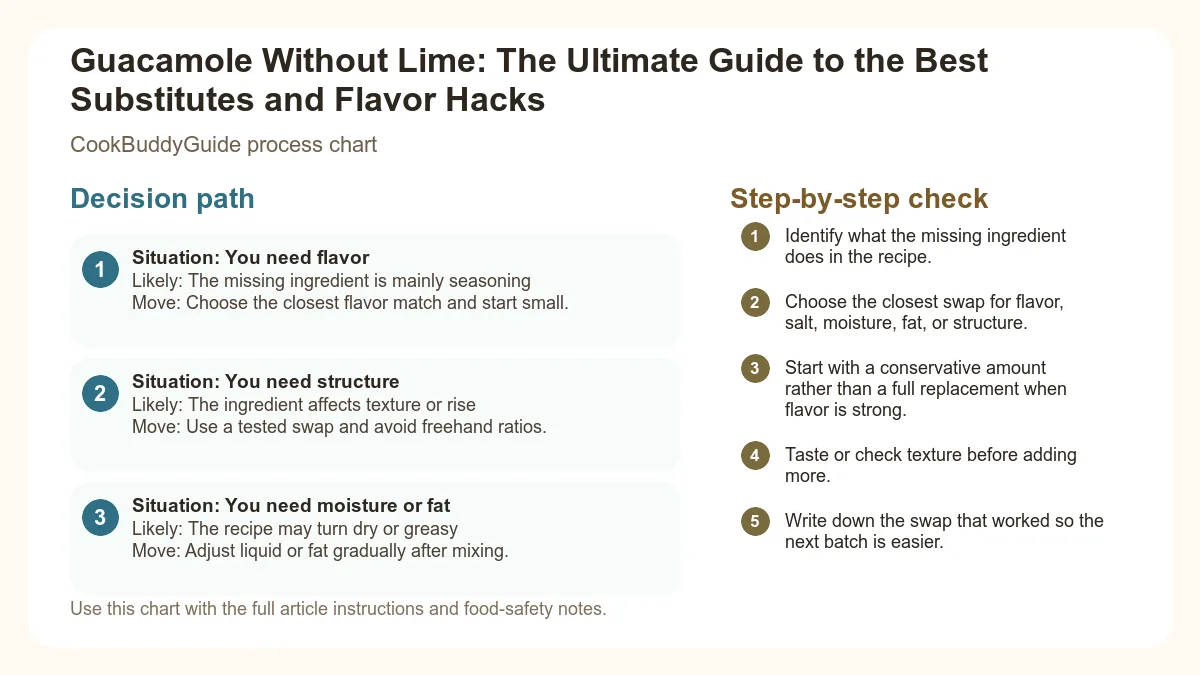
Decision table
| Situation | Likely cause or meaning | Best move |
|---|---|---|
| You have lemon | Closest bright citrus substitute | Use about 2 teaspoons per avocado, then taste. |
| You only have vinegar | Provides acidity but can taste sharp | Use 1 teaspoon mild vinegar per avocado. |
| You have no acid | Guacamole will still work but brown faster | Season well, cover the surface tightly, and serve soon. |
Step-by-step fix
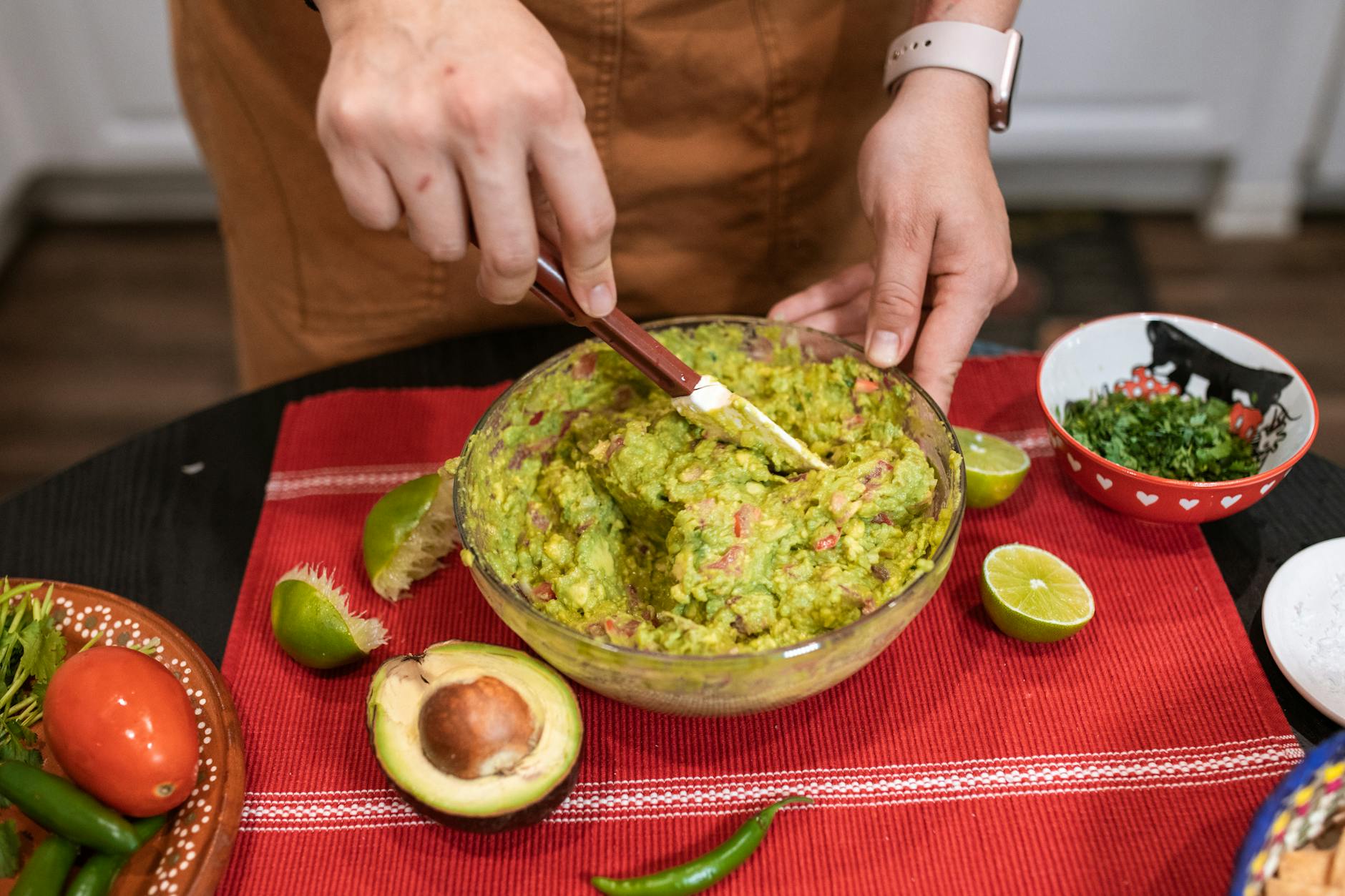
- Mash ripe avocados to the texture you prefer.
- Fold in finely chopped onion, cilantro, and jalapeno if using.
- Add lemon juice or mild vinegar using the starting ratio above.
- Season with salt, taste, and adjust the acid a little at a time.
- Serve immediately or cover the surface tightly before chilling.
Common mistakes
- Replacing lime with the same volume of sharp vinegar.
- Using underripe avocados that will not mash smoothly.
- Adding all the salt and acid before tasting the avocado.
- Leaving an air gap between the guacamole and its cover.
Related topic hubs
You can make good guacamole without lime. Lemon juice is the closest easy substitute, while vinegar, tomato, or a small amount of yogurt can provide acidity in a different style. The right choice depends on whether you want to preserve a familiar flavor, avoid all citrus, or keep the guacamole green for a short time.
- The Science of Browning: Why We Use Acid
- Top 5 Guacamole Lime Substitutes Ranked
- How to Balance Flavors When Skipping Lime
- The Master 'No-Lime' Guacamole Recipe
- Kitchen Tips for Preventing Browning Without Lime
- Common Mistakes to Avoid
- Regional Variations: Guacamole Styles That Skip Lime
- Frequently Asked Questions
The Science of Browning: Why We Use Acid
Understanding Polyphenol Oxidase
To understand why we need a guacamole lime substitute, we first have to understand the enemy: oxidation. When you cut into an avocado, you break the cell walls, exposing an enzyme called polyphenol oxidase to oxygen. This chemical reaction creates melanins, which result in those unappetizing brown avocados. According to research on preventing enzymatic browning, this process happens rapidly unless we intervene.
How Acidic Components Slow Down Oxidation
Acid works by lowering the pH level of the avocado's surface. Polyphenol oxidase is highly sensitive to pH; once the environment becomes sufficiently acidic (usually below a pH of 4.0), the enzyme's activity slows down significantly. This is why fresh ingredients with high acidity are crucial. It’s not just about the "zing"—it’s about chemical preservation. When making guacamole without lime, your primary goal is to find an alternative that provides enough ascorbic acid or citric acid to keep the enzymes at bay while complementing the rich, fatty nature of the Hass Avocados.
Acid can slow browning, but limiting contact with air matters too. Press reusable wrap directly onto the surface or use an airtight container with as little headspace as possible. The linked WebMD overview explains why cut avocados brown after exposure to air.
Top 5 Guacamole Lime Substitutes Ranked by Flavor
The alternatives below are ranked by flavor similarity, acidity, and how easily they fit into a standard guacamole recipe.
1. Fresh Lemon Juice: The Gold Standard
For lemon juice versus lime, start with a 1:1 substitution: one tablespoon of lemon juice for one tablespoon of lime juice. Lemon is slightly more floral, so taste before adding more. It is the closest everyday substitute when following Food Network's flexible method for making guacamole without a fixed recipe.
2. White Wine Vinegar or Apple Cider Vinegar: The Pantry Staple
If you have no fresh citrus, vinegar in guacamole is a surprisingly effective backup. However, caution is required. Vinegar is more acetic than citric, which can lead to a "pickled" flavor if overused. Consider using 50% less vinegar than you would lime juice. For three avocados, start with 1.5 teaspoons of white wine vinegar. Apple cider vinegar adds a touch of sweetness that pairs well with spicy peppers, but avoid balsamic or red wine vinegar, as they will discolor the dip.
3. Citric Acid Powder: The Professional Secret
If you want to keep your guacamole green for 24 hours without adding extra liquid, citric acid powder is your best friend. This is what commercial producers use. A mere 1/4 teaspoon for three avocados provides the necessary pH balance to stop browning in its tracks. As highlighted by Penn State Extension, using citric acid powder is one of the most effective ways to preserve the color of fresh produce without altering the creamy texture of the fruit.
4. Orange Juice: For a Milder, Floral Twist
Orange juice is much lower in acidity than lime, but it offers a beautiful sweetness. If you use orange juice, consider adding a pinch of extra salt to taste and perhaps a teaspoon of lemon juice alternative like vinegar to boost the acidity. This version is fantastic for kids or those who find traditional guacamole too tart. It’s a common variation in certain Caribbean-inspired avocado salads.
5. Pineapple or Grapefruit Juice: The Tropical Alternative
For a truly unique guacamole without lime, reach for pineapple or grapefruit juice. These juices contain enzymes and acids that provide a tropical punch. Grapefruit juice, in particular, has a bitterness that mimics the pithy notes of lime. When using these, ensure the juice is fresh-squeezed; bottled versions often contain preservatives that can create a metallic aftertaste. For more ideas on citrus swaps, check out this guide on the best lime juice substitute options.
How to Balance Flavors When Skipping Lime
Lime juice does more than just add acid; it provides a specific aroma from the citrus oils in the zest. When you skip it, you need to compensate in other areas to ensure your guacamole doesn't taste "flat."
Adjusting Salt and Heat
The Role of Aromatics (Onion, Garlic, Cilantro)
In a lime-free guacamole, your aromatics have to work harder. Use red onion for its sharp, peppery crunch. If you find the onion too overpowering, soak the minced pieces in cold water for 10 minutes before adding them; this removes the sulfurous "bite" while keeping the flavor. Don't skimp on the cilantro—the aldehydes in cilantro provide a citrusy scent that can trick the brain into thinking there’s lime present.
Adding Zest for Essential Oils
The Master 'No-Lime' Guacamole Recipe
Ingredients:
- 3 large, ripe Hass Avocados
- 1/2 medium red onion, finely diced
- 1/2 cup fresh cilantro, chopped (stems included for extra flavor!)
- 1 jalapeño, deseeded and minced
- 1 clove garlic, turned into a paste with salt
- 1 tsp Kosher salt (plus more to taste)
- Substitute Choice: 1 tbsp Lemon Juice OR 1.5 tsp White Wine Vinegar OR 1/4 tsp Citric Acid
Instructions:
- Prepare the Aromatics: In a large bowl, combine the diced red onion, jalapeño, and garlic paste. Sprinkle with the salt and let sit for 5 minutes. This "macerates" the onions, drawing out their juices and creating a flavor base.
- Process the Avocados: Cut the avocados in half, remove the pits, and scoop the flesh into the bowl. Using a fork or a potato masher, mash until you reach your desired consistency. Choose a chunky texture with some smooth elements.
- Add the Acid: Pour in your chosen guacamole lime substitute. Mix thoroughly to ensure every bit of avocado is coated—this is vital to prevent oxidation.
- Fold and Season: Fold in the chopped cilantro. Taste and add more salt to taste if necessary. If the flavor feels flat, add another teaspoon of your acid substitute.
- Serve Immediately: Guacamole is best served at room temperature for maximum flavor release.
Substitute Conversion Chart
Use this handy chart to swap ingredients based on what you have in your pantry:
- 1 tbsp Lime Juice = 1 tbsp Lemon Juice
- 1 tbsp Lime Juice = 1.5 tsp White Wine Vinegar
- 1 tbsp Lime Juice = 1/4 tsp Citric Acid Powder + 1 tsp Water
- 1 tbsp Lime Juice = 2 tbsp Fresh Orange Juice + 1/2 tsp Apple Cider Vinegar
Kitchen Tips for Preventing Browning Without Lime
The 'Water Barrier' Method
This is the single most effective way to store guacamole. Put your leftovers in a container and pack the guacamole down firmly with a spoon to remove any air pockets. Pour about half an inch of lukewarm water over the top. The water creates a physical barrier that oxygen cannot penetrate. When you're ready to eat, simply pour the water off and give it a quick stir. The creamy texture remains perfectly intact.
Plastic Wrap Contact Technique
If you don't want to use water, use plastic wrap. However, simply covering the bowl isn't enough. You must press the plastic wrap directly onto the surface of the guacamole, ensuring there are no air bubbles. This mimics the "skin" of the avocado and keeps the pH balance stable at the surface.
The Pit Myth vs. Reality
Leaving the avocado pit in the bowl does not protect the exposed surface. At most, it blocks air from the small patch directly beneath it. Use direct surface coverage or an airtight container instead.
Common Mistakes When Making Guacamole Without Lime
Over-acidifying with Vinegar
Using Bottled 'Fake' Juices
Those little plastic lemons and limes shaped like fruit? Avoid them. They often contain sulfur-based preservatives that can react with the fats in the avocado, creating a bitter, metallic taste. If you don't have fresh citrus, you are much better off using a high-quality vinegar or even a pinch of citric acid.
Ignoring the Salt Balance
Without the sharp punch of lime, the richness of the avocado can feel heavy or greasy on the palate. Salt is the key to cutting through that fat. Consider tasting your guacamole with a chip, not a spoon. Chips are salty, and you want to ensure the final combination isn't a salt bomb.
Guacamole Styles That Skip the Lime
It’s a common misconception that lime has always been in guacamole. Historically, many regions of Mexico and South America used other ingredients for tartness.
Traditional Mexican 'Guacamole de Molcajete'
In some traditional preparations, particularly in the Oaxacan highlands, the acidity comes from tomatillos. Tomatillos are naturally high in acid and provide a bright, tangy flavor that is distinct from citrus. By roasting a few tomatillos and mashing them into the avocado, you get a guacamole without lime that is incredibly authentic and complex.
The Creamy South American Style
In countries like Chile and Peru, "Palta Reina" or similar avocado preparations often skip the lime entirely, favoring a very simple mix of avocado, oil, and salt. They rely on the quality of the fresh ingredients and the natural buttery flavor of the fruit. This style is often served as a spread on bread rather than a dip for chips.
Frequently Asked Questions
If you use a strong guacamole lime substitute like lemon juice or citric acid and the water barrier storage method, it will stay green for 24 to 48 hours in the refrigerator. Without any acid, it will begin to brown within 2 hours.
Yes! Oxidation is a natural process and doesn't mean the avocado has spoiled. However, the flavor can become slightly bitter and the texture a bit mushy. If it's just a thin layer of brown on top, you can usually scrape it off to reveal the bright green dip underneath.
In a pinch, yes, but dried cilantro lacks the citrusy aldehydes that help compensate for the lack of lime. If you must use dried, use 1/3 of the amount called for in the recipe.
Conclusion: Mastering the Lime-Free Dip
Making guacamole without lime doesn't mean you have to settle for a mediocre dip. By understanding the role of acid in preventing oxidation and selecting the right guacamole lime substitute, you can create a bowl that is just as vibrant and delicious as the traditional version. Whether you choose the brightness of lemon, the punch of vinegar, or the professional consistency of citric acid, the key is to balance your flavors with salt to taste and plenty of fresh ingredients.
The next time you find yourself with a handful of ripe Hass Avocados and a lime-free fridge, don't panic. Reach for the lemon or the vinegar, follow my master recipe, and enjoy a dip that proves necessity truly is the mother of delicious invention. Happy mashing!