Quick Answer
This guide covers the best dairy free soup recipes for a rich, creamy dairy free soup without cream or butter. Master pro thickening tips and 5-star comfort food recipes.
Practical note
For 15 Best Dairy Free Soup Recipes, this guide centers on Full-fat canned coconut milk, Coconut cream, Over-salting Plant-Based Milks. Those are the checkpoints we would use first in a normal home kitchen before making a bigger change.
Decision table
| Situation | Likely cause or meaning | Best move |
|---|---|---|
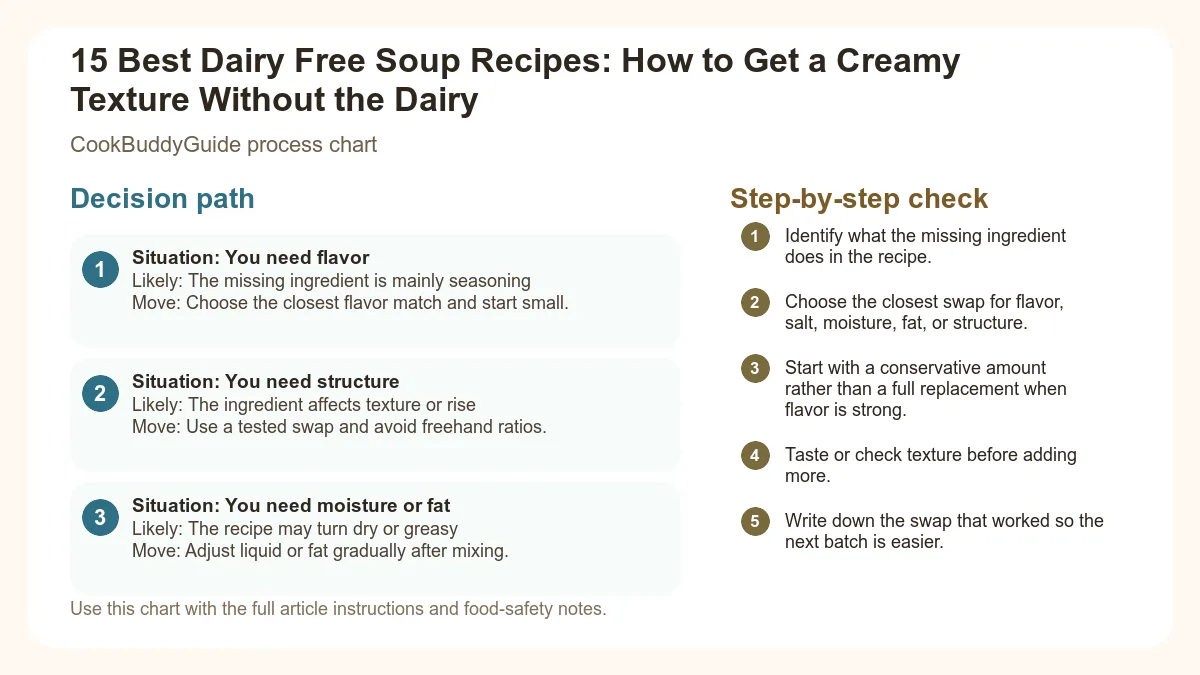
| You need flavor | The missing ingredient is mainly seasoning | Choose the closest flavor match and start small. |
| You need structure | The ingredient affects texture or rise | Use a practical swap and avoid freehand ratios. |
| You need moisture or fat | The recipe may turn dry or greasy | Adjust liquid or fat gradually after mixing. |
Step-by-step fix
- Identify what the missing ingredient does in the recipe.
- Choose the closest swap for flavor, salt, moisture, fat, or structure.
- Start with a conservative amount rather than a full replacement when flavor is strong.
- Taste or check texture before adding more.
- Write down the swap that worked so the next batch is easier.
Common mistakes
- Replacing a strong ingredient 1:1 before tasting.
- Choosing a flavor match when the recipe actually needs structure.
- Forgetting that salty swaps can change the whole dish.
- Adding extra liquid before the batter, dough, or sauce has time to hydrate.
Related topic hubs
You’ve been there: it’s a chilly Tuesday evening, you’re craving a bowl of something rich, velvety, and soul-warming, but you’re staring at a carton of vegetable broth and wondering how on earth it’s going to turn into a "cream of" anything without a half-pint of heavy cream. For years, the standard advice for dairy free soup recipes was simply to "leave the cream out," resulting in thin, watery broths that felt more like a punishment than a meal.
In This Guide
- The Secret to Indulgent, Creamy Dairy-Free Soup
- 5 Pro Methods for Thickening Soup Without Cream
- Essential Tools for Silky Smooth Results
- Recipe 1: Roasted Butternut Squash Soup
- Recipe 2: Blended Roasted Tomato Soup
- Recipe 3: Cashew Cream Potato Leek Soup
- Recipe 4: Hearty Red Lentil Soup
- Recipe 5: Dairy-Free Broccoli Soup
- Common Mistakes to Avoid
- Meal Prep and Storage Guide
The Secret to Indulgent, Creamy Dairy-Free Soup
Why Dairy-Free Doesn't Mean Thin or Watery
The Science of Emulsification in Plant-Based Cooking
To get that reliable silky texture, you need to understand emulsification. This is the process of forcing two liquids that don't normally mix—like water (broth) and oil (fats)—into a stable union. In vegan soup, we often use an immersion blender to break down fat molecules from coconut milk or olive oil into tiny droplets that stay suspended in the broth. This creates a luxurious, opaque liquid that feels "creamy" to the brain. My philosophy at CookBuddyGuide is simple: focus on the science of the ingredients, and you’ll never miss the dairy.
5 Pro Methods for Thickening Soup Without Cream or Butter
1. The Root Vegetable Puree Technique
2. Cashew Cream: The Gold Standard for Richness
3. Coconut Milk vs. Coconut Cream: When to Use Each
- Full-fat canned coconut milk: Best for most dairy free soup recipes. It provides healthy fats and a medium thickness.
- Coconut cream: Use this for ultra-decadent bisques. It has a higher fat-to-water ratio.
4. The Magic of Blended Legumes
5. Using High-Quality Fats: Olive Oil and Avocado
Never underestimate the power of a high-quality Extra Virgin Olive Oil. By whisking oil into a hot soup just before serving, you create a temporary emulsion that adds a "glossy" richness. This is a staple technique in Mediterranean vegan soup recipes.
Essential Tools for Silky Smooth Results
Immersion Blenders vs. High-Speed Blenders
The Importance of Fine-Mesh Strainers
If you are serving guests and want a truly clean finish, pour your blended soup through a fine-mesh strainer (chinois). This removes any remaining bits of skins or fibers, leaving you with a liquid that looks like velvet. It’s an extra step, but for a special occasion, it’s worth the 3 minutes of effort.
Recipe 1: Roasted Butternut Squash Soup with Coconut Milk
This is the gold standard for creamy dairy free soup. The secret is in the roasting, which caramelizes the sugars in the squash.
Ingredients:
- 1 large butternut squash (about 3 lbs), halved and seeded
- 1 tbsp olive oil
- 1 yellow onion, diced
- 3 cloves garlic, minced
- 1 tsp fresh ginger, grated
- 4 cups vegetable broth
- 1 can (13.5 oz) full-fat coconut milk
- 1 tbsp lime juice
- Salt and black pepper to taste
Instructions:
- Preheat oven to 400°F. Brush squash with oil and roast cut-side down for 40 minutes until tender.
- In a large pot, sauté onion, garlic, and ginger until fragrant (about 5 minutes).
- Scoop the roasted squash flesh into the pot. Add broth and simmer for 10 minutes.
- Add the coconut milk. Use an immersion blender to puree until completely smooth.
- Stir in lime juice. The acid is crucial to balance the sweetness of the squash.
Recipe 2: Blended Roasted Tomato Soup (A Practical Comfort)
Most classic tomato soups rely on heavy cream to cut the acidity. In my version, we use a single starchy potato and the power of roasting. By roasting tomatoes for deeper flavor, you develop a savory complexity that makes the dairy unnecessary. This pairs perfectly with a vegan grilled cheese or a side of crusty sourdough.
Achieving Creaminess Without the Milk
Roasted Tomato Soup Ingredients:
- 3 lbs Roma tomatoes, halved
- 1 head of garlic, top sliced off
- 1 medium Yukon Gold potato, peeled and diced small
- 2 cups vegetable broth
- 1/4 cup fresh basil leaves
- 2 tbsp balsamic vinegar
Roast the tomatoes and garlic at 400°F for 45 minutes. Squeeze the softened garlic into a pot with the tomatoes, potato, and broth. Simmer until the potato is fork-tender (about 15 mins), then blend with the fresh basil. The result is a vibrant, lactose-free masterpiece.
Recipe 3: Cashew Cream Potato Leek Soup
Classic Vichyssoise is usually loaded with butter and heavy cream. This dairy free soup recipe uses cashew cream for that signature French elegance.
Cleaning Leeks: The Step You Can't Skip
How to Avoid 'Gummy' Potatoes
When making potato-based creamy dairy free soup, do not over-blend. If you use a high-speed blender for too long, the starches break down into a glue-like consistency. Consider blending just until smooth, or using a food mill for the most traditional texture. Also, use white pepper instead of black to keep the soup looking pristine and white.
Recipe 4: Hearty Red Lentil Soup with Extra Virgin Olive Oil
Red lentils are the unsung heroes of one-pot meals. Unlike green or brown lentils, red lentils completely disintegrate when cooked, creating a natural puree. This soup is a staple of healthy comfort food because it's packed with protein and fiber.
The Emulsion Trick: Whisking in Fat
If you're looking for more hands-off ways to cook legumes, you might enjoy these make-ahead crockpot freezer meals which include several lentil variations.
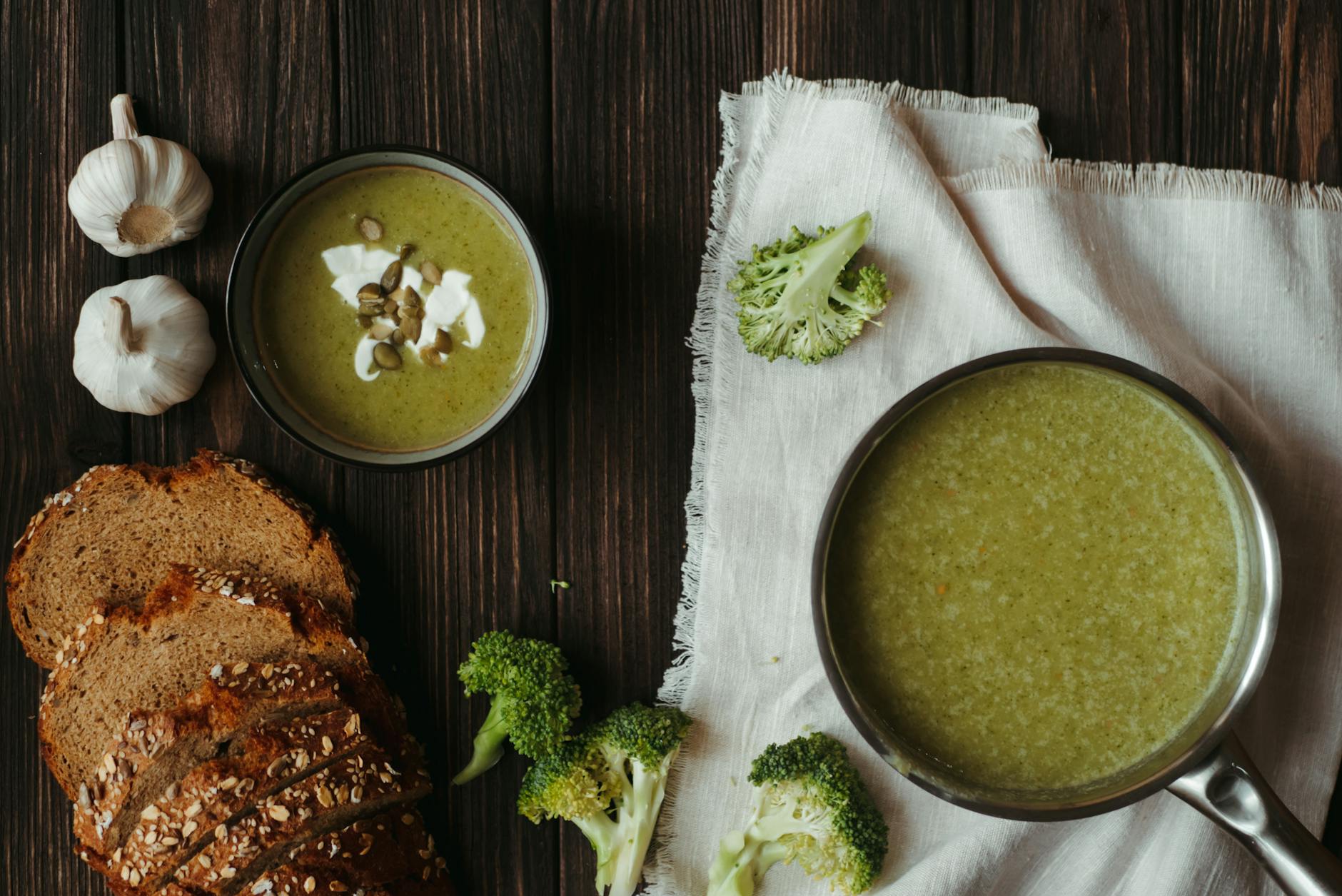
Recipe 5: Dairy-Free Broccoli Soup (Thickened with Pureed Potato)
The challenge with broccoli soup is getting that "cheddar" flavor without the cheese. The solution? Nutritional yeast. This deactivated yeast has a salty, nutty, cheesy profile that is essential for vegan soup.
Keeping the Green: How to Avoid Gray Broccoli
Quick Dairy-Free Broccoli Soup:
Combine 1 large head of broccoli, 1 large potato, 1 quart of broth, and 1/2 cup of nutritional yeast. After blending, add a splash of apple cider vinegar. This tiny bit of acid makes the "cheesy" flavors of the yeast pop. Testing note: Frozen broccoli actually works better than fresh here because it’s flash-blanched, preserving that bright green color!
Common Mistakes When Making Dairy-Free Soup
- Over-salting Plant-Based Milks: Some store-bought plant-based milk (like almond or oat) contains added salt or sugar. Always taste your milk alternative before adding it to the pot, and adjust your seasoning accordingly.
- Ignoring the 'Acid' Component: Dairy has a natural lactic acidity. When you remove it, your soup can taste "flat." Always finish your creamy dairy free soup with a squeeze of lemon, lime, or a teaspoon of vinegar to brighten the flavors.
Meal Prep, Storage, and Freezing Guide
One of the best things about these recipes is that they are perfect for batch cooking. However, not all dairy-free thickeners freeze equally.
Which Dairy-Free Soups Freeze Best?
Soups thickened with cashew cream or coconut milk freeze exceptionally well. However, soups that rely heavily on pureed potatoes can sometimes take on a slightly grainy texture after thawing. If this happens, simply give the thawed soup a quick 30-second whirl with the immersion blender after reheating to restore the silky texture.
For safety, always consult the safe storage times for soup. Generally, these vegetable-based soups will last 3-4 days in the fridge or up to 3 months in the freezer. For those just starting their meal-prep journey, these beginner-friendly Instant Pot recipes often feature soup bases that are incredibly freezer-stable.
Reheating Tips
Reheat your soup on the stovetop over medium-low heat. Avoid a rolling boil if you’ve used a lot of plant-based milk, as it can sometimes separate. If the soup has thickened too much in the fridge (common with lentil and potato soups), add a splash of vegetable broth or water to loosen it up.
Final Thoughts
Creating world-class dairy free soup recipes isn't about finding a "substitute" for cream; it's about embracing the incredible textures that vegetables and nuts provide on their own. Whether you're using the starch of a potato, the richness of a cashew, or the emulsification of olive oil, you now have the tools to make soups that are more flavorful and healthful than their dairy-laden counterparts.
Next time it’s 6:00 PM and you’re looking for a comforting meal, don't reach for the heavy cream. Reach for your blender, a bag of cashews, or a simple potato, and see just how indulgent creamy dairy free soup can truly be. Happy cooking!
Frequently Asked Questions
The cauliflower trick is your best bet! Pureed cauliflower adds incredible body and creaminess with very few calories and a neutral flavor profile.
Most brands are naturally gluten-free, but always check the label if you have a severe allergy, as some are processed in facilities that handle wheat.